
Acting
Gustav Opočenský
Born — Died
1920-12-07 — 1992-12-17
Place of birth
Prague, Czechoslovakia
Known for
Acting
Credits
47 titles
Gustav Opočenský was the son of Bohemian poet and journalist Gustav Roger of Opočenský (1881-1949). Originally, he began to study law, but after closing Nazi colleges in 1939 he headed for the theater, close to art, thanks to his father. He did not undergo any professional training, but after the war he gained his first permanent engagement in the Realistic Theater in Prague (1945-1946). Due to his unbridled inheritance, his father in the mid-1950s came into conflict with the Communist power, he had to go to the theater in Cologne from Pardubice and eventually in 1956 he banned the ban on artistic activity. Then he worked as a miner, later a worker in Stalin's races in Záluží near Most, but…
Known for
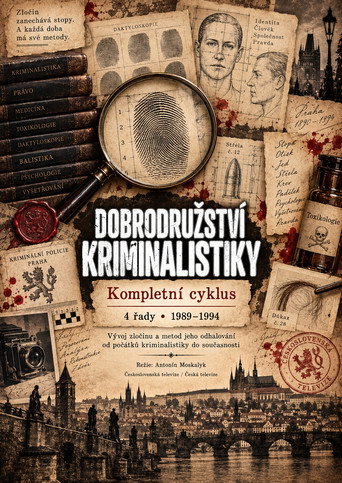 8.6
8.6No synopsis available yet.
Dobrodružství kriminalistiky
1989
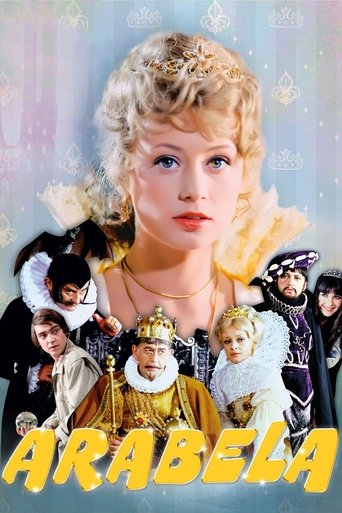 8.2
8.2Arabela was a children's television series produced in Czechoslovakia which aired from 1979 to 1981. The series has 13 episodes and is in the Czech language.
Arabela
1980
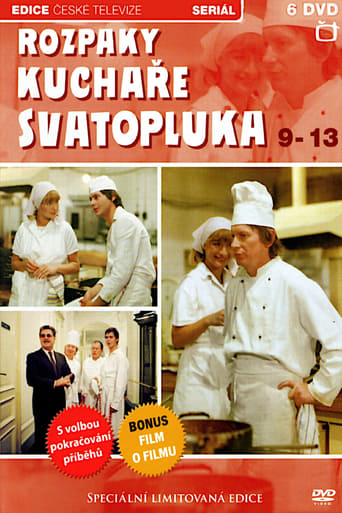 5.5
5.5No synopsis available yet.
Rozpaky kuchaře Svatopluka
1985
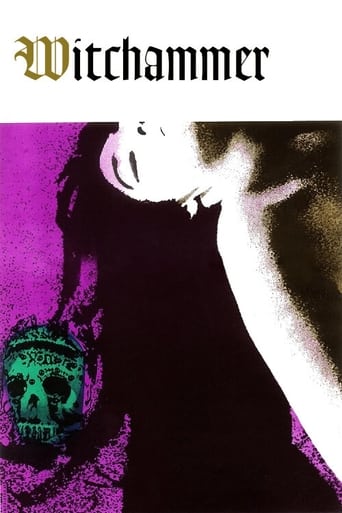 7.6
7.6In the 1600s, an overzealous clergy hauls innocent women in front of tribunals, forces them to confess to imaginary witchery, and engages in brutal torture and persecution of their subjects.
Witchhammer
1970
 7.0
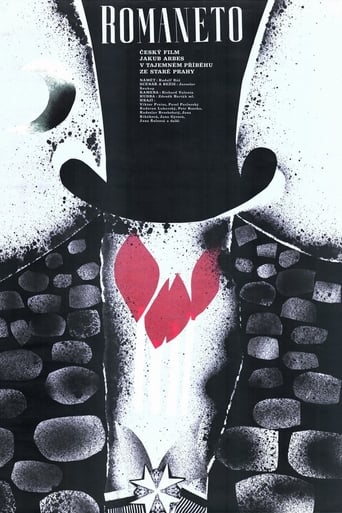
7.0A frightening atmosphere, full of chilling dampness and darkness, follows the fate of a desperate searcher who tries in vain to unravel the supposed secret of the altarpiece...
Romaneto
1981
 NR
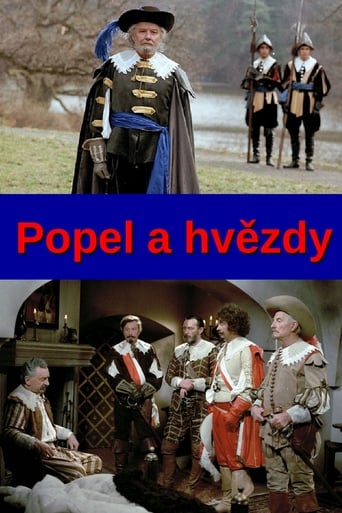
NRNo synopsis available yet.
Popel a hvězdy
1990
Film credits
1990s · 6 titles
 7.2
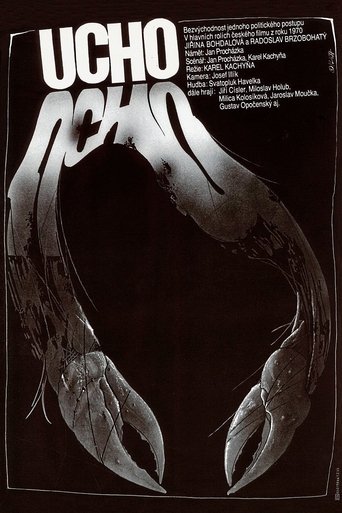
7.2Government bureaucrat Ludvik becomes suspicious after several colleagues disappear and he overhears something strange at a cocktail party. Returning home with his wife, Anna, he finds their house under surveillance and spends a fraught night worrying about his possible arrest in the morning. Marital difficulties come to light as Ludvik and his wife attempt to act normal in front of the cameras while dredging up their problems out of sight.
The Ear
1990
At the beginning was the Slovak television series Lekár umierajúceho czasu (Doctor of Dying Time), dedicated to the Rudolphine-era scientist Jan Jesenius. He ended up on the scaffold along with other gentlemen after losing the anti-Habsburg uprising. When director Miloslav Luther conceived the idea of making an abridged version of the footage for cinema, he had to not only rebuild the storyline but also dub it into Czech. However, the result was only an illustrative puzzle, describing the various stages of the hero's turbulent life.
Svědek umírajícího času
1991
No synopsis available yet.
Pot, lesk a potlesk
1990
 6.0
6.0Matylda, who lives in the Czech countryside, is trying to arrange burial plans for her dying husband, Jan. While Matylda hopes to have a funeral for Jan in the small town where they once lived, there are complications. Years earlier, Jan spoke out against the Communist government and was consequently expelled from the town. When Matylda fails to convince a local politician to allow the ceremony, she uses her husband's funeral as a public show of dissent.
Funeral Ceremony
1990
In the young man's imagination, the image of a mysterious house - a mystical building that symbolizes the spiritual world of an unknown faith - persistently returns.
Home
1991
No synopsis available yet.
Zbabělec
1992
1980s · 16 titles
7.0A frightening atmosphere, full of chilling dampness and darkness, follows the fate of a desperate searcher who tries in vain to unravel the supposed secret of the altarpiece...
Romaneto
1981
 5.5
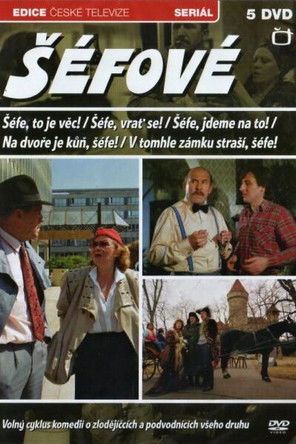
5.5Criminal comedy, a fourth movie from the "Chief" series.
Chief, There Is a Horse in the Backyard
1989
 5.3
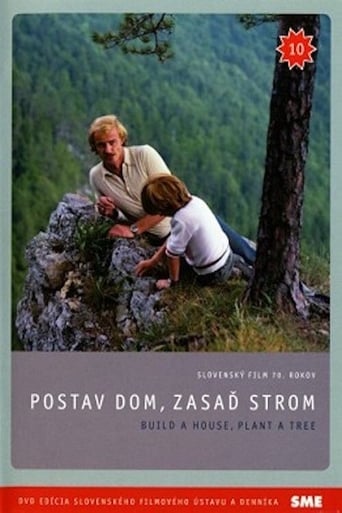
5.3Juraj Jakubisko's first feature film after a forced nine-year-long break is a story about an unconventional man, Jozef Matúš. He arrives to a small village in eastern Slovakia to settle down and start a family. He is ready to subordinate everything to his goal. It all starts with stealing building material and ends with him disregarding those close to him to a point where his ambitions are turning against him. Build a House, Plant a Tree is a viewer-friendly film with a plot resembling a western, including several attractive action sequences.
Build a House, Plant a Tree
1980
 6.2
6.2A docudrama about four weeks in the life of famous Czech composer Antonin Dvorak. The drama - filled with many of Dvorak's compositions - begins when the composer suddenly decides to cut a concert in London and return home. While on the train, flashbacks reveal his relationship to his wife Anna and her sister Josefina. Both women gave him inspiration, yet Dvorak is clearly troubled in some way as musical excerpts come and go in his creative mind.
Concert at the End of Summer
1980
 5.5
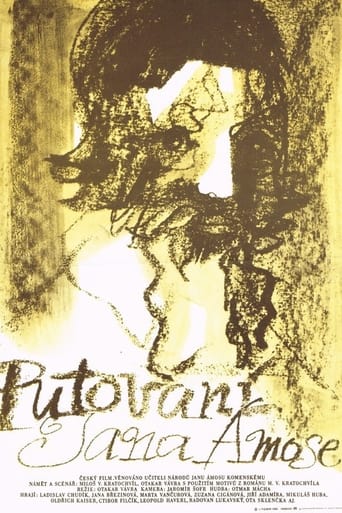
5.5The distressing fate of the Czech great Jan Amos Komenský, forced to leave his homeland after the White Mountain disaster. It depicts his encounters with various European personalities of the 17th century - the Queen of Sweden, artists and scientists. It emphasises the hero's nobility, but also his inner resilience, which allowed him to overcome many personal and professional tragedies. The parable of The Labyrinth of the World and the Paradise of the Heart becomes part of the story. However, Comenius's concept is sculpturally lifeless and, in particular, the religious dimension is "erased" from it. The simplistic biography therefore does not avoid schoolboyish dryness.
Putování Jana Amose
1983
 5.8
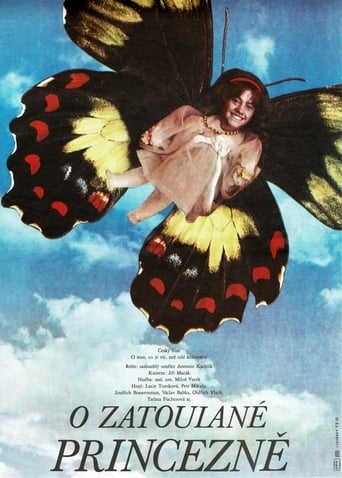
5.8Princess Julia doesn't want to marry an old prince Hubert so she runs away from home. She meets two old magicians and join the circus, where she meets lovely Franta Kuldan and evil devil performer.
On a Wayward Princess
1987
Otakar Vávra dedicated his latest film to events accompanying the devastation of the first World War. It takes place in representative centers of power, in the courts of Vienna, Berlin and Moscow. In parallel, it develops the fate of the Czech archivist, who will take part in the Serbian anti-Austrian branch.
Evropa tančila valčík
1989
 4.5
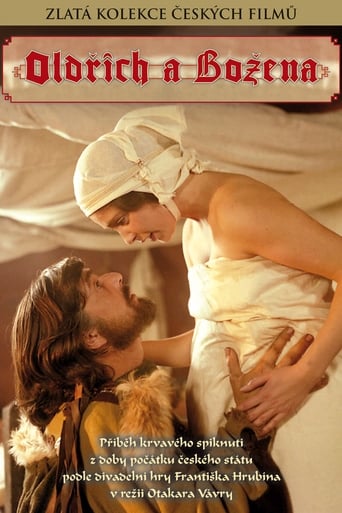
4.5At the turn of the 10th and 11th centuries Boleslav's kingdom fell apart in the fratricidal war between the Přemyslovci and the other clans the main profiteer of this being the German emperor. At that time it seemed as if the Czech state and the lineage of its princes was awaiting its end..." It is with these words that the tale of this film begins, whose narrative is based upon the the play by František Hrubín of the same name.
Oldrich and Bozena
1985
The happiness that has passed away will never return - this is exactly what a young Polish man learns when, in the immediate post-war period, he recalls how he fell in love with a charming Jewish girl before the outbreak of the war. He manages to find her, only she is already married and has a child.
Salty Rose
1983
The true story of a little boy who was taken from his grandmother's care during the war by a court decision at the request of his father and his upbringing was entrusted to the German authorities. Upbringing means Germanization. The methods used here did not even remotely resemble their noble name. Inhuman treatment and psychological and physical suffering also affected Mirko.
Uloupené dětství
1988
No synopsis available yet.
V kleštích
1987
Getting out of prison doesn't mean being free. After the bloody suppression of the Prague Revolution in 1848, one of its participants, the writer František Vinický, spent eight years in prison. Returning to Prague in 1857, he tries to make contact with his former friends. The main one is his former comrade-in-arms Antoš. Of course, the man's steps also lead him to his former love Ida, who has been married to the councillor Mayer for several years. Vinicky is followed at practically every turn by the secret police, who will not allow him to get a decent job, let alone publish his new book. Police Councillor Berger makes it clear to the writer that a lot could be arranged if Vinicky would commit to cooperating...
Záchvěv strachu
1984
No synopsis available yet.
Rudin
1987
No synopsis available yet.
Flotila
1987
 10.0
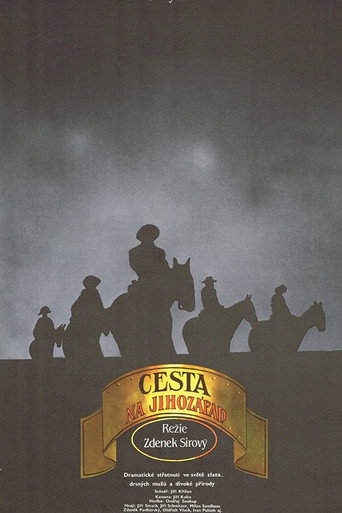
10.0Based on a Jack London story, this is another attempt at a Western spectacle - after the short story triptych The Canyon of Gold - about a teenage boy who, after his father's death, lives in a gold-mining town. He even witnesses a cruel fight between two cowboys over a supposed treasure.
Cesta na jihozápad
1989
No synopsis available yet.
Nedosněné sny
1989
1970s · 15 titles
7.6In the 1600s, an overzealous clergy hauls innocent women in front of tribunals, forces them to confess to imaginary witchery, and engages in brutal torture and persecution of their subjects.
Witchhammer
1970
 6.2
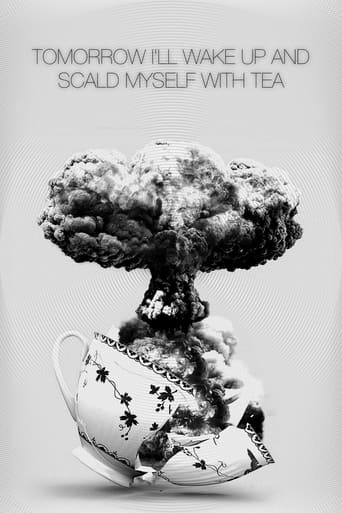
6.2Former Nazi Klaus Abard survives to the 1990s by taking anti-ageing pills. He plans to use a time travel trip to return to Germany in 1944 and present Hitler with a hydrogen bomb, so that he can win the war. Unfortunately the pilot, woman-chasing Karel Bures, dies on the morning of the trip and his earnest twin brother Jan impersonates him, without knowing about the plot.
Tomorrow I'll Wake Up and Scald Myself with Tea
1977
 9.0
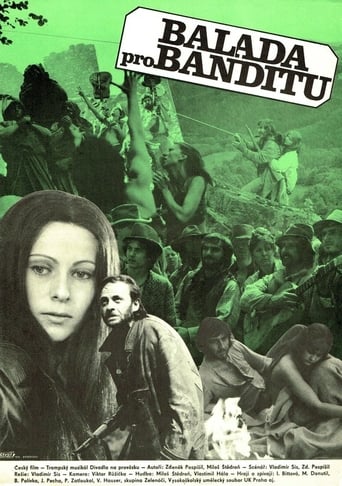
9.0The film version of the theatre musical production by the "Divadlo na provazku" in Brno tells the tale of legendary bandit Nikola Šuhaj from Koločava.
Ballad for a Bandit
1979
 6.2
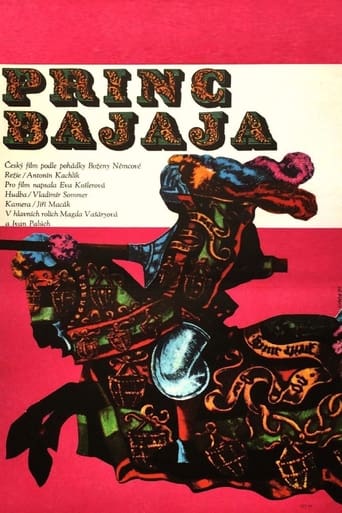
6.2The hero of this popular fairy tale is a young prince who, after the death of his parents, goes out into the world. During his travels he meets a magical talking horse and falls in love with the beautiful princess Slavna. On the advice of his horse, he binds one eye and pretends to be dumb and enters into service as the castle gardener.
Prince Bajaja
1971
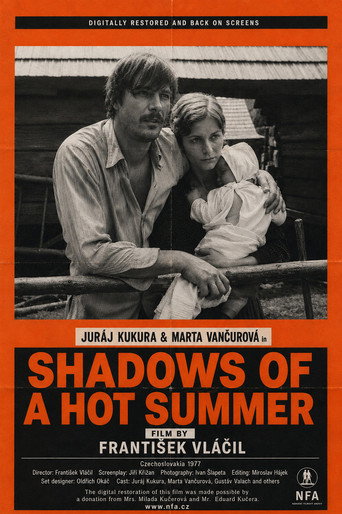 7.3
7.3Ondrej lives on a farm outside a small town with his family. One day a group of men arrive at the family's house and the harmonious life they've led so far changes drastically for the worse.
Shadows of a Hot Summer
1978
Three short stories ("Zelenáči 1945", "Silvestr 1948" and "Zimní vítr 1951") about members of the SNB units guarding the Šumava border in the post-war years. Ivo Toman had artistic supervision over the debutants. The theme of the third short story was made in 1959 for the film "Entry Forbidden" by František Vláčil, who was also starting at the time.
Boty plné vody
1976
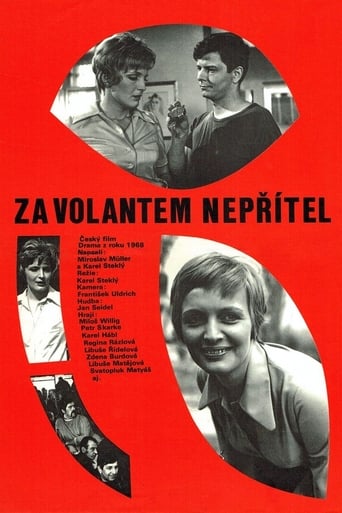 5.0
5.0Summer 1968: The crisis is reaching its peak. The director of the Prague taxi service, Mudroch, rejects the drivers' absurd demands for a pay increase. The taxi drivers decide to go on strike and seek support against Murdoch from trade unionists and enemies of the regime. The director is convinced that honest communists like him cannot be defeated. However, hateful vandals damage the brakes in his car...
Za volantem nepřítel
1975
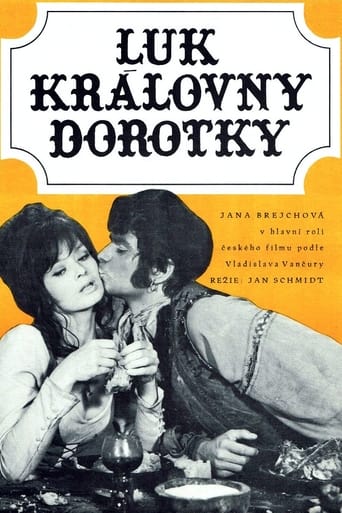 10.0
10.0Set in a vagabond and petty bourgeois environment, the three stories deal with the pitfalls of love, the petty and insidious betrayals of trust.
Luk královny Dorotky
1971
 5.5
5.5Despite the initial mistrust of others, former glass worker Štěoán Urban becomes the founder and first chairman of the local agricultural cooperative. However, 1968 arrives and with it comes previously unexpected problems.
Tam kde hnízdí čápi
1976
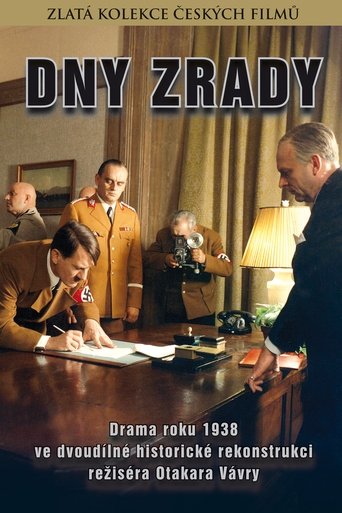 5.6
5.6This feature film based on the events of 1938 is a chronicle of the futile efforts of the Czechoslovak president Edvard Benes (Jirí Pleskot), politicians and ordinary citizens, to save the independence and the territorial integrity of the state from the advance of Hitler's Germany. On the 29th of March 1938 the leader of the Sudeten Germans Henlein (Werner Ehrlicher) has a meeting with Hitler (Gunnar Möller). Hitler orders him to intensify pressure on the Czechoslovak government. On the 24th of April in Carlsbad, the Sudetendeutsche Partei (Sudeten German Party) decides upon eight demands that are unacceptable to the Czechoslovak President, since they would ultimately lead to the break-up of the Republic. Benes still shows a certain willingness to negotiate, and Henlein resents this. The Germans are determined to make further negotiations impossible through incidents and violence.
Days of Betrayal
1973
Eleven-year old Mísa has the temperament of a proper boy and endless problems with the grown-ups. It is no wonder that he longs to become an adult without further delay. Mísa keeps house together with his father and has various duties. After a failed attempt at dish-washing he goes off to the research institute where his father is working on an important invention. He is trying to produce a substance that would make poultry and other animals bigger and thus help the struggle against famine in the world, but so far he has only managed to produce a shrinking substance. After his father leaves the laboratory, Mísa mixes up different ingredients and makes the growth substance. He drinks it and instantly becomes an adult. His father, conversely, turns into a toddler after drinking the shrinking substance with his beer by mistake.
Just Because You're Grown-Up
1970
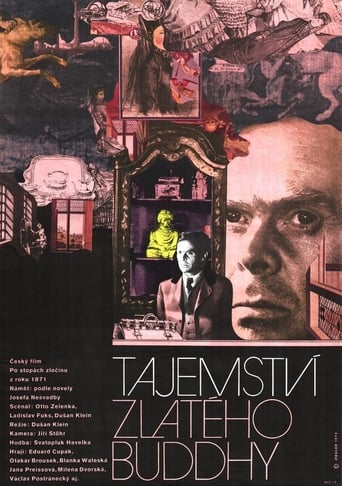 9.0
9.0A crime story set in the second half of the 19th century. Krasl, a Prague schoolteacher, is searching for a statue of the Golden Buddha, which is supposed to contain compromising materials on the factory owner Riessig.
The Secret of the Gold Buddha
1973
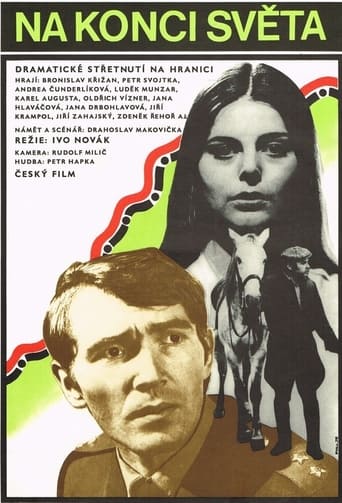 4.2
4.2In the 1950s, selected basic soldiers in a small border unit guard the western border with devotion, fighting intruders and uncovering their network of facilitators. It's a story of border guards that thankfully wasn't much of a political nudge, more of a tongue-in-cheek tale of young men at war and their joys and sorrows. And in between, they managed to catch a saboteur.
Na konci světa
1975
No synopsis available yet.
Třírohý klobouk
1971
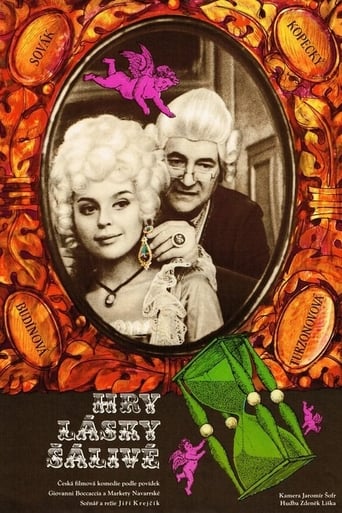 4.7
4.7Two historical stories about love. In the story "The Arabian Horse", the scheming townsman Messer Francesco Vergellesi is so firmly convinced of his wife's virtue that he does not hesitate to bet her against a rare stallion he has a crush on... The story "The Earrings" shows how a poor girl can help herself to a rare jewel and what intrigues are needed for an elderly noble couple to finally have an heir...
Hry lásky šálivé
1971
1960s · 2 titles
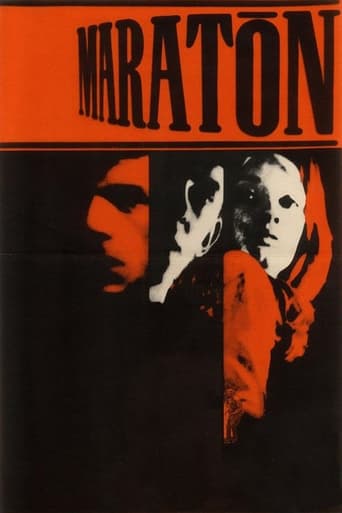 5.6
5.6It is 5 May 1945 and the uprising against the hated German occupiers has broken out in Prague. The Czech guards open the gate of the Pankrác prison to allow the prisoners to escape en masse. Many of them are shot dead by the German guards but young Ruda (Jaromír Hanzlík) manages to run away. He is taken care of by one of the Prague fighters, concierge Kytka. Kytka hides him in the flat of the house's owner where only the young maid Karla (Jana Brejchová) is left, ordering her to take care of Ruda.
Marathon
1968
A twelve-year-old boy knows that adults often lie—and this realization causes him no end of trouble. When he stumbles upon the suspicious death of an old man, he begins to weave a web of suspicion.
Mlčení mužů
1969
1950s · 3 titles
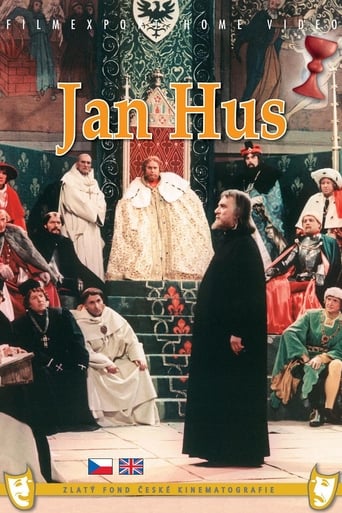 6.3
6.3The first part of the "Hussite Revolutionary Trilogy", completed with Jan Žižka (1955) and Proti všem (Against All Odds, 1957). The film captures the period from May 1412 to the summer of 1415, a turbulent time in the Czech Kingdom, during which there were protests in Prague against the sale of "omnipotent indulgences" whose sale throughout the kingdom was announced by Pope John XXIII. The ideological leader of this movement is the preacher Master Jan Hus, whose words, calling for the elimination of church abuses, are listened to in the Bethlehem Chapel by thousands of ordinary Praguers, Czech lords and Queen Sophie, wife of the Czech King Wenceslas IV.
Jan Hus
1955
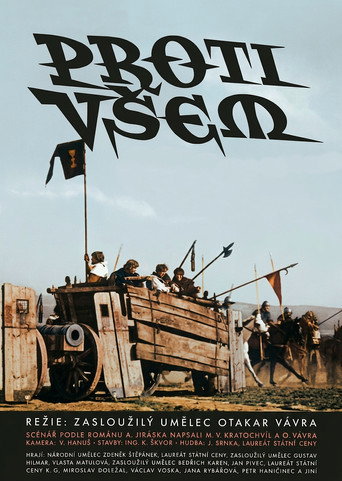 6.1
6.1After the battle of Sudoměř the Hussite teaching spreads through the whole country and people start leaving their homes to help build the fortification of Tábor. Prague citizens request help against the army of Zikmund. The Hussite army with Jan Žižka in the lead make their way towards Prague. They fortify themselves on the mountain Vítkov and engage in a bloody battle with Zikmund’s huge army.
Against All
1957
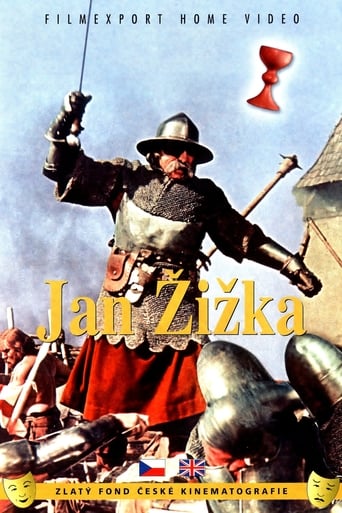 7.3
7.3The second part of the revolutionary Hussite trilogy takes place in the years 1419-1420.
Jan Žižka
1956
Series credits
8.6No synopsis available yet.
Dobrodružství kriminalistiky
1989
8.6No synopsis available yet.
Dobrodružství kriminalistiky
1989
8.2Arabela was a children's television series produced in Czechoslovakia which aired from 1979 to 1981. The series has 13 episodes and is in the Czech language.
Arabela
1980
5.5No synopsis available yet.
Rozpaky kuchaře Svatopluka
1985
NRNo synopsis available yet.
Popel a hvězdy
1990