

Directing
Abigail Child
Place of birth
Newark, New Jersey, USA
Known for
Directing
Credits
42 titles
Abigail Child has been at the forefront of experimental writing and media since the 1980s, having completed more than thirty film and video works and installations, and six books. An acknowledged pioneer in montage, Child’s early film work addressed the interplay be- tween sound and image in the context of resh aping narrative tropes, in a manner that prefigured many contemporary and future media concerns. Her major projects include Is This What You Were Born For?: a 9 year, 7-part work; B/Side: a film that negotiates the politics of internal colonialism in New York City; 8 Million: a collaboration with avant-percussionist Ikue Mori that re- defines the “music video”; The Suburban Trilogy: a…
Known for
 5.0
5.0Images and sounds of American mass media, are dissected and carefully composed into a rapid-fire montage which reveals the processes at work. The myth of the 'body beautiful' is effectively debunked in an overwhelming swirl of movement and sound
Mercy
1989
 5.8
5.8In 1983, filmmaker and poet Abigail Child cut up old footage from Between Times, a documentary profile of high school girls in Minneapolis which she had produced for WNET/PBS back in 1975. That footage would then be integrated into work of a drastically different kind: The film was called Mutiny which, by its very name, signaled her abandonment of the humanist documentary tradition to which Between Times belonged, to become, in her words, “a prismatic rhythmic pinwheel” born of the artistic and political necessity to radically rethink form. Mutiny, in turn, stood as one of the most densely woven in a series of bold experiments that came to be known as Is This What You Were Born For?
Mayhem
1987
 7.0
7.0Prefaces is composed of wild sounds constructed along entropic lines, placed tensely beside bebop rhythms, and a resurfacing narrative cut from a dialogue with poet Hannah Weiner. Child tells us, "The tracks are placed in precise and asynchronous relation to images of workers, the gestures of the marketplace, colonial Africa, and abstractions, to pose questions of social force, gender relations and subordination." This tape serves as a pre-conscious preface to the parts that follow, whose scope and image bank are more narrowly defined.
Prefaces
1981
Early Abigail Child feature, 51min
Tar Garden
1975
 NR
NRCovert Action is a stunning melange of rapid-fire retro imagery accomplishing Child’s proclaimed goal to "disarm my movies." "I wanted to examine the erotic behind the social, and remake those gestures into a dance that would confront their conditioning and, as well, relay the multiple fictions the footage suggests (the ‘facts’ forever obscured in the fragments left us). The result is a narrative developed by its periphery, a story like rumor: impossible to trace, disturbing, explosive."
Covert Action
1984
 NR
NRA superabundance of useless information effectively subdues freedom of speech. Condense and survive!
Radio Adios
1982
Film credits
Behind the camera
5.0Images and sounds of American mass media, are dissected and carefully composed into a rapid-fire montage which reveals the processes at work. The myth of the 'body beautiful' is effectively debunked in an overwhelming swirl of movement and sound
Mercy
1989
5.8In 1983, filmmaker and poet Abigail Child cut up old footage from Between Times, a documentary profile of high school girls in Minneapolis which she had produced for WNET/PBS back in 1975. That footage would then be integrated into work of a drastically different kind: The film was called Mutiny which, by its very name, signaled her abandonment of the humanist documentary tradition to which Between Times belonged, to become, in her words, “a prismatic rhythmic pinwheel” born of the artistic and political necessity to radically rethink form. Mutiny, in turn, stood as one of the most densely woven in a series of bold experiments that came to be known as Is This What You Were Born For?
Mayhem
1987
7.0Prefaces is composed of wild sounds constructed along entropic lines, placed tensely beside bebop rhythms, and a resurfacing narrative cut from a dialogue with poet Hannah Weiner. Child tells us, "The tracks are placed in precise and asynchronous relation to images of workers, the gestures of the marketplace, colonial Africa, and abstractions, to pose questions of social force, gender relations and subordination." This tape serves as a pre-conscious preface to the parts that follow, whose scope and image bank are more narrowly defined.
Prefaces
1981
7.0Prefaces is composed of wild sounds constructed along entropic lines, placed tensely beside bebop rhythms, and a resurfacing narrative cut from a dialogue with poet Hannah Weiner. Child tells us, "The tracks are placed in precise and asynchronous relation to images of workers, the gestures of the marketplace, colonial Africa, and abstractions, to pose questions of social force, gender relations and subordination." This tape serves as a pre-conscious preface to the parts that follow, whose scope and image bank are more narrowly defined.
Prefaces
1981
Early Abigail Child feature, 51min
Tar Garden
1975
NRCovert Action is a stunning melange of rapid-fire retro imagery accomplishing Child’s proclaimed goal to "disarm my movies." "I wanted to examine the erotic behind the social, and remake those gestures into a dance that would confront their conditioning and, as well, relay the multiple fictions the footage suggests (the ‘facts’ forever obscured in the fragments left us). The result is a narrative developed by its periphery, a story like rumor: impossible to trace, disturbing, explosive."
Covert Action
1984
 5.0
5.0Mutiny employs a panoply of expression, gesture, and repeated movement. Its central images are of women: at home, on the street, at the workplace, at school, talking, singing, jumping on trampolines, playing the violin. The syntax of the film reflects the possibilities and limitations of speech, while “politically, physically, and realistically” flirting with the language of opposition.
Mutiny
1983
 NR
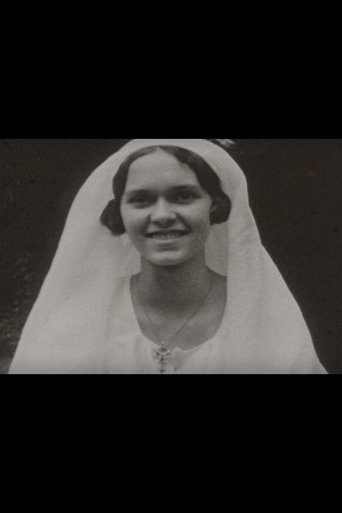
NRCake and Steak excavates ‘girl training’ in the legacy of home movies and post-war American suburban culture. Constructed as a series of achronological ‘chapters’ in which Edenic images of adolescent twirlers, basement parties, and ‘dress-up’ are challenged by a sound montage composed of horror movie music, old TV shows, laugh tracks, and machine noise of our modern Arcadias, Cake and Steak is conceived for single-screen and loop projection.
Cake + Steak
2004
A profoundly working-class community with an intense connection to its land and water is transformed into a pleasure paradise for the wealthy…all while the ground slips into the sea. A feature documentary, PRECIPICE focuses on the intersection between climate change and a changing shore community’s response to this global emergency.
Precipice
2026
 NR
NRExperimental music and eroticism swirl about each other in Shiver, the second of the 8 Million stories which can be found in this lively and continuing collaborative ‘album’. In Kiss of Fire , Child reworks images from her squisy TV soap Swamp (1991), to punctuate romantic cliche.” Selected for New York Film Festival Video Visions (1993) Short songs chart erotic tales in an urban topology. Includes FISHTANK, SHIVER, KISS OF FIRE, 8 MILLION WAYS TO DIE, and FAINT CLUE. The myths of popular culture—romance and TV soaps— provide the motifs for the work which restructures memory-image-fragment to foreground the body against a mechanized landscape. In the shape of small stories, 8 Million rewrites women's drama.. And on occasion to be the basis of the score: image as conductor, the music performed to the video.
8 Million
1992
 1.3
1.3What do construction workers do in their well-earned breaks? How might Angelina Jolie's and Brad Pitt's relationship have ended? And what really happened between Marilyn Monroe and Joan Crawford during the summer of 1959? The answers to these and many other interesting questions are provided by twelve queer New York filmmakers. Their films also scrutinize such topics as the difference between the way men and women dream, and how erotic tying a necktie or having a manicure can be.
Fucking Different New York
2007
A short collaboration in NYC subways right after 9/11— envisioning the absence and paranoia of Metropolis. With Benton Bainbridge & Eric Rosenzveig.
Subtalk
2002
 NR
NR16mm to digital, w/ Gary Sullivan Foreign Film Series
Mirror World
2006
 NR
NRFound footage exploring public and private space, organized formally as a sonata, centered around work and issues of class: the divisions between home and public, owners and workers, saturation and flow, structure and improvisation.
Surface Noise
2000
In Rome for a year at the American Academy, I created imaginary home movies of scenes from the life of Mary and Percy Shelley. I was attracted to these authors — their life of poetry, politics and sexual invention—and inspired by my previous fictionalizing of home movies in Covert Action and The Future is Behind You. I worked with non-actors, the seasons and the extraordinary architecture and landscapes of Italy where the Shelleys were in exile for six of their eight years together. The result was a feature film A Shape of Error, gorgeous, emotional and harnessed to the narrative. I wanted to go further and abetted by digital technology, I have ‘exploded’ the film. The result is UNBOUND, digressive, looped, unpredictable, symphonic, spontaneous, messy—like life and memory.
Unbound
2013
 NR
NRIn collaboration with Adeena Karasick & Charles Bryant's Salome (1923) Child has layered and processed the images, recomposed the strains of music, and selected words and phrases to create a "succulent nexus" - fluid and strange.
Salomé
2014
 NR
NR“In The Party, Child has assembled a remarkable array of subjects embodying the complex intersections of sexuality, race, and class. The film documents a party of African-American men in Cleveland, living "on the down-low” (having clandestine sex with men while leading apparently heterosexual lives), and showcases Child's unique ability to get people to reveal themselves.
The Party
2007
 NR
NRIn Ornamentals (1979), Abigail Child explores rhythm and the poetry of the repetitive image form.
Ornamentals
1979
 NR
NR“DARK DARK is a ghost dance of narrative gesture melding four found story fragments: Noir, Western, Romance and Chase. The music of Ennio Morricone provocatively interacts with the images, tantalizing the audience with webs of memory, meaning and elusive folly.” A.C.
Dark Dark
2001
 NR
NRAn experimental l6mm feature, A Shape of Error is based on the life of Percy Bysshe Shelley and his second wife, Mary Wollstonecraft Shelley— writers whose lives forecast the modern in their concern for women, free love and labor.
A Shape of Error
2012
NRAn experimental l6mm feature, A Shape of Error is based on the life of Percy Bysshe Shelley and his second wife, Mary Wollstonecraft Shelley— writers whose lives forecast the modern in their concern for women, free love and labor.
A Shape of Error
2012
 NR
NRPeripeteia I and Peripeteia II, shot by the artist in Oregon’s rainforest, alone and without electricity. "Navigation spiraling sunwards. Exploring the movement of forest and body, seeking the larger pattern of my digressive attendance. Filmed in the Oregon coastal rain forest, fall." - A.C.
Peripeteia I
1977
 NR
NRAbigail Child’s short, ELSA merdelamerdelamer, is a smoky, punky and sexy chapter in the collectively made Feminist bio-drama, MamaDada about the Baroness Elsa von Freytag-Loringhoven, avant-garde performance artist, sculptress and poet. The Baroness travelled from Germany to Tennessee, New York to Paris, was lovers with William Carlos Williams and perhaps gave the famous urinal to Duchamp, whom she describes as her “cast-iron lover.” This brief excursion is inspired by an event that was lost in development where Man Ray and Duchamp made a film of the Baroness shaving her public hair.
Elsa merdelamerdelamer
2013
 6.0
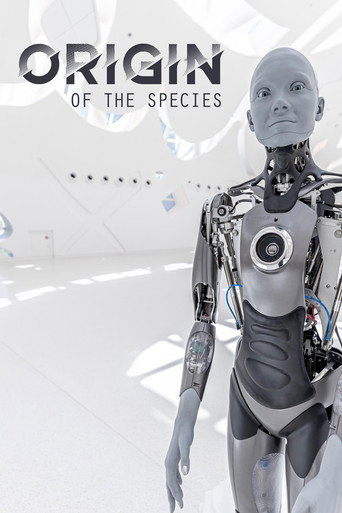
6.0Origin of the Species is an experimental documentary that explores the current climate of android development with a focus on human/machine relations, gender and the ethical implications of this research. The film provides an insider look into cutting edge laboratories in Japan and the USA where scientists attempt to make robots move, speak and look human. These scientists and their discoveries are contextualized with cinematic and pop culture references, to underline the mythic, comic and uncanny aspects of our aspiration to create machines that are eerily similar to ourselves.
Origin of the Species
2020
 NR
NRContemporary ambiguities on the Jersey shore: the look is secular, the lifestyle capitalist, the religion orthodox. 40,000 Syrian Jews have moved into a landscape previously occupied by Irish, Italian, and the quite different sect of Askenazi Jews. The “unmelted pot” of America’s small towns is set within memory and contemporary oppositions. What does it mean to have class in America? What does it mean to be Jewish? I think of conflicts between Israel and Palestine, Serbia and Bosnia, India and Pakistan: neighboring families and races split apart by religion. Extreme poverty enforces the tribal, while extreme wealth maintains it. Surf and Turf provides no easy answers but raises issues that have too long stayed behind closed doors: what do we say when we think no one is listening?
Surf + Turf
2011
 NR
NRPeripeteia I and Peripeteia II, shot by the artist in Oregon’s rainforest, alone and without electricity. "Extending from PERIPETEIA 1 - a navigation by light, contrasting the camera's fixed sight with "in site" movement. A sculpture of glass, mirrors and film vies with the choreography of the cardinal points: dense shelter, rain, red emulsion. Filmed in the Oregon coastal forest, June." - A.C.
Peripeteia II
1978
 6.0
6.0A cinematic reflection focused on the quotidian, with unexpected sound/image juxtapositions and bristling space/time vortices made cognizant through editing. The film was begun in a "blue" moment a year ago, returned to during the Covid19 pandemic and lockdown in New York City. It's pace, melancholy, and concentration on the everyday, rather than the grandiose, seem particularly suited to this moment in history. As well it returns again and again to themes of mortality and goodbye. The result is allusive and idiosyncratic, exhibiting cross-national globalism within and through the adjacencies of form and content.
BLUE EDIT
2020
 NR
NRA beautifully ambiguous study of the nude in light and movement, this short silent film focuses on the dimly lit bodies of two women shot from Child’s distinctly non-male perspective.
Both
1988
 6.0
6.0The condensed filmic work of Abigail Child, borrowing strategies from found footage, Appropriation Art, Language Poetry and experimental music, stands a a landmark in the experimental cinema of the 1980's. The processing of interruption and fragmentation inform the series IS THIS WHAT YOU WERE BORN FOR?, reactivating the stakes of montage applied in different artistic practices.
Perils
1986
 NR
NROne of the early documentaries that Child made before turning towards the experimental cinema, and whose footage she repurposed for her later work, MUTINY (1982-83), GAME is a portrait of a prostitute and pimp in downtown Manhattan.
Game
1972
 9.0
9.0B/Side is a poignant and intelligent exploration of the urban homeless, combining sensitive footage of their exterior situation and entering imaginatively into interior deliriums. Framed by footage of the encampment locally known as Dinkinsville on New York's Lower East Side, where some of the homeless of Thompkins Square Park settled after the riots of June 1991, the movie begins with the encampment's first night and ends with the fire and subsequent destruction of the lot in October of the same year. Applying rhythmic construction, poetic license and a generous eye to bodies in poverty, B/side documents beautifully a gritty vision of late 20th century urban life. —Kurzfilmtage - international short film festival Oberhausen
B/Side
1996
 NR
NRA fictional story composed from an anonymous family archive of 1930s Europe with two sisters who play, race, fight, kiss, and grow up together under the shadow of oncoming history. There are at least three levels of research: 1) the home movie in which a family poses for the camera, preternaturally happy; 2) the historical moment which remains as text trace, undermining the image and serving as covert motive; 3) the development of gender identities—the innocent freedom of the elder transformed into socially bruised ‘bride,’ the irrepressibility of the younger moving from tomboy to awkward, diffident adult. At once biography and fiction, history and psychology, The Future is Behind You excavates gestures to get at the heart of narrative; it seeks a bridge between private and public histories. Music by John Zorn, arranged and performed for the movie by Sylvie Courvoisier and Mark Feldman.
The Future is Behind You
2004
 NR
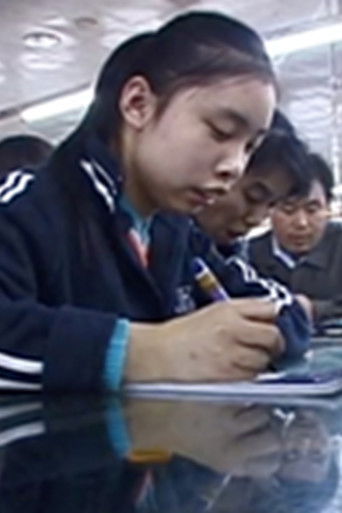
NRA feature-length experimental video based on a 6-week stay in Mainland China in October-November 2006. The result is an intimate and critical look at China today featuring Beijing's workers, streets, stores, and parks, as well as closeup portraits of a number of characters.
Riding the Tiger: Letters from Capitalist China
2010
NRA feature-length experimental video based on a 6-week stay in Mainland China in October-November 2006. The result is an intimate and critical look at China today featuring Beijing's workers, streets, stores, and parks, as well as closeup portraits of a number of characters.
Riding the Tiger: Letters from Capitalist China
2010
 NR
NRWords taken from lines of Nada Gordon's unrequited love poems, whose sentences are taken, in their turn, from anonymous web poems, reveal a history of sexuality.
(If I Can Sing a Song About) Ligatures
2009
NRWords taken from lines of Nada Gordon's unrequited love poems, whose sentences are taken, in their turn, from anonymous web poems, reveal a history of sexuality.
(If I Can Sing a Song About) Ligatures
2009
Collaboration between Abigail Child and L. Champagne/Benton Bainbridge. "A revised Snow White, exploring abstract narrative structures, seduced and reconstructed, a wicked dream....I'm pretty sure this is worthless if memory serves me correctly." - AC
Through the Looking Lass or Snow White
1995
 NR
NRA second landscape film, in this case urban. The work constructed from materials gathered over two years looking out at downtown San Francisco from a loft on Folsom Street. The elements are “folded” and mixed, Time redefines Space: the erector and helicopter appear as toys within a schizy motor-oil-ized ballet mechanique.
Pacific Far East Line
1979
 NR
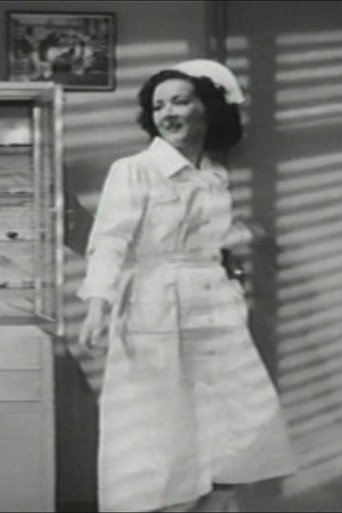
NRIn collaboration with Monica de la Torre & Bunuel's Women Without Love. Status and culture crack the mirror of family secrets, dreams, hauntings and wish-fulfillment in shifting and multiplying frames.
To and No Fro
2005
 NR
NRThis video essay combines diary footage of St. Petersburg with archival material, accompanied by the voices of two young Russians who, through personal anecdote, describe the emotional, political, and economic transformations that have wrenched their society.
Below the New: A Russian Chronicle
1999