

Directing
Michael Pilz
Born
1943-02-12 (83)
Place of birth
Gmünd, Austria
Known for
Directing
Credits
42 titles
Known for
 6.7
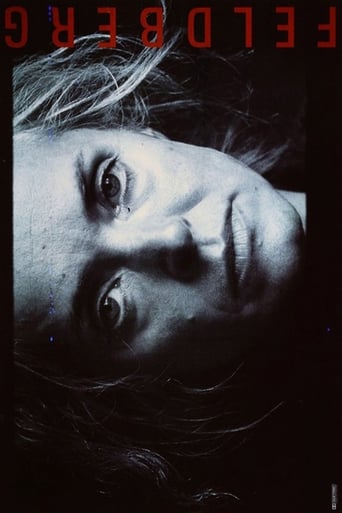
In this evocative work, we hear and see the interactions of a man and a woman in a pristine forest. We gain a sense of intimacy with them and nature. Suddenly we leave the worries of our scattered lives and begin to remember the primal elements of existence: earth, wind, fire, water, people, and creation. This epiphanic process demands patience and an almost meditative state, but it is so worth the effort – just as a journey a mountain meadow requires some effort in order to find its treasures. We leave the traditions of narrative for a more open approach to cinema. There are suggestions and onsets of a storyline, but almost everything remains a mystery for our encountering. This is a film that will allow you to observe and exist, without anxiety, without demands, and it allows you a rare glimpse into the life of things.
Feldberg
1990
 NR
For one night Michael Pilz rides through New York with a remarkable taxi driver, Jeff Perkins. Sitting by his side, looking and listening, sometimes intervening, he uses his handy high-8 camera like a writing instrument, a „camera-stylo“.
Facts for Fiction
1997
 NR
No synopsis available yet.
Wladimir Nixon
1971
 10.0
Karl Prantl, the main character in the film, is one of the leading figures of Austrian art. As a sculptor - as one who shapes stones - he has produced an oeuvre of rare consistency and coherence, created out of an awareness of the fundamental concerns and utterances of man.
80cm 5t
1989
 6.1
A man visits a friend's house. They watch a film of an earlier time when they were hanging around, meeting girls.
Slow Summer
1976
"Deep is the doctrine of events as arising from causes, and it looks deep too. It is through not understanding this doctrine, through not penetrating it, that this generation has become a tangled skein, a matted ball of thread, like munja-grass and rushes, unable to overpass the doom of the Waste, the Woeful Way, the Downfall, the Constand Round (of transmigration)." (Translation: T. W. Rhys Davids)
Paticca-samuppada
1986
Film credits
Behind the camera
6.7In this evocative work, we hear and see the interactions of a man and a woman in a pristine forest. We gain a sense of intimacy with them and nature. Suddenly we leave the worries of our scattered lives and begin to remember the primal elements of existence: earth, wind, fire, water, people, and creation. This epiphanic process demands patience and an almost meditative state, but it is so worth the effort – just as a journey a mountain meadow requires some effort in order to find its treasures. We leave the traditions of narrative for a more open approach to cinema. There are suggestions and onsets of a storyline, but almost everything remains a mystery for our encountering. This is a film that will allow you to observe and exist, without anxiety, without demands, and it allows you a rare glimpse into the life of things.
Feldberg
1990
NRFor one night Michael Pilz rides through New York with a remarkable taxi driver, Jeff Perkins. Sitting by his side, looking and listening, sometimes intervening, he uses his handy high-8 camera like a writing instrument, a „camera-stylo“.
Facts for Fiction
1997
NRFor one night Michael Pilz rides through New York with a remarkable taxi driver, Jeff Perkins. Sitting by his side, looking and listening, sometimes intervening, he uses his handy high-8 camera like a writing instrument, a „camera-stylo“.
Facts for Fiction
1997
NRNo synopsis available yet.
Wladimir Nixon
1971
10.0Karl Prantl, the main character in the film, is one of the leading figures of Austrian art. As a sculptor - as one who shapes stones - he has produced an oeuvre of rare consistency and coherence, created out of an awareness of the fundamental concerns and utterances of man.
80cm 5t
1989
10.0Karl Prantl, the main character in the film, is one of the leading figures of Austrian art. As a sculptor - as one who shapes stones - he has produced an oeuvre of rare consistency and coherence, created out of an awareness of the fundamental concerns and utterances of man.
80cm 5t
1989
10.0Karl Prantl, the main character in the film, is one of the leading figures of Austrian art. As a sculptor - as one who shapes stones - he has produced an oeuvre of rare consistency and coherence, created out of an awareness of the fundamental concerns and utterances of man.
80cm 5t
1989
6.1A man visits a friend's house. They watch a film of an earlier time when they were hanging around, meeting girls.
Slow Summer
1976
6.1A man visits a friend's house. They watch a film of an earlier time when they were hanging around, meeting girls.
Slow Summer
1976
"Deep is the doctrine of events as arising from causes, and it looks deep too. It is through not understanding this doctrine, through not penetrating it, that this generation has become a tangled skein, a matted ball of thread, like munja-grass and rushes, unable to overpass the doom of the Waste, the Woeful Way, the Downfall, the Constand Round (of transmigration)." (Translation: T. W. Rhys Davids)
Paticca-samuppada
1986
 NR
Found footage filmed by Russian soldiers in Vienna in 1945. On the soundtrack is “ The Flat Foot Floogee” with a “Floy Floy,” 1938, by Louis Armstrong and the Mills Brothers. It is also part of “ Das Lied vom Hofer” (1972).
Zero
1975
A cinematographic attempt at a maximum of exertion and a maximum of relaxation based on the thoughts of John Cage, Chuang Tzu and others.
Cage
1993
A cinematographic attempt at a maximum of exertion and a maximum of relaxation based on the thoughts of John Cage, Chuang Tzu and others.
Cage
1993
A cinematographic attempt at a maximum of exertion and a maximum of relaxation based on the thoughts of John Cage, Chuang Tzu and others.
Cage
1993
 NR
In a long, slow, silent procession, they pass by the viewer: the stone-hewn witnesses of a battle that took place more than a century and a half ago in Rome. In 1849 the city, where the advocates of the democratic republic had entrenched themselves, was besieged by French troops who wanted to restore the Papal States. Led by the legendary Giuseppe Garibaldi, the freedom fighters resisted for a long time. Film artist Michael Pilz shows the silent and tranquil remains in a Roman park, with music and sounds from the present in the background. Life around the statues goes in slow motion, but occasionally the noisy, warm, bubbling ‘present’ breaks through: people relaxing outside a restaurant, the remains of a meal. In between we see pictures of the city on which the heroes of yore looked out: a city filled with life in hard-fought freedom.
Roman Diary
2011
NRIn a long, slow, silent procession, they pass by the viewer: the stone-hewn witnesses of a battle that took place more than a century and a half ago in Rome. In 1849 the city, where the advocates of the democratic republic had entrenched themselves, was besieged by French troops who wanted to restore the Papal States. Led by the legendary Giuseppe Garibaldi, the freedom fighters resisted for a long time. Film artist Michael Pilz shows the silent and tranquil remains in a Roman park, with music and sounds from the present in the background. Life around the statues goes in slow motion, but occasionally the noisy, warm, bubbling ‘present’ breaks through: people relaxing outside a restaurant, the remains of a meal. In between we see pictures of the city on which the heroes of yore looked out: a city filled with life in hard-fought freedom.
Roman Diary
2011
 NR
Unusual interview on the occasion of Lou Reed's concert in Vienna . Highly personal, funny and rambling.
How the Ladies Pay (Lou Reed)
1977
 6.4
An essay film or an ethnographic documentary, contemplating the finite lot of individuals as part of a continuum of human experience in the natural world. Himmel und Erde, translatable as Heaven and Earth, was recorded between 1979 and 1982. The documentary invites the viewer to contemplate the disruptive effects of technology on economic and social ties through circumscribed vignettes of village life, which are often repeated either as recycled footage or variations on a theme.
Heaven and Earth
1983
6.4An essay film or an ethnographic documentary, contemplating the finite lot of individuals as part of a continuum of human experience in the natural world. Himmel und Erde, translatable as Heaven and Earth, was recorded between 1979 and 1982. The documentary invites the viewer to contemplate the disruptive effects of technology on economic and social ties through circumscribed vignettes of village life, which are often repeated either as recycled footage or variations on a theme.
Heaven and Earth
1983
If the mind is silent, and is willing to accept what happens, there are some very receptive happenings. So there is actually nothing to fear.
Silence
2007
Originally intended as a four-room media installation, allowing the viewer to "live" the film, come and go, Michael Pilz's essay about South Styrian painter Gerald Brettschuh was adapted to one 751 minutes sequential documentary with three parts and an epilogue. Part 1: The Use of Bodies, Part 2: As-If-Not, Part 3: The Party, Epilogue: Coda
Triptych
2018
 8.0
A cinematographic reflection on external and internal images based on a journey to Siberia: looking, listening and marvelling.
Let‘s Sit Down Before We Leave
1995
8.0A cinematographic reflection on external and internal images based on a journey to Siberia: looking, listening and marvelling.
Let‘s Sit Down Before We Leave
1995
8.0A cinematographic reflection on external and internal images based on a journey to Siberia: looking, listening and marvelling.
Let‘s Sit Down Before We Leave
1995
Gabriele Hochleitner's camera on Michael Pilz in Khosrow Sinai's – his friend's – home in Teheran, October 2007, during her shootings for her portrait For Some Friends/2008
Teatime Teheran
2022
 NR
To this day, a work in progress called 'Curtains' can be found on the extensive website of Austrian maverick master Michael Pilz. The idea was to edit all the curtains shots he ever made in strictly chronological order – as a pars pro toto representation of his oeuvre and philosophy of cinema. With Love – Volume One 1987-1996 developed from this project. How close it is to the original intentions behind Curtains, only Pilz can say. But considering that Pilz's whole life and art is about self-development, discovery and realisation, every film he makes is in its own way another sum total. Each film is a debut as well as a cenotaph for what was so far; in loving memory, for a morrow of love. This development demands encounters with other people; that's the only way to grow. Come along and meet Pilz − and yourself.
With Love – Volume One 1987-1996
2020
NRTo this day, a work in progress called 'Curtains' can be found on the extensive website of Austrian maverick master Michael Pilz. The idea was to edit all the curtains shots he ever made in strictly chronological order – as a pars pro toto representation of his oeuvre and philosophy of cinema. With Love – Volume One 1987-1996 developed from this project. How close it is to the original intentions behind Curtains, only Pilz can say. But considering that Pilz's whole life and art is about self-development, discovery and realisation, every film he makes is in its own way another sum total. Each film is a debut as well as a cenotaph for what was so far; in loving memory, for a morrow of love. This development demands encounters with other people; that's the only way to grow. Come along and meet Pilz − and yourself.
With Love – Volume One 1987-1996
2020
Film that was made in 1996 during Pilz's stay in the USA, where he spent time visiting the Austrian painter and emigrant Josef Schützenhöfer. During his, Schützenhöfer showed Pilz the crumbling surroundings of Monticello, the former residence of President Thomas Jefferson, where the land hasn’t been cultivated for years and the former traditional crafts are gradually losing its fight to unequal competition with multinational companies. The film explores the persistent problems of the North American lifestyle, including disrespect for one's own homeland and its history, and the negligent treatment of nature and the landscape.
Bridge To Monticello
1998
 NR
The gentle breath of wind that blows down from the mountains, hangs in the palm leaves, moves them barely noticeably, caresses them and plays with the last rays of sunshine and the shadows that herald the cool evening... and then, out of the imperceptible, but the all-encompassing standstill of time, beauty and silence, quite unexpectedly the crunching run between the bushes obscuring the view over hill and dale, on and on, up to the high stone wall and upon it, until at last in the sound of the surf and the clanking clash of large and small stones widens the eerie darkness of the sea, as far as the horizon and above the first stars flash, as in each of the countless nights since the beginning. (Michael Pilz)
Three Days, My Friend
2021
A compilation of 16-year-old documentary footage taken by the director while watching rehearsals of three theatre productions of Samuel Beckett's plays at George Tabori's theater Der Kreis in Vienna. The plays were then directed by theatre director Jack Garfein. Pilz watched the rehearsals over a period of six weeks and filmed Garfein's work with the actors, editing the footage more than 16 years later.
That's All There Is
2005
Actually, Michael Pilz wanted to make his trip to India kameralos, but when he told a girlfriend just before departure, she said only that he would go to the bottom if he can not take pictures. This is how one of the core works in Mushroom's oeuvre emerged, a film of rarely concise elegance about the craft of ayurvedic healing in hyperconcrete and light-flooded pictures, intensively penetrating in the colors, precisely in every glance that seems to have clapped open hands. One has the happy feeling that mushroom would have felt better in those days. ImplicitIndian Diary - Days at Sree Sankara also pays homage to Robert Gardner and his Great Song on the Burning Forks of Benares, Forest of Bliss (1986), whom Fungus loves so fervently as if it were a piece of him - he likes to tell that sometimes when watching the film, he thinks he has shot this or that scene.
Indian Diary - Days at Sree Sankara
2001
10.0Parco delle Rimembranze is a film which offers us the opportunity to reflect, to observe and to listen and thereby experience something that happens when we slowly close our eyes and expose ourselves, not yet asleep to dreams, to uncertainness and chance, to unwanted events.
Park of Remembrance
1988
 9.0
Accidentally, as if they had secretly intended to do so, Jonas and Maria meet. They go on a trip together and try to find out what sense there is in living and the road to freedom. Just as accidentally, an unknown man is trailed, hindered and kidnapped. Finally, he fights back and becomes the victim of his own doing. Accident? Fate? Necessity?...
Noah Delta II
1986
9.0Accidentally, as if they had secretly intended to do so, Jonas and Maria meet. They go on a trip together and try to find out what sense there is in living and the road to freedom. Just as accidentally, an unknown man is trailed, hindered and kidnapped. Finally, he fights back and becomes the victim of his own doing. Accident? Fate? Necessity?...
Noah Delta II
1986
"A montage of years of personal videography. My way of seeing was, and remains, more important than the object itself." (Michael Pilz)
All The Vermeers in Prague
1994
"A montage of years of personal videography. My way of seeing was, and remains, more important than the object itself." (Michael Pilz)
All The Vermeers in Prague
1994
"A montage of years of personal videography. My way of seeing was, and remains, more important than the object itself." (Michael Pilz)
All The Vermeers in Prague
1994