
Known for
 NR
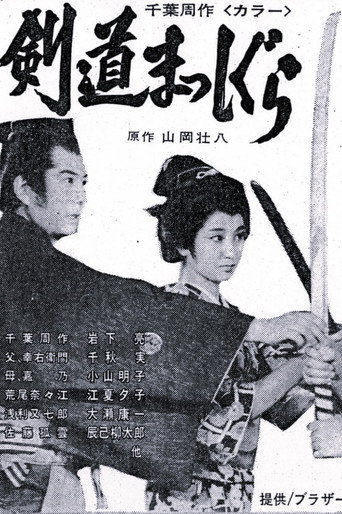
NRChiba Shusaku: Kendo Masshigura is a Japanese period drama that aired on the TBS network from November 2, 1970 to August 30, 1971 in the "Brother Gekijo" slot. It ran for 44 colour episodes of 30 minutes each. Based on Sohachi Yamaoka's novel "Chiba Shusaku", it depicts the youth of Chiba Shusaku, founder of the Hokushin Itto-ryu school of swordsmanship. A hot-blooded young man who calls himself Shusaku enters the dojo of Asari Matashichiro and, through encounters with all kinds of people, grows rapidly both in swordsmanship and in character. Produced by TBS and Shochiku. Rerun on the Japanese CS channel Jidaigeki Senmon Channel from March 17, 2025.
Chiba Shusaku: Kendo Masshigura
1970
 4.6
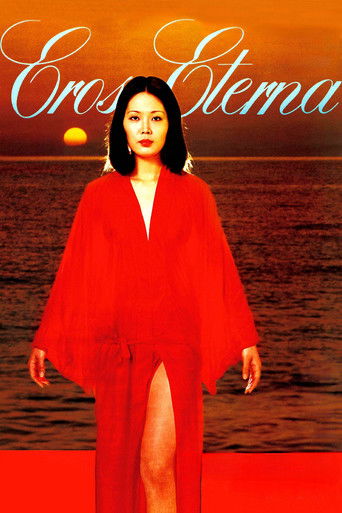
4.6A woman believing to be a legendary immortal nun attracts people looking for answers to their life struggles.
Eros Eterna
1977
 NR
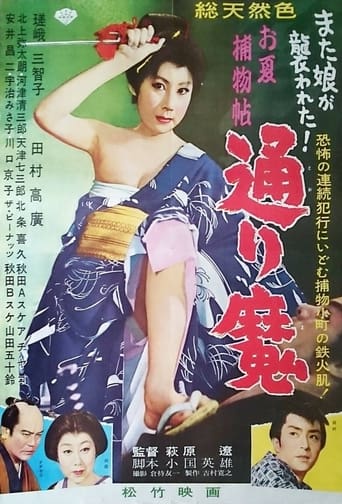
NRJapanese crime film
Onatsu Detective Case: Mad Slasher
1960
 6.4
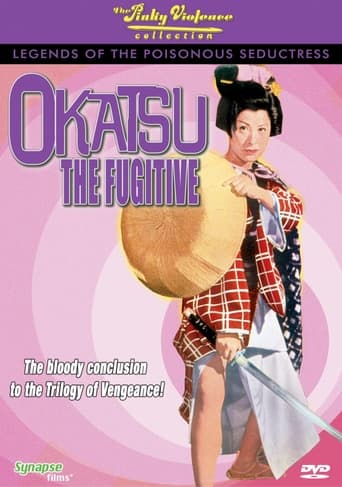
6.4Okatsu the Fugitive is the third film in the "Ohyaku/Okatsu" series. Okatsu; a "tomboy" who is good with a sword. Her father has found her a man to marry and actually she doesn't seem too upset about the situation. At the same time, a bunch of farmers are being slaughtered by a corrupt group running a tobacco smuggling ring. They're being investigated by a man who is documenting their crimes and when they find out about it, they torture him for information but get none. It's not long before he and Okatsu's mother wind up dead and she sets out for revenge.
Okatsu the Fugitive
1969
 6.2
6.2The plot is based on the novel "Akechi Samanosuke no Koi," the final work in a trilogy by Hiroshi Kato about the forced suicide of Oda Nobunaga at the temple Honnoji. Historically, the general Akechi Mitsuhide is credited with causing Nobunaga's downfall. Kato's novel focuses on Mitsuhide's nephew Samanosuke, who fought alongside his uncle during the assault on Honnoji.
Honno-Ji in Flames
1960
 10.0
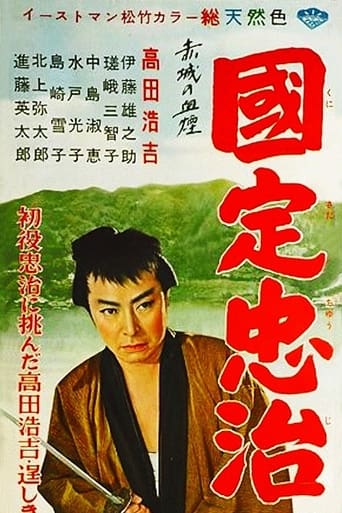
10.0Chuji Kunisada runs into strange adventures which tests his skill as a samurai as he untangles intrigue and murder against the backdrop of the majestic Mount Akagi.
The Adventures of Chuji
1957
Film credits
1970s · 2 titles
4.6A woman believing to be a legendary immortal nun attracts people looking for answers to their life struggles.
Eros Eterna
1977
 9.0
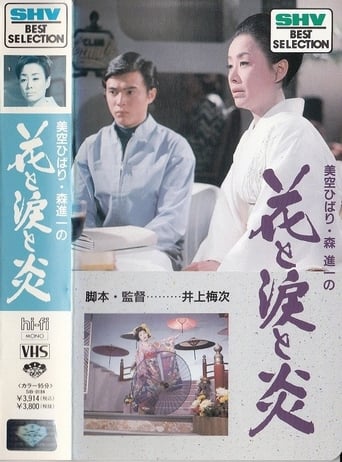
9.0Seijuro Fujihana, head master of the Fujihana dance school, is a proud and lonely artist. And because of his character, his group lacks the prosperity of others. He wishes his daughter Kasumi, gifted like himself, to take over and develop the Fujihana, but she wishes to marry Hiroshi, head of a jazz band which her father opposes. Kisaburo, Seijuro's No.1 disciple, wants to marry Kasumi and take over the Fujihana with the backing of the chairman of the supporters' association.
The Performers
1970
1960s · 10 titles
NRJapanese crime film
Onatsu Detective Case: Mad Slasher
1960
6.4Okatsu the Fugitive is the third film in the "Ohyaku/Okatsu" series. Okatsu; a "tomboy" who is good with a sword. Her father has found her a man to marry and actually she doesn't seem too upset about the situation. At the same time, a bunch of farmers are being slaughtered by a corrupt group running a tobacco smuggling ring. They're being investigated by a man who is documenting their crimes and when they find out about it, they torture him for information but get none. It's not long before he and Okatsu's mother wind up dead and she sets out for revenge.
Okatsu the Fugitive
1969
6.2The plot is based on the novel "Akechi Samanosuke no Koi," the final work in a trilogy by Hiroshi Kato about the forced suicide of Oda Nobunaga at the temple Honnoji. Historically, the general Akechi Mitsuhide is credited with causing Nobunaga's downfall. Kato's novel focuses on Mitsuhide's nephew Samanosuke, who fought alongside his uncle during the assault on Honnoji.
Honno-Ji in Flames
1960
 9.0
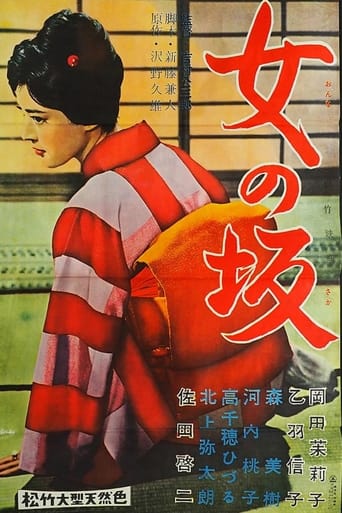
9.0Tradition and modernity clash when a young woman inherits a sweet-making firm in Kyoto.
A Woman’s Uphill Slope
1960
 NR
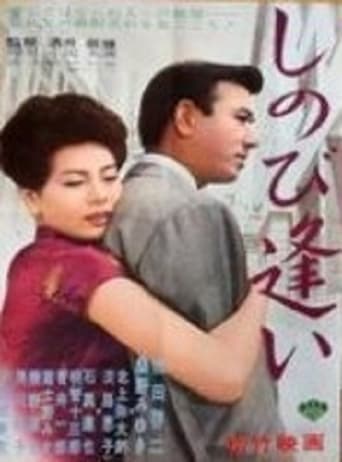
NRA painfully sad woman's heart cries from forbidden love. A love triangle drawn by three stars of Japanese cinema: Keiji Sada, Miyuki Kuwano and Keiko Awaji.
Secret Love
1962
 6.5
6.5Follows the murder of a money-lending masseur by an impoverished samurai. The slain masseur's daughter will also fall victim to his curse, so that she can become empowered as an agent of her father's vengeance.
Ghost Story: Depth of Kasane
1960
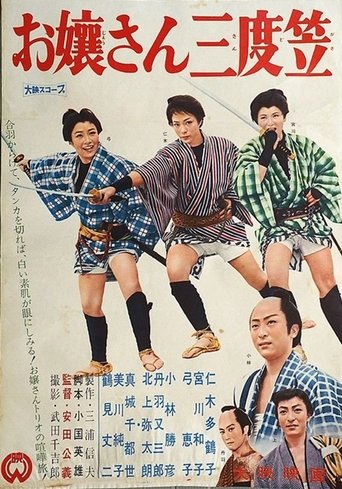 NR
NRNo synopsis available yet.
Oja sando gosa
1960
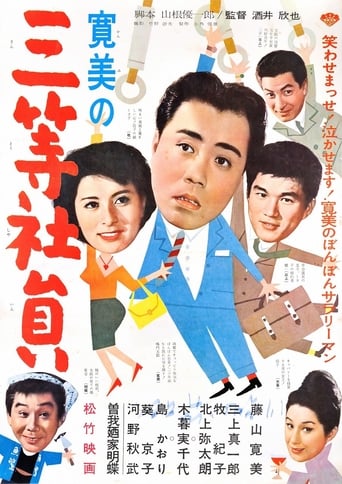 NR
NRJapanese comedy film.
Kanbi no san-tō shain
1961
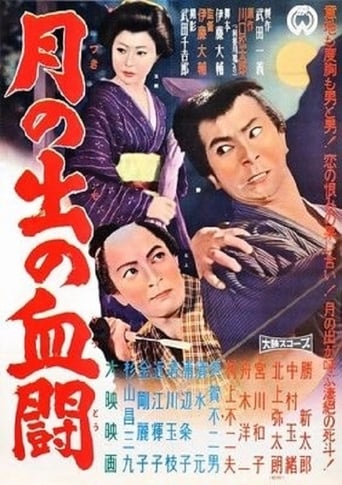 7.0
7.0No synopsis available yet.
Tsukinode no ketto
1960
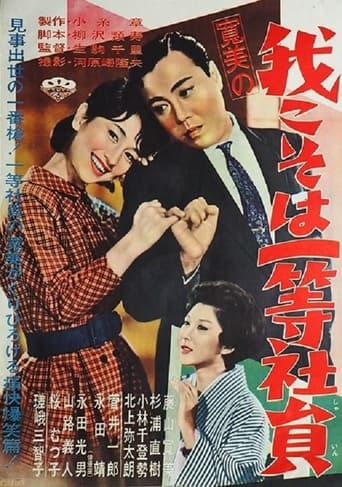 NR
NR1962 Japanese movie
Kanbi no ware koso wa ittō shain
1962
1950s · 47 titles
10.0Chuji Kunisada runs into strange adventures which tests his skill as a samurai as he untangles intrigue and murder against the backdrop of the majestic Mount Akagi.
The Adventures of Chuji
1957
Japanese film.
Blood Festival of Akagi
1955
 NR
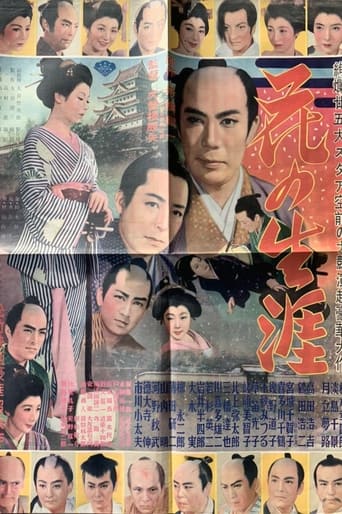
NRIn 1842, in the Umemoku Mansion within Hikone Castle, Naosuke Ii, despite the tumultuous times, was engrossed in the world of tea ceremony. His friend, the Kokugaku scholar Nagano Shuzen, introduced him to a captivating shamisen master named Murayama Taka. Naosuke became deeply infatuated with her, disregarding the jealousy of his consort Shizu and the warnings of his senior retainer, Gaiji. However, upon discovering Taka's relationship with Shuzen, Naosuke promptly ended his ties with her.
Hana no shôgai
1953
 NR
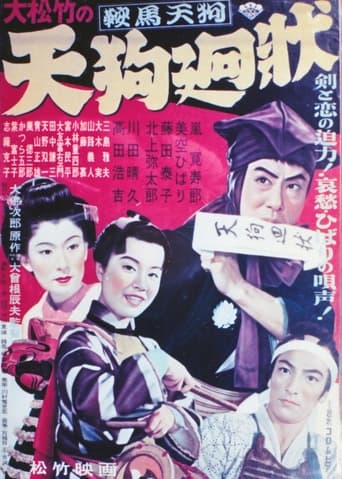
NRMasked avenger Kurama Tengu and his young sidekick try to stop a mysterious adversary from assassinating a group of young warriors who want to bring down the Shogunate...
Kurama Tengu: Anonymous letter to Tengu
1952
 9.0
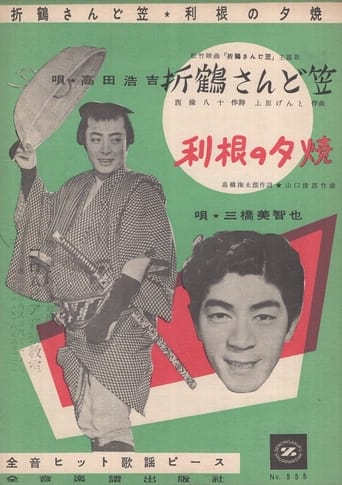
9.0Akitaro Orizuru, who set out on a journey to avenge his father's death in the darkness, returned to Itako, his hometown, where the Ayame Festival was approaching, for the first time in five years. His late father's brother, Sutezo, who took off his waraji, runs a small prostitute with only one child, Sutematsu. In addition, only Shigezaburo, who left a mark in the middle wind, was ill-mannered by Inomatsu. Akitaro was accompanied by a daughter named Omitsu on the way to here, but she was Ura's younger sister who works at Fujikura's house, and the villagers worked on the fifty cars to meet her critically ill father.
The Young Avenger
1957
 7.0
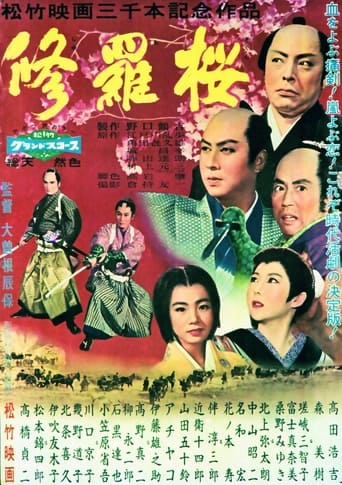
7.0Shochiku's commemorative 3000th film production; a suspenseful period drama.
The Hidden Treasure
1959
 NR
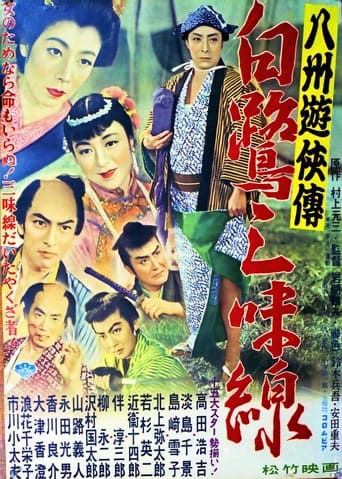
NRHatamoto Ooka Gentaro was deeply committed to a future with a beautiful girl named Omachi, a relationship facilitated by his love of the shamisen. Omachi was stalked by a ronin named Akiyama Kanosuke, and at one point, Gentaro and Akiyama dueled at Matanuiyama, but the confrontation was left unresolved when Omachi, sensing urgency, called the authorities. Meanwhile, Gentaro's uncle, Kii-no-kami, concerned about Gentaro's whereabouts, ordered him to investigate a conspiracy by Tachibana Tadama, a tyrannical director of Hachijo who exercised his power oppressively in Shimousa Iioka. Gentaro attempted to leave on a journey with Omachi but was obstructed by his uncle's retainers.
八州遊侠伝 白鷺三味線
1955
 NR
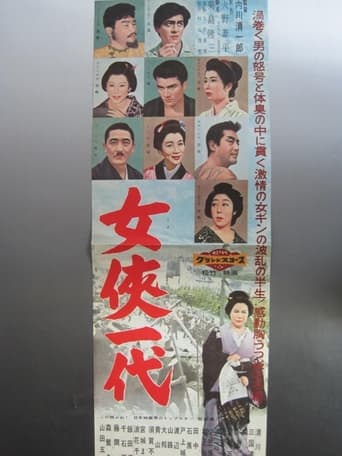
NRNo synopsis available yet.
The Undefeated Woman
1958
 7.0
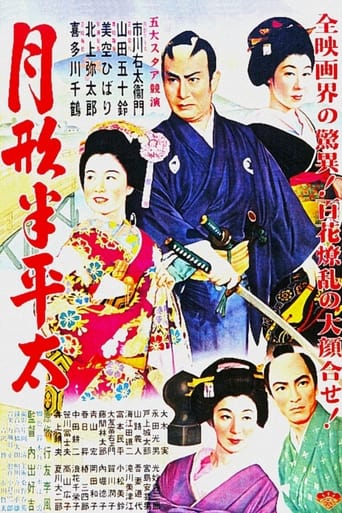
7.0During the ultra-violent era of the downfall of the Tokugawa Shogunate one man rose above the rest with his ideas of how to overthrow the corrupt government and end the bloodshed between the Choshu and Satsuma clans which would ultimately lead to the alliance of these 2 clans and restoration of the emperor to full power. Based on the play that made Sawada Shojiro famous, this is the story of Tsukigata Hanpeita, a forward looking samurai from Choshu, who along with Katsura Kogoro and Sakamoto Ryoma of Tosa worked to bring their dream of a new era in Japan.
Tsukigata Hanpeita
1952
 9.0
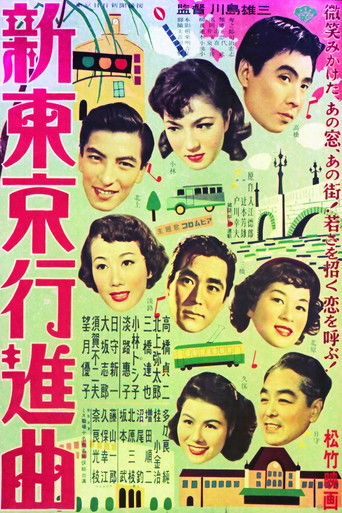
9.0Follows six male friends from elementary school whose career paths diverge—newspaper reporter, engineer, boxer, sushi restaurant owner—but whose romantic lives intersect. (MoMA)
New Tokyo March
1953
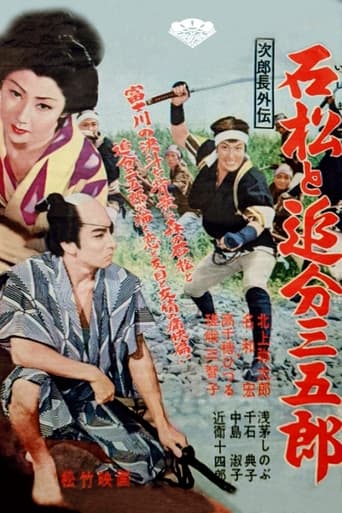 10.0
10.0Ishimatsu is strong in fights, but weak in relationships with women and enjoys great popularity among them, and we see how an exciting historical drama about love, enmity and friendship is played out.
Stories about Jirocho: Ishimatsu and Oiwake Sangoro
1957
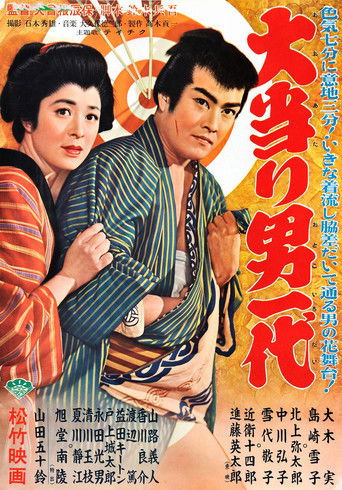 NR
NRShinzō, the heir of the prominent Edo lumber dealer Yamashiroya, left home when his stubborn father, Chōzaemon, dismissed his lover, the maid Oyasu. Shinzō and Oyasu set up a household near a soba shop in Fukagawa, but Shinzō struggled financially, turning to gambling and fighting, while Oyasu worked as a tea server in a theater, constantly harassed by a small-time gangster, Rikichi, for cigarette money. The only ones concerned about Shinzō and Oyasu were Shinzō’s sister, Omitu, and her dance teacher, Oyoshi. Later, Shinzō managed to get a job at another lumber dealer, but after a conflict with the detective Hansuke, who was also infatuated with Oyasu, Shinzō accidentally dropped lumber into the river and was fired. Unaware that Oyasu had borrowed money from a bar to repay the lumber dealer, Shinzō left to earn money in the Mito clan's crew quarters and ended up rescuing Rikichi from a dice game trouble.
大当り男一代
1956
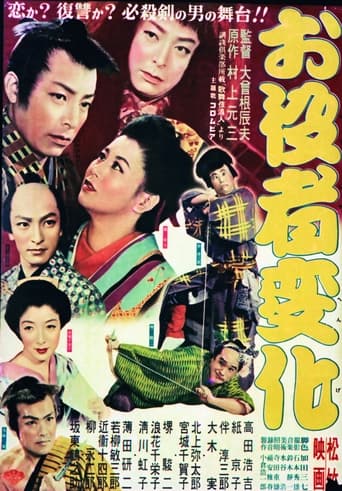 NR
NRDuring the Genroku era, Azusa Gennosuke, renowned in Nara as a top swordsman and a scholar, crossed swords with the Magistrate Kurobane Yatayu, who tried to force himself on Gennosuke's beloved foster-sister, Kikuno. As a result, Gennosuke's younger brother, Shichisaburo, was killed. Separated from his mother, Gennosuke found himself on the run from the officials.
お役者変化
1954
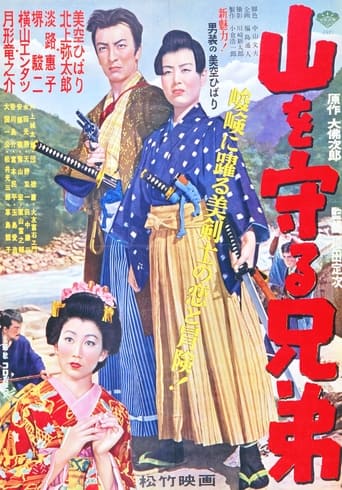 NR
NRIn the mountainous region of Koshu, Taikahara, there was an intense power struggle between the prominent families, Tamaki and Kakukura. Facing the steward of Kakukura, Kurokawa Senjiro, was Tamaki Daisaburo, who was skilled with a handgun. Daisaburo had granted protection to the charcoal maker, Miyoshi, safeguarding a few mountains passed down from their ancestors. Daisaburo's elder brother, Iori, who had completed his training in Edo, saved Kakukura's only daughter, Koyumi, on his way back home. However, while Daisaburo rushed to Iori's aid after Koyumi was attacked by Kurokawa and his men, their family home was set ablaze.
The Brothers who Protect the Mountain
1953
Produced by Shochiku’s all-star cast as a commemorative film to mark the completion of the “Shochiku Kaikan” in Tsukiji, Tokyo, this movie introduces both the Shochiku Ofuna and Kyoto studios. Part One focuses on the studio’s behind-the-scenes staff: set designers, prop masters, and lighting technicians. Part Two presents a digest-style overview of the process surrounding a young woman who auditions for the “New Faces” program, from the auditions to her debut as an actress.
Shochiku Festival: All-Star Lineup – Studio Express / The Birth of an Actress
1956
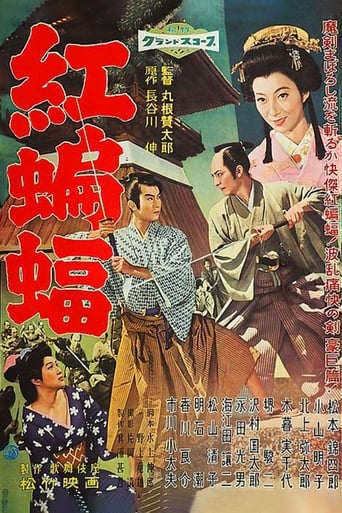 10.0
10.0No synopsis available yet.
The Red Bat
1958
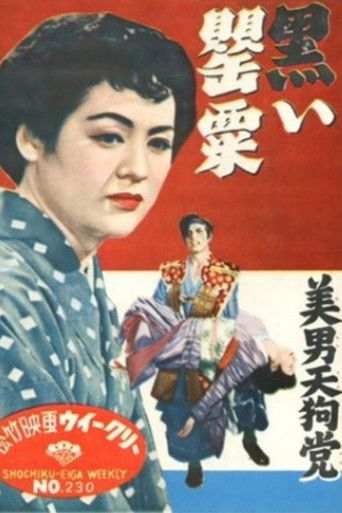 NR
NRDuring the tumultuous end of the Tokugawa shogunate, the Tengu Party rose in rebellion in Mito. Friends from their hometown, Tanaka Genzo and Fujita Koshiro, each walked different paths. Koshiro, who upheld the philosophy of "Revere the Emperor, Expel the Barbarians," became a leader of the Tengu Party, taking refuge in the mountains. Genzo, however, did not have any particular ideological stance.
Beautiful Tengu
1954
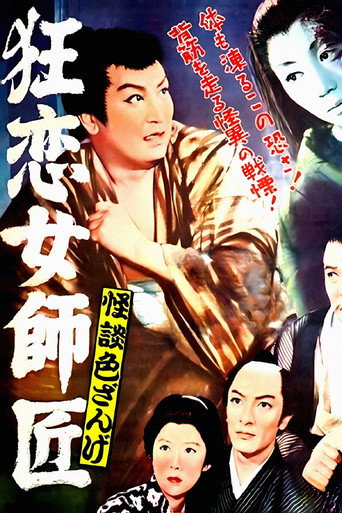 8.0
8.0Osen, a dance teacher who hates men, refuses to become the concubine of a rich merchant, but falls in love with the thief Sojiro, unaware that he is avenging the death of his brother. Jinzo, who wants to win over a rich merchant, pours boiling water on One's face...
Dancing Mistress
1957
 NR
NRDuring the era of Tokugawa Ieyasu, one night a carver named Fujijiro was murdered. Immediately launching an investigation, Denhichi, accompanied by Otoshi and Take, toured the entertainment houses of Ryogoku. There, they discovered a connection between an acrobat and the incident. On their way home, Otoshi unexpectedly encountered an old friend, Inosuke, nervously buying a dagger. Inosuke, a clerk at the Kashimaya store, was in love with Oko, a secret lover of Bunzaemon. Amidst this, Seihei, the head clerk, was murdered by someone, and a dagger belonging to Inosuke was found at the scene, leading Gohei to suspect Inosuke as the culprit. However, Otoshi was hiding Inosuke. Driven by Otoshi's plea and a professional instinct that Inosuke wasn't the perpetrator, Denhichi desperately searched for the real culprit.
Denshichi Torimonocho: Tattoo Woman Trouble
1954
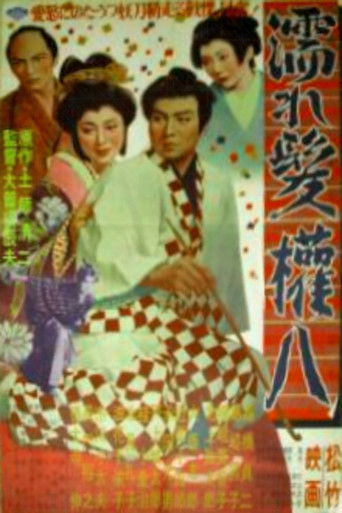 NR
NRA foot soldier from Tottori domain named Shirai Gonpachi showcased exceptional swordsmanship that even surpassed the domain's champion Honjo Sukehichi during a ceremonial match. Though Gonpachi was promised a promotion to samurai status due to his skills, Sukehichi's father Sukezaemon's intervention out of jealousy prevented this. In anger, Gonpachi killed Sukezaemon and, without realizing it, also mistakenly killed Tomoe, his lover's brother Tsushimo Uemon. Following this, he fled to Kyoto, seeking shelter at the "Murasa" inn operated by Uemon's aunt.
Beautiful Gonpati
1954
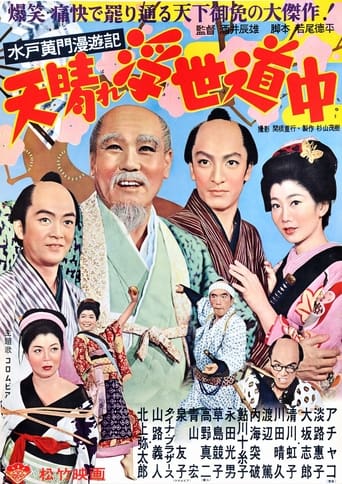 NR
NRThird film in the 'Travels of Lord Mito' franchise.
Travels of Lord Mito Pt.3
1954
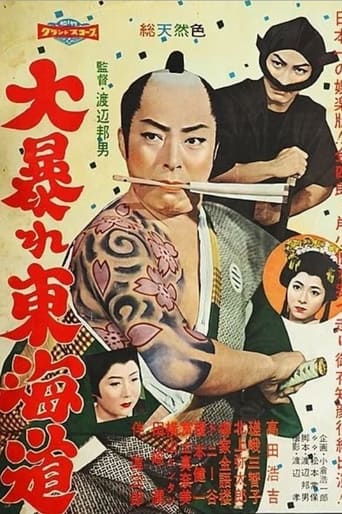 NR
NRAn entertainment movie featuring familiar faces of Toyama no Kin-san, Nezumi Kozo, Yaji Kita, and others who traveled around the Tokaido. Written and directed by Kunio Watanabe. A group of samurai rushed into the Sakura Opera Troupe in the mountain village, chasing a young woman named Chiyohime who was promoting dancing around Edo Asakusa area. Suri Nao and Kinshiro Toyama was there and saved her. Meanwhile, the samurai asked the acquaintance Nezumi Kozo Jirokichi to find her. Jirokichi visited Kinshiro 's house, and found her there…
Dai Abare Tokaido
1958
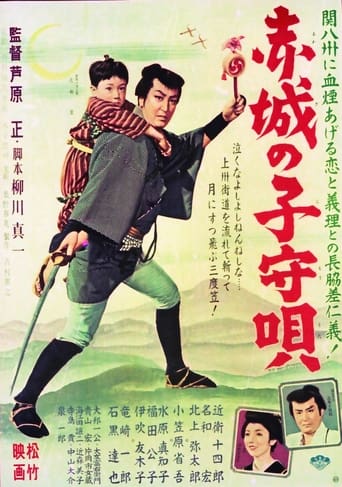 NR
NRFilm directed by Tadashi Ashihara
Akagi no komori-uta
1957
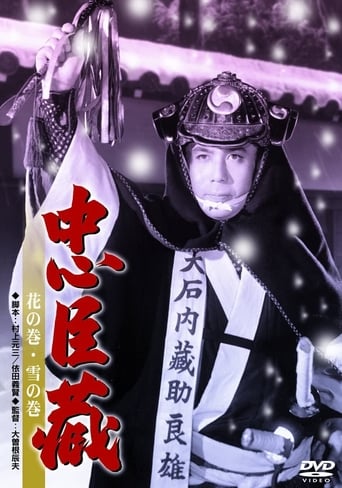 NR
NRNo synopsis available yet.
Chushingura
1954
The tragedy of the geiko girl Ume and the men who try to pursue her.
Life of Geisha
1955
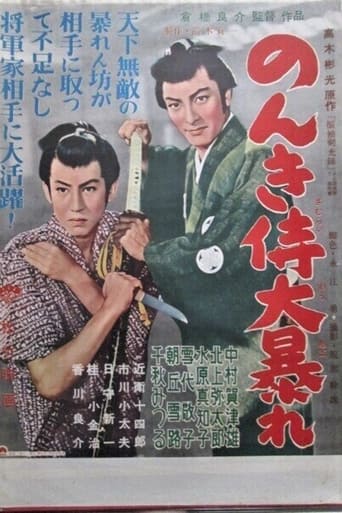 NR
NRIn the mid-Tokugawa period, a conflict arose over the "Seiryū Himon," a secret document left by the former shogun Iesai, bequeathing the eighth shogunate to young Lord Manguro of Owari domain. This document became the center of a struggle between the current shogun, Yoshimune, and Manguro. Iida Daisuke, a member of the shogunate's secret intelligence group, the Kurokuwa Group, stole the document from Owari but was killed by Manguro's men. The document then fell into the hands of Yozakura Ogin, who had pledged her life to Daisuke.
のんき侍大暴れ
1956
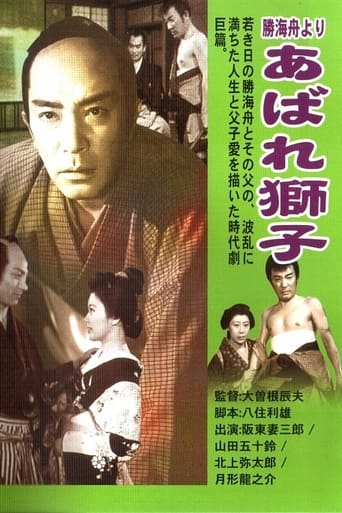 NR
NRA gripping historical drama that follows the explosive growth of Katsu Kaishu, the hero of the Meiji era, and the interesting human image of his father, Kokichi, who lived for the common people, his neighbors and his children. A film about paternal and maternal love and conjugal love in the creation of mankind, about the healing power of which laughter and tears have. The film that became the last work of the giant star Tsumasaburo Bando.
Wild Lion
1953
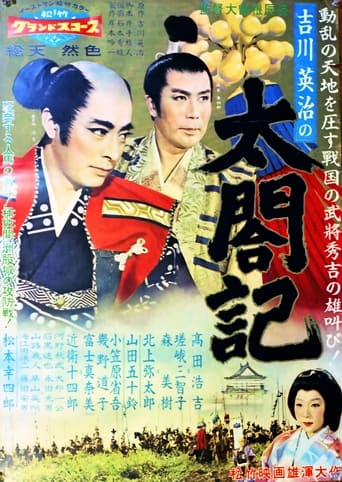 6.5
6.5From birth Hideyoshi was a restless, defiant spirit--a child of the poorest of the poor. Cast out of his peasant cottage, he would live by his wits, driven by his burning ambition to become a samurai and to find a warlord worth pledging his sword to. This is the story of his rise, and the thunderous battle he pinned his hopes on. The challenge that had already ruined and bloodied the armies of higher-ranking samurai than Hiyoshi. The battle that brought him rank, fame and fortune and transformed him into Hashiba Hideyoshi, right-hand man to the ruthless Lord Oda Nobunaga, and would drive him on to conquer Japan.
Taikoki - The Saga of Hideyoshi
1958
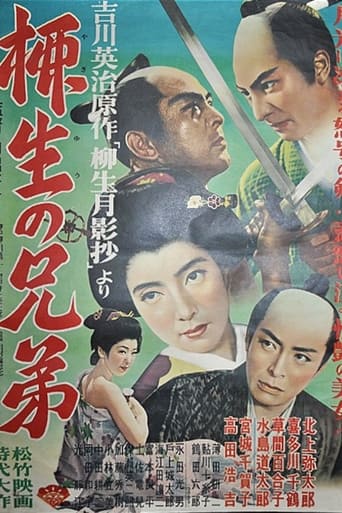 NR
NRDuring the era of the third Tokugawa shogun, Iemitsu, to strengthen the shogunate, many daimyo clans that did not align with the central power were dismantled. Among them, the ronin from the Higo Kato domain harbored a grudge against Yanagisawa Tajima-no-kami, who was at the forefront of these suppressions. Tajima-no-kami had two sons, Jubei and Matashiro. While Jubei was prudent and thoughtful, Matashiro was of a free-spirited nature. However, both were devoted to their father and were exceptionally skilled in the way of the sword.
柳生の兄弟
1952
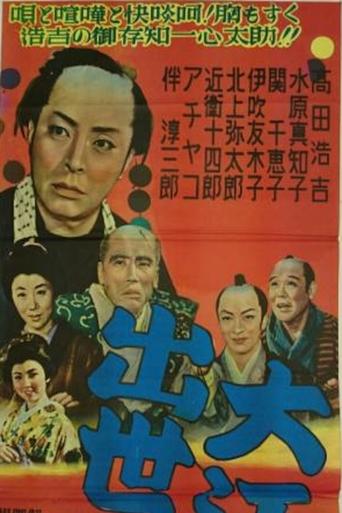 NR
NRIsshin Tasuke, a friend of Ōkubo Hikozōemon, the esteemed public arbitrator of the realm, saved the maid Onatsu from punishment after she accidentally broke a plate gifted by Lord Ieyasu. Tired of the strict samurai service, Tasuke moved to the Genbei tenements and opened a fish shop. This tenement housed various characters, including the landlord's daughter Osen who had a crush on Tasuke, the midwife Okan, the blind masseur Oyone and her husband, the carpenter-loving couple Yoshigorō and Ohama, the rōnin Takeuchi Yogoemon, and the siblings Ochika and Shin'nosuke who cared for their sick mother.
大江戸出世双六
1955
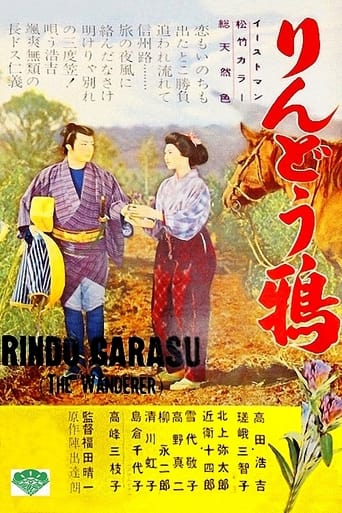 8.0
8.0After killing the deceiver, the Masa gambler comes to Ina. There is a horse market in Ina, and the landowner Tamegoro, plans to steal the proceeds from the sale. Tamegoro steals money and blames the Masa for this crime. Masa has to go on the run, because now he is wanted for a crime that he did not commit...
The Wanderer
1957
 NR
NRA parody based on Kabuki plays about thieves led by the famous Soshun Kochiyama.
Six Men Mustered in Great Edo
1953
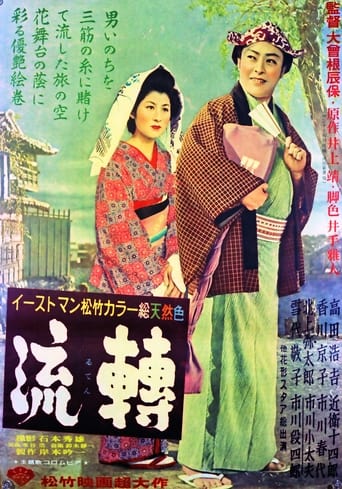 NR
NRIn the eleventh year of the Tenpō era, the Kawarazaki-za theater in Edo buzzed with excitement for a new production of "Kanjinchō" by Naritaya, featuring music by the master Kineya Rokusaburō. However, Naritaya's requests to change some of Rokusaburō's most painstakingly crafted parts of the composition angered his disciple, Shinjirō, leading to a conflict and Shinjirō's abandonment of the shamisen. One day, Shinjirō was captivated by the mysteriously beautiful dance of Oaki, a traveling performer's daughter, who seemed to be channeling her art into a form of revenge.
流轉
1956
Third sequel to "Story of Second Class Private".
続二等兵物語 決戦体制の巻
1957
 4.3
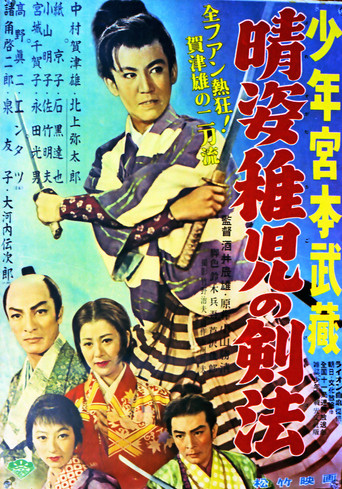
4.3Underneath Himeji Castle, Miyamoto Bensuke was determined to inherit the will of his late father, Shinmen Munenori, and aimed to become a great swordsman. For this purpose, he challenged anyone he could to matches and eventually forced a duel upon a martial artist named Arima Kihei, whom he killed. Munenori's old friend, the monk Guan Ando, reprimanded Bensuke's brutality and told him to go to the capital to refine his skills.
晴姿稚児の剣法
1956
 NR
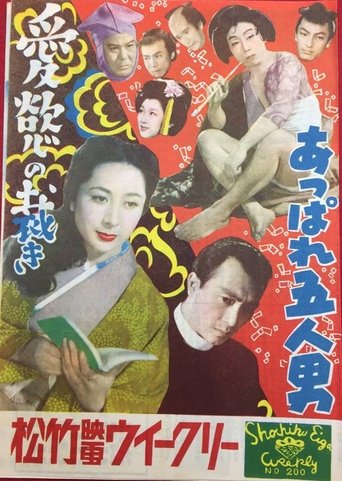
NRA parody of the Kabuki play about thieves, "Five Men of the White Waves".
Bravo! Five Men
1953
 NR
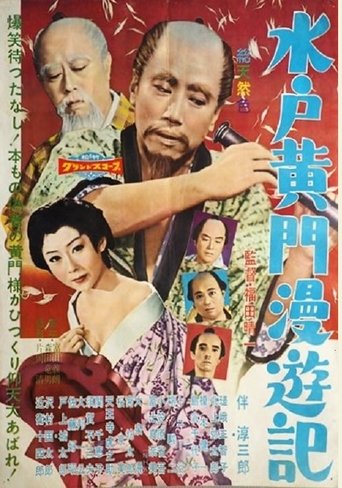
NR1958 Mito Kōmon film.
The Beloved Imposters
1958
 6.5
6.5Based on the famous novel by Yamagami Itaro, this is the story of a group of ronin living in abject poverty in the latter days of the Edo period. Starring the great Konoe Jushiro, Ronin Gai is populated by an ensemble of colorful characters, social outcasts who patronize a restaurant and bar on the outskirts of Edo. Among them are masterless samurai reduced to drunkenness and debauchery. One disgraced and disillusioned former warrior gets a chance at redemption when he is hired to retrieve a famous knife from a corrupt lord. This is the third version directed by Makino Masahiro and is considered a true classic.
Street of Ronin
1957
Japanese film.
Shimazu no sanshita yakko
1955
 10.0
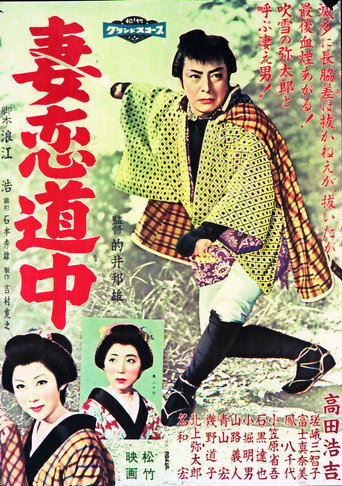
10.0No synopsis available yet.
The Gallant on the Highway
1958
 NR
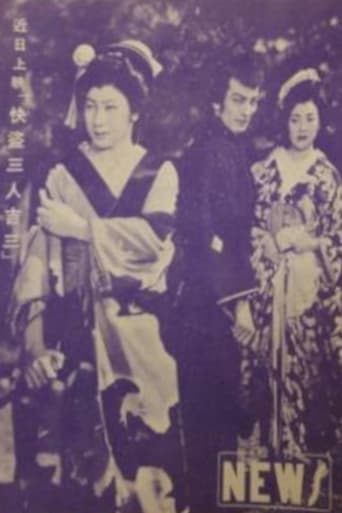
NROn March 11 in the seventh year of Tenpo (1836), a monk named Bennō, who fell in love with a geisha named Oshima, was publicly exposed at Nihonbashi for committing an illicit act with a woman. While this was happening, an extravagant procession led by another monk named Nikkei passed over the bridge. Nikkei, the head of the Kanouin temple, in collusion with Nakano Harima-no-Kami, had schemed to make his younger sister, Miyoshi, the Shogun's mistress and aimed to transform Kanouin into the Shogun's family temple. To fund the renovations, Nikkei accepted bribes from a corrupt merchant named Koya Bunzo.
快盗三人吉三
1954
 8.0
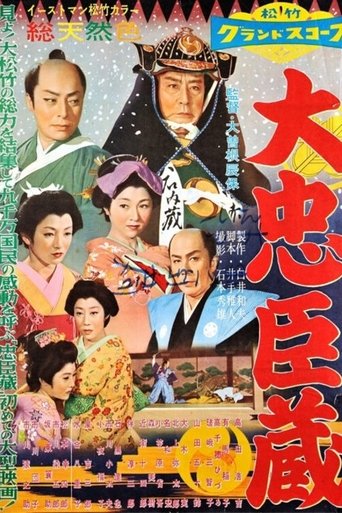
8.0Chushingura has been made into a movie several times before, but this time it will be presented in a widescreen version with all natural colors and a new look. Written by Masato Ide and directed by Tatsuo Osone. This is a magnificent scroll of images that depicts on a grand scale the triumph of the Genroku era that shook the citizens of Edo, the peaceful capital of Japan. The top stars of the film, shinpa, shingeki, and kabuki worlds at the time of production were lavishly cast, and a huge budget was invested to create a large set for this highly acclaimed and moving epic.
A Matter of Valour
1957
 NR
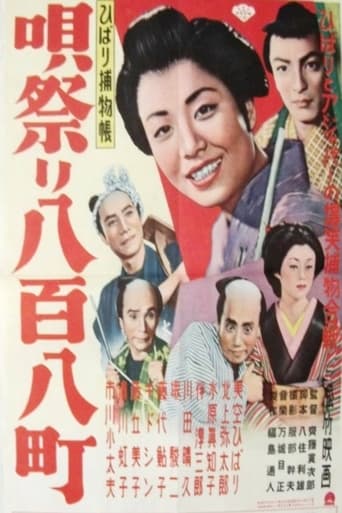
NRThe feudal lord Kisaragi Yae no Kami (Minami Komyo) searches for a child he had with a low-borne woman, that was sent away from his home 16 years ago while carrying a special seal. At that time, Kanda's detective Zenshichi (Ichikawa Kodayu II) had three daughters, the third of whom, Omiyo (Misora Hibari), was a skilled singer and an expert with the lasso.
Great Edo Song Festival
1953
 NR
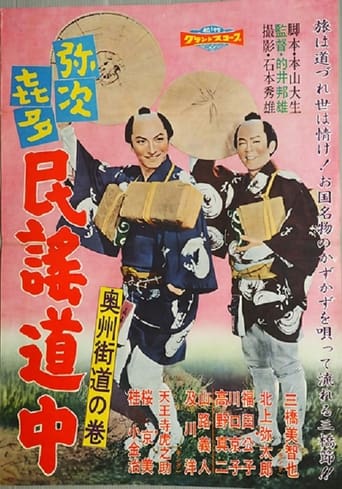
NR1959 Japanese movie
Yajikita min'yō dōchū Ōshū kaidō no maki
1959
 NR
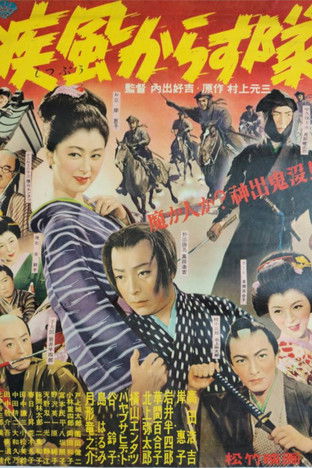
NRDuring the end of the shogunate, there was a group of black-clothed masked samurai known as the "Crow Squad" who resisted the shogunate's oppression, taking down key figures one by one. During a Go game with a visitor named Seki Hikonoshin, the government inspector, Nozoe Minbu, was attacked and killed by what appeared to be the Crow Squad. The witness, Yoshi Goro, was also injured by their blade. Minbu's son, Katsuma, returning from a trip, learned of this and, along with his sister Sakura, vowed revenge.
疾風からす隊
1953
 NR
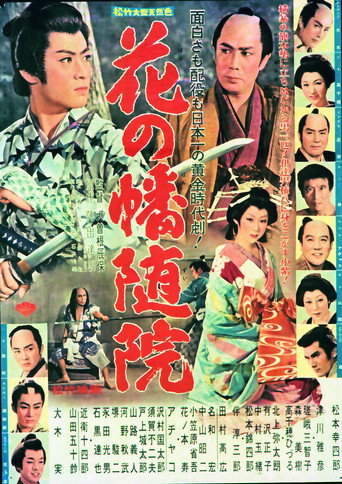
NRHistorical drama depicting the life of Banzuin Chobei.
Man of Edo
1959
 NR
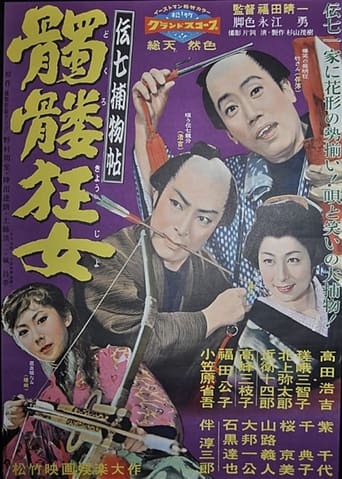
NRDetective Denshichi is called to investigate the mysterious disappearance of the Kishu family's daughter Teruhime and the activities of a dangerous group dressed as skulls and their female leader.
Denshichi Torimonocho: Mad Skullwoman
1958