
Directing
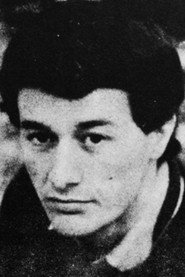
Alfredo Leonardi
Born
1938-09-07 (88)
Place of birth
Voghera, Lombardy, Italy
Known for
Directing
Credits
40 titles
Alfredo Leonardi (Voghera, Italy, 1938) studied literature in Milan, initially becoming involved in theatre and later in cinema. After moving to Rome in the early 1960s, he worked as an assistant director to Ugo Gregoretti. He worked as a director on cultural programs for RAI and made several experimental short !lms for the producer Enzo Nasso, as well as the feature !lm Amore amore (1966). From 1967 to 1970, he self-produced a number of experimental !lms and was a member of the Cooperativa Cinema Indipendente. In 1969, he spent time in the United States writing a book on the New American Cinema, entitled Occhio mio dio (Feltrinelli, 1971). In 1971, together with Guido Lombardi and Anna Lajo…
Known for
 NR
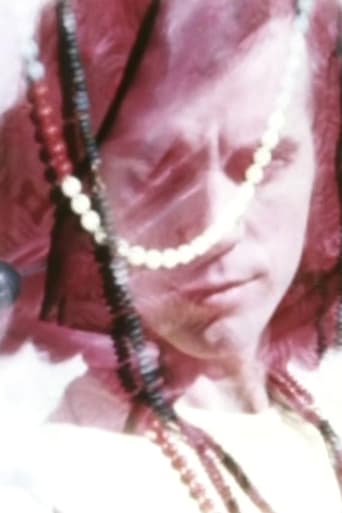
NRA (temporary) leave of many friends who are my truest world, with the attempt of getting them together in an ideal summary conceived to support me during my being far away. –A. L.
Book of Saints of Eternal Rome
1968
 NR
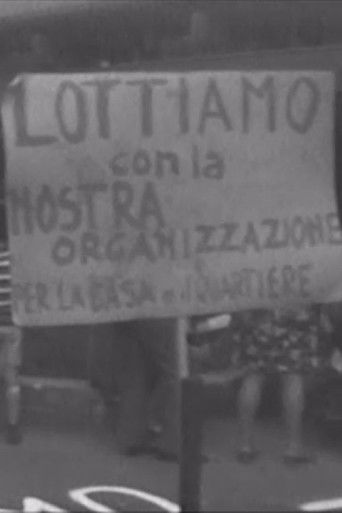
NRThe struggle for housing in Rome, in the area of Magliana. Self-organization is opposed to the mediation of political parties, especially the Communist Party, and emerges as the only way for the emancipation and re-appropriation by the exploited.
La nostra lotta è l'autoriduzione, la nostra forza è l'organizzazione
1972
 NR
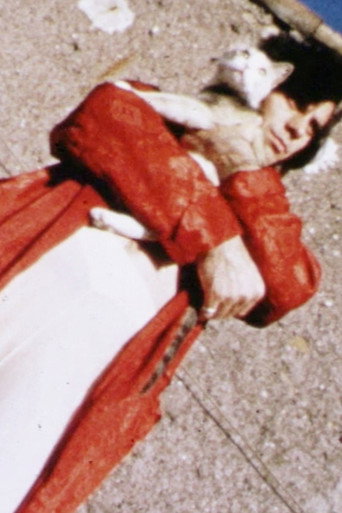
NRWith Vampiro romano, Leonardi made his last experimental film before switching to collective videomaking with the group Videobase, which focused on political investigation and counter-information. "We are all vampires. We live and move forward, intellectually and emotionally, thanks to the contribution – the 'blood' – of the people closest to us."
Vampiro romano
1970
On the occasion of the regional elections of 1970, the Italian Communist Party seizes a new model of propaganda and counter-information developed in France during May 68: the cine-tract.
Cine-Volantini
1970
 NR
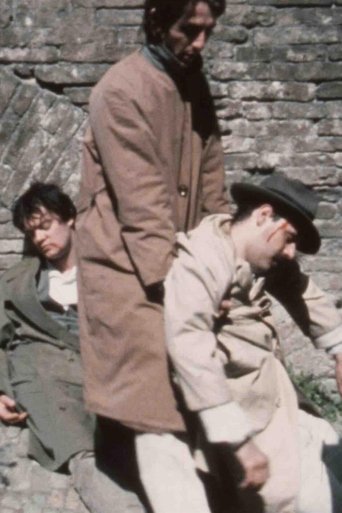
NRCollective manifesto by the members of C.C.I. It is a collective film, the result of an operation devoid of any aesthetic purpose: to verify the existence of any harmony between a fairly large group (twelve people) of members of the independent Cooperative. Someone, who had the idea, turned 60 meters of Ektachrome according to the moods –or discontent – of the moment and gave them to others to see. The others reacted, each with their own piece. It was then thought to call the film “circular letter”. It was not so simple and so quick: the operation, which started in June of ’68, ended in March of ’69.
Tutto, tutto nello stesso istante
1969
 NR
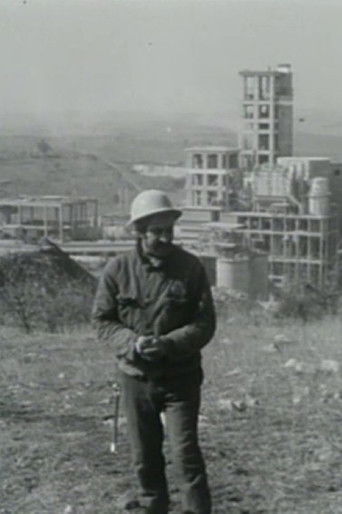
NRIn a construction site near Rome, a Calabrian construction worker dies. The emigrant's hard life is reconstructed through the words of his fellow workers and family, interviewd between Rome and Calabria. One of the first experiments of collective directing that will later turn into the group Videobase.
E nua ca simu a forza du mundu
1971
Film credits
2010s · 2 titles

1970s · 3 titles
 2.0
2.0In the distant future, a spaceship inhabited by a group of young descendants of a "subversive" minority who escaped the destruction of the Earth, recovers a capsule in which the hibernating body of a reactionary warmonger has been preserved, who after having caused war and death, it has abandoned the now unlivable Earth. The visual experimentation aimed at the liberation of the gaze is intertwined with psychedelic visions on the one hand and with the orgone theory of Reichian memory on the other.
Long Live The Orgonauts!
1970
 NR
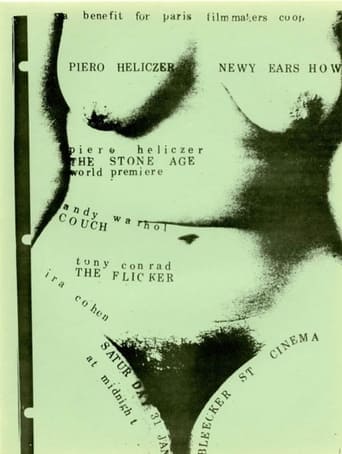
NR"The question is, it is either going to be a stoned age or a new Stone Age" - Louis Brigante
The Stone Age
1970
 NR
NRIn 1969, Leonardi traveled to the United States to write a book about the New American Cinema. Using a Super-8 camera, he made a film-diary of this experience between New York and San Francisco. During his journey, the director’s love for experimental cinema was shaken by overwhelming political events, which forged a profound social conscience.
Occhio privato sul nuovo mondo
1970

Behind the camera
NRA (temporary) leave of many friends who are my truest world, with the attempt of getting them together in an ideal summary conceived to support me during my being far away. –A. L.
Book of Saints of Eternal Rome
1968
NRA (temporary) leave of many friends who are my truest world, with the attempt of getting them together in an ideal summary conceived to support me during my being far away. –A. L.
Book of Saints of Eternal Rome
1968
NRThe struggle for housing in Rome, in the area of Magliana. Self-organization is opposed to the mediation of political parties, especially the Communist Party, and emerges as the only way for the emancipation and re-appropriation by the exploited.
La nostra lotta è l'autoriduzione, la nostra forza è l'organizzazione
1972
NRWith Vampiro romano, Leonardi made his last experimental film before switching to collective videomaking with the group Videobase, which focused on political investigation and counter-information. "We are all vampires. We live and move forward, intellectually and emotionally, thanks to the contribution – the 'blood' – of the people closest to us."
Vampiro romano
1970
On the occasion of the regional elections of 1970, the Italian Communist Party seizes a new model of propaganda and counter-information developed in France during May 68: the cine-tract.
Cine-Volantini
1970
NRCollective manifesto by the members of C.C.I. It is a collective film, the result of an operation devoid of any aesthetic purpose: to verify the existence of any harmony between a fairly large group (twelve people) of members of the independent Cooperative. Someone, who had the idea, turned 60 meters of Ektachrome according to the moods –or discontent – of the moment and gave them to others to see. The others reacted, each with their own piece. It was then thought to call the film “circular letter”. It was not so simple and so quick: the operation, which started in June of ’68, ended in March of ’69.
Tutto, tutto nello stesso istante
1969
NRIn a construction site near Rome, a Calabrian construction worker dies. The emigrant's hard life is reconstructed through the words of his fellow workers and family, interviewd between Rome and Calabria. One of the first experiments of collective directing that will later turn into the group Videobase.
E nua ca simu a forza du mundu
1971
 NR
NRThe struggles of the workers at Montedison in Porto Marghera, following an accident that resulted in the deaths of three people.
Porto Marghera, il lavoro contro la vita
1979
 NR
NRA television experiment, filmed with the first portable video recorders, in the Ligurian community of Carloforte, on the island of San Pietro: for two months, the small crew lived in close contact with the people and their daily lives. They created a collective portrait, featuring former ore carriers, seafarers, salt workers, fishermen, tuna fishermen, industrial workers in the Sulcis area, young men and women from the nautical and teaching sectors, and the women, "white widows," wives of sailors, entrusted with raising their children. Three years later, in light of the changes, that first portrait—comprising life, work, feelings, and hopes, past and present—was shown to the islanders in the streets, squares, workplaces, and schools. Reactions and comments were filmed and incorporated into the final edit, which showcases the process and working method. Video is used as a means of recognition, identity, participation, and horizontal dialogue, a pioneering "street television."
L'isola dell'isola
1977
 NR
NROmsa Sud workers’ struggle to keep the factory occupied. The documentary was partially realized within a project financed by the city of Fermo, which initially included the idea of teaching video shooting techniques as part of a laboratory. Omsa Sud was shot only in one week, an unusual occurence for the Videobase group, and features as part of their methodology the "video within the video" approach.
Omsa Sud. Dopo un anno di lotta
1974
 NR
NRThe title Amore amore (Love, Love) defines the primary emotive motor of the film and constitutes the filter through which are selected the materials used - people, things, signs - and determines a good portion of the associations though which the sequences unwind.
Amore, amore
1966
NRThe title Amore amore (Love, Love) defines the primary emotive motor of the film and constitutes the filter through which are selected the materials used - people, things, signs - and determines a good portion of the associations though which the sequences unwind.
Amore, amore
1966
 NR
NRThe focus of this documentary is the nurses and porters working at the Policlinico universitario Umberto I in Rome, which demand equal treatment within a militan action that follows the steps of the operaist labor struggles in factories.
Policlinico in lotta
1973
A video made for RAI by Videobase in 1972
Sotto le stelle, sotto il tendone
1972
 NR
NRThe documentary deals with the struggle s to obtain decent housing in a metropolis such the capital city of Italy in which the right for all to an acceptable dwelling is met with by all kids of serius obstacles-the chaotic increase of urbanization, the building speculation, the degradayion of suburbs, the magnitudine of slums with their unfortunatle inhabitants whose living condition have been dramatic for years. Starting from the Roman situation, the documentary faces the general housing problem in the country as whole and therefore the problrm of the struggles which people support - also through new structures such as People's Councils and Commitees - on the entire national territory in oder to attain one the primary goals of a decent society: a home whorty of its name for all its citizens.
La casa è un diritto non un privilegio
1970
 NR
NRStories of Italian emigrants in Berlin declined without an ethic of sacrifice and goodism but through a sense of the ferocity necessary to wrest survival from the miserable life that capitalism has offered and continues to impose on us.
Lottando la vita - Lavoratori italiani a Berlino
1975
No synopsis available yet.
Après la Passion selon Sade
1968
 NR
NRDocumentary on the fight for housing in the 70s in Magliana, a popular neighborhood of Rome.
Il fitto dei padroni non lo paghiamo più
1972
NRIn 1969, Leonardi traveled to the United States to write a book about the New American Cinema. Using a Super-8 camera, he made a film-diary of this experience between New York and San Francisco. During his journey, the director’s love for experimental cinema was shaken by overwhelming political events, which forged a profound social conscience.
Occhio privato sul nuovo mondo
1970
NRIn 1969, Leonardi traveled to the United States to write a book about the New American Cinema. Using a Super-8 camera, he made a film-diary of this experience between New York and San Francisco. During his journey, the director’s love for experimental cinema was shaken by overwhelming political events, which forged a profound social conscience.
Occhio privato sul nuovo mondo
1970
 NR
NRDocumentary about life in Italian working class neighborhoods.
Quartieri popolari di Roma
1972
 NR
NRPrison as the repressed side of an entire society. As such, it flows in the long monologue of an ex-con recorded by the analogue videotape which, still at his dawn, captures it in its integrity.
Carcere in Italia
1973
A deep dive into the beating heart of 1960s Stockholm—an era of change and contrasts, where modernity and tradition intertwine in a vibrant atmosphere.
Stoccolma un giorno
1965
 NR
NRIn this film, as in all my previous ones, there is a direct connection between inner urges and cinematic rendering. I tried to visualize my present aspiration to recover, through the various ways taught by one’s experience, the easiness, directness and ripeness proper to children’s relationships and affective life. This film is maybe a track of this path backwards. – A. L.
If the Unconscious Revolts
1967
 NR
NRDuring the 1968 Pesaro Festival, animated by the intervention of the students, riots occurred caused by fascist provocations and the usual police brutality. Following clashes culminating in the arrest of several Festival participants, there was a general assembly of those present in Pesaro, whose firm attitude led to the release of those arrested. The film is a chronicle of that meeting (It is the second of the cycle Seeing is a way of thinking).
Può la forza d'un sorriso
1968
To a large extent, Cage’s scores do not exist. They consist of instructions on how to create the score: a series of transparencies featuring holes, dots, and lines, layered haphazardly upon one another. Leonardi attempts to follow this general path using a filming technique attentive to visual phenomena.
Musica in corso
1966
 NR
NRWork and life of Musica Elettronica Viva, group of live electronic music, mainly composed by American musicians, active in Rome, Italy. –A. L.
Organum Multiplum
1967
 NR
NRThe faces of beauty are infinite, if you only want to look at them, and the ones of infancy are the most divine. –A. L.
The N Most Beautiful Girls of Navona Square
1968
Leonardi's first documentary Indulgenza Plenaria explicitly exposed, and implicitly criticized, a prevailing culture of oppressive policing and censorship, a widespread state authoritarianism in Italian society in the sixties.
Indulgenza Plenaria
1964
 NR
NRA compilation film of war newsreels and documentary material from historic, sociological and industrial films.
Newsreel
1967
 NR
NRA collective portrait of 1960s Italy, captured through fleeting glimpses of men and women poised between the intimacy of daily life and the public sphere. An evocative narrative that—through details, faces, and atmospheres—reveals the identity of an entire society undergoing profound transformation.
Noi
1966
 NR
NRLeonardi's film about the Living Theatre is less concerned with a straight documentary presentation of the exile theatre group from New York, but rather is concerned with the specific atmospheric factor which is indicated by their name, and which constitutes the highly suggestive effect of their playing. Cutting, for Leonardi, is the most decisive aesthetic device. The result is a wonderfully composed furioso of pictures. The hand-held camera catches rehearsals, conversations without sound, bits of theatre and daily life actions (which, for Living Theatre people, is very often intermixed).
Living & Glorious
1965
 NR
NRA piece of reality, a roman square, observed in a way to achieve a more intense self-perception. –A. L.
Exercise in Meditation
1968
Images of the life of the Living, the material that composes it was originally shot for the film: "The Unconscious Rebels". The shots were re-edited following the rehearsals of Mysteries and Antigone.
J. & J. & Co.
1967