
Acting
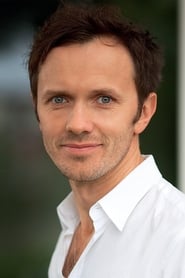
Renārs Kaupers
Born
1974-09-01 (52)
Place of birth
Jelgava, Latvian SSR, USSR [now Latvia]
Known for
Acting
Credits
16 titles
Renārs Kaupers (sometimes anglicised as Reynard Cowper; born 1 September 1974, in Jelgava) is a Latvian pop/rock singer, instrumentalist, and songwriter who is the vocalist of the band Prāta Vētra (known internationally as Brainstorm). Kaupers graduated from University of Latvia in 1996 with a degree in journalism. He can speak at least three languages with fluency: English, Latvian, and Russian. Kaupers' ancestors were probably Baron Friedrich von Stuart from Courland (1761–1842) and Immanuel Kant's niece Henrietta Kant. He is the lead singer of the Latvian pop/rock band Brainstorm, which came third at the Eurovision Song Contest 2000 with their song "My Star". In 2001, Renārs received th…
Known for
 7.4
The Eurovision Song Contest is an international song competition, organised annually by the European Broadcasting Union (EBU) and featuring participants representing primarily European countries. Each participating country submits an original song to be performed on live television and radio, transmitted to national broadcasters via the EBU's Eurovision and Euroradio networks, with competing countries then casting votes for the other countries' songs to determine the winner.
Eurovision Song Contest
1956
 6.9
KVN is a Russian humour TV show and competition where teams compete by giving funny answers to questions and showing prepared sketches. The programme was first aired by the First Soviet Channel on November 8, 1961. Eleven years later, in 1972, when few programmes were being broadcast live, Soviet censors found the students' impromptu jokes offensive and anti-Soviet and banned KVN. The show was revived fourteen years later during the Perestroika era in 1986, with Alexander Maslyakov as its host. It is one of the longest-running TV programmes on Russian Television. It also has its own holiday on November 8, the birthday of the game, which KVN players celebrate every year since it was announced and widely celebrated for the first time in 2001.
KVN Major League
1986
 NR
No synopsis available yet.
Квартирник НТВ у Маргулиса
2017
Eurolaul was an annual televised competition to select a song to represent Estonia in the Eurovision Song Contest made by the Estonian Public Television Service ETV. For many years the competition differed from the national selections of most other countries in that the outcome was solely determined by an international jury. The rules were changed to entrust the Estonian public with the choice by means of televoting in 2004 and 2005, but due to the disappointing results in the ESC in those years there was a return to the former system in 2006. Eurolaul also selected Tanel Padar and Dave Benton's song "Everybody" in 2001, which went on to win the contest for Estonia. In 2009, Eurolaul was discontinued after a long period of bad results for Estonia in the Eurovision Song Contest and was replaced with a new contest entitled Eesti Laul.
Eurolaul
1993
 NR
Supernova is a Latvian music entertainment show created by the Latvian broadcaster, LTV. It is currently used as the Latvian national selection for the Eurovision Song Contest.
Supernova
2015
 NR
The Congratulations: 50 Years of the Eurovision Song Contest (Vol. 2: 1981–2005) DVD is a high-energy retrospective that captures the contest's evolution into a modern pop spectacle.
Congratulations : 50 Years Of The Eurovision Song Contest (1981 - 2005)
2005
Film credits
2010s · 4 titles
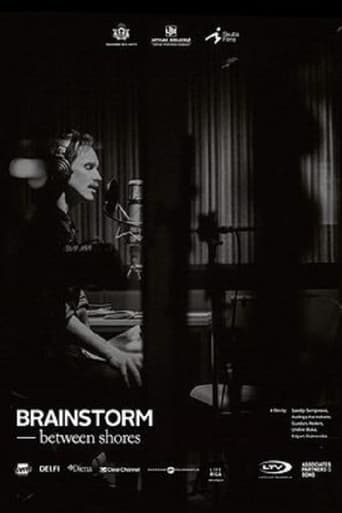 NR
Brainstorm is the best-known Latvian band in Europe. They started out 25 years ago, when most of them were in the same class at school. That was the time when people in Latvia, Lithuania and Estonia joined hands to create the Baltic Way, and the fall of the Berlin Wall became a symbol of the hunger for freedom. The young men listened to U2, the Scorpions and Roxette and dreamed of becoming famous. Now Brainstorm is famous in Russia as well. The musicians are Latvians who live in Latvia, but they reap profits in Russia. Brainstorm has experienced the most interesting and intense period of modern European history. This period has also been a dramatic time for the band itself.
Brainstorm: Between Shores
2015
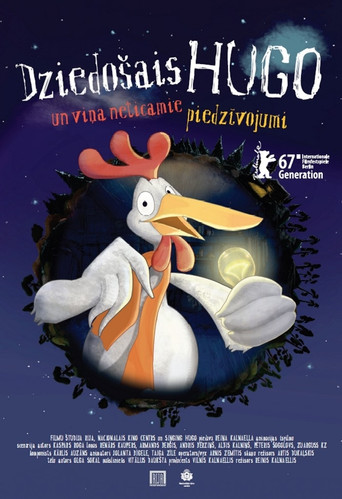 NR
When a chicken is kidnapped by two thieves, a lively adventure full of humor and with a surprising twist begin.
Singing Hugo And His Incredible Adventures
2016
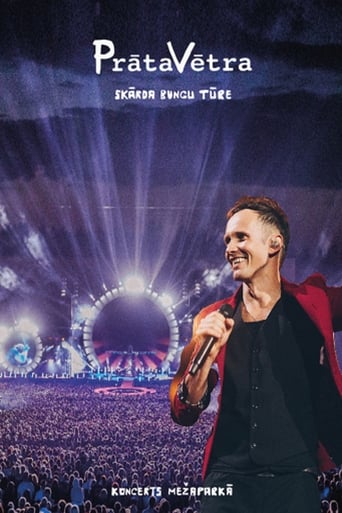 NR
No synopsis available yet.
Prāta Vētra "Skārda bungu tūre" Mežaparks
2018
 NR
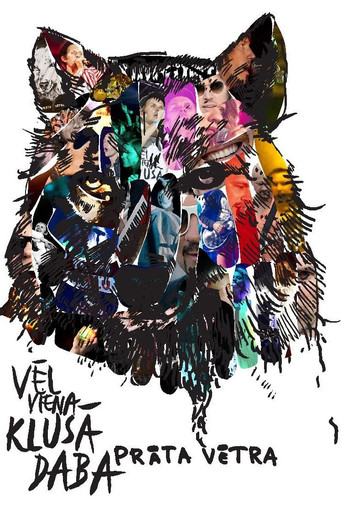
No synopsis available yet.
Prāta Vētra. Koncertfilma "Vēl viena klusā daba"
2013
2000s · 6 titles
NRThe Congratulations: 50 Years of the Eurovision Song Contest (Vol. 2: 1981–2005) DVD is a high-energy retrospective that captures the contest's evolution into a modern pop spectacle.
Congratulations : 50 Years Of The Eurovision Song Contest (1981 - 2005)
2005
No synopsis available yet.
Prāta vētra. Tur kaut kam ir jābūt. Koncerts Mežaparkā
2008
 5.7
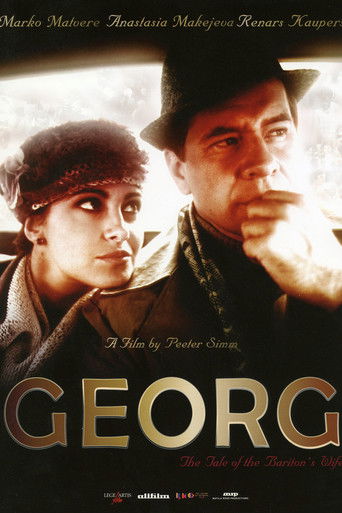
Unforgettable melodies, unique timbre and a memorable, soul-stirring voice. A mystery for women and authority for men, his talent was revered by the highest ranks of the Soviet Union and millions of ordinary people. Georg Ots took the stage when a huge country was recovering from the horrors of war, and his voice returned them faith in a bright future. Few people know what his life was really like.
Georg
2007
 NR
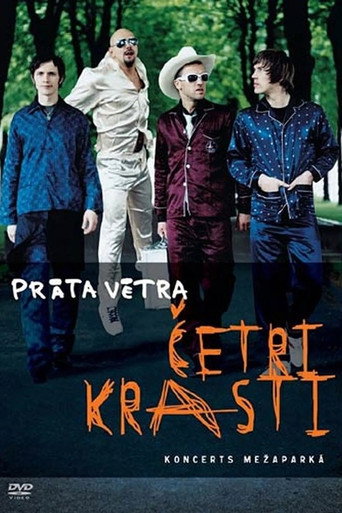
No synopsis available yet.
Prāta vētra. Četri krasti. Koncerts Mežaparkā
2005
Congratulations: 50 Years of the Eurovision Song Contest was a television programme organised by the European Broadcasting Union (EBU) to commemorate the Eurovision Song Contest's fiftieth anniversary and to determine the Contest's most popular entrant of its fifty years. Hosted by Katrina Leskanich and Renārs Kaupers, the event took place at Forum, in Copenhagen on 22 October 2005. The host broadcaster was Danmarks Radio (DR). Fourteen songs from the Contest's first half-century, chosen through an internet poll and by a jury, contested the event.
Congratulations: 50 Years of the Eurovision Song Contest
2005
 7.5
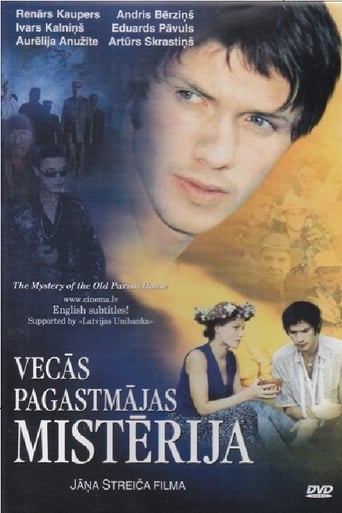
In this movie (based on a true story) within a movie, a director tries to film the tale of an old KGB activist living in a parish house. In the summer of 1941 the activist tortured and killed Latvians in the cellar of the house. Although the old man hires others to brick over the cellar door, the murdered people keep coming through the stones and never leave him in peace. Unbeknownst to the film makers, the "real" KGB activist, now an aged drunk, is milling about the film set. Moreover, the director and lead actor are competing for the love of the lead actress, and the film's producer wants the director to re-shoot parts of the movie.
The Mystery of the Old Parish House
2000
Series credits
7.4The Eurovision Song Contest is an international song competition, organised annually by the European Broadcasting Union (EBU) and featuring participants representing primarily European countries. Each participating country submits an original song to be performed on live television and radio, transmitted to national broadcasters via the EBU's Eurovision and Euroradio networks, with competing countries then casting votes for the other countries' songs to determine the winner.
Eurovision Song Contest
1956
6.9KVN is a Russian humour TV show and competition where teams compete by giving funny answers to questions and showing prepared sketches. The programme was first aired by the First Soviet Channel on November 8, 1961. Eleven years later, in 1972, when few programmes were being broadcast live, Soviet censors found the students' impromptu jokes offensive and anti-Soviet and banned KVN. The show was revived fourteen years later during the Perestroika era in 1986, with Alexander Maslyakov as its host. It is one of the longest-running TV programmes on Russian Television. It also has its own holiday on November 8, the birthday of the game, which KVN players celebrate every year since it was announced and widely celebrated for the first time in 2001.
KVN Major League
1986
NRNo synopsis available yet.
Квартирник НТВ у Маргулиса
2017
Eurolaul was an annual televised competition to select a song to represent Estonia in the Eurovision Song Contest made by the Estonian Public Television Service ETV. For many years the competition differed from the national selections of most other countries in that the outcome was solely determined by an international jury. The rules were changed to entrust the Estonian public with the choice by means of televoting in 2004 and 2005, but due to the disappointing results in the ESC in those years there was a return to the former system in 2006. Eurolaul also selected Tanel Padar and Dave Benton's song "Everybody" in 2001, which went on to win the contest for Estonia. In 2009, Eurolaul was discontinued after a long period of bad results for Estonia in the Eurovision Song Contest and was replaced with a new contest entitled Eesti Laul.
Eurolaul
1993
NRSupernova is a Latvian music entertainment show created by the Latvian broadcaster, LTV. It is currently used as the Latvian national selection for the Eurovision Song Contest.
Supernova
2015