
Known for
 8.5
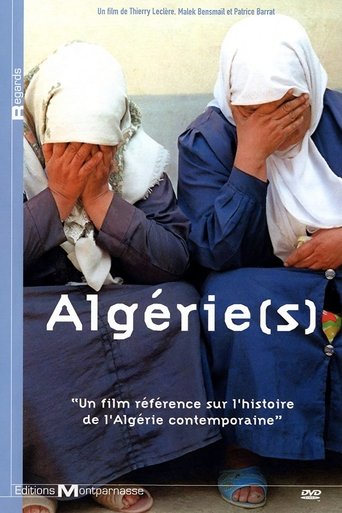
Documentary series in two parts: 1. A people without a voice (80'), 2. A land in mourning (78'). Part 1: A people without a voice: October 88, the Algerian Republic is faltering, the film goes back to the sources of this tragedy and explains how the face to face between the Islamists and those in power began. The interruption of the legislative elections of December 91, followed shortly after the assassination of President Boudiaf in June 92, plunged Algeria into chaos. Part 2: A land in mourning: the cycle of violence that leads to massacres and the economic and geopolitical underside of the war. More than 100,000 deaths, an incredible degree of barbarity, massacres, apparently incomprehensible... Behind the official window of power and its artificial political scene, hides a shadow power.
Algeria's Bloody Years
2002
Three months of riots and street fighting. Three months of marches and demonstrations, but the anger of Algerias Kabyle population has not diminished. This rank and file mouvement mistrusts political parties, and presents a real threat to the Algerian government. Berber-speaking, Kabylian native, director Samia Chala followed Mohand, one of the young people who initiated those riots, through his village of Avizar, 40 kilometers from Tizi Ouzou, to get the inside story. Because of her background and intimate knowledge of the region, Samia was allowed to film without any police escort, and this produced a rare document.
Kabylie : au cœur de la révolte
2001
Chahinaz is a young Algerian woman who dreams of freedom and who cannot understand why her life is being dictated to her. A student in Constantine, this young sparkling woman loves her country but is suffocated by the weight of tradition and religion. How can you change society in a country where the law officially sanctions inequality between men and women? How can women’s rights be advanced on a global level? In order to find answers to her questions, we have travelled to her country and across several continents, comparing her situation with that of other women. And also to inform those who have the power to change what Chahinaz does not accept. Chahinaz asks questions without blinkers, and seeks answers that are not just black and white. She brings a fresh and intelligent view to the condition of women in the North and the South, and in the process challenges some widely prevalent clichés about Muslim women.
Chahinaz : quels droits pour les femmes ?
2006
A compilation of vignettes of daily life in Sarajevo and the people who fight to survive the war that tears the city apart. In November 1993 BBC2 TV began to broadcast 'Sarajevo: A Street Under Siege', a 2-minute film shown every night before the 22.30 Newsnight programme. It was bringing a day-by-day account of how the siege was affecting a group of ordinary citizens. The authors were Ademir Kenovic, a graduate of the Sarajevo Film and Theater Academy, and Patrice Barrat, a director from an independent French production company. The full version of the film was broadcast on BBC2 on 20 March 1994. Later on in 1994 the film 'Sarajevo: A Street Under Siege', ('Chaque jour pour Sarajevo') received a BAFTA (British Academy Award of Film & TV Arts) award and the Jury Award at the Locarno Film Festival.
Sarajevo: A Street Under Siege
1994
 10.0
Where does submission to authority end? Where does individual responsibility begin? Each person confronted with violence asks themselves these questions. Through the testimonies of conscripts but also of Algerian activists, a memory of this war is constructed. The atrocities of the Algerian war are known. However, conscripts were pressured not to speak out upon their return. General de Bollardière was punished for opposing torture. Guy Mollet, President of the Council, denied any shameful practice before Parliament…
Pacification en Algérie
2002
Behind the camera
8.5Documentary series in two parts: 1. A people without a voice (80'), 2. A land in mourning (78'). Part 1: A people without a voice: October 88, the Algerian Republic is faltering, the film goes back to the sources of this tragedy and explains how the face to face between the Islamists and those in power began. The interruption of the legislative elections of December 91, followed shortly after the assassination of President Boudiaf in June 92, plunged Algeria into chaos. Part 2: A land in mourning: the cycle of violence that leads to massacres and the economic and geopolitical underside of the war. More than 100,000 deaths, an incredible degree of barbarity, massacres, apparently incomprehensible... Behind the official window of power and its artificial political scene, hides a shadow power.
Algeria's Bloody Years
2002
Three months of riots and street fighting. Three months of marches and demonstrations, but the anger of Algerias Kabyle population has not diminished. This rank and file mouvement mistrusts political parties, and presents a real threat to the Algerian government. Berber-speaking, Kabylian native, director Samia Chala followed Mohand, one of the young people who initiated those riots, through his village of Avizar, 40 kilometers from Tizi Ouzou, to get the inside story. Because of her background and intimate knowledge of the region, Samia was allowed to film without any police escort, and this produced a rare document.
Kabylie : au cœur de la révolte
2001
Chahinaz is a young Algerian woman who dreams of freedom and who cannot understand why her life is being dictated to her. A student in Constantine, this young sparkling woman loves her country but is suffocated by the weight of tradition and religion. How can you change society in a country where the law officially sanctions inequality between men and women? How can women’s rights be advanced on a global level? In order to find answers to her questions, we have travelled to her country and across several continents, comparing her situation with that of other women. And also to inform those who have the power to change what Chahinaz does not accept. Chahinaz asks questions without blinkers, and seeks answers that are not just black and white. She brings a fresh and intelligent view to the condition of women in the North and the South, and in the process challenges some widely prevalent clichés about Muslim women.
Chahinaz : quels droits pour les femmes ?
2006
A compilation of vignettes of daily life in Sarajevo and the people who fight to survive the war that tears the city apart. In November 1993 BBC2 TV began to broadcast 'Sarajevo: A Street Under Siege', a 2-minute film shown every night before the 22.30 Newsnight programme. It was bringing a day-by-day account of how the siege was affecting a group of ordinary citizens. The authors were Ademir Kenovic, a graduate of the Sarajevo Film and Theater Academy, and Patrice Barrat, a director from an independent French production company. The full version of the film was broadcast on BBC2 on 20 March 1994. Later on in 1994 the film 'Sarajevo: A Street Under Siege', ('Chaque jour pour Sarajevo') received a BAFTA (British Academy Award of Film & TV Arts) award and the Jury Award at the Locarno Film Festival.
Sarajevo: A Street Under Siege
1994
10.0Where does submission to authority end? Where does individual responsibility begin? Each person confronted with violence asks themselves these questions. Through the testimonies of conscripts but also of Algerian activists, a memory of this war is constructed. The atrocities of the Algerian war are known. However, conscripts were pressured not to speak out upon their return. General de Bollardière was punished for opposing torture. Guy Mollet, President of the Council, denied any shameful practice before Parliament…
Pacification en Algérie
2002