
Directing
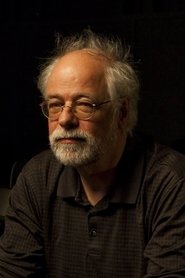
Vincent Grenier
Place of birth
Québec City, Québec, Canada
Known for
Directing
Credits
43 titles
Vincent Grenier is a native of Quebec City, Canada. Since the seventies, he has made over fifty films and videos. One of his video, Tabula Rasa, was screened in the "Best Avant Garde Films & Videos of the Decade" program at the Lincoln Center. Watercolor (2013) received two grand prizes in Experimental Cinema at Black Maria and Athens Film Festival. He will be receiving the Stan Brakhage Vision award at the Denver Film Festival in November 2019. He has received a Guggenheim Foundation Fellowship in 2010 and numerous Canada Council Grants earlier in his career amongst others. He lives in Ithaca NY and teaches at nearby Binghamton University.
Known for
 NR
NRThis video was taken using small digital still camera on multiple bus trips between New York City and Upstate NY. The bus' many large windows, afforded dramatic reflections to this perched passenger feeling as if floating through the landscape. Lulled by the noises of the tires on the road, the incessant tremors, muffled conversations and trying to keep digital camera steady while being thrown from side to side, visual wedges kept uncannily intersecting and gesturing.
Travelogue
2010
 NR
NR“Washes of water and other liquids soak the imagery...strung together for a rather enigmatic yet definite statement on something. Only the subconscious knows for sure.” --G.K.
Aqueerius
1980
 NR
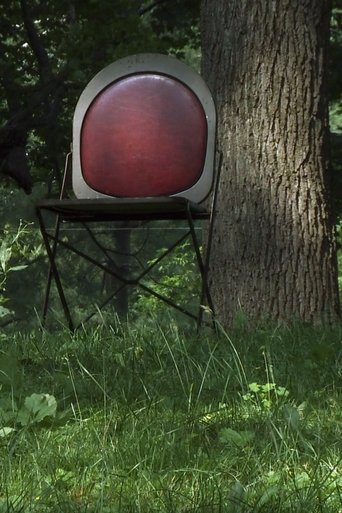
NR"Two weather worn red vinyl chairs on an outdoor promontory oriented toward a "view", stand as subjects and witnesses. The chairs themselves provide openings or internal views, into color fields, their standard issue "natural textures" upholstery, oval screens for the light projected through wind swept tree leaves." -VG
The Chairs
2008
Human subjects and their verbal discourse, dealing with fleeting and shifting identity.
I. D.
1988
Miracle Grow is a personal piece with elements of a home movie. Originally shot in Mini DV, edited and transferred to film without leaving the digital realm, the film is an inventory of a growing baby as he struggles to gain mastery of his limbs. As the father the filmmaker attempts to insert himself within this well worn and taboo subject and redefine it. As in his other works, the images are composed and structured to lead us within other realms of thoughts.
Miracle Grow
1998
 NR
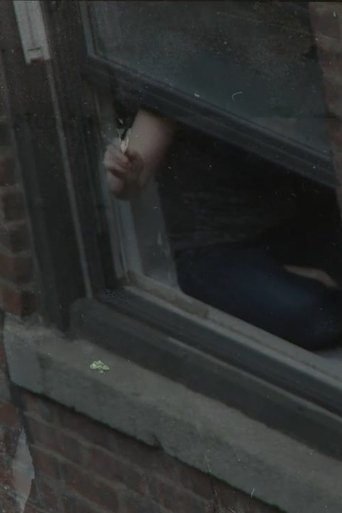
NRThe Upper West Side has some of the tallest brick apartment buildings in NYC. The orderly but deserted and aging concrete courtyards, their metal stairs and shafts, register a dramatically changing atmosphere. This is a cinema that seeks to observe, obscure, shorten and protract, and redefine, while remaining open ended.
Back View
2011
Film credits

Behind the camera
NRThis video was taken using small digital still camera on multiple bus trips between New York City and Upstate NY. The bus' many large windows, afforded dramatic reflections to this perched passenger feeling as if floating through the landscape. Lulled by the noises of the tires on the road, the incessant tremors, muffled conversations and trying to keep digital camera steady while being thrown from side to side, visual wedges kept uncannily intersecting and gesturing.
Travelogue
2010
NR"Two weather worn red vinyl chairs on an outdoor promontory oriented toward a "view", stand as subjects and witnesses. The chairs themselves provide openings or internal views, into color fields, their standard issue "natural textures" upholstery, oval screens for the light projected through wind swept tree leaves." -VG
The Chairs
2008
Human subjects and their verbal discourse, dealing with fleeting and shifting identity.
I. D.
1988
Miracle Grow is a personal piece with elements of a home movie. Originally shot in Mini DV, edited and transferred to film without leaving the digital realm, the film is an inventory of a growing baby as he struggles to gain mastery of his limbs. As the father the filmmaker attempts to insert himself within this well worn and taboo subject and redefine it. As in his other works, the images are composed and structured to lead us within other realms of thoughts.
Miracle Grow
1998
NRThe Upper West Side has some of the tallest brick apartment buildings in NYC. The orderly but deserted and aging concrete courtyards, their metal stairs and shafts, register a dramatically changing atmosphere. This is a cinema that seeks to observe, obscure, shorten and protract, and redefine, while remaining open ended.
Back View
2011
 NR
NRA humorous, digitally induced meditation on colors, motion and space from a few frames of road side fall panorama in upstate NY.
Color Study
2000
 NR
NR"Catch is a fragmented observation on hidden reflective surfaces, the corner of a dormant television screen, a window..." —Mike Reynolds
Catch
1975
 NR
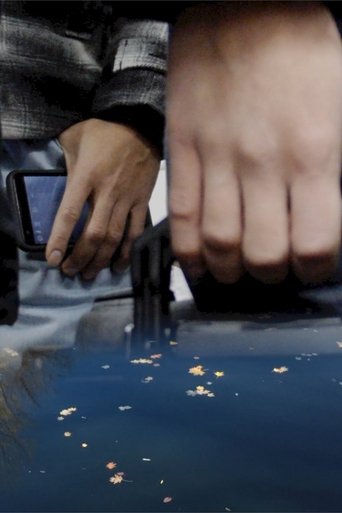
NRDistinct fields on the same screen, foreground each other, invite comparisons, between different times and spaces, and the constructed and natural processes that inescapably defines us thru textures and emotional spaces. Commute does refer to regular travels between one place and an other, but also to substitutions, and exchanges.
Commute
2018
 NR
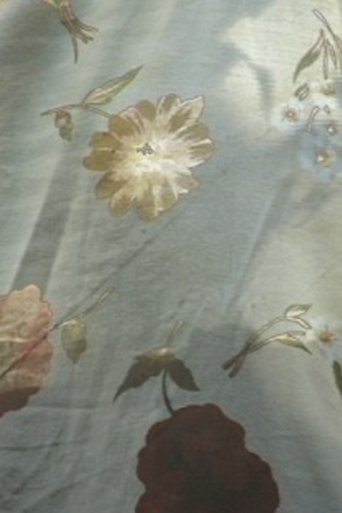
NRMaterial Incidents brings a layered look at the secrets of light's rituals and it’s loose associations with matter, temperature and the senses. Our eyes, our brain’s primary sensors, ultimate arbiters of our sense of reality, well being and even of security, are closely implicated in this shadowy drama where notions of solidity, joust with fluidity and the ephemeral.
Material Incidents
2001
 NR
NRThe pulsating rhythms of fluorescent lighting not quite in synch with those of the video image, create a singular array of drifting yellows. Camera handler and son waiting for a pediatric doctor's appointment, while playful taunts mingle with the curious decor, the focused patients, slow blurs and daily life unfurl. Chance encounters, accidental time, in spite of everything, small miracles of cinema and being.
Waiting Room
2012
 NR
NRA rumination on cinematic time reversals as versatile continuums. Re-discovering the outdoors as (a stage) set where the natural is made to pose as the artifice.
Tableaux Vivants
2011
 NR
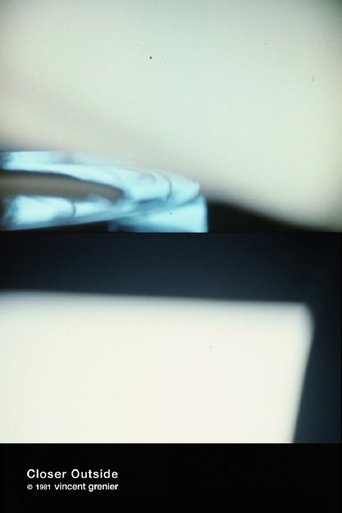
NRThe precisions and idiosyncrasies of movement associated with domestic activities are closely stared at, or as it sometimes happens, watched carefully through the peripheral vision. This while rhyming, is done in alternance, thus creating sudden rushes in the mind while spaces collapse. Also, light burns wedges in this film, recalling…
Closer Outside
1981
 NR
NRA collage more than a diary using images as artifacts that reflect processes. Sounds often come from other rooms, altered by their distance and the spaces that they have come through, just as the images themselves reflect the history of their own alterations. It is also a humorous exploration of the ideas of vignetting as it frames, highlights, distances and alters space.
Pending
2016
 NR
NRChanges of directions, in the wind, the edges, the shapes, a joyous and mesmerizing intrigue. Perhaps an other way to put it is to describe this piece as a humorous digital cine take on the long cultural history of the lessons left by the great Chinese painters of the 13th century for whom shapes and edges where often all one and the same.
North Southernly
2006
 NR
NRTall buildings and cars are shot through the Kinemacolor process, variable color filters and a water lens. Sturdiness jousts with fragility, past with present, alienation with tenderness, abrasiveness with sensuality, red with green. The camera is moving in the slick of space. Shapes vibrate selectively out of the image; others at different points in space and in turn, vibrate or flash as vibrations also vary in rhythms and intensity. The Kinemacolor process was use in 1915 to obtain fairly illusionistic colors from black and white films by filming and projecting them through synchronized, alternating red and green filters. This film, while already in color, takes advantage of many of the particularities of the system.
Tremors
1984
 NR
NR"'Shade' is a near exhaustion of the possibilities between camera (aperture, focus) and nature (sun, wind). It is a beautiful study-poem on the undying presence that renders the world perceptually. In this minimal area, the variations are pursued with quiet doggedness, each frame revealing the secret of the next." —Mike Reynolds
Shade
1975
 NR
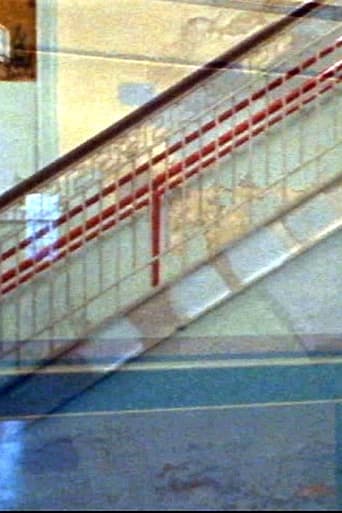
NR"Revisiting footage he shot more than ten years ago in an American high school, Vincent Grenier combines deftly manipulated and layered images with oblique commentaries delivered by students and instructors. The socializing process of education is made visible in the architecture, surfaces and colours of the school, 'in the ambiguous quality of appearances so assiduously cultivated by institutions' (Grenier)." - Images Festival, 2005
Tabula Rasa
2004
 NR
NRIs it happening in the screening room or on the screen; in a snowstorm or inside; what isn't surrounding and what is? From filming Ann sewing, on a grey winter day. Preserved by the Academy Film Archive in 2016.
Mend
1979
 6.1
6.1I had been looking for someone's unnerving encounter, that conversation that one just couldn't get out of their head, the kind of event that leaves one still debating out loud while walking in the streets or doing one's tidies in the bathroom. After interviewing a few people, I found Lisa Black who obliged with one of her own and became the film's main character. A situation with many angles; the telling, the filming, the final projection event... YOU is an imaginary fictionalized you in a whimsical space.
You
1990
A boy’s phantasmagoric world of heroes is captured in layers of light and hues. This video, humorously and poetically juggles ideas about make believe and representation of the everyday.
Here
2002
 NR
NRA product of the pandemic, Grenier's new film brings the outdoors in, with curious results.
Wishbone
2021
 NR
NRIn the playful and hypnotic miniature Moonrise, avant-garde luminary Vincent Grenier sets falling rain and its sweeping pock-filled shadows to an audio collage of DIY foley mimicking the persistent pitter-patter.
Moonrise
2022
Energetic audio montage finely re-contextualizes and layers framed displays of giant mechanized insect spouting heat and liquids.
de-icing
2014
 NR
NRBurning Bush is made from a series of mid fall shots of a bright "digital" red euonymus both in real time and with video time lapses. Much of the ideas for the piece emerged during post-production. The Euonymus mid fall "natural" leaves are startling, their colors are so saturated as to appear unreal, their purity so uniform as to appear manufactured. It has long been a fascination of mine to activate shared qualities living in parallel universes; always, that which is present in the make up of the digital cinema image and that of the physical world it is representing. Assumptions we make about the real world, the way it is recorded, or more appropriately translated, are cultural constructs. The inevitable biblical conotations of the Burning Bush refers to man made poetic as well as insttutional constructs. - VG
Burning Bush
2010
 NR
NRChanges of spatial relationships, scales, locations, and materials are intimated with recognisable clues which nevertheless do not always eliminate the former understanding of the images. These and other levels of ambiguity are instilled, which shake the photographic image’s authority as a principle of reality by confronting it with its illusory nature. We are back with magic, made possible with black and white film, shadows and lights, the limitations of the screen and the depth of field. So as when film grains, dots in deep space, disintegrate the solidity and enclosureness of a wall, the intentions of the film and the transforming events accumulate at a very intimate level of the viewer, that is at the level of the mechanism of his understanding.
Interieur Interiors (To A-K)
1978
 NR
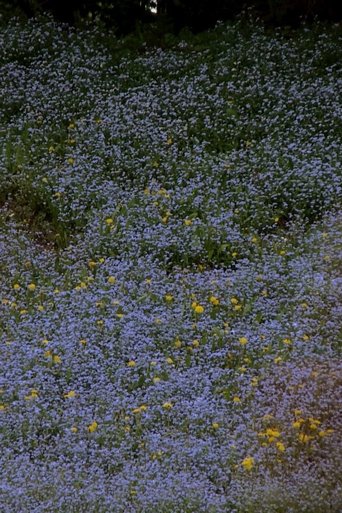
NROn the corner of Brooktondale Rd and route 79 near Ithaca is an amazing planting of Forget-Me-Nots and Dandelions. An improbable dance between different layers of reality, one organic, the other mechanical, another the numbing everyday. Timeless fragility joust with fleeting enamels and the upstanding violence.
Intersection
2015
 NR
NR"The insinuation of camera movements and the familiarity of the same forms recurring in black and then luminous white shapes, makes X an intriguing visual play on positive/negative space. Scale, depth and angle of view are indecipherable. Is it the object or the cameras which moves across the frame? This Rubic's cube for seeing simultaneously demonstrates the illusionism of cinematic space and the camera's ability to isolate and transform. Grenier's use of silence in X is perfectly à propos to its concerns. -Raphael Bendahan, Vanguard, Summer 1985. Preserved by the Academy Film Archive in 2014.
X
1976
 NR
NR(This film has been referred to as both White Revolved and While Revolved.) Project at 18 fps. This film is concerned with the projected, not just light or the emulsion or the illusion or the projector or the camera, but all of them. The surface of the film, the grain, is remembered when a similar but illusionistic surface appears (just as magnified), crossing the frame. Other times the grain is left to itself. There are the idiosyncratic focusing qualities of shadows acting as diaphragms inside the image. The elusive background confounds itself with the foreground. The notions of appearances and disappearances transform themselves in notions of time. Made with a grant from the Canada Council.
While Revolved
1976
 NR
NRA black-and-white collage in motion. Shadowy projections and solids layered.
Straight Lines
2009
This video was originally shot in Hi 8 on a winter day in 1992, the last day Ithacans could have their dry garbage and cast-offs hauled away for free by the city of Ithaca. Huge piles of debris and broken household items had accumulated on curbsides throughout the city, awaiting disposal. Then it snowed. These piles, the broken kinks of the comfort machine of consumerism, offer voyeuristic opportunities for incongruous art happenings. The camera collaborates with an old Toyota car, which doubles as a dolly, to photograph these found art installations offered in front yards. These random, quotidian piles transform with monster-like auras and new-found permanence. The Toyota also supplies the musique concrete soundtrack.
Winter Collection
2000
"'Window Wind Chimes' explores in semi-documentary manner the interrelationship between Vincent Grenier and his wife Ann Knutson in the environment of their San Francisco apartment. Conversations between them consist of fragments of arguments, apologies, affections and distillations of the personal rituals that take place between man and wife.
Window Wind Chimes: Part 1
1974
 NR
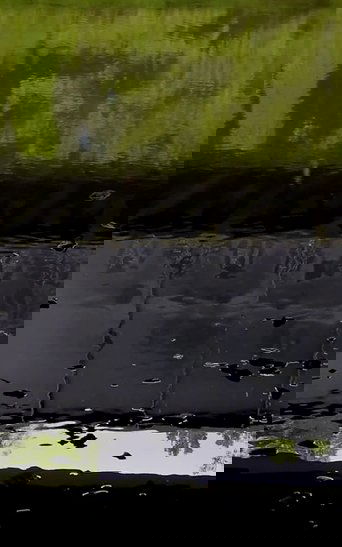
NRWater flows under two bridges, or so it may appear. Since the advent of the industrial age, there has been a heated dialogue regarding the relationship between earth's natural environment and manufactured human spaces. Watercolor (Fall Creek) exists between these necessary worlds, as time unfolds and remains difficult to comprehend.
Watercolor (Fall Creek)
2013
 NR
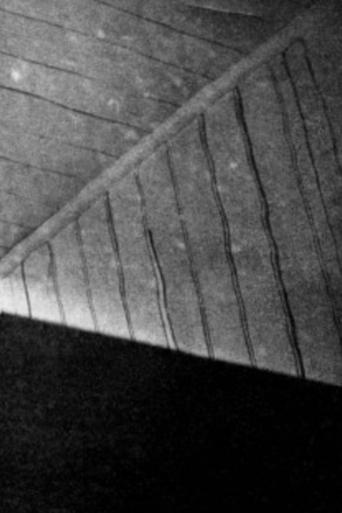
NR"Light Shaft" diagonally crosses the screen with a wedged light formation, usually on the diagonal. Its variations are rendered through arrangements of the tripod while panning the camera. Limiting the viewer's attention to a smaller screen, a point in space, allows for a certain confusion as to whether the rest of the (dark) screen blends itself into the surrounding blackness or is just a window into it.
Light Shaft
1975
A video portrait of my friend, Susan Weisser and of her rapport with 13 year old son Billy and seventeen year old daughter Amanda. The video, divided in two sections used as a premise the reconstruction of her daily rituals with first the son and then the daughter. Enactments, accounts, confidences and spirited arguments freely crisscross each other within the dynamic that my presence and that of the camera create. Great opportunities ensued for live tensions in the framing of sounds and visuals; a sort of enchanted construction from the fanciful revelations of the everyday.
Feet
1994
In D'APRES MEG, small hand gestures are microscopically observed in their everyday context, a garden conversation, a construction site, a gallery setting. By taking our common peripheral vision of events seriously, Grenier produces an evocative enigma. From these images and bits of conversations, which are equally mundane, a new kind of disinterested seeing can be engaged. One that does not reflect meaning as invite it through repetition
D'apres Meg
1982
 NR
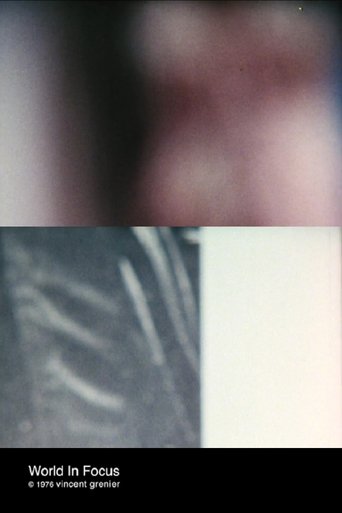
NRIn “World in Focus,” the screen becomes the two-dimensional support of an amazingly versatile three-dimensional object (an atlas) which contains in turn two-dimensional pictures of other three-dimensional objects. The uniform use of a close-up lens creates often ambiguous or nearly unidentifiable images (from the atlas), emphasizing the rhythms, volumes, angles and movements obtained from the handling of the book.
World in Focus
1976
Inspired by dreams and nightmares, Honey Moon Lane unfolds with a series of absurdist entanglements in the heterosexual love life of a man and his loved one. For better or for worst, this film is as engaged in the unraveling of amorous film clichés and fantasies than it is in the spirited creation of a somewhat schizophrenic and hysterical emotional space.
Honey Moon Lane
1972
“This, and This”, is digital immediacy splendor where images of nature cannot be merely innocent. Ideas about the natural and the mechanical are being toyed with, in varying degrees of wetness, scale, compressed states and expectations.
This, and This
2006
 NR
NRA film about the dynamic of assumptions as seen through the struggle of a gay man who has recently been told that he is HIV positive and who, in his own way, tries to come to terms with the news. The film eschews the usual talking head and focuses on the peculiar occasion for examining anew as brought on by disconnectedness. In the process,questions of identity, one's sense of reality, the day to day and social tyrannies end up implicating the viewer intimately as well. -VG.
Out in the Garden
1991
This film is a collage of distant worlds, lost and not yet learned; memories and functions as playful instincts. An Alzheimer-afflicted woman’s distant reactions are intercut with the mischievious antics of a four-year-old looking into, scratching and feeding the screen.
Brendan's Cracker
1999