
Directing
Vojtěch Jasný
Born — Died
1925-11-30 — 2019-11-15
Place of birth
Kelc, Czechoslovakia [now Czech Republic]
Known for
Directing
Credits
45 titles
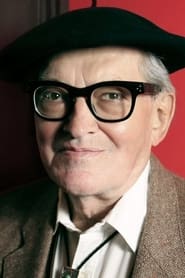
Vojtěch Jasný (born 30 November 1925 – 15 November 2019) was a Czech director who came to prominence in the sixties. He won a Cannes Special Jury Prize for Až přijde kocour/The Cassandra Cat (1963). He was born in Kelč in Moravia. An active filmmaker in Czechoslovakia throughout the 1950s and 1960s, he was among many artists and intellectuals who left the country after the USSR-led invasion following the Prague Spring of 1968. Jasný worked in other European countries for several years including Austria, West Germany and Yugoslavia until relocating to Brooklyn, New York in the early 1980s. Jasný taught film directing classes at Columbia University for several years (where his compatriot Milo…
Known for
Television series Golden Sixties examines new insights into Czech and Slovak cinema of the 1960s and the role of the Czechoslovak New Wave. Each episode focuses on a different filmmaker.
Golden Sixties
2009
 6.8
While visiting their grandparents in the Québec countryside, two children enter a fantasy kingdom and are confronted by evil forces.
The Great Land of Small
1987
No synopsis available yet.
Lidé jednoho srdce
1953
 NR
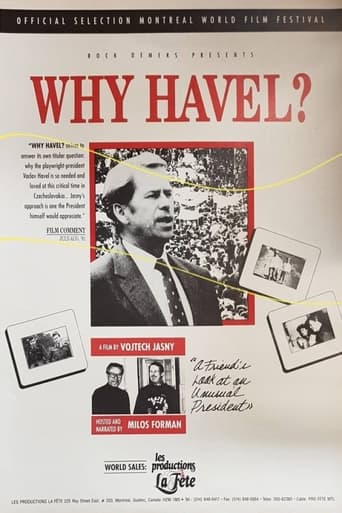
The first part of the block will be dedicated to the monograph Vojtěch Jasný: The Film Poet in Exile (2020) authored by the film historian Jiří Voráč. The monograph is centered on the legendary director’s life and career after his emigration to Western Europe and to the US after 1968, which have so far received little attention. In exile, Jasný established himself as a film director (he authored over thirty cinema and TV films and documentaries), stage director, photographer, and film studies lecturer. The first part will be followed by the screening of Jasný’s documentary Why Havel? co-produced by himself and Miloš Forman in Canada and Czechoslovakia in 1991. As remarkable as this reflection of the paradoxical transformation of a dissident into a president in the carnival-like atmosphere of the euphoric post-revolution period with the first question marks already appearing may be, it did not meet the expectations of the head of state.
Why Havel?
1991
 6.1
Based on the best-selling novel by Nobel-laureate Heinrich Böll, this drama is a passionate indictment of Catholicism. Hans Schnier (Helmut Griem) has earned his living as a clown, though he is in fact a very covert sort of social critic. After enduring a difficult childhood in Bonn during the Second World War, including his mother's fanatic Nazism, he is appalled to discover many of the people he knows and loves swept deeply into involvement in the Catholic Church.
The Clown
1976
 7.0
While old Oliva tells a group of children about his life as a sailor and how he met Diana and her cat with sunglasses, a strange circus arrives in town.
When the Cat Comes
1963
Film credits
2000s · 2 titles
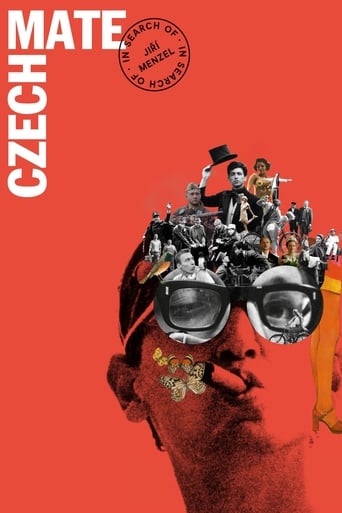
After being one of the most successful filmmakers in Europe in the sixties, Vojtech Jasny (Czech Republic, 1925) lives in a small apartment in New York. For Jasny, life and cinema are inseparable concepts. By visiting friends who still live in Life and Film Jasny first person will have their own history and some decisive events in his life: the Nazi invasion and subsequent Soviet invasion of Czechoslovakia, exile and his arrival in New York years later.
Life and Film: The Labyrinthine Biographies of Vojtech Jasny
2009
 8.0
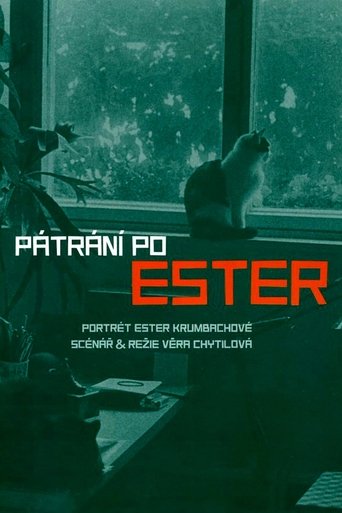
Ester Krumbachová - a costume designer, screenwriter, director; one of the boldest personalities of the Czech New Wave. She worked in theatre, she was a writer and an illustrator. She co-created films such as O slavnosti a hostech (1966), Sedmikrásky (1966), Vsichni dobrí rodáci (1969), Pension pro svobodné pány (1968), Valerie a týden divu (1970), Slamený klobouk (1972) and many others. In the 1960s, she was a 'pivot' of the art scene in Prague, attracting artists who were on the threshold of their career, just setting out to find their own form of self-realization. Those who underwent her tutelage remember her forever. Director Vera Chytilová talks to those who knew Ester Krumbachová, who worked with her, befriended her, loved her. She sets off on a search that is to end by answering the question: Who was Ester?
Searching for Ester
2005
Series credits
Behind the camera
6.8While visiting their grandparents in the Québec countryside, two children enter a fantasy kingdom and are confronted by evil forces.
The Great Land of Small
1987
No synopsis available yet.
Lidé jednoho srdce
1953
No synopsis available yet.
Lidé jednoho srdce
1953
NRThe first part of the block will be dedicated to the monograph Vojtěch Jasný: The Film Poet in Exile (2020) authored by the film historian Jiří Voráč. The monograph is centered on the legendary director’s life and career after his emigration to Western Europe and to the US after 1968, which have so far received little attention. In exile, Jasný established himself as a film director (he authored over thirty cinema and TV films and documentaries), stage director, photographer, and film studies lecturer. The first part will be followed by the screening of Jasný’s documentary Why Havel? co-produced by himself and Miloš Forman in Canada and Czechoslovakia in 1991. As remarkable as this reflection of the paradoxical transformation of a dissident into a president in the carnival-like atmosphere of the euphoric post-revolution period with the first question marks already appearing may be, it did not meet the expectations of the head of state.
Why Havel?
1991
6.1Based on the best-selling novel by Nobel-laureate Heinrich Böll, this drama is a passionate indictment of Catholicism. Hans Schnier (Helmut Griem) has earned his living as a clown, though he is in fact a very covert sort of social critic. After enduring a difficult childhood in Bonn during the Second World War, including his mother's fanatic Nazism, he is appalled to discover many of the people he knows and loves swept deeply into involvement in the Catholic Church.
The Clown
1976
7.0While old Oliva tells a group of children about his life as a sailor and how he met Diana and her cat with sunglasses, a strange circus arrives in town.
When the Cat Comes
1963
7.0While old Oliva tells a group of children about his life as a sailor and how he met Diana and her cat with sunglasses, a strange circus arrives in town.
When the Cat Comes
1963
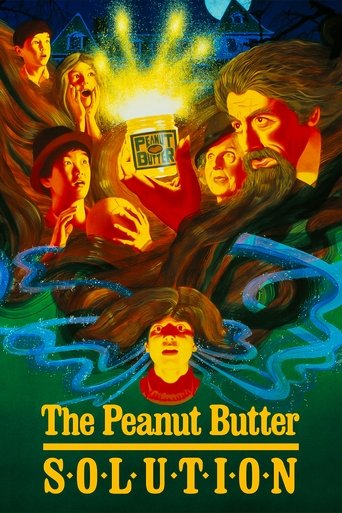 5.7
Peanut butter is the secret ingredient for magic potions made by two friendly ghosts. Eleven-year-old Michael loses all of his hair when he gets a fright and uses the potion to get his hair back, but too much peanut butter causes things to get a bit hairy.
The Peanut Butter Solution
1985
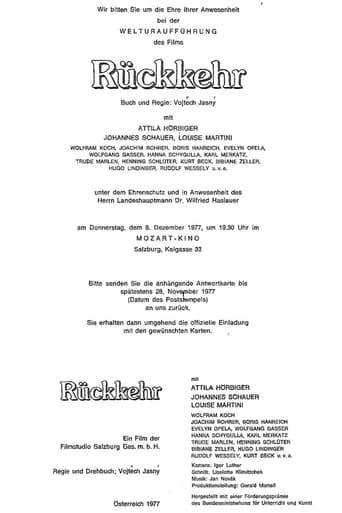 NR
Rückkehr (Return) consists of two short films inspired by the director's youth: "Die Rückkehr des alten Herrn" (The return of the old lord) is a nostalgic dive into the memories of an old man who entrusts his grandson with stories of his youth. "Mein seliger Onkel" (My blessed uncle) then tells the story of the boy and his adventurous uncle. Both stories take place in a picturesque small town.
Die Rückkehr des alten Herrn
1978
NRRückkehr (Return) consists of two short films inspired by the director's youth: "Die Rückkehr des alten Herrn" (The return of the old lord) is a nostalgic dive into the memories of an old man who entrusts his grandson with stories of his youth. "Mein seliger Onkel" (My blessed uncle) then tells the story of the boy and his adventurous uncle. Both stories take place in a picturesque small town.
Die Rückkehr des alten Herrn
1978
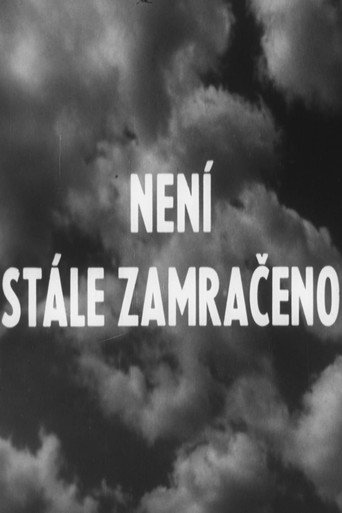 7.0
A film about life in the Czech borderlands after the expulsion of the Sudeten Germans.
It’s Not Always Cloudy
1950
7.0A film about life in the Czech borderlands after the expulsion of the Sudeten Germans.
It’s Not Always Cloudy
1950
 5.6
A professor reunites with an old friend who inspires him to return to Czechoslovakia for the first time since he emigrated years ago.
Return to Paradise Lost
1999
5.6A professor reunites with an old friend who inspires him to return to Czechoslovakia for the first time since he emigrated years ago.
Return to Paradise Lost
1999
No synopsis available yet.
Neobyčejná léta
1952
No synopsis available yet.
Neobyčejná léta
1952
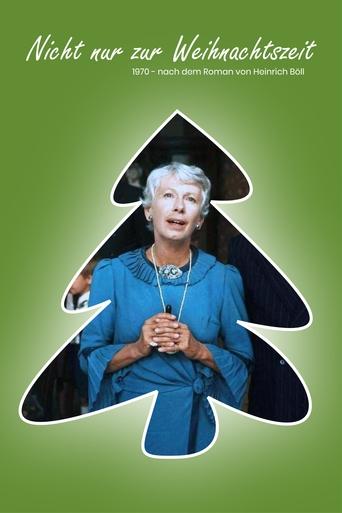 10.0
An elderly lady has a trauma and simply must celebrate Christmas every day of the year, to the dismay of her family and relatives.
Nicht nur zur Weihnachtszeit
1970
From Steven Spielberg and Survivors of the Shoah Visual History Foundation comes Broken Silence, a series of five films about human courage, heroism, and triumph over intense adversities during World War II. Hell on Earth: Renowned Czech filmmaker Vojtech Jasny directed this Czech-language documentary, a look at Theresienstadt, the "model" Czech ghetto set up by the Nazis to deceive the world about how well the Jews were treated.
Hell on Earth
2001
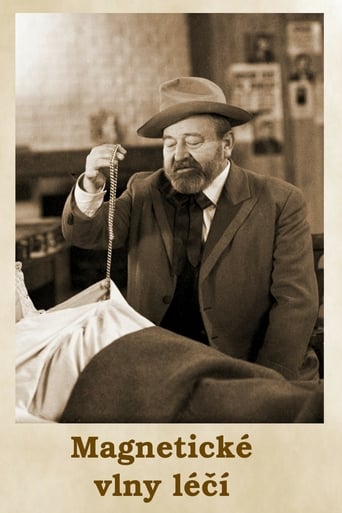 6.5
Detective Biddle arrives in a small American town to warn the local mayor Banks about a fraudulent healer. Together, they agree on how to convict the con man. They only need to catch him in the act, so the mayor feigns illness and the healer is called upon to help him. Directed by Vojtěch Jasný, they played with gusto - the healer Jan Werich and the mayor Jiří Sovák.
Magnetické vlny léčí
1965
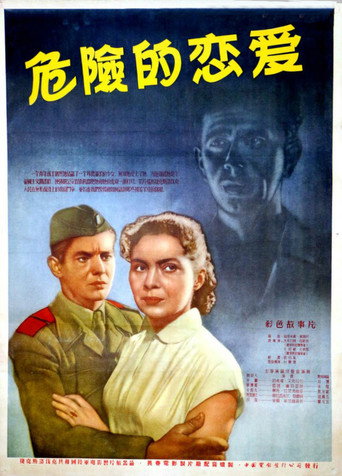 6.0
The adventurous story of a young soldier, lance corporal Milan Pazdera, who falls in love with a beautiful young girl at a party who claims to be in the countryside on medical leave. However, it turns out that she is a dangerous spy who is trying to obtain the call lists with the help of Milan, a scribe at the military camp headquarters.
Everything Ends Tonight
1955
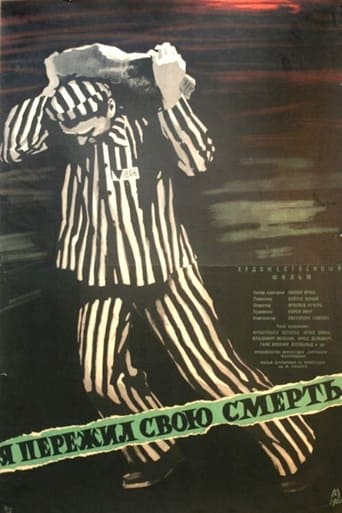 7.0
Telling the prisoners of a death camp. Boxer Tony Majer, who got into a concentration camp for a fight with the Gestapo, remembers the murderous work in quarries, on the cruel torture of the Nazis and prison solidarity that helped him survive.
I Survived Certain Death
1960
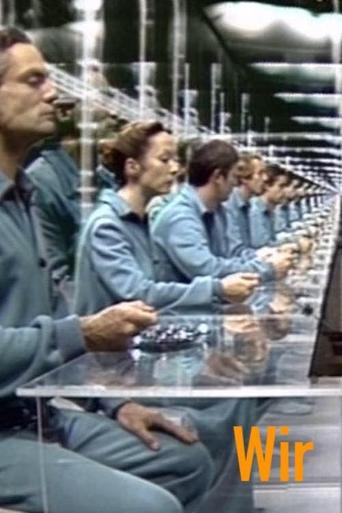 4.8
In the 26th century the inhabitants of Utopia have so lost their individuality, which varies in number. They live in glass houses (this was written before the invention of television), which allows the political police, called “Keepers” can easily supervise them. They all wear the same uniform and usually turn to each other or as a ”cipher-so” or "UNIFEM" (uniform). They feed on artificial food and rest hour marching in fours in a row the anthem of the One State, pouring out of the loudspeakers. As they are allowed to put a break on the hour (known as the ”sexy time“), draw the curtains of their glass houses. At the head of the One State is one called The Benefactor, which are replaced every year the whole population, usually unanimously. The guiding principle of the State is that happiness and freedom are incompatible.
We
1982
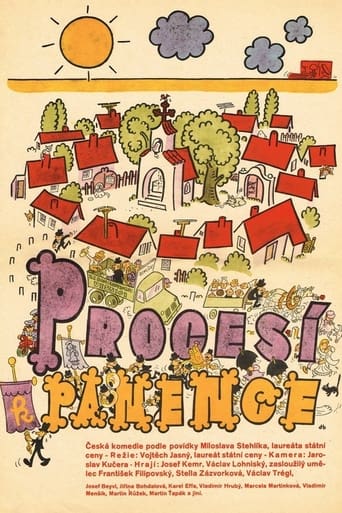 8.0
Farmers get away from their arguments by embarking on a religious pilgrimage, enjoy a picnic en route, and on their return decide to form a cooperative.
The Pilgrimage to the Holy Virgin
1961
No synopsis available yet.
Stará čínská opera
1954
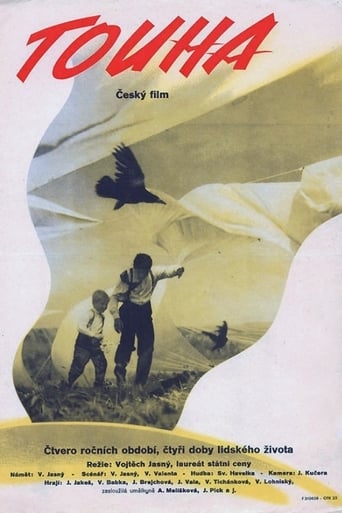 6.5
A poignant overview of how short life can be, this interesting drama from Czech director Vojetch Jasny is divided into four separate segments. In the first skit, a young child's impressions are observed as his newborn baby sister becomes a part of the family. In the second, a young woman falls in love for the first time one summer, and in the third, a tough, older peasant woman battles against the farming cooperatives. Finally, in the last segment, everything comes full circle as a woman who is about to become a grandmother dies while her daughter-in-law has not yet given birth.
Desire
1958
6.5A poignant overview of how short life can be, this interesting drama from Czech director Vojetch Jasny is divided into four separate segments. In the first skit, a young child's impressions are observed as his newborn baby sister becomes a part of the family. In the second, a young woman falls in love for the first time one summer, and in the third, a tough, older peasant woman battles against the farming cooperatives. Finally, in the last segment, everything comes full circle as a woman who is about to become a grandmother dies while her daughter-in-law has not yet given birth.
Desire
1958
 7.2
Essay film from Czech director Vojtech Jasný on his home country.
Czech Rhapsody
1970
7.2Essay film from Czech director Vojtech Jasný on his home country.
Czech Rhapsody
1970
 NR
The film tells the fantastic story of a young man who can fly.
Am Strand
1982
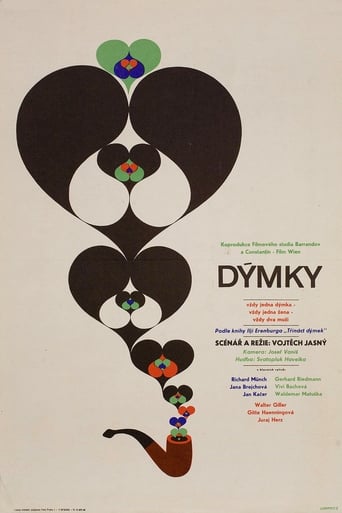 6.0
This three-part Austrian/Czech comedy stretches the boundaries of what is considered to be humorous. Part one finds a silent film actor upset because of a rival actor's attention to the former's wife. When he kills his rival, it is only when he is strapped to the electric chair that he realizes that this is his last live scene. The second episode has the wife of an elderly British nobleman having an affair with the young gamekeeper of their estate. Part three finds a peasant woman taking a lover when her husband goes off to fight the war.
The Pipes
1966
6.0This three-part Austrian/Czech comedy stretches the boundaries of what is considered to be humorous. Part one finds a silent film actor upset because of a rival actor's attention to the former's wife. When he kills his rival, it is only when he is strapped to the electric chair that he realizes that this is his last live scene. The second episode has the wife of an elderly British nobleman having an affair with the young gamekeeper of their estate. Part three finds a peasant woman taking a lover when her husband goes off to fight the war.
The Pipes
1966
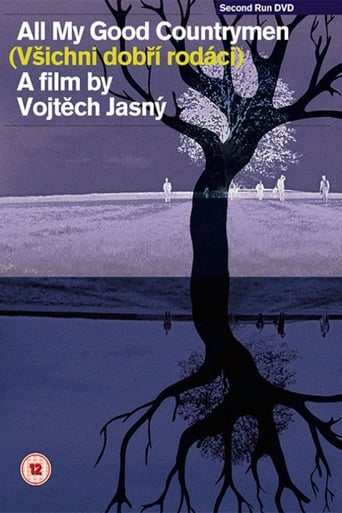 7.6
The lives of 7 friends in a small Czech town from 1945 to some time after 1958.
All My Good Countrymen
1969
7.6The lives of 7 friends in a small Czech town from 1945 to some time after 1958.
All My Good Countrymen
1969
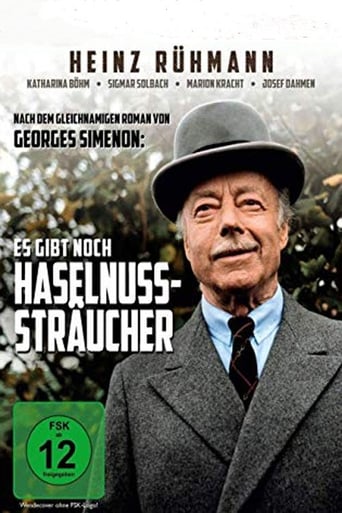 9.5
The story of François Perret-Latour, a formerly successful banker and member of Parisian high society. His exciting life is long gone, and despite having a large family, he now spends most of his time alone in his Paris apartment on Place Vendôme. But then, within a very short time, a series of events breathe new life into the old, lonely man. His 16-year-old granddaughter, who turns to him in desperation because she is pregnant, plays a key role in this...
Es gibt noch Haselnußsträucher
1983
A schizophrenic patient is is wasting away in a mental institution, until a young doctor encourages him to write poetry. The resulting masterpieces are however not able to stop the man from suicide.
Das Leben des schizophrenen Dichters Alexander März
1975
No synopsis available yet.
Die Stühle des Herrn Szmil
1979
No synopsis available yet.
Milos Forman: Portrait
—