

Camera
Aleksandr Gintsburg
Born — Died
1907-03-01 — 1972-03-10
Place of birth
Belorussia - USSR
Known for
Camera
Credits
6 titles
Known for
 5.0
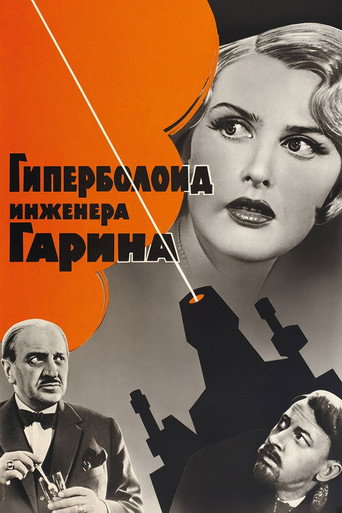
A Russian engineer Petr Garin possesses a unique beam-shooting weapon that can destroy any target. His goal is to achieve world domination with the help of this weapon. Vasily Shelga is out to stop him and also to prevent others getting possession of this weapon.
The Hyperboloid of Engineer Garin
1965
 7.0
Based on the play of the same name by the Uzbek poet, playwright, and composer Hamza Hakimzade Niyazi. Exposing the feudal way of life, the wealthy landowners (bais), the clergy, and Tsarist officials, the film depicts the awakening of class consciousness among working Uzbeks.
Bai and Farmhand
1954
 NR
Kazakhstan. Day and night, through scorching heat and fierce blizzards, drivers pilot their vehicles. One day, a grain convoy is caught in a snowstorm. A *Pobeda* car—carrying the artist Shaltay, his wife, and their child—accidentally finds itself in the midst of the convoy. It is here that the driver, Kemel, encounters Tana, his ex-wife. Determined to save both the people and the grain, Kemel and other brave men set out for the district center. Tana insists that Shaltay join them. Along the way, Shaltay feigns illness, forcing the drivers to turn back. The people in the convoy battle the elements; they are being searched for and are on everyone's minds.
One Night
1960
 9.0
The film tells the story of the development of Russian and Soviet cinema from the late 19th century to the late 1920s. It focuses in particular on the landmark silent films of Sergei Eisenstein, Vsevolod Pudovkin, and Alexander Dovzhenko, which have become classics of world cinema.
The Birth of Soviet Cinema
1976
Behind the camera
5.0A Russian engineer Petr Garin possesses a unique beam-shooting weapon that can destroy any target. His goal is to achieve world domination with the help of this weapon. Vasily Shelga is out to stop him and also to prevent others getting possession of this weapon.
The Hyperboloid of Engineer Garin
1965
7.0Based on the play of the same name by the Uzbek poet, playwright, and composer Hamza Hakimzade Niyazi. Exposing the feudal way of life, the wealthy landowners (bais), the clergy, and Tsarist officials, the film depicts the awakening of class consciousness among working Uzbeks.
Bai and Farmhand
1954
NRKazakhstan. Day and night, through scorching heat and fierce blizzards, drivers pilot their vehicles. One day, a grain convoy is caught in a snowstorm. A *Pobeda* car—carrying the artist Shaltay, his wife, and their child—accidentally finds itself in the midst of the convoy. It is here that the driver, Kemel, encounters Tana, his ex-wife. Determined to save both the people and the grain, Kemel and other brave men set out for the district center. Tana insists that Shaltay join them. Along the way, Shaltay feigns illness, forcing the drivers to turn back. The people in the convoy battle the elements; they are being searched for and are on everyone's minds.
One Night
1960
9.0The film tells the story of the development of Russian and Soviet cinema from the late 19th century to the late 1920s. It focuses in particular on the landmark silent films of Sergei Eisenstein, Vsevolod Pudovkin, and Alexander Dovzhenko, which have become classics of world cinema.
The Birth of Soviet Cinema
1976