
Directing
Bruce Nauman
Born
1941-12-06 (84)
Known for
Directing
Credits
59 titles
Bruce Nauman is an American artist. His practice spans a broad range of media including sculpture, photography, neon, video, drawing, printmaking, and performance. Nauman lives near Galisteo, New Mexico.
Known for
No synopsis available yet.
Stilbruch
2008
 NR
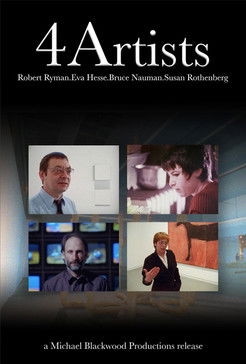
NR4 Artists: Robert Ryman, Eva Hesse, Bruce Nauman, Susan Rothenberg acts as a collective portrait of creators linked only by their stated intention of expressing ideas through art. Unconnected to traditional concepts of beauty, storytelling or pictorial representation, the artists discuss the context of their art and how their work and the public's perception of it have changed over time. This film offers the rare opportunity to see a large body of work in their studios.—Michael Blackwood Productions
4 Artists: Robert Ryman, Eva Hesse, Bruce Nauman, Susan Rothenberg
1988
 2.0
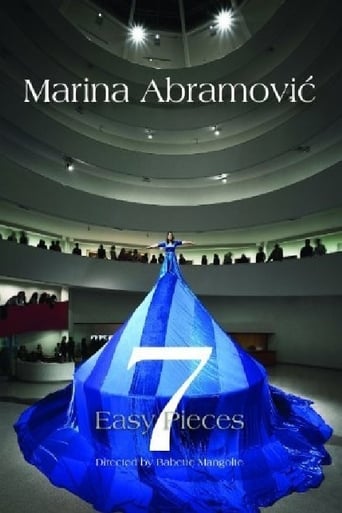
2.0For Seven Easy Pieces Marina Abramovic reenacted five seminal performance works by her peers, dating from the 1960's and 70's, and two of her own, interpreting them as one would a musical score. The project confronted the fact that little documentation exists from this critical early period and one often has to rely upon testimony from witnesses or photographs that show only portions of any given performance. The seven works were performed for seven hours each, over the course of seven consecutive days, November 9 –15, 2005 at the Guggenheim Museum, in New York City. Seven Easy Pieces examines the possibilities of representing and preserving an art form that is, by nature, ephemeral.
Seven Easy Pieces
2007
 NR
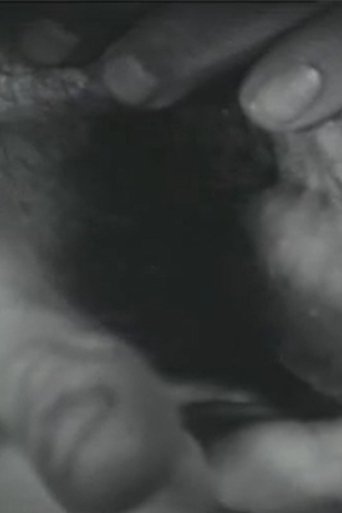
NRIn this film, Nauman bounces his testicles with one hand. Shot in extreme close-up, the work is perhaps an ironic reference to an earlier film Bouncing Two Balls Between the Floor and Ceiling with Changing Rhythms, in which he bounced rubber balls. Along with Black Balls, Gauze, and Pulling Mouth, Bouncing Balls is one of Nauman's "Slo-Mo" films which are shot with an industrial high speed camera.
Bouncing Balls
1969
 NR
NR“Two color monitors placed in the window played one of Nauman’s most recent videos, that of a clown jumping up and down shouting ‘No, No, No, No!’ endlessly. Nauman’s videos confront the viewer with behavior normally thought unacceptable. The clown’s simple declarative statement takes on new meaning and creates tension and anxiety for the viewer.” The New Museum Annual Report, 1988
No, No
1987
 NR
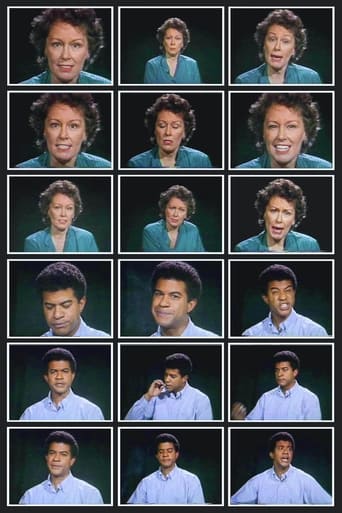
NRIn the work two monitors are displayed at head height on pedestals. The head and shoulders of a young black man appear on one; on the other is an older white woman. They both speak the same sequence of a hundred phrases five times, beginning in a flat neutral tone, and becoming increasingly animated and intense until by the fifth recitation they appear very angry. Their techniques of delivery are quite different, and result in a slippage of time, so that played on a continuous loop, the two tapes become out of sequence.
Good Boy Bad Boy
1985
Film credits
2010s · 2 titles
 NR
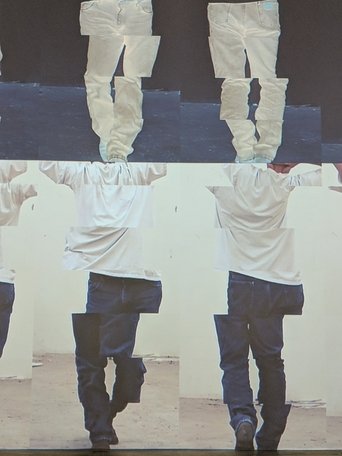
NRThis exhibition presents a new work by Bruce Nauman, Contrapposto Studies, I through VII, which continues the artist's exploration of video, sound, and performance. Characteristic of his work over the last five decades, Nauman transforms a simple and subtle gesture into a complex network of images and sound.
Contrapposto Studies, I through VII
2015
 NR
NRHD video installation (color, stereo sound), continuous play, two HD video sources, two HD video projectors, four speakers
For Beginners (all the combinations of the thumb and finger)
2010
1990s · 2 titles
 NR
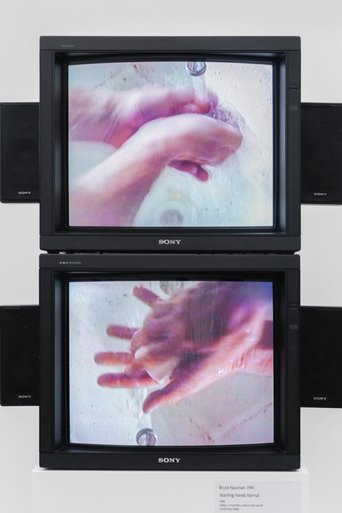
NRThis stacked two-screen video installation shows the artist washing his hands with a vigour that goes beyond a daily cleaning ritual. The energy of the gesture and the distortive effect of the double screen evoke a sinister prior event and a sense panic or fear. Here Nauman continues his ongoing investigation into human psychology and feelings of discomfort. The sense of anxiety is heightened by the echoing sound of the water draining away for the fifty-five-minute duration of the double footage.
Washing Hands Normal
1996
 NR
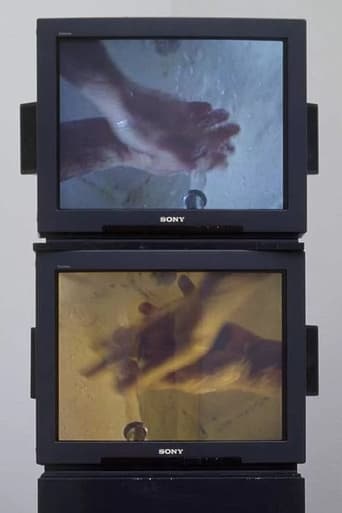
NRIn this work, shown on two stacked monitors, Bruce Nauman washes his hands with a thoroughness bordering on obsession. Each from a different vantage point, the two monitors present a simple everyday action, extended to fill almost an hour. The work is a self-portrait in which the hands serve as a metaphor for the artist’s creative potency. The camera’s unorthodox angle, the image’s shifting colors and the repetitive movement unite in giving this commonplace act an hypnotic effect. Bruce Nauman is particularly renowned for his video performances of the 1970s in which his body is the focus of improvised, repetitive acts. The works produced in the ‘90s refer back to the strategy he pursed in his earlier career.
Washing Hands Abnormal
1996
1980s · 2 titles
NR4 Artists: Robert Ryman, Eva Hesse, Bruce Nauman, Susan Rothenberg acts as a collective portrait of creators linked only by their stated intention of expressing ideas through art. Unconnected to traditional concepts of beauty, storytelling or pictorial representation, the artists discuss the context of their art and how their work and the public's perception of it have changed over time. This film offers the rare opportunity to see a large body of work in their studios.—Michael Blackwood Productions
4 Artists: Robert Ryman, Eva Hesse, Bruce Nauman, Susan Rothenberg
1988
NR“Two color monitors placed in the window played one of Nauman’s most recent videos, that of a clown jumping up and down shouting ‘No, No, No, No!’ endlessly. Nauman’s videos confront the viewer with behavior normally thought unacceptable. The clown’s simple declarative statement takes on new meaning and creates tension and anxiety for the viewer.” The New Museum Annual Report, 1988
No, No
1987
1960s · 12 titles
NRIn this film, Nauman bounces his testicles with one hand. Shot in extreme close-up, the work is perhaps an ironic reference to an earlier film Bouncing Two Balls Between the Floor and Ceiling with Changing Rhythms, in which he bounced rubber balls. Along with Black Balls, Gauze, and Pulling Mouth, Bouncing Balls is one of Nauman's "Slo-Mo" films which are shot with an industrial high speed camera.
Bouncing Balls
1969
 NR
NRCreative portrait of the artist Bruce Nauman.
The Bruce Nauman Story
1968
 NR
NRIn this film, Nauman applies black makeup to his testicles. The action was recorded with an industrial high-speed camera capable of shooting between one thousand and four thousand frames per second.
Black Balls
1969
 NR
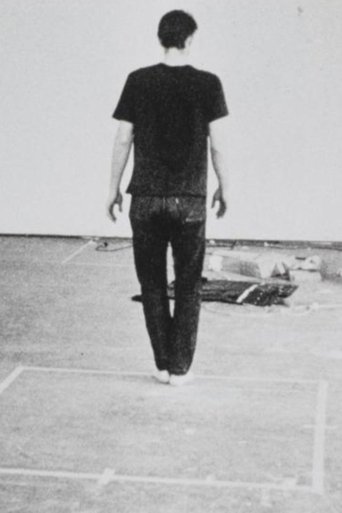
NRBruce Nauman - Dance or Exercise on the Perimeter of a Square (Square Dance) (1968), 16mm black-and-white film For this film, Bruce Nauman made a square of masking tape on the studio floor, with each side marked at its halfway point. To the sound of a metronome and beginning at one corner, he methodically moves around the perimeter of the square, sometimes facing into its interior, sometimes out.
Dance or Exercise on the Perimeter of a Square
1968
 NR
NRFlour Arrangements, a photo series showing Bruce Nauman pushing some piles of flour around on the floor. He uses his body by treating it like material for his art. Nauman committed himself to making one ephemeral flour sculpture each day for over a month.
Flour Arrangements
1967
 NR
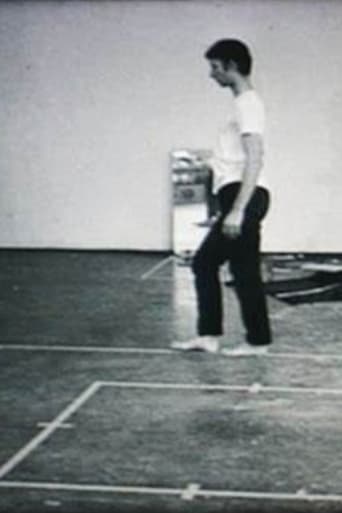
NRIn this silent film, Nauman walks around the perimeter of a large square marked off with masking tape. He shifts his hips exaggeratedly as he places one foot in front of the other, moving carefully around the square.
Walking in an Exaggerated Manner around the Perimeter of a Square
1968
 NR
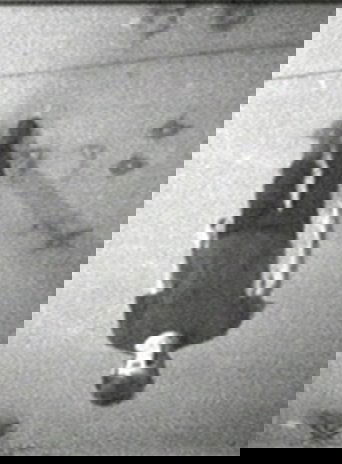
NRFrom an inverted position, high above the floor, the camera records Nauman’s trek back and forth and across the studio; his stamping creates a generative rhythm reminiscent of native drum beats or primitive dance rituals. However, Nauman is not participating in a social rite or communal ritual—he is completely individualized. Isolated in his studio, his actions have no apparent reason or cause beyond his aesthetic practice.
Stamping in the Studio
1968
 NR
NRViolin Film #1 (Playing the Violin as Fast as I Can), is one of several 1967-68 films featuring Nauman's violin-playing, in which the production of sound is subjected to procedural strategies that problematize its status as music and performance.
Violin Film #1 (Playing The Violin As Fast As I Can)
1968
 NR
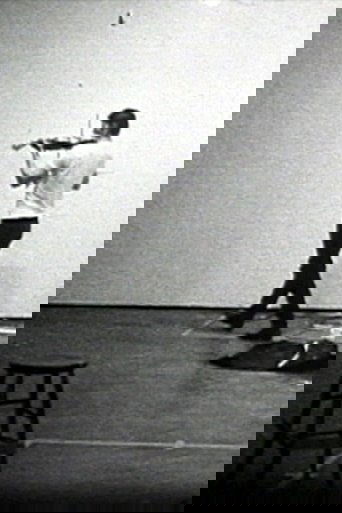
NRIn this film record of a studio activity, Nauman set himself the task of walking while playing "two notes [on a violin] very close together so that you could hear the beats in the harmonics." The camera is set centrally in the studio in a stationary position so that when he walks outside of the camera's view at times, only the sounds of the notes and footsteps are heard. Sound and image are out of sync, a situation noticeable only at the end of the film when the sound stops but Nauman continues to pace and play. [Overview Courtesy of Electronic Arts Intermix]
Playing a Note on the Violin While I Walk Around in the Studio
1968
 NR
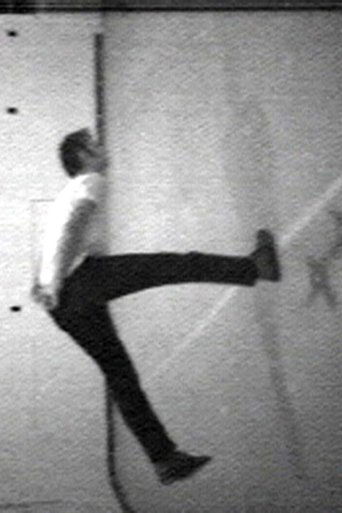
NRA fixed camera turned on its side records Nauman repeating for nearly an hour a laborious sequence of body movements inspired by passages in works by Samuel Beckett that describe similarly repetitive and meaningless activities. Hands clasped behind his back, he kicks one leg up at a right angle to his body, pivots forty-five degrees, falls forward hard with a thumping noise, extends the rear leg again at a right angle behind, and begins the sequence again. As in many of his fixed-camera film and video works, parts of Nauman's body disappear from the frame as he moves close to the camera; occasionally, he walks off-screen completely while the sound of his footsteps continues on the sound tracks.
Slow Angle Walk (Beckett Walk)
1968
 NR
NRIn an earlier film, Playing A Note on the Violin While I Walk Around the Studio (Violin #1), Nauman played a single note on the violin as he walked around his studio. In this video work, he remains in a stationary position while he plays four strings together. (These have been tuned to the notes of the title, as opposed to the normal G, D, A, and E.) The camera is fixed and turned on its side.
Violin Tuned D.E.A.D
1969
"In this videotape Nauman attempted to maintain the contrapposto pose associated with classical and Renaissance sculpture while walking down a long, narrow corridor of his own design. In this position, one knee is bent, and weight is shifted to the opposing hip. Trying to walk while holding the pose of Donatello's David is absurd and comical, but there is also a menacing discomfort to Walk with Contrapposto. With both hands behind his head, Nauman resembles a prisoner; the video camera positioned high above him might be a surveillance device. He elected to show the corridor without the video at the Whitney Museum in New York in 1969, inviting viewers to traverse it. Nauman removed himself from the piece yet maintained a claustrophobic sense of control: "It's another way of limiting the situation so that someone else can be a performer, but he can do only what I want him to do," he said."
Walk with Contrapposto
1968
Series credits
Behind the camera
2.0For Seven Easy Pieces Marina Abramovic reenacted five seminal performance works by her peers, dating from the 1960's and 70's, and two of her own, interpreting them as one would a musical score. The project confronted the fact that little documentation exists from this critical early period and one often has to rely upon testimony from witnesses or photographs that show only portions of any given performance. The seven works were performed for seven hours each, over the course of seven consecutive days, November 9 –15, 2005 at the Guggenheim Museum, in New York City. Seven Easy Pieces examines the possibilities of representing and preserving an art form that is, by nature, ephemeral.
Seven Easy Pieces
2007
NRIn this film, Nauman bounces his testicles with one hand. Shot in extreme close-up, the work is perhaps an ironic reference to an earlier film Bouncing Two Balls Between the Floor and Ceiling with Changing Rhythms, in which he bounced rubber balls. Along with Black Balls, Gauze, and Pulling Mouth, Bouncing Balls is one of Nauman's "Slo-Mo" films which are shot with an industrial high speed camera.
Bouncing Balls
1969
NR“Two color monitors placed in the window played one of Nauman’s most recent videos, that of a clown jumping up and down shouting ‘No, No, No, No!’ endlessly. Nauman’s videos confront the viewer with behavior normally thought unacceptable. The clown’s simple declarative statement takes on new meaning and creates tension and anxiety for the viewer.” The New Museum Annual Report, 1988
No, No
1987
NRIn the work two monitors are displayed at head height on pedestals. The head and shoulders of a young black man appear on one; on the other is an older white woman. They both speak the same sequence of a hundred phrases five times, beginning in a flat neutral tone, and becoming increasingly animated and intense until by the fifth recitation they appear very angry. Their techniques of delivery are quite different, and result in a slippage of time, so that played on a continuous loop, the two tapes become out of sequence.
Good Boy Bad Boy
1985
 NR
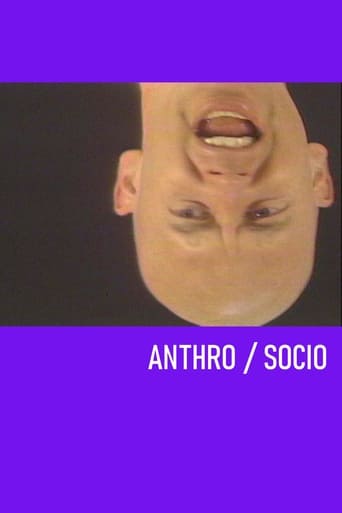
NROn three projection surfaces and six monitors, one sees the head of a man shown in different takes. While continually revolving about his own axis, in a variety of tonalities he sings «FEED ME/ EAT ME/ ANTHROPOLOGY,» «HELP ME/ HURT ME/ SOCIOLOGY,» and «FEED ME, HELP ME, EAT ME, HURT ME». In order to grasp the full effect of the installation «Anthro/Socio,» the space has to be entered. The calls heard from different directions irritate as much as the contradictory demands, aimed at the simplest of bodily needs and questioning them at the same time. The repetition of the alarming singsong, and multiple video shots of the singer, also create a disturbing moment. In «Anthro/ Socio,» not only because of the all-encompassing sensual experience does the viewer become part of the artwork; the installation also encourages viewers to give thought to the inherent qualities of subjects and objects, and to human beings in society.
Anthro / Socio
1991
 NR
NRExperimental short by Bruce Nauman.
Pinchneck
1968
 NR
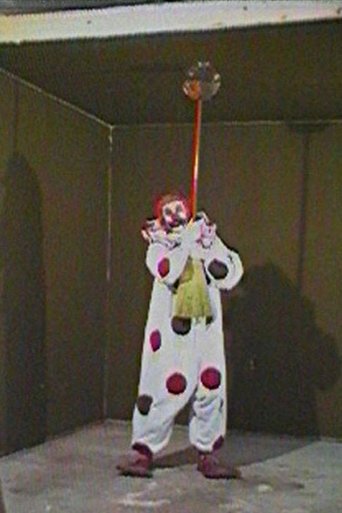
NRThis is one of four videos in a collection called Clown Torture, 1987 by Bruce Nauman- this one being "Clown with Goldfish" featured at the Chicago Art Institute.
Clown Torture: Clown with Goldfish
1987
 NR
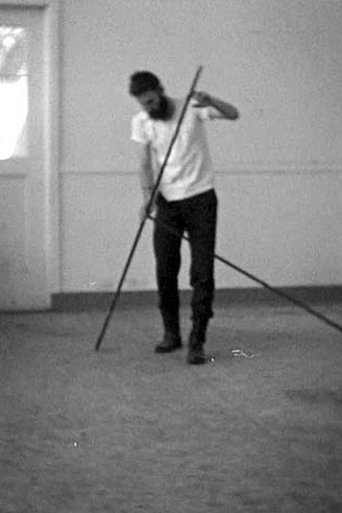
NRNauman shot two films in 1965, and despite their rudimentary execution they make a compelling diptych. Manipulating the T-Bar (1965) shows the artist delineating what would become his basic studio practice, arranging and rearranging a sculptural form within the constrained architectural parameters of the studio. Film of an actor pretending to be myself making a tape of the sound effects for the film “Manipulating the T-Bar,” on the other hand, introduces what would become Nauman’s consistent artistic persona: the absent presence.
Manipulating the T-Bar
1966
The artist Bruce Nauman set the corner post of a fence on his ranch in Galisteo, New Mexico, one day and videotaped the process. As the title of Setting a Good Corner (Allegory & Metaphor) suggests, Nauman sees this simple, even mundane, activity as an allegory and metaphor for other areas of life. Maybe we are to see the work as a metaphor for making a work of art, since Nauman has chosen to film it for display in a museum. One of the key elements of the video is Nauman’s decision to show us the entire process. He does not leave out the long digging scenes or edit the piece down to its most essential components.
Setting a Good Corner (Allegory & Metaphor)
2000
In this film, Nauman, bit by bit, pulls five or six yards of gauze from his mouth. Along with Black Balls and Pulling Mouth, it is one of the "Slo-Mo" films that he shot with an industrial high speed camera.
Gauze
1969
 NR
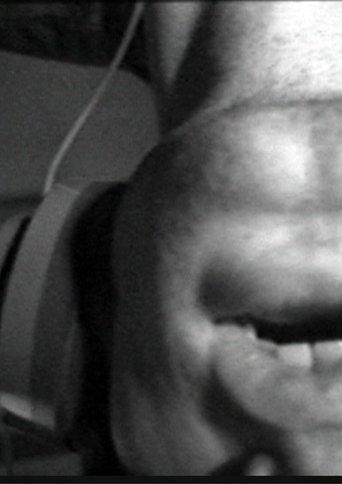
NRAn upside-down close-up of the artist’s mouth, Nauman repeats the words “lip sync” as the audio track shifts in and out of sync with the video. The disjunction between what is seen and heard keeps the viewer on edge, struggling to attach the sound of the words with the off-kilter movements of Nauman’s mouth.
Lip Sync
1969
 NR
NRIn this video work Bruce Nauman explores violence, gender and behaviour. Set around a simple middle class dining table, the scene quickly escalates into a slapstick fight between a man and a woman. Their actions become increasingly more erratic and aggressive yet also ridiculous and cartoon-like as the video progresses. Nauman explores the ways in which anger can be provoked by others and questions the way we can react to them. Much like many of his other artworks, he employs the use of humour and exaggeration to explore serious and even dangerous topics - he produced this work as a result of his frustration with futile acts of violence in ordinary life. He explains, “The viewer is presented with a hypnotic repetition of pointlessly cruel and destructive violence which is both seductive and alienating.”
Violent Incident: Man-Woman, Segment
1986
NRIn this film, Nauman applies black makeup to his testicles. The action was recorded with an industrial high-speed camera capable of shooting between one thousand and four thousand frames per second.
Black Balls
1969
NRBruce Nauman - Dance or Exercise on the Perimeter of a Square (Square Dance) (1968), 16mm black-and-white film For this film, Bruce Nauman made a square of masking tape on the studio floor, with each side marked at its halfway point. To the sound of a metronome and beginning at one corner, he methodically moves around the perimeter of the square, sometimes facing into its interior, sometimes out.
Dance or Exercise on the Perimeter of a Square
1968
 NR
NRThis is one of the "Slo-Mo" series of films Nauman shot. Here he distorts his mouth with his fingers for the duration of the film in an inverted, close-up image.
Pulling Mouth
—
NRFlour Arrangements, a photo series showing Bruce Nauman pushing some piles of flour around on the floor. He uses his body by treating it like material for his art. Nauman committed himself to making one ephemeral flour sculpture each day for over a month.
Flour Arrangements
1967
NRIn this silent film, Nauman walks around the perimeter of a large square marked off with masking tape. He shifts his hips exaggeratedly as he places one foot in front of the other, moving carefully around the square.
Walking in an Exaggerated Manner around the Perimeter of a Square
1968
NRThis exhibition presents a new work by Bruce Nauman, Contrapposto Studies, I through VII, which continues the artist's exploration of video, sound, and performance. Characteristic of his work over the last five decades, Nauman transforms a simple and subtle gesture into a complex network of images and sound.
Contrapposto Studies, I through VII
2015
In this videotape, a companion to Elke..., the actor's task was to imagine himself sinking into the floor. The resulting images portray him stretched out on the floor, sometimes face up, sometimes face down, in a series of dissolves. Although the mental component of the exercise is not captured, Nauman has recounted the highly charged atmosphere of the shooting session: "He was lying on his back and after about fifteen minutes he started choking and coughing. He sat up and said, 'I did it too fast and scared myself.' He didn't want to do it again, but did it anyway. At another time we were watching his hand through the camera and it was behaving very strangely. We asked him about it later and he said that he was afraid to move his hand because he thought he might lose his molecules." -- EAI
Tony Sinking into the Floor, Face Up, and Face Down
1973
NRFrom an inverted position, high above the floor, the camera records Nauman’s trek back and forth and across the studio; his stamping creates a generative rhythm reminiscent of native drum beats or primitive dance rituals. However, Nauman is not participating in a social rite or communal ritual—he is completely individualized. Isolated in his studio, his actions have no apparent reason or cause beyond his aesthetic practice.
Stamping in the Studio
1968
 NR
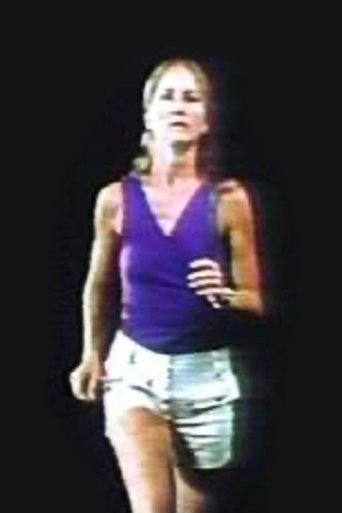
NRImages of sixteen men and women are shown, one by one, as they run on a conveyor belt against a black background. They appear to be in a complete void. The camera films the runners from all kinds of angles: sometimes from the front, from the knees up, then in profile or a focus on one of the limbs in close up. The heavy breathing of their exertions is audible. The tight close-ups of the limbs lend the moving body parts an almost abstract, mechanical character.
Pursuit
1975
In 1969 Nauman had devised a set of mental exercises in which a live performer was to concentrate on sinking into the floor or allowing the floor to rise up over him or her. This videotape was based on these exercises and were the first videotapes Nauman made in a professional studio. They also were the first to use performers other than himself and to utilize an optical effect. (His earlier videos all employ a fixed camera and a single long take.) "We used two cameras and changed locations from time to time," recalled Nauman in a 1979 interview. "What I was investigating at that time was how to examine a purely mental activity as opposed to a purely physical situation which might incur some mental activity." -- EAI
Elke Allowing the Floor to Rise Up Over Her, Face Up
1973
NRViolin Film #1 (Playing the Violin as Fast as I Can), is one of several 1967-68 films featuring Nauman's violin-playing, in which the production of sound is subjected to procedural strategies that problematize its status as music and performance.
Violin Film #1 (Playing The Violin As Fast As I Can)
1968
 NR
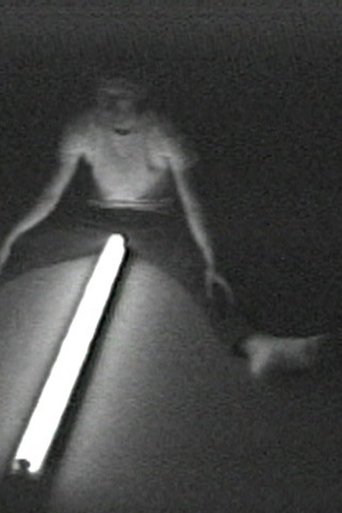
NRThis film records the activities Nauman performed four years earlier in 1965. Both in this performance and in this work he strikes and holds a variety of poses on the floor in relation to a glowing fluorescent light fixture.
Manipulating a Fluorescent Tube
1969
NRThis stacked two-screen video installation shows the artist washing his hands with a vigour that goes beyond a daily cleaning ritual. The energy of the gesture and the distortive effect of the double screen evoke a sinister prior event and a sense panic or fear. Here Nauman continues his ongoing investigation into human psychology and feelings of discomfort. The sense of anxiety is heightened by the echoing sound of the water draining away for the fifty-five-minute duration of the double footage.
Washing Hands Normal
1996
 NR
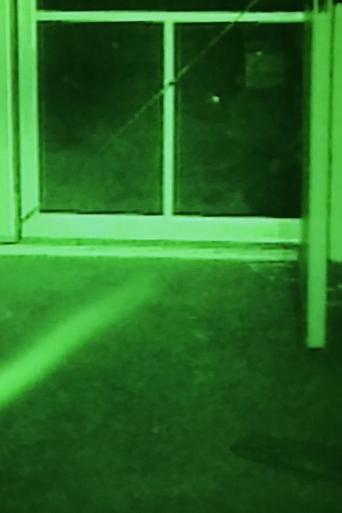
NRSeven screens show videos of as many places in Bruce Nauman's studio during the summer of 2000. He filmed these slices of night life with an infrared camera and processed them during editing. But one person is conspicuous by his absence: the artist. From time to time, only a cat wanders between the workbenches. Test Tape Chance John Cage is an incursion into a place dedicated to creation. It highlights the silence, sleep and inactivity at the heart of the creative process.
Test Tape Fat Chance John Cage
2001
NRIn this film record of a studio activity, Nauman set himself the task of walking while playing "two notes [on a violin] very close together so that you could hear the beats in the harmonics." The camera is set centrally in the studio in a stationary position so that when he walks outside of the camera's view at times, only the sounds of the notes and footsteps are heard. Sound and image are out of sync, a situation noticeable only at the end of the film when the sound stops but Nauman continues to pace and play. [Overview Courtesy of Electronic Arts Intermix]
Playing a Note on the Violin While I Walk Around in the Studio
1968
NRA fixed camera turned on its side records Nauman repeating for nearly an hour a laborious sequence of body movements inspired by passages in works by Samuel Beckett that describe similarly repetitive and meaningless activities. Hands clasped behind his back, he kicks one leg up at a right angle to his body, pivots forty-five degrees, falls forward hard with a thumping noise, extends the rear leg again at a right angle behind, and begins the sequence again. As in many of his fixed-camera film and video works, parts of Nauman's body disappear from the frame as he moves close to the camera; occasionally, he walks off-screen completely while the sound of his footsteps continues on the sound tracks.
Slow Angle Walk (Beckett Walk)
1968
NRIn an earlier film, Playing A Note on the Violin While I Walk Around the Studio (Violin #1), Nauman played a single note on the violin as he walked around his studio. In this video work, he remains in a stationary position while he plays four strings together. (These have been tuned to the notes of the title, as opposed to the normal G, D, A, and E.) The camera is fixed and turned on its side.
Violin Tuned D.E.A.D
1969
 NR
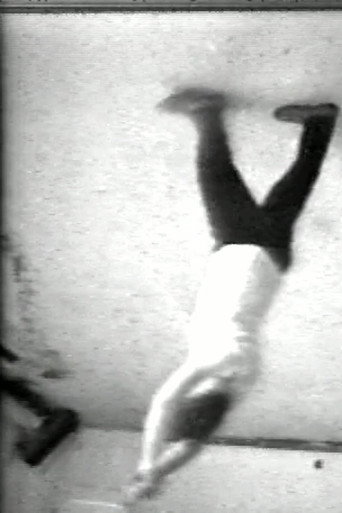
NRThis video registration of a performance in his studio shows Bruce Nauman walking the perimeter of different shapes: circles, spirals and figure eights. Nauman recorded the performance on video because, unlike film, video was a medium that allowed him to make longer recordings. This videotape was recorded in a single take lasting almost one hour, which was the maximum capacity of video tape at that time. This aspect also serves to underline the time-based quality of the performance. By inverting the camera, the artist appears to be walking on the ceiling, an effect that Nauman amplified by holding his hands above his head – a physically demanding task in itself. In the video, Nauman’s arms seem to dangle at his sides. -- Stedelijk
Pacing Upside Down
1969
 NR
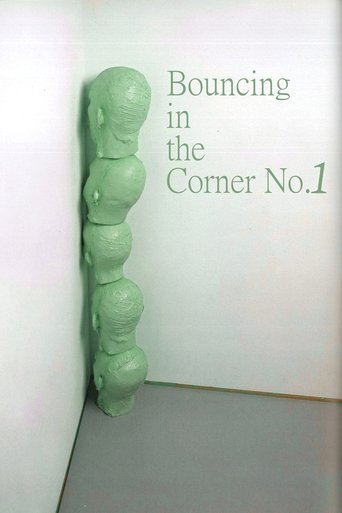
NRFor this videotape, Nauman turned the camera sideways and positioned it so that his head is cropped from the frame and his body is presented from neck to ankles. As he stands in the corner, his back to the wall, he appears to be lying down; falling backwards into the corner and then pushing himself off the wall again, he appears to be trying to levitate himself... As he performs these actions, his hands slam into the wall to break his falls, and the sounds become an integral part of the activities filmed. -- EAI
Bouncing in the Corner No. 1
1968
"In this videotape Nauman attempted to maintain the contrapposto pose associated with classical and Renaissance sculpture while walking down a long, narrow corridor of his own design. In this position, one knee is bent, and weight is shifted to the opposing hip. Trying to walk while holding the pose of Donatello's David is absurd and comical, but there is also a menacing discomfort to Walk with Contrapposto. With both hands behind his head, Nauman resembles a prisoner; the video camera positioned high above him might be a surveillance device. He elected to show the corridor without the video at the Whitney Museum in New York in 1969, inviting viewers to traverse it. Nauman removed himself from the piece yet maintained a claustrophobic sense of control: "It's another way of limiting the situation so that someone else can be a performer, but he can do only what I want him to do," he said."
Walk with Contrapposto
1968
NRHD video installation (color, stereo sound), continuous play, two HD video sources, two HD video projectors, four speakers
For Beginners (all the combinations of the thumb and finger)
2010
 NR
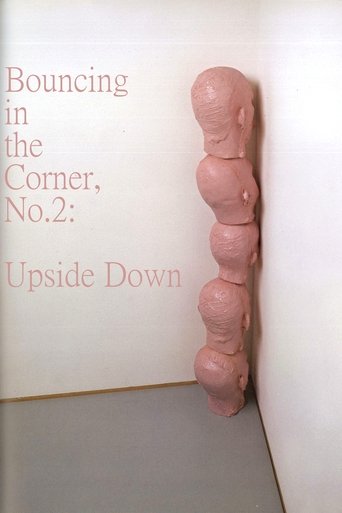
NRNauman, his head cropped from the frame, is shown bouncing in the corner of his studio. Here, however, the images were recorded with a fixed camera that was inverted rather than turned on its side. -- EAI
Bouncing in the Corner, No. 2: Upside Down
1969
 NR
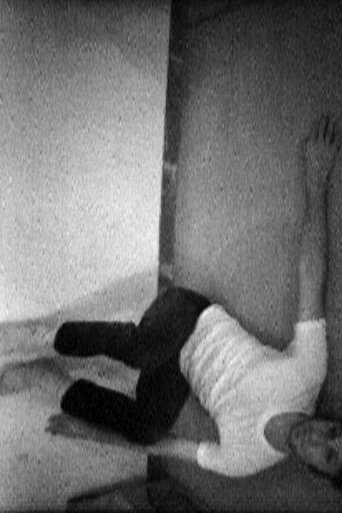
NRBruce assumes a set of positions in relation to the wall and floor.
Wall-Floor Positions
1968
 NR
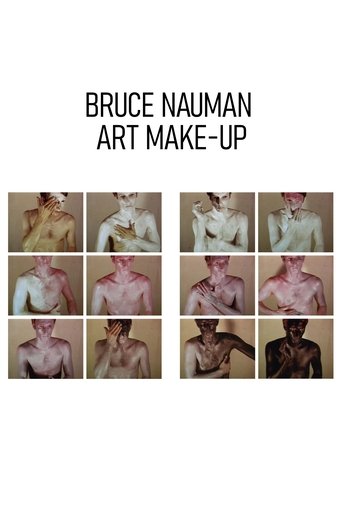
NRArt Make-Up is composed of four individual segments, each 10 minutes long. In them, Nauman appears tightly framed by the camera against a blank background, shirtless, and visible from the torso up. The action begins. Dipping his fingers into a small dish of makeup, he smears his face and body with the thick pigment until he is entirely covered. As the work’s title indicates, he begins with white makeup. He then moves on to pink, green, and, finally, black, layering each color on top of the previous ones.
Art Make-Up
—
NRIn this work, shown on two stacked monitors, Bruce Nauman washes his hands with a thoroughness bordering on obsession. Each from a different vantage point, the two monitors present a simple everyday action, extended to fill almost an hour. The work is a self-portrait in which the hands serve as a metaphor for the artist’s creative potency. The camera’s unorthodox angle, the image’s shifting colors and the repetitive movement unite in giving this commonplace act an hypnotic effect. Bruce Nauman is particularly renowned for his video performances of the 1970s in which his body is the focus of improvised, repetitive acts. The works produced in the ‘90s refer back to the strategy he pursed in his earlier career.
Washing Hands Abnormal
1996
A stationary camera set upside down and framing a long shot of the studio records Nauman, with his hands clasped behind his back, repeating a series of steps similar to those of Slow Angle Walk (Beckett Walk). The curious exercise combines pirouettes, goose steps, and crabbed, angled arabesques. The inverted image further disorients our sense of the maneuvers, which appear to be taking place on the ceiling. -- EAI
Revolving Upside Down
1969