
Acting
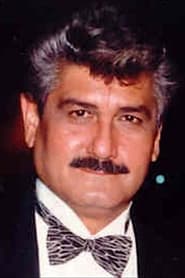
Justino Díaz
Born
1940-01-29 (86)
Place of birth
San Juan, Puerto Rico
Known for
Acting
Credits
10 titles
Justino Díaz (born January 29, 1940) is a Puerto Rican operatic bass-baritone. In 1963, Díaz won an annual contest held at the Metropolitan Opera of New York, becoming the first Puerto Rican to obtain such an honor and as a consequence, made his Metropolitan debut in October 1963 in Verdi's Rigoletto as Monterone. Díaz was born in San Juan, Puerto Rico, the capital of the island, but lived and was raised in the town of Cataño. He attended Robinson Elementary School where, at the age of 8, he started to participate in the school's activities as a singer. In his first school play, when he was 10 years old, he sang the song "Old Black Joe", which became his favorite. After finishing his primar…
Known for
 6.1
The best in the performing arts from across America and around the world including a diverse programming portfolio of classical music, opera, popular song, musical theater, dance, drama, and performance documentaries.
Great Performances
1971
 8.0
Le Grand Échiquier is a French variety television program created and presented by Jacques Chancel. It aired at 8:30 pm on the first channel of the ORTF from January 12, 1972 to July 12, 1972, then on the second color channel of the ORTF from September 1972 to December 1974, and finally on Antenne 2 from January 1975 to December 21, 1989. The program returned to France 2 on December 20, 2018 and is hosted by Anne-Sophie Lapix.
Le Grand Échiquier
1972
 6.5
Aging opera singer Maria Callas tries to make a comeback by performing in a production of Bizet's "Carmen."
Callas Forever
2002
Documentary on the life and accomplishments of the members of this uniquely talented musical family. The film focuses on the Figueroa family’s history within the context of its creative universe, dating back to the 19th century. Through the use of photographs, historic film footage, recordings, sheet music, newspaper clippings, and posters, the musical trajectory of the family is brought to life and their role in transforming the musical history of Puerto Rico and the world is portrayed.
La familia Figueroa: una dinastía musical
2015
Through interviews with friends, family, and colleagues, the documentary relates the life and career of Rafael Hernández, one of Puerto Rico’s most renowned and beloved composers of popular songs.
Rafael Hernández, jibarito del mundo
1992
 9.0
A Victor Hugo play, haunting and scandalous, provided the inspiration for Verdi’s mid-career masterpiece. A vengeful but misguided court jester strives to save his daughter from a duke’s licentious clutches, but can't part with the feeling that a curse looms over all of his actions. In Rigoletto, the composer introduces several of his most iconic arias and duets—as well as an 11th-hour quartet that counts among the finest moments in opera.
Rigoletto
1977
Film credits
2010s · 2 titles
Documentary on the life and accomplishments of the members of this uniquely talented musical family. The film focuses on the Figueroa family’s history within the context of its creative universe, dating back to the 19th century. Through the use of photographs, historic film footage, recordings, sheet music, newspaper clippings, and posters, the musical trajectory of the family is brought to life and their role in transforming the musical history of Puerto Rico and the world is portrayed.
La familia Figueroa: una dinastía musical
2015
 8.2
In this documentary, award-winning filmmaker Susan Froemke explores the creation of the Metropolitan Opera’s storied home of the last five decades. Drawing on rarely seen archival footage, stills, and recent interviews, The Opera House looks at an important period of the Met’s history and delves into some of the untold stories of the artists, architects, and politicians who shaped the cultural life of New York City in the ’50s and ’60s. Among the notable figures in the film are famed soprano Leontyne Price, who opened the new Met in 1966 in Samuel Barber’s Antony and Cleopatra; Rudolf Bing, the Met’s imperious General Manager who engineered the move from the old house to the new one; Robert Moses, the unstoppable city planner who bulldozed an entire neighborhood to make room for Lincoln Center; and Wallace Harrison, whose quest for architectural glory was never fully realized.
The Opera House
2017
2000s · 1 titles
1980s · 2 titles
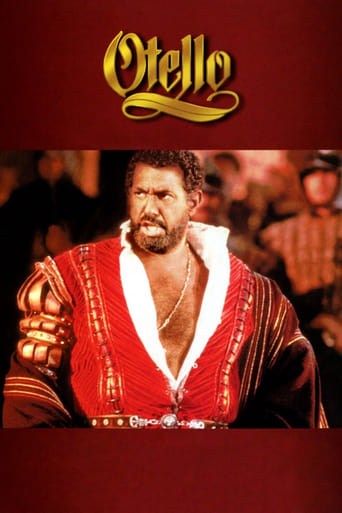 6.2
Based on Shakespeare's play, Verdi's opera depicts the devastating effects of jealousy, "...the green-eyed monster which doth mock the meat it feeds upon". Believing Otello has promoted the fast-rising Cassio over himself, Iago plots to destroy both Cassio and Otello. Iago convinces the jealous Otello that his beautiful wife Desdemona is unfaithful, and that Cassio is her lover. Jealousy is followed by tragedy, then retribution, "Has Heaven no more thunderbolts?"
Otello
1986
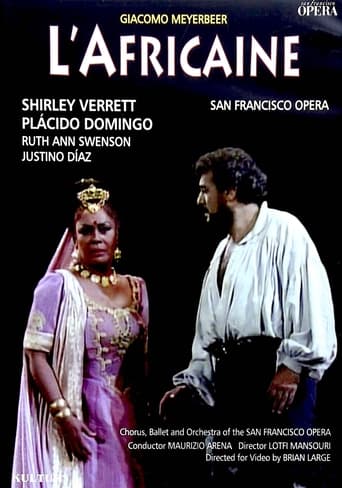 7.5
This was a 1988 revival of a 1971 production that teamed Domingo (Vasco da Gama) and Verrett (Selika - both then very much in their prime) in Meyerbeer's discursive swan-song. Seventeen years on, they are more statuesque than sexy, but both give larger-than-life performances that contain moments of completely thrilling vocalism. The casting is very strong, with the exception of Justino Diaz's Nelusko, which has strong presence but not much vocal allure. As Inez, Vasco da Gama's fiancee and rival for Shirley Verrett, Ruth Ann Swneson sings with great beauty and has impressive stage presence, very much holding her own in the confrontation with Verrett in the last act. Domingo is refulgent of tone and dramatically convincing, and he and Verrett strike sparks. She really comes into her own in one of the most preposterous mad-scenes in all opera, where she is slowly poisoned by the scent of a giant tree, contriving to make this dramatically truthful and even moving.
Meyerbeer: L'Africaine
1988

Series credits
6.1The best in the performing arts from across America and around the world including a diverse programming portfolio of classical music, opera, popular song, musical theater, dance, drama, and performance documentaries.
Great Performances
1971
8.0Le Grand Échiquier is a French variety television program created and presented by Jacques Chancel. It aired at 8:30 pm on the first channel of the ORTF from January 12, 1972 to July 12, 1972, then on the second color channel of the ORTF from September 1972 to December 1974, and finally on Antenne 2 from January 1975 to December 21, 1989. The program returned to France 2 on December 20, 2018 and is hosted by Anne-Sophie Lapix.
Le Grand Échiquier
1972