
Directing
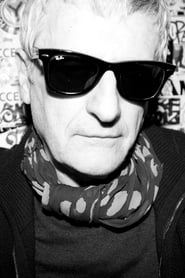
Michel Auder
Place of birth
Soissons, Aisne, France
Known for
Directing
Credits
53 titles
Michel Auder’s films, which span in length from five minutes to multiple hours, are all edited from the thousands of hours of footage the artist has casually shot throughout his life. Early on, Auder made a habit of carrying portable video-recording equipment on a daily basis, and so amassed a biographical reel that frequently captured his fellow artists in the New York art scene, including such personalities as Cindy Sherman, Larry Rivers, and, most famously, Alice Neel. Auder did not consider his practice to be factually driven, however: “It was not in any way a documentary, not to be related as truth. This work reflects my own feelings.” Auder’s approach to filming was largely inspired by…
Known for
 7.0
7.0Jonas Mekas assembles 160 portraits, appearances, and fleeting sketches of underground and independent filmmakers captured between 1955 and 1996. Fast-paced and archival in spirit, the film celebrates the avant-garde as its own “nation of cinema,” a vital community existing outside the dominance of commercial film.
Birth of a Nation
1997
Homeo is a mental construction made from visual reality, just as music is made from auditive reality. I put in this film no personal intentions. All my intentions are personal. I’ve made this film thinking of what the audience would have liked to see, not something specific that I wanted to say: what the film depicts is above all reality, not fiction. Homeo is, for me, the search for an autonomous cinematographic language, which doesn't owe anything to traditional narrative, or maybe everything. Cinema is, above all, part of a way of life which will become more and more self-assured in the years and century to come. We are part of this change, and that’s why I tried in Homeo to establish a series of perpetual changes, in constant evolution or regress, which tries, above all, to focus on things.
Homeo
1967
 5.0
5.0Cleopatra situates itself in the same relationship to Hollywood as the Warhol/Morrisey films of the period. It corresponds to Joseph Mankiewicz's 1963 Cleopatra, starring Elizabeth Taylor and Richard Burton which Auder's cast watched and used as the starting point for scene by scene improvisation Auder drew his cast from Warhol's ensemble – including not only Viva and Louis Waldon, but also Taylor Mead, Ondine, Andrea Feldman, Gerard Melanga and others.
Cleopatra
1970
 NR
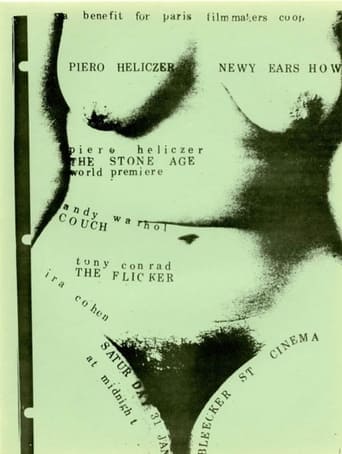
NR"The question is, it is either going to be a stoned age or a new Stone Age" - Louis Brigante
The Stone Age
1970
a fictional autobiography in which a day from the artist’s life—filtered, edited, mediated, and performed by another actor—becomes the “ghost” of the person, a doubled identity that can never fully capture its subject. The work also conjures the spectral presence of a long-gone New York City, an uncanny body-double on the verge of austerity and collapse.
Chasing the Dragon
1982
 6.6
6.6“FUN AND GAMES (FOR EVERYONE): a pitch black and milky white film shot during one of Olivier Mosset's exhibition openings. A psychedelic game of improvisation joins the Zanzibar group with Salvador Dalí, Barbet Schroeder and Jean Mascolo... the solarized image reminiscent of thick strokes of a paintbrush.” - Philippe Azoury
Fun and Games for Everyone
1969
Film credits
2000s · 2 titles
 8.0
8.0The Feature does not reconcile fact and fiction; instead, it blurs the definitions seemingly represented by the film’s two clearly demarcated registers: that of the archival footage and that of the new, theatrical material. In his guise as “Michel Auder,” living a fulsome and extravagant life, replete with beautiful women and a rock-cut pool overlooking Los Angeles, the art world is revealed as a sham, and his character exhibits a repulsive narcissism. And yet, when caught in quiet moments, something poignant emerges—a glimmer of truth that rebels against the entire endeavour. Or maybe, that’s what makes The Feature.
The Feature
2008
Video by Michel Auder.
Apocalypse Later - Hudson
2003
1990s · 3 titles
7.0Jonas Mekas assembles 160 portraits, appearances, and fleeting sketches of underground and independent filmmakers captured between 1955 and 1996. Fast-paced and archival in spirit, the film celebrates the avant-garde as its own “nation of cinema,” a vital community existing outside the dominance of commercial film.
Birth of a Nation
1997
Video recorded in 1986, edited 1993. ”You know you're addicted to heroin when you begin proclaiming every bag to be your last.” Auder says this from experience. Throughout the early and mid 1980s he was an addict. In this candid piece of disclosure he demonstrates a method of smoking heroin referred to as Chasing the Dragon. Drumming his fingers on the table-top while waiting for the high to take effect, heroin use is depicted as a boredom far from bliss. The work ends with Auder in a druginduced stupor, delivering a rambling proclamation about kicking the habit, ”good-bye dope, good bye monkey.”
My Last Bag of Heroin (For Real)
1993
Video by Michel Auder.
Bitte Danke
1999
1970s · 3 titles
NR"The question is, it is either going to be a stoned age or a new Stone Age" - Louis Brigante
The Stone Age
1970
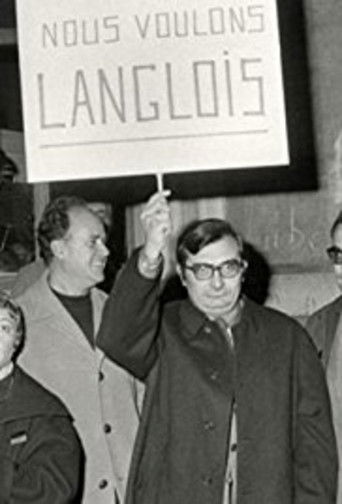 5.3
5.3Documentary portrait of Henri Langlois, co-founder of the Cinémathèque Française.
Langlois
1970
The Chronicles capture the natural and cultural beauty of Morocco from its ancient walled villages to its nomadic caravans. Music comes from everywhere. Edited almost thirty years apart, the two Chronicles together are a study in Auder's approach to his memories. The footage is all from the same trip that was a family vacation. Considering Chronicles/Morocco, 1971 a construct of emotional convenience unfaithful to memory, Auder decided to supplement the first version with a fuller account. The two works feature almost entirely different footage. There are, however, sections where one can see where Auder has omitted Viva. The star of the 1971 version is a young Moroccan Adonis who appoints himself tour-guide for a group of Europeans including Michel. The camera follows his charming antics as he flaunts his nubile body and rather blunt but effective skills as a hunter.
Chronicles: Morocco
1972
1960s · 4 titles
Homeo is a mental construction made from visual reality, just as music is made from auditive reality. I put in this film no personal intentions. All my intentions are personal. I’ve made this film thinking of what the audience would have liked to see, not something specific that I wanted to say: what the film depicts is above all reality, not fiction. Homeo is, for me, the search for an autonomous cinematographic language, which doesn't owe anything to traditional narrative, or maybe everything. Cinema is, above all, part of a way of life which will become more and more self-assured in the years and century to come. We are part of this change, and that’s why I tried in Homeo to establish a series of perpetual changes, in constant evolution or regress, which tries, above all, to focus on things.
Homeo
1967
6.6“FUN AND GAMES (FOR EVERYONE): a pitch black and milky white film shot during one of Olivier Mosset's exhibition openings. A psychedelic game of improvisation joins the Zanzibar group with Salvador Dalí, Barbet Schroeder and Jean Mascolo... the solarized image reminiscent of thick strokes of a paintbrush.” - Philippe Azoury
Fun and Games for Everyone
1969
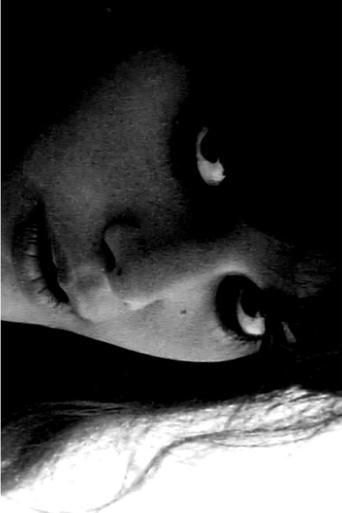 NR
NRThe film begins with shots in Venice, passers-by seized from a hotel room, with Tina Aumont. It continues in Morocco during the filming of Bed of the Virgin, in a hotel room, people chat, play the guitar, smoke.
Home Movie : Marrakech
1968
One of the very few films made by Etienne O'Leary, all of which emerged from the French underground circa 1968 and can be very loosely designated 'diary films.' Like the contemporaneous films by O'Leary's more famous friend Pierre Clementi, they trippily document the drug-drenched hedonism of that era's dandies. O'Leary worked with an intoxicating style that foregrounded rapid and even subliminal cutting, dense layering of superimposed images and a spontaneous notebook type shooting style. Yet even if much of O'Leary's material was initially 'diaristic,' depicting the friends, lovers, and places that he encountered in his private life, the metamorphoses it underwent during editing transformed it into a series of ambiguously fictionalized, sometimes darkly sexual fantasias. - Experimental Film Club
Chromo sud
1968
Behind the camera
5.0Cleopatra situates itself in the same relationship to Hollywood as the Warhol/Morrisey films of the period. It corresponds to Joseph Mankiewicz's 1963 Cleopatra, starring Elizabeth Taylor and Richard Burton which Auder's cast watched and used as the starting point for scene by scene improvisation Auder drew his cast from Warhol's ensemble – including not only Viva and Louis Waldon, but also Taylor Mead, Ondine, Andrea Feldman, Gerard Melanga and others.
Cleopatra
1970
a fictional autobiography in which a day from the artist’s life—filtered, edited, mediated, and performed by another actor—becomes the “ghost” of the person, a doubled identity that can never fully capture its subject. The work also conjures the spectral presence of a long-gone New York City, an uncanny body-double on the verge of austerity and collapse.
Chasing the Dragon
1982
a fictional autobiography in which a day from the artist’s life—filtered, edited, mediated, and performed by another actor—becomes the “ghost” of the person, a doubled identity that can never fully capture its subject. The work also conjures the spectral presence of a long-gone New York City, an uncanny body-double on the verge of austerity and collapse.
Chasing the Dragon
1982
8.0The Feature does not reconcile fact and fiction; instead, it blurs the definitions seemingly represented by the film’s two clearly demarcated registers: that of the archival footage and that of the new, theatrical material. In his guise as “Michel Auder,” living a fulsome and extravagant life, replete with beautiful women and a rock-cut pool overlooking Los Angeles, the art world is revealed as a sham, and his character exhibits a repulsive narcissism. And yet, when caught in quiet moments, something poignant emerges—a glimmer of truth that rebels against the entire endeavour. Or maybe, that’s what makes The Feature.
The Feature
2008
8.0The Feature does not reconcile fact and fiction; instead, it blurs the definitions seemingly represented by the film’s two clearly demarcated registers: that of the archival footage and that of the new, theatrical material. In his guise as “Michel Auder,” living a fulsome and extravagant life, replete with beautiful women and a rock-cut pool overlooking Los Angeles, the art world is revealed as a sham, and his character exhibits a repulsive narcissism. And yet, when caught in quiet moments, something poignant emerges—a glimmer of truth that rebels against the entire endeavour. Or maybe, that’s what makes The Feature.
The Feature
2008
 NR
NRNo synopsis available yet.
Coupla White Faggots Sitting Around Talking
1981
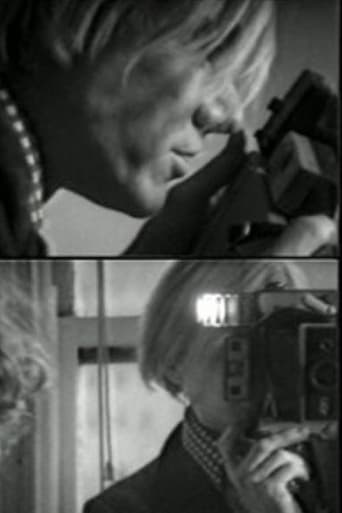 8.0
8.0In 1969 Michel Auder began a series of video diaries that chronicled the art scene in downtown New York. In Chelsea Girls with Andy Warhol, Auder captures revealing moments in Warhol's public and private life: the opening of the 1970 Whitney Museum retrospective, a party held at John Lennon and Yoko Ono's home, a heated telephone conversation between Warhol, Viva and Brigid Berlin, and an illuminating interview conducted with Larry Rivers, the grandfather of Pop Art, following the publication of The Philosophy of Andy Warhol in 1975. The issue of money is a consistent topic of conversation with Viva, who after departing the Factory in 1969 sent Warhol a series of threatening letters demanding money.
Chelsea Girls with Andy Warhol
1976
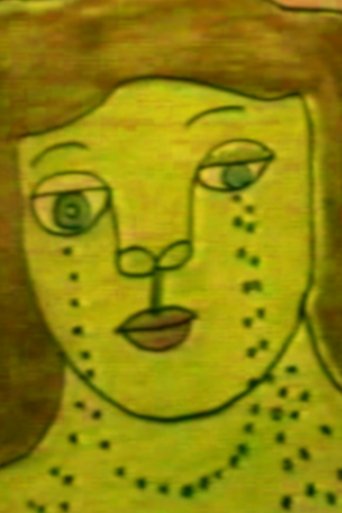 NR
NRMichel reads a book about love, with pictures of naked ladies flashing by and a song by Laurie Anderson playing in the background.
My Love
1978
 NR
NRA portrait of Rome that would have made Plutarch proud, Roman Variations was made during a residency at a studio provided by the gallerist Barbara Gladstone.
Roman Variations
1991
 NR
NRAuder's reminiscences from 1986 - 87.
Magnetic Notes, 1986-1987
1988
Gulf War TV War was made in one of Auder's usual domestic modes: filming his TV, in which he documents American television news during the run-up to the first Gulf War, a mixture of crass propaganda and feeble journalism, image and text. Montages of antiwar demonstrators marching across Manhattan and gray-faced politicians at dark desks extolling invasion compete with commercials and text scrolling the pixilated screen.
Gulf War TV War
2017
 NR
NRMichel Auder’s Jesus – in which underground NY artists and Warhol superstars openly discuss their beliefs. Jesus – which premiered as a screening at The Kitchen in 1980 – mixes documentary elements such as footage of evangelical TV programs, books, cartoons, paintings, and other Jesus related imagery – with performances including Taylor Mead as a priest in the West Village and Florence Lambert playing a crucified Jesus. Also, intercut throughout are surprisingly candid interviews with Auder’s friends, family, and people he approaches on New York City streets about their faith and relationship to the world’s most famous person. Among those interviewed are Diego Cortez, Jackie Curtis, Gerard Malanga, Alice Neel (Andrew Neel’s grandmother), Larry Rivers, and Viva.
Jesus
1979
NRMichel Auder’s Jesus – in which underground NY artists and Warhol superstars openly discuss their beliefs. Jesus – which premiered as a screening at The Kitchen in 1980 – mixes documentary elements such as footage of evangelical TV programs, books, cartoons, paintings, and other Jesus related imagery – with performances including Taylor Mead as a priest in the West Village and Florence Lambert playing a crucified Jesus. Also, intercut throughout are surprisingly candid interviews with Auder’s friends, family, and people he approaches on New York City streets about their faith and relationship to the world’s most famous person. Among those interviewed are Diego Cortez, Jackie Curtis, Gerard Malanga, Alice Neel (Andrew Neel’s grandmother), Larry Rivers, and Viva.
Jesus
1979
NRMichel Auder’s Jesus – in which underground NY artists and Warhol superstars openly discuss their beliefs. Jesus – which premiered as a screening at The Kitchen in 1980 – mixes documentary elements such as footage of evangelical TV programs, books, cartoons, paintings, and other Jesus related imagery – with performances including Taylor Mead as a priest in the West Village and Florence Lambert playing a crucified Jesus. Also, intercut throughout are surprisingly candid interviews with Auder’s friends, family, and people he approaches on New York City streets about their faith and relationship to the world’s most famous person. Among those interviewed are Diego Cortez, Jackie Curtis, Gerard Malanga, Alice Neel (Andrew Neel’s grandmother), Larry Rivers, and Viva.
Jesus
1979
Reel-to-reel video by Michel Auder, recorded 1971, edited 2009. Features Auder's former wife Viva.
Confession
2009
The Chronicles capture the natural and cultural beauty of Morocco from its ancient walled villages to its nomadic caravans. Music comes from everywhere. Edited almost thirty years apart, the two Chronicles together are a study in Auder's approach to his memories. The footage is all from the same trip that was a family vacation. Considering Chronicles/Morocco, 1971 a construct of emotional convenience unfaithful to memory, Auder decided to supplement the first version with a fuller account. The two works feature almost entirely different footage. There are, however, sections where one can see where Auder has omitted Viva. The star of the 1971 version is a young Moroccan Adonis who appoints himself tour-guide for a group of Europeans including Michel. The camera follows his charming antics as he flaunts his nubile body and rather blunt but effective skills as a hunter.
Chronicles: Morocco
1972
Phone video by Michel Auder.
Endless Column
2011
Video recorded in 1986, edited 1993. ”You know you're addicted to heroin when you begin proclaiming every bag to be your last.” Auder says this from experience. Throughout the early and mid 1980s he was an addict. In this candid piece of disclosure he demonstrates a method of smoking heroin referred to as Chasing the Dragon. Drumming his fingers on the table-top while waiting for the high to take effect, heroin use is depicted as a boredom far from bliss. The work ends with Auder in a druginduced stupor, delivering a rambling proclamation about kicking the habit, ”good-bye dope, good bye monkey.”
My Last Bag of Heroin (For Real)
1993
 NR
NRThe thrill of cocaine becomes a metaphor for the consumption of images in this short montage. The title and lyrics come from Auder´s friend and 2001 Prix Goncourt winner Jean-Jacques Shuhl. The piece is composed entirely of still photographs from a variety of books and magazines that simultaneously reveal and feed an addiction to spectacle. With a source that is once removed, Auder's scopophilia is symptomatic of society at large. The song is performed by legendary chanteuse Ingrid Caven. Suffused with a bittersweet melancholy, Canven's seasoned voice compliments Auder's selection of images which dwell on the themes of death, destruction and desire. The melody is classic cabaret performed by a piano/violin duo who dramatically heighten the works already dark eroticism.
Polaroid Cocaine
1993
“SEDUCTION OF PATRICK is a satire about unrequited love. A flirting Patrick becomes the object of Gary’s desire. Later rejected and rebuffed by Patrick, Gary talks with friends who help him attempt to figure out where Patrick’s sexuality lies.” –“Michel Auder: Selected Video Works 1970-1991” (Anthology Film Archives)
Seduction of Patrick
1979
 10.0
10.0Warhol Superstars Viva and Louis Waldon are the main subjects of Auder’s first film with synched sound, Keeping Busy (1969), which was billed as “a film novel about what they did to keep busy.”
Keeping Busy
1969
 NR
NRIn Michel Auder's short video Talking Head, a young girl (presumably his daughter) is occupied with a plastic toy-package of some sort. She talks incessantly about 'a nothing-nothing'; 'a thing that never came back again…. everyone was mad about it and sad about it…but nothing ever happened'. Michel Auder, hiding behind a Yucca (or some such exotic plant), films the girl telling this story. She develops her 'story' circumventing and encompassing this nothing-thing, and she does it in a hypnotizing and repetitive way, like a mantra, using all the permutations possible with a minimum amount of words or facts.
Talking Head
1981
Video by Michel Auder.
Bitte Danke
1999
Video by Michel Auder.
Apocalypse Later - Hudson
2003
No synopsis available yet.
High Life
2019
Video recorded in NYC by Michel Auder in 1983, edited in 2009.
Blind Sex
2009
 NR
NRAuder observes his friend Alice Neel as she paints and talks her way through her portrait of Margaret Evans Pregnant
Alice Neel Paints Margaret
2009
Video interviews of passerby at the World Trade Center by artist Marcia Resnick. Recorded 1976, edited 2007.
It's Hard to Be Down When You're Up
2007
 NR
NRFor the past 50 years, Michel Auder has been recording his personal life, creating films and videos that document his own experience and social milieu. His new work, Fictional Art Film, is a composite portrait of Auder’s New York art world during the 70’s and 80’s. The filmmaker recorded his friends, the artists and writers he hung around and admired. These now-famous subjects (which include Alice Neel, Andy Warhol, John Ashbery, David Hammons, Hannah Wilke, Willem de Koonig, and Bill T. Jones, among many others) are shown here both as people and performers, with Auder’s footage often blurring the line between life and art.
Fictional Art Film
2019
 NR
NR1967 (made in 2015) presents newly found and digitized silent 16mm films from the 1960s in the form of a four-part composition portraying a cast of artists, writers, musicians and actors who made up the bohemian underground of that time. The film recasts the essence of a scene whose participants have since been idealized as celebrities or else forgotten.
1967
2015
HD video by Michel Auder.
Daytime Version of the Night
2013
Hi8 video by Michel Auder, recorded 1990, edited 2009.
Shoppingheads
2009
Shot on his phone in 2016, Michel Auder’s latest work delves into stasis and acceleration at the same time: a compressed pack of digital memories indiscriminately flickering across the screen in rapid succession, separated by glimpses of nothingness.
Phone content HQ6s02 BERLIN CAMERAROLL
2016
 8.0
8.0Voyage's structure is simple. Coastal landscape footage and spectacular sunsets are combined with phone conversations recorded from a scanner that picks up cordless phone frequencies.
Voyage to the Center of the Phone Lines
1993
The Course of Empire is inspired by the eponymous series of paintings created by Thomas Cole from 1833 to 1836. A 'text film,' constructed from iPhone images of writings by James Baldwin, Donna J. Haraway, and Arthur Rimbaud, it also features excerpts from Alexander von Humboldt’s slave-trade opus Personal Narrative of Travels to the Equinoctial Regions of the New Continent during the Years 1799–1804.
The Course of Empire
2017
 NR
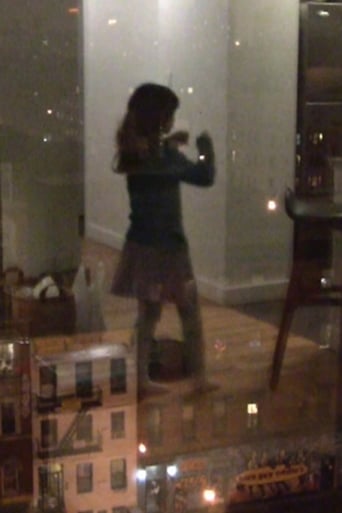
NRMichel Auder dedicated himself to capturing the views from his apartment over the course of a year. This three-channel video installation from 2014 is based on that footage.
Untitled (I Was Looking Back To See If You Were Looking Back At Me To See Me Looking Back At You)
2012
 NR
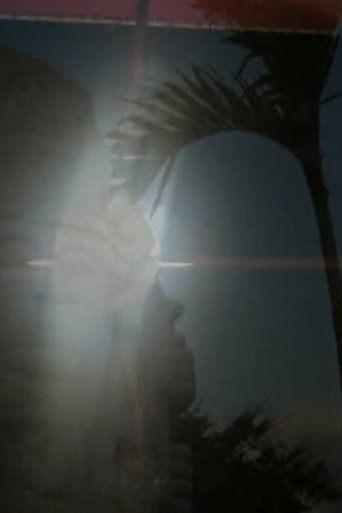
NRNarcolepsy includes footage shot with a small hand-held digital video camera, mobile phones and underwater devices. The videos appear on one monitor at a time, as the rest remain blank. A transparent rabbit in bed is superimposed on a dog in the snow; hands being washed under a faucet are juxtaposed with an outdoor flood; little girls play with dolls and mothers tend real babies; a spider web holds a captive fly.
Narcolepsy
2011
Super 8 film transferred to SD video.
48 Hours in 8 Minutes
1979
 NR
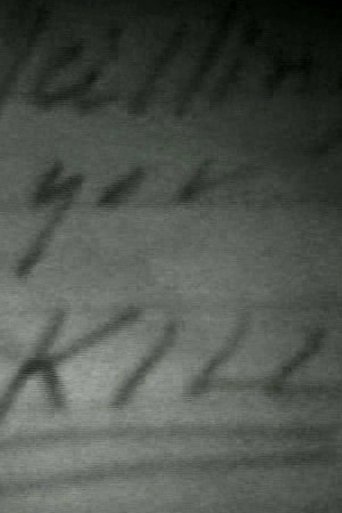
NRIn 1970 Valerie Solanas was released from a mental institution, two years after shooting Andy Warhol. Still unstable, she moved into the Chelsea Hotel where she penned a death threat to Michel Auder and his wife Viva. Using a soundtrack by Wagner, Auder surveys the handwritten evidence of Solanas's threat, before reciting its threatening prose melodramatically.
The Valerie Solanas Incident
1971
16mm film transferred to SD video, recorded 1970, edited 2009. An excerpt from Michel Auder's film Cleopatra (1970).
Heads in Love
2009