
Known for
 7.8
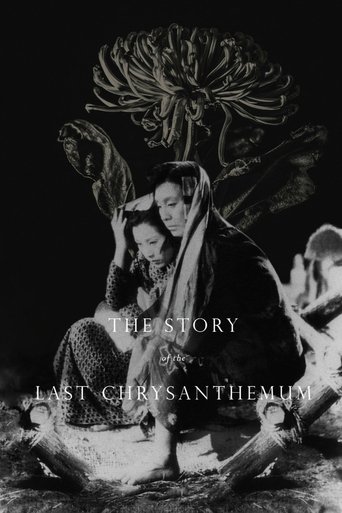
7.8In late 19th-century Tokyo, Kikunosuke Onoue, the adopted son of a legendary actor, himself an actor specializing in female roles, discovers that the praise he receives is only due to his status as his father's heir. Devastated, he turns to Otoku, a servant of his family, for comfort, and they fall in love. Kikunosuke becomes determined to leave home and develop as an actor on his own merits, and Otoku faithfully joins him.
The Story of the Last Chrysanthemum
1939
No synopsis available yet.
The Road of Love
1954
 NR
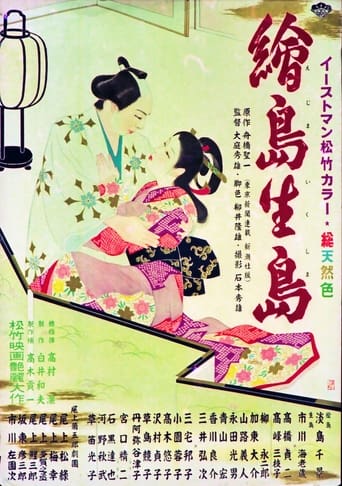
NRThis period film is inspired by one of the most notorious scandals to have taken place in Edo-period Japan. The heroine, Ejima, was a lady of the Ooku, the harem of Edo Castle in which the Shogun’s mother, wife and concubines resided, forbidden from contact with any other man except in the presence of the Shogun. The institution played a key role in the Byzantine world of Japanese court politics during the Edo era. In 1714, Lady Ejima was sent to pay her respects at a Buddhist temple in the city, and chose to pay an unauthorised visit to the kabuki theatre – a violation of protocol that was to have tragic consequences.
Ejima and Ikushima
1955
 10.0
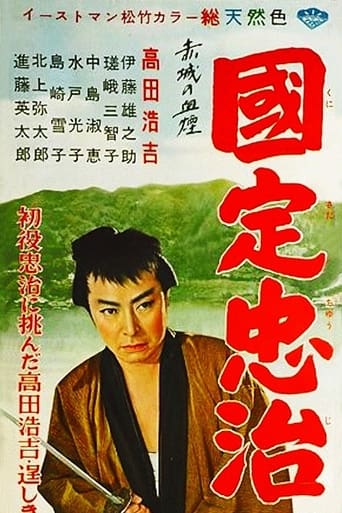
10.0Chuji Kunisada runs into strange adventures which tests his skill as a samurai as he untangles intrigue and murder against the backdrop of the majestic Mount Akagi.
The Adventures of Chuji
1957
 NR
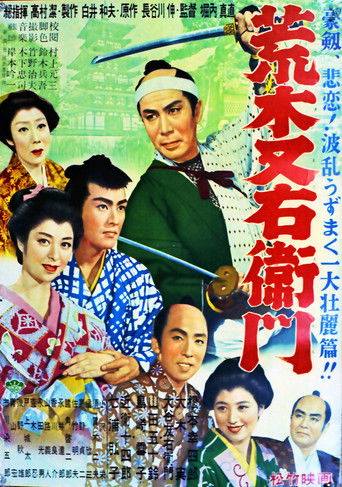
NRWatanabe Kazuma and Kawai Matagorō from the Bizen Okayama Ikeda clan were close friends, but they inevitably became enemies after Matagorō killed Kazuma's younger brother, Gentayū, and fled. Seeking assistance, Kazuma asked his brother-in-law, Araki Mataemon, for help, but Mataemon refused, saying that it was against the code for a brother to avenge another brother's death. On the other hand, the lord of the clan, Ikeda Tadao, ordered a search for Matagorō, who was found to be sheltered by the Hatamoto, including Andō Jiemon, in Edo. Tadao was furious but unable to act. Matagorō, in Edo, came to regret his birth as a samurai. He met and fell in love with Okō, a bathhouse maid. As the discord between the Hatamoto and the Ikeda clan deepened, Tadao died of illness. Seizing the opportunity to ease the conflict, the shogunate ordered the Ikeda clan to be succeeded by the young lord Katsugorō and to relocate to the Ikeda clan of Inshū Tottori. Meanwhile, Matagorō was exiled from Edo.
荒木又右衛門
1955
 10.0
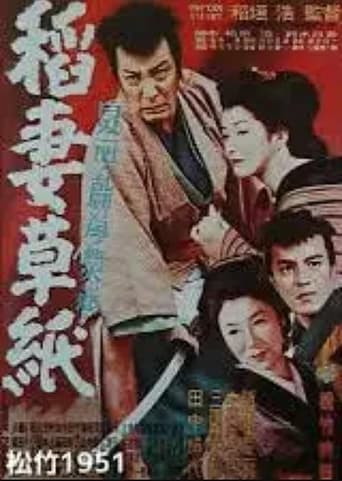
10.0Gensaburo Funaki and Oyuki were childhood friends, but Gensaburo misunderstood that Oyuki was hesitant to get married because he had to feed his father and younger brother. I left the town.
Story of Lightning
1951
Film credits
1960s · 1 titles
1950s · 20 titles
No synopsis available yet.
The Road of Love
1954
NRThis period film is inspired by one of the most notorious scandals to have taken place in Edo-period Japan. The heroine, Ejima, was a lady of the Ooku, the harem of Edo Castle in which the Shogun’s mother, wife and concubines resided, forbidden from contact with any other man except in the presence of the Shogun. The institution played a key role in the Byzantine world of Japanese court politics during the Edo era. In 1714, Lady Ejima was sent to pay her respects at a Buddhist temple in the city, and chose to pay an unauthorised visit to the kabuki theatre – a violation of protocol that was to have tragic consequences.
Ejima and Ikushima
1955
10.0Chuji Kunisada runs into strange adventures which tests his skill as a samurai as he untangles intrigue and murder against the backdrop of the majestic Mount Akagi.
The Adventures of Chuji
1957
NRWatanabe Kazuma and Kawai Matagorō from the Bizen Okayama Ikeda clan were close friends, but they inevitably became enemies after Matagorō killed Kazuma's younger brother, Gentayū, and fled. Seeking assistance, Kazuma asked his brother-in-law, Araki Mataemon, for help, but Mataemon refused, saying that it was against the code for a brother to avenge another brother's death. On the other hand, the lord of the clan, Ikeda Tadao, ordered a search for Matagorō, who was found to be sheltered by the Hatamoto, including Andō Jiemon, in Edo. Tadao was furious but unable to act. Matagorō, in Edo, came to regret his birth as a samurai. He met and fell in love with Okō, a bathhouse maid. As the discord between the Hatamoto and the Ikeda clan deepened, Tadao died of illness. Seizing the opportunity to ease the conflict, the shogunate ordered the Ikeda clan to be succeeded by the young lord Katsugorō and to relocate to the Ikeda clan of Inshū Tottori. Meanwhile, Matagorō was exiled from Edo.
荒木又右衛門
1955
10.0Gensaburo Funaki and Oyuki were childhood friends, but Gensaburo misunderstood that Oyuki was hesitant to get married because he had to feed his father and younger brother. I left the town.
Story of Lightning
1951
 10.0
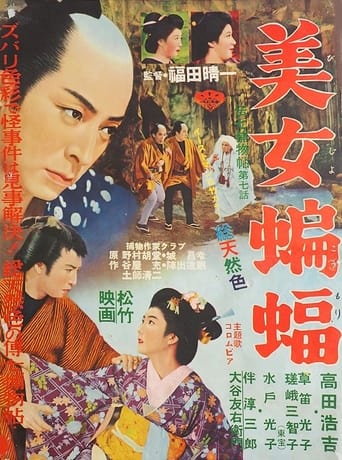
10.0The head of Oshu, Harumichi Honma, was ordered by the boat bugyo (Commissioner of the board) Tajima Kuze to extract five gold coins to the Shogun family in Edo, and put it into Ryujin Maru. However, Tajima, who was the chief retainer of the shogunate, said that he was a member of the board, tetsugoro Funabashi, kumiyumi no Kami ichibei, and his son, masakichi, and others, and in the middle of the night, he killed all the members with poison in the night of the storm, threw Masayoshi, who was a fellow of the city, and masakichi, who escaped from the death of poison, into the sea and sank the boat to eliminate evidence.
The Detective Denshichi Case Files: The Beautiful Bat
1957
 8.0
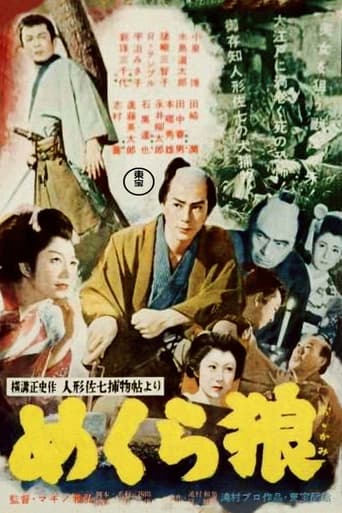
8.0In this movie, Sashichi tries to catch a serial killer who kills his victims with shurikens.
Casebook of Dandy Sashichi: Blind Wolf
1955
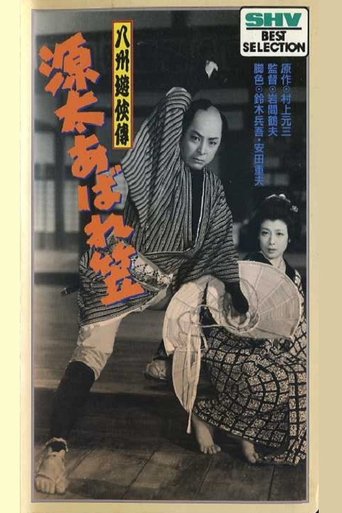 NR
NRNo synopsis available yet.
The Further Adventures of Genta
1955
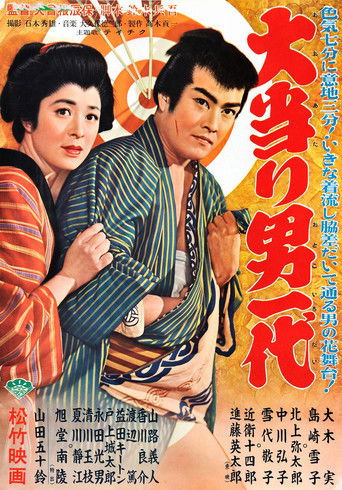 NR
NRShinzō, the heir of the prominent Edo lumber dealer Yamashiroya, left home when his stubborn father, Chōzaemon, dismissed his lover, the maid Oyasu. Shinzō and Oyasu set up a household near a soba shop in Fukagawa, but Shinzō struggled financially, turning to gambling and fighting, while Oyasu worked as a tea server in a theater, constantly harassed by a small-time gangster, Rikichi, for cigarette money. The only ones concerned about Shinzō and Oyasu were Shinzō’s sister, Omitu, and her dance teacher, Oyoshi. Later, Shinzō managed to get a job at another lumber dealer, but after a conflict with the detective Hansuke, who was also infatuated with Oyasu, Shinzō accidentally dropped lumber into the river and was fired. Unaware that Oyasu had borrowed money from a bar to repay the lumber dealer, Shinzō left to earn money in the Mito clan's crew quarters and ended up rescuing Rikichi from a dice game trouble.
大当り男一代
1956
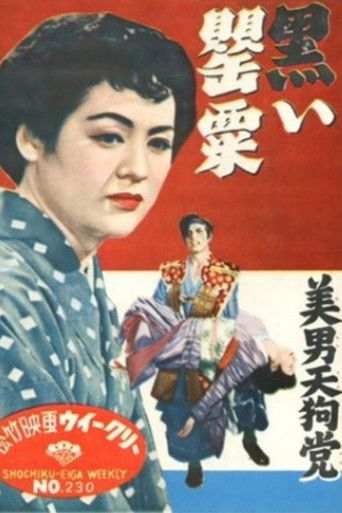 NR
NRDuring the tumultuous end of the Tokugawa shogunate, the Tengu Party rose in rebellion in Mito. Friends from their hometown, Tanaka Genzo and Fujita Koshiro, each walked different paths. Koshiro, who upheld the philosophy of "Revere the Emperor, Expel the Barbarians," became a leader of the Tengu Party, taking refuge in the mountains. Genzo, however, did not have any particular ideological stance.
Beautiful Tengu
1954
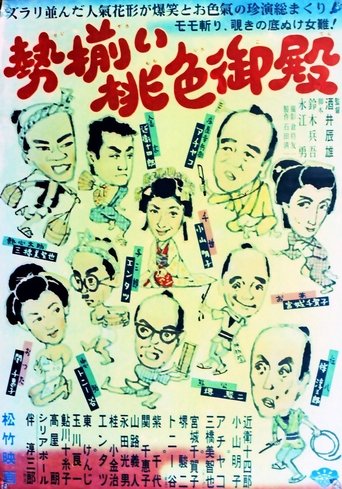 NR
NR1957 Japanese movie
Seizoroi momoiro goten
1957
 NR
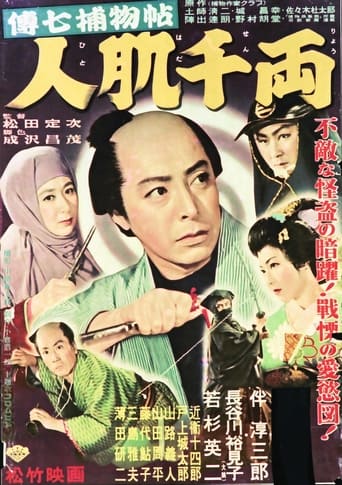
NRIn the era of the twelfth Shogun, Tokugawa Ieyoshi, a notorious bandit known as "Shippu" (or "Swift Wind") emerged in Edo. Shippu would send a warning message called the "Thief's Summons" before striking, yet despite the magistrate's desperate search efforts, they couldn't find any leads. One day, a summons was shot into the residence of Ono Ryusai, who was leading a peaceful retirement life with his two concubines, O-Ran and O-Koshi. With the summons, various individuals including O-Ran's brother Itami Shigoshiro, the master of the Muso-ryu dojo, vigilante Mankichiro, rope expert Gohei, and Den'ichi from Kuromon Town were assigned to monitor the situation. However, while they were distracted by a neighboring fire, a chest containing a thousand ryo was stolen, and O-Koshi was killed.
Denshichi Torimonocho: Senryo Human Skin
1954
 NR
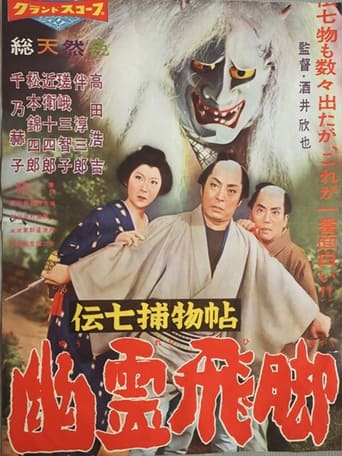
NRThe eleventh episode of the Denshichi Torimonocho series. Around the time of Shogun Ienari, a murderer known as a ghost hikyaku appeared in Edo, raping and killing young girls one after another. One night, a notice was recieved that Oichi, the daughter of Wakasa Kanayu of the small construction group, would be taken away. The mansion was surrounded by ten and twenty layers of people including Denshichi, who was asked to guard the house, and Sesshinsai Ohba, the owner of the dojo. Four seconds later, a violent explosion suddenly occurred.
Denshichi Torimonocho: Silver Snake Spell
1959
 NR
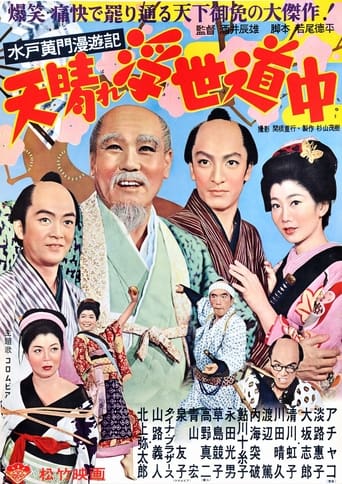
NRThird film in the 'Travels of Lord Mito' franchise.
Travels of Lord Mito Pt.3
1954
 NR
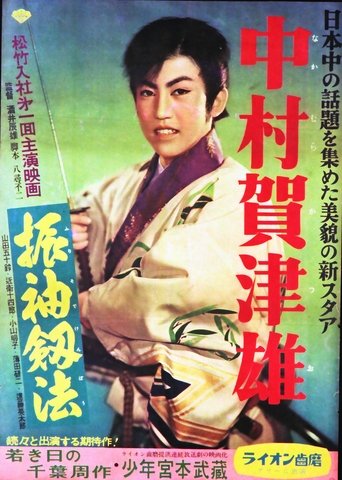
NRIn Marugame Domain of Shikoku, a low-ranking foot soldier named Tagami Genbachi was envied for marrying Tsuji, the most beautiful woman in the domain. However, due to a personal grudge held by Horikawa Gentazaemon, the swordsmanship instructor, Genbachi met an untimely and bitter death through foul means within the precincts of the Hachiman Shrine. Due to the domain's oppressive treatment of those of low status, Tsuji, now with her infant son Botaro, was dispossessed of her home and exiled.
振袖釼法
1955
 NR
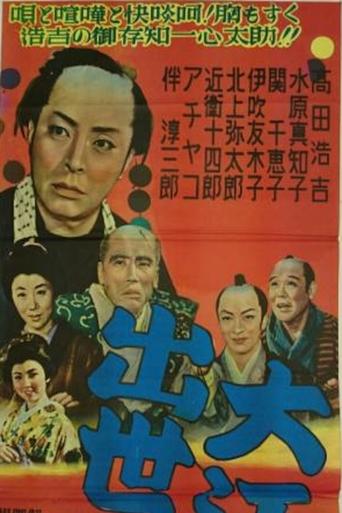
NRIsshin Tasuke, a friend of Ōkubo Hikozōemon, the esteemed public arbitrator of the realm, saved the maid Onatsu from punishment after she accidentally broke a plate gifted by Lord Ieyasu. Tired of the strict samurai service, Tasuke moved to the Genbei tenements and opened a fish shop. This tenement housed various characters, including the landlord's daughter Osen who had a crush on Tasuke, the midwife Okan, the blind masseur Oyone and her husband, the carpenter-loving couple Yoshigorō and Ohama, the rōnin Takeuchi Yogoemon, and the siblings Ochika and Shin'nosuke who cared for their sick mother.
大江戸出世双六
1955
 NR
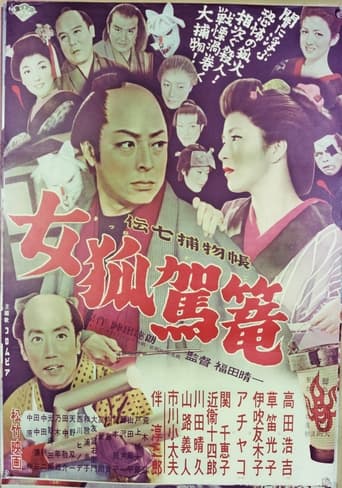
NROne night in Edo, a mysterious woman in a palanquin appeared at the moneylender Yamashiroya, revealing herself to a beautiful woman. She told the owner, Shigebē, that she had come to collect a life he owed from twenty years ago and then left. The same night, Maruiya Genbē also received a visit from the woman's palanquin, and nearby, a man named Manbē was murdered. The detective Hayanawa Gohē concluded the murder was the work of a fox spirit, but another detective, Den Shichi, skeptical of this theory, noticed footprints on the tatami and decided to investigate further.
Denshichi Torimonocho: Female Fox Palanquin
1956
 NR
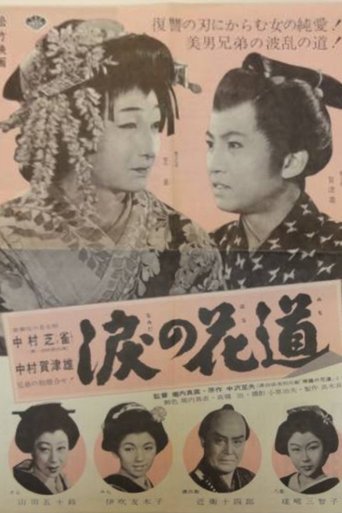
NRNakamura Yukinojō, Edo's most popular actor, discovered that his parent's enemy, Ohara Genba, had changed his name to Isshiki Kurōnosuke and become a hatamoto, a direct retainer of the shogun. Yukinojō's younger brother, Shingorō, traveling to Edo from their hometown, helped the town boy Kiyohē and his daughter Michi from troublemakers led by Kumosuke. This act led to a reunion with Yukinojō through the assistance of their associate, Daisaburō.
Namida no hanamichi
1956
 NR
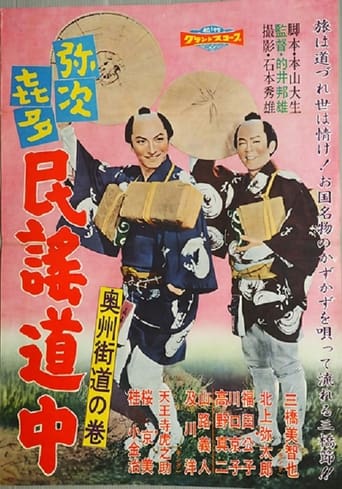
NR1959 Japanese movie
Yajikita min'yō dōchū Ōshū kaidō no maki
1959
 NR
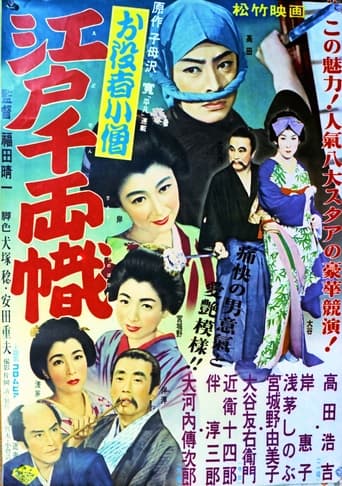
NROkazaki Domain samurai Inaba Gotaro accidentally killed a superior while trying to save his beloved geisha, Ko-en. On the run, they were rescued by the actor Nakamura Utaemon, but Ko-en was taken by the Hatamoto, Ono Issai. Gotaro, who fell off a cliff, was saved by the Dutch-trained doctor, Shibarai Ryokai, and his daughter Oume. While traveling to Edo, they met Utaemon in Mishima, who was suffering from a serious eye disease. Ryokai’s treatment saved Utaemon from blindness, and a strong friendship was formed among the three.
Edo Kid
1955
1940s · 1 titles
1930s · 6 titles
7.8In late 19th-century Tokyo, Kikunosuke Onoue, the adopted son of a legendary actor, himself an actor specializing in female roles, discovers that the praise he receives is only due to his status as his father's heir. Devastated, he turns to Otoku, a servant of his family, for comfort, and they fall in love. Kikunosuke becomes determined to leave home and develop as an actor on his own merits, and Otoku faithfully joins him.
The Story of the Last Chrysanthemum
1939
 NR
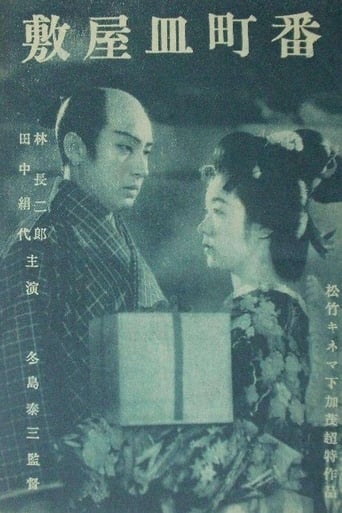
NRshort film about Banchō Sarayashiki.
Banchō sarayashiki
1937
Bored Hatamoto film #5
Bored Hatamoto on a Rampage
1933
Bored Hatamoto film #6
Bored Hatamoto on the Nakasendo
1935
No synopsis available yet.
Hakurai Bunmeigai
1931
Bored Hatamoto film #7
Bored Hatamoto Judges 100,000-koku
1935
1920s · 3 titles
 6.0
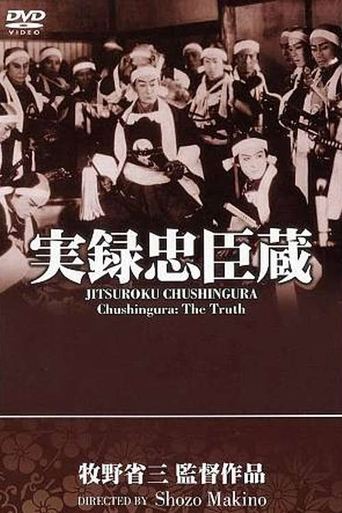
6.0Lord Asano Takumi-no-Kami Naganori was charged with receiving a group of envoys from the Imperial Court in Kyoto. He was young and slightly inexperienced, so Lord Kira Kozuke-no suke Yoshinako was given the task of instructing Lord Asano in the customs of the ceremony. On the day of the reception, something went terrible wrong, and Lord Asano attempted to kill Lord Kira. For this, Lord Asano was order to commit seppuku. However, in violation of existing law, Lord Kira was not punished. The ruling Shogun Tokugawa Tsunayoshi eventually confiscated Lord Asano's land and dismissed the samurai that had served him so faithfully, effectively making them all ronin. Two years later, Oishi Kuranosuke Yoshi led a group of samurai loyal to Lord Asano in an attack on Kira's compound. Their aim was to capture and kill him.
Chushingura: The Truth
1928
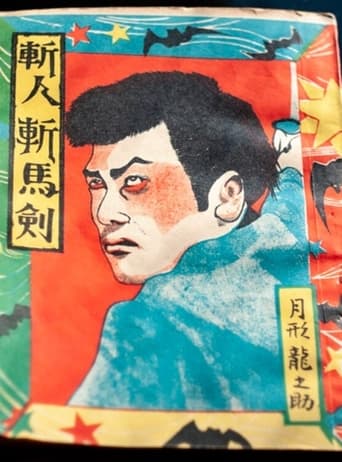 6.6
6.6In medieval Japan, a brutal and corrupt magistrate is planning to kill the child who is about to become the heir to the estate and position of the local lord and substitute his own "heir", an orphan, in order to get control of the late lord's estate and rule as the impostor's "regent". However, a mysterious stranger appears and sets out to thwart the magistrate's plans and free the people from his oppressive rule.
Man-Slashing Horse-Piercing Sword
1929
No synopsis available yet.
Akuma no hoshî no shita nî
1927