
Known for
 5.8
5.8Praxis Bülowbogen is a German television series.
Praxis Bülowbogen
1987
 6.4
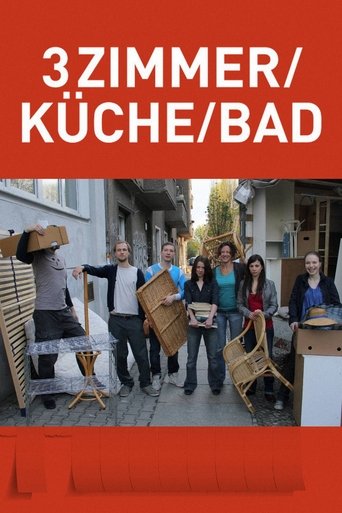
6.4Eleven moving dates, eight friends: Philipp, Wiebke, Jessica, Maria, Swantje, Michael, Thomas, Dina – all in their twenties and mutually lonesome. And always searching: For a new city, a new job, an own apartment, a new, or even an old love. The search is never-ending, and so they repeatedly find themselves at a ritual gathering: someone moving. Boxes are shifted from one side of Berlin to the other, or the length and breadth of Germany, from one abode to the next as one life is exchanged for another. In 3 ZIMMER/KÜCHE/BAD, director Dietrich Brüggemann portrays existences in which relationships, social networks and backdrops are in a constant state of flux; where best friends are the only, and therefore the most valuable constant. Humorous sketches of the self-conception of a generation for whom moving has become the symbol of a life on the go.
Move
2012
 5.0
5.0An African-German author loses his memory and is used by a modern National Socialist Party as a promotion-figure for more political power over Germany.
Heil
2015
 6.1
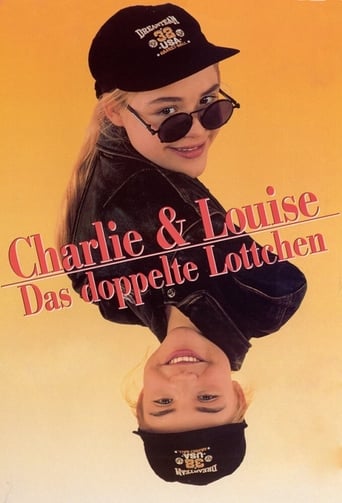
6.1The two twelve-year-old girls Charlotte Palfy and Louise Kröger meet on a language trip to Scotland and discover that they are twins who were separated shortly after birth. Charlotte, the daughter of a music hall composer, is cool, self-confident and cheeky, dresses accordingly and listens to techno music. Louise, who grew up with her mother, an advertising executive, wears more "old-fashioned" clothes, is shy and reserved, but conscientious and orderly. Determined to play fate, the two swap roles - at the end of the journey, Louise travels as Charlie to her father, who works as a composer in Berlin-Kreuzberg, while Charlie travels as Louise to her mother in Hamburg, where she works in an advertising agency. The girls realize that getting their parents back together is not as easy as they thought.
Charlie & Louise - Das doppelte Lottchen
1994
 8.0
8.0The time is the French Revolution; the place is the village of Travers, ensconsed in neutral Switzerland. Prussian aesthete Herman Beyer is on the verge of divorcing wife Corinna Harfouch. Radical writer Uwe Kokisch, Corinna's lover, hopes to find a way of smoothing out animosities. What follows, however, is a nonstop drinking binge. The film subliminally addresses the then-prevalent issue of a divided Germany. Whether or not it succeeds is unimportant; Treffen in Travers (Reunion in Travers) has proven to be a crowd pleaser wherever it has been shown.
Reunion in Travers
1989
 8.0
8.0A psychodrama based on the criminal activities of the former STASI (state security police) in the now defunct German Democratic Republic.
Farewell to Agnes
1994
Film credits
2010s · 2 titles
6.4Eleven moving dates, eight friends: Philipp, Wiebke, Jessica, Maria, Swantje, Michael, Thomas, Dina – all in their twenties and mutually lonesome. And always searching: For a new city, a new job, an own apartment, a new, or even an old love. The search is never-ending, and so they repeatedly find themselves at a ritual gathering: someone moving. Boxes are shifted from one side of Berlin to the other, or the length and breadth of Germany, from one abode to the next as one life is exchanged for another. In 3 ZIMMER/KÜCHE/BAD, director Dietrich Brüggemann portrays existences in which relationships, social networks and backdrops are in a constant state of flux; where best friends are the only, and therefore the most valuable constant. Humorous sketches of the self-conception of a generation for whom moving has become the symbol of a life on the go.
Move
2012
5.0An African-German author loses his memory and is used by a modern National Socialist Party as a promotion-figure for more political power over Germany.
Heil
2015
1990s · 2 titles
6.1The two twelve-year-old girls Charlotte Palfy and Louise Kröger meet on a language trip to Scotland and discover that they are twins who were separated shortly after birth. Charlotte, the daughter of a music hall composer, is cool, self-confident and cheeky, dresses accordingly and listens to techno music. Louise, who grew up with her mother, an advertising executive, wears more "old-fashioned" clothes, is shy and reserved, but conscientious and orderly. Determined to play fate, the two swap roles - at the end of the journey, Louise travels as Charlie to her father, who works as a composer in Berlin-Kreuzberg, while Charlie travels as Louise to her mother in Hamburg, where she works in an advertising agency. The girls realize that getting their parents back together is not as easy as they thought.
Charlie & Louise - Das doppelte Lottchen
1994
8.0A psychodrama based on the criminal activities of the former STASI (state security police) in the now defunct German Democratic Republic.
Farewell to Agnes
1994