Acting
Asdrúbal Meléndez
Born
1935-11-01 (90)
Place of birth
Falcón, Venezuela
Known for
Acting
Credits
38 titles
A schoolteacher, calligrapher, and theater, film, and television actor, he has an interest in other disciplines such as poetry, sculpture, and painting. He studied art at renowned institutions in the country and sculpture in Prague, Czech Republic. His artistic work can be seen in more than 60 feature films, the first of which was El cine soy yo (1977) by Luis Armando Roche. He has also worked as a set designer for various theatrical productions and Venezuelan films. As a poet, he has an important body of work published in magazines and newspapers.
Known for
 7.0
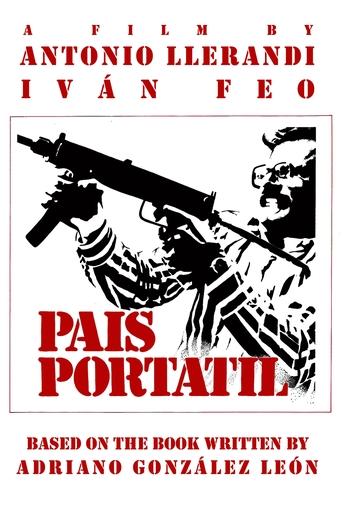
7.0Portable Country is a classical Venezuelan film about the urban guerrilla. Based on the novel of the same name, written by Adriano González León, the film centers on Andrés Barazarte, a disillusioned man from a wealthy landowning family, who grapples with his personal and political identity in the midst of Venezuela's tumultuous social changes and engages in the guerrilla. He reflects on his life, his family's decline, and the broader struggle for power in a country torn between tradition and revolution.The story unfolds as Andrés is tasked with transporting a mysterious package. This journey becomes a metaphor for his search for meaning and a confrontation with his family’s, and his country's, violent past. His recollections weave together with present events, creating a complex tapestry of memory and history.
Portable Country
1979
 7.0
7.0The intent of novice director Solveig Hoogesteijn to make a drama about two Venezuelans from opposite sides of the economic and social tracks wobbles and weakens in the telling. Although the two compatriots both live in the capital, Caracas, and both love music, they have a need to go out into the rest of the country and discover their roots. As big-city dwellers, they are limited in their perspectives, though this excursion into other areas of Venezuela may prove more illuminating to them than to a foreign audience.
Manoa
1980
 9.0
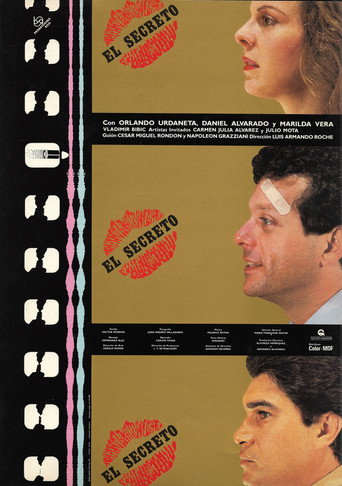
9.0Gaspar Urbieta works as a typographer in Maracaibo. The National Guard convinces him to infiltrate an organization of Colombian gold smugglers. Gaspar will experience situations of fear, humour, intrigue and romance with a beautiful and enigmatic blonde. His secret will be so incredible that if he told it, no one would believe it!
The Secret
1988
 9.0
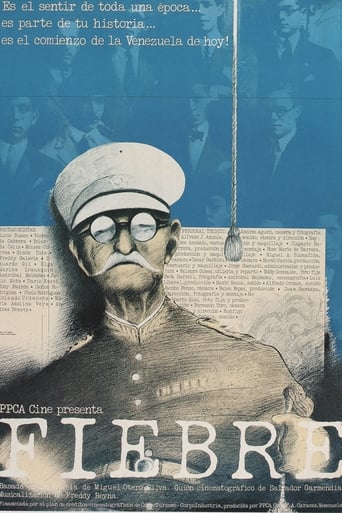
9.0Vidal Rojas, an opponent of the dictatorship of Juan Vicente Gómez, after failing in a subversive attempt and suffering a romantic disappointment, decides to enlist in the revolutionary groups in the interior of the country.
Fiebre
1976
 3.8
3.8Rufino, a man of 71, is widowed and decides to return to the village where he met his wife. There is reunited with his landscapes and his friend Gaspar, a painter who has taken over a little orphan girl named Ana eight-year-E, Rufino who will be forced to remain under the same roof, despite its hostile coexistence . The loneliness of these characters are facing, beginning strokes to a new way to overcome abandonment.
Una Mirada al Mar
2011
 5.7
5.7A young girl is sent to a Venezuelan hacienda, where she learns about the life of her reclusive aunt, Oriana.
Oriana
1985
Film credits
2020s · 3 titles
 NR
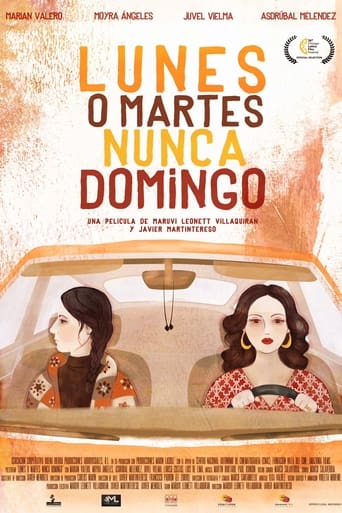
NRGregoria is a young peasant from the Venezuelan Andes, Lucia is a frivolous middle-aged city dweller. Forced by the circumstances they must travel together to reach their destinations. One will discover the past, the other will discover her present. Both discover the strength of love.
Monday or Tuesday, Never Sunday
2020
 NR
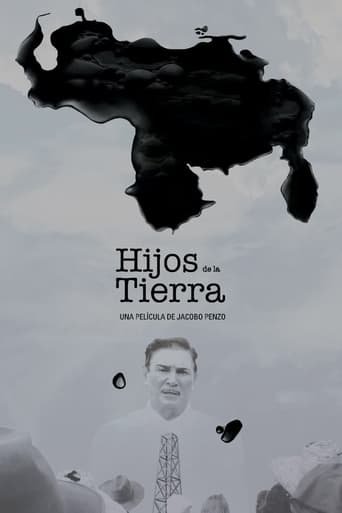
NR"Hijos de la tierra" presents a drama set a little before the 1920s, in which scattered news, stories and rumors spread the presence of a new wealth, oil, leading to the suspicion that a great change was about to take place.
Sons of the Earth
2022
The eternal dilemma of the creator and his relationships with the state, patronage, and society comprise this Ludovician triptych. The creator establishes a loving and committed relationship with his work. A relationship of obscurities pierced into the illuminated spaces of his conscience, which, beyond his creation, is enmeshed in all the vicissitudes of public life, in his constant appearance to exhibit himself and his work, another inescapable trap.
Canción de las sombras
2020
2010s · 5 titles
3.8Rufino, a man of 71, is widowed and decides to return to the village where he met his wife. There is reunited with his landscapes and his friend Gaspar, a painter who has taken over a little orphan girl named Ana eight-year-E, Rufino who will be forced to remain under the same roof, despite its hostile coexistence . The loneliness of these characters are facing, beginning strokes to a new way to overcome abandonment.
Una Mirada al Mar
2011
 5.0
5.0During Christmas time in Caracas, a woman (Yotama) holds up a restaurant. She takes three persons (Emilio, Manuel and Lucia) hostage in their apartment. Day by day Emilio, an old musician and Yotama become friends. Yotama's small daughter, Victoria, is brought into the apartment. Emilio dies and the rest of the three persons become united in a common bond of humanity.
Yotama se va volando
2013
 NR
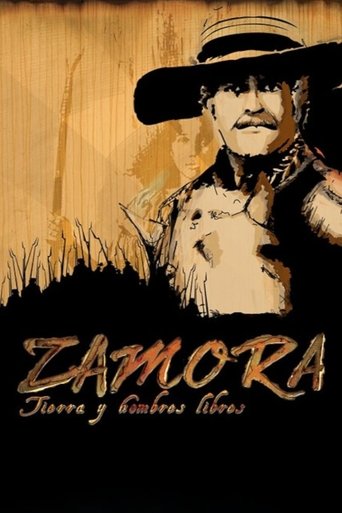
NRVenezuela, the mid-nineteenth century. The polarization between liberals and conservatives marked the political agenda. Inequalities of colonial society kept farmers and slaves under the yoke of the oligarchy. Ezequiel Zamora mobilized by deep ideals of liberty is leading a fight to try to erase social inequalities and distribute land equitably.
Zamora, tierra y hombres libres
2010
 NR
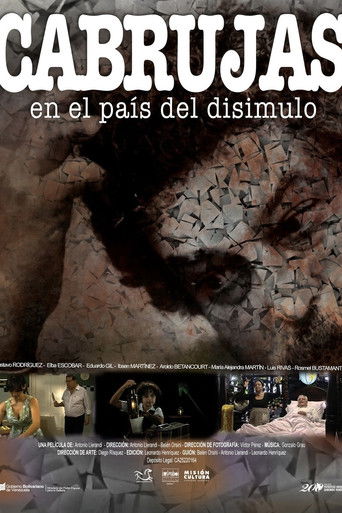
NRBeginning with his childhood and covering the many facets that characterized his intellectual universe, this documentary details the different aspects of the most important venezuelan writer of the 60s, 70s and 80s: José Ignacio Cabrujas.
Cabrujas en el país del disimulo
2017
 2.0
2.0Short film based on the Venezuelan folkloric story: The Whistler (El SIlbón)
El Silbón
2011
2000s · 3 titles
 4.0
4.0No synopsis available yet.
La clase
2007
 4.3
4.3El Caracazo o Sacudón fue una serie de fuertes protestas y disturbios durante el gobierno de Carlos Andrés Pérez, que comenzó el día 27 de febrero y terminó el día 28 de febrero de 1989 en la ciudad de Caracas, e iniciados realmente en la ciudad de Guarenas, cercana a Caracas. El nombre proviene de Caracas, la ciudad donde acontecieron parte de los hechos, recordando a otro hecho ocurrido en Colombia el 9 de abril de 1948; el Bogotazo. La masacre ocurrió el día 28 de febrero cuando fuerzas de seguridad de la Policía Metropolitana (PM) y Fuerzas Armadas del Ejército y de la Guardia Nacional (GN) salieron a las calles a controlar la situación.
El caracazo
2005
 6.7
6.7In 1856, a whaler arrives in Paita, Peru; on board is Herman Melville, who is astonished to learn that Manuela Sáenz, for eight years the lover of Simón Bolívar, is still alive. He calls on her, and although she will not talk to him about her life, his visit sends her to her chest of Bolívar's letters. As she reads them, the sepia-toned present gives way to flashbacks in color: she meets 'the Liberator' in 1822, becomes his lover, and also becomes a colonel in his military movement to realize the 'Gran Colombia', one nation across South America. As plague (brought by the ship) closes in on Manuela's household, so does her tempestuous story move toward Bolívar's betrayal and death.
Manuela Sáenz
2000
1990s · 4 titles
 4.2
4.2Ryuzo, Japanese young man who has committed a crime of passion in Tokyo, is sent by his father to Paraguaipoa to escape justice. In this place, inhabited by the Wayuu ethnic group, meets Princess Campanula. Among them was a love affair, not welcomed by the smuggler Challenger occurs.
Tokyo-Paraguaipoa
1996
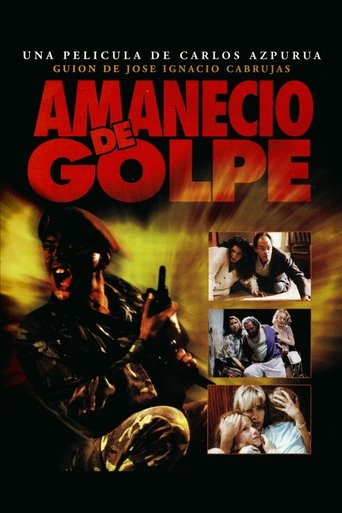 6.8
6.8The film follows the events of the night of February 4, 1992 in Caracas, Venezuela. That night a group of military rebels staged a coup d'etat. Venezuelans found themselves as virtual prisoners. As the coup starts and fighting takes place from a military base which is in the center of the city's most affluent areas, with both luxury high rises and palatial mansions. The area of La Carlota provides a wealth of very interesting, often flamboyant and typical characters of the Latin America upper middle and upper classes. They are among the most affected. Various vignettes in these different characters' homes are developed. These people's reactions, lifestyles, vices, and humanity come out in a very honest fashion under duress.
Coup at Daybreak
1998
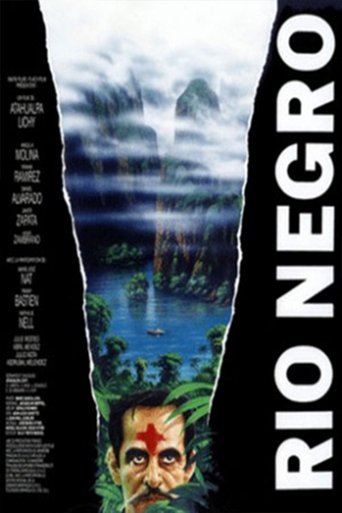 6.8
6.8The struggle of two men, Osuna and Funes, hungry for power and wealth in a small town in Venezuela, during the dictatorship of Juan Vicente Gómez.
Black River
1990
It tells the story of Tomás, a man who decides to enter the Orinoco jungle under another identity and meets a woman, together they will live in a world of threats
La voz del corazón
1997
1980s · 10 titles
7.0The intent of novice director Solveig Hoogesteijn to make a drama about two Venezuelans from opposite sides of the economic and social tracks wobbles and weakens in the telling. Although the two compatriots both live in the capital, Caracas, and both love music, they have a need to go out into the rest of the country and discover their roots. As big-city dwellers, they are limited in their perspectives, though this excursion into other areas of Venezuela may prove more illuminating to them than to a foreign audience.
Manoa
1980
9.0Gaspar Urbieta works as a typographer in Maracaibo. The National Guard convinces him to infiltrate an organization of Colombian gold smugglers. Gaspar will experience situations of fear, humour, intrigue and romance with a beautiful and enigmatic blonde. His secret will be so incredible that if he told it, no one would believe it!
The Secret
1988
5.7A young girl is sent to a Venezuelan hacienda, where she learns about the life of her reclusive aunt, Oriana.
Oriana
1985
 10.0
10.0A young peasant farmer has a feud with a heartless landowner which results in the landowner killing the peasant's cattle which result in the peasant killing the landowner which for the man goes in to hiding for more than 40 years, hounded by the murdered landowner's son obsessed with finding his father's killer.
¡Diles que no me maten!
1984
 8.0
8.0The confrontation between two families over possession of the land gradually becomes a great slaughter where almost all the members of one the sides dies. One of the survivor will take justice into his own hands.
La Matanza de Santa Bárbara
1986
 7.0
7.0In Secretaries Day, either you get laid or you get paid.
Cóctel de Camarones. En el Día de la Secretaria
1984
 5.3
5.3An elderly man with wings is blown off course during a tropical storm in this symbolic fantasy. The Old Man lands near a Caribbean island where a poor family gives him shelter in a chicken coop. Father Gonzaga is the skeptical priest who rushes to damn the creature. Soon the Old Man is the subject of curiosity seekers as Elisinda and Pelayo start charging admission. A traveling carnival of human oddities camps near the Old Man as people flock to see the show. The Old Man is reduced to being an unwanted pet, and after six years, he mends his wings and flies away. Nudity, simulated sex with a spider woman, and the ugliness of human exploitation definitely put this fantasy in a category not for children.
A Very Old Man with Enormous Wings
1988
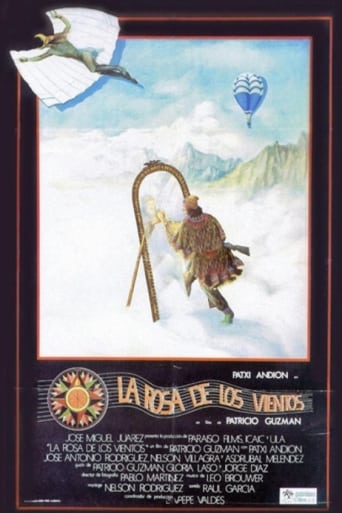 4.6
4.6Exiled Chilean director Patricio Guzmán filmed in Cuba and in Venezuela to create this controversial statement on the creation and survival of Latin American culture from the late-15th century to the present. For some viewers, the film will be superficially symbolic and rhetorical, for others, it will be a strong and personal vision of several centuries of history.
The Compass Rose
1983
 6.8
6.8A politically charged film, where a series of archetypal characters are presented.
The Wedding
1982
 10.0
10.0Ignacio is known as El Iluminado de la Esmeralda (The Enlightened One of the Emerald) for his healing powers. Urged by the eviction of the house where he lives, he decides to charge for his services with an illusionist. What he ends up with is being mistreated and taken advantage of by others, even ending up in jail. After regaining his freedom, he goes mad.
El iluminado
1984
1970s · 12 titles
7.0Portable Country is a classical Venezuelan film about the urban guerrilla. Based on the novel of the same name, written by Adriano González León, the film centers on Andrés Barazarte, a disillusioned man from a wealthy landowning family, who grapples with his personal and political identity in the midst of Venezuela's tumultuous social changes and engages in the guerrilla. He reflects on his life, his family's decline, and the broader struggle for power in a country torn between tradition and revolution.The story unfolds as Andrés is tasked with transporting a mysterious package. This journey becomes a metaphor for his search for meaning and a confrontation with his family’s, and his country's, violent past. His recollections weave together with present events, creating a complex tapestry of memory and history.
Portable Country
1979
9.0Vidal Rojas, an opponent of the dictatorship of Juan Vicente Gómez, after failing in a subversive attempt and suffering a romantic disappointment, decides to enlist in the revolutionary groups in the interior of the country.
Fiebre
1976
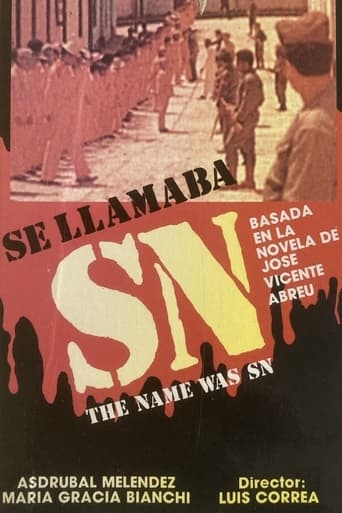 8.0
8.0As José Abreu “Guanipa” is transferred with a group of prisoners to the Guasina camp in the Orinoco Delta, he recalls the torture he was subjected to by SN (National Security) henchmen in order to obtain information about the resistance. In Guasina, the prisoners are subjected to forced labor while they plan their escape. Guanipa is released after signing the bond and the rest of his companions remain in the camp.
Se llamaba SN
1977
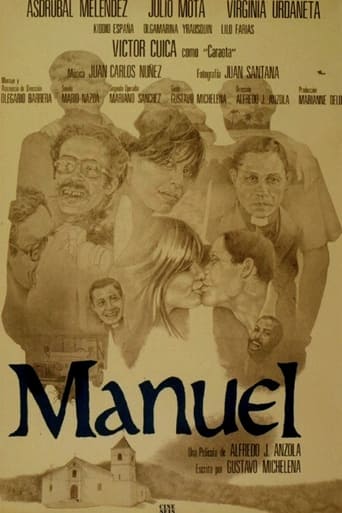 9.5
9.5Directed by Alfredo Anzola, Manuel (1979) is a Venezuelan drama that explores themes of love, faith, and resistance. The story follows Aparicio and his wife, Alma Rosa, as they welcome a new priest, Manuel, to their coastal village. As Manuel becomes acquainted with the community, he discovers that the village is slated for demolition to make way for a tourist development. Deeply moved by the villagers' plight, Manuel joins the local fishermen in their struggle to defend their land. During this time, he also finds himself drawn to Alma Rosa, leading to personal and moral dilemmas. The developers, aware of Manuel's growing influence and his feelings for Alma Rosa, begin to monitor his actions closely. The film delves into the complexities of human relationships and the fight against displacement.
Manuel
1979
 7.3
7.3Happy fun times with a little crew of people driving around to backwater villages to show movies in places where the locals don't get much culture. But all good things come to an end...
The Moving-Picture Man
1977
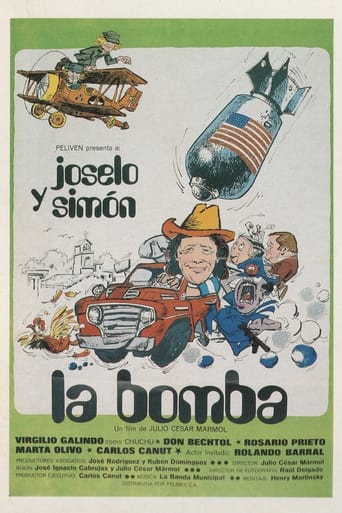 9.0
9.0Venezuelan comedy by Julio César Mármol, featuring Joselo.
La bomba
1975
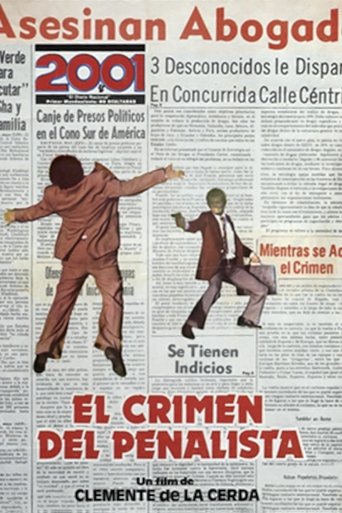 9.0
9.0Based on the real story of the murder of Venezuelan lawyer Ramón Carmona Vásquez by a paramilitary group. Based on the book Grupo Táctico Operacional GATO by Alexis Rosas.
El crimen del penalista
1979
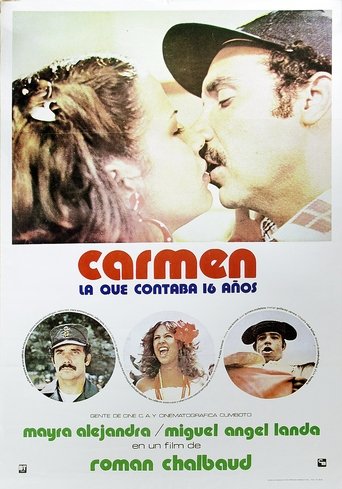 5.5
5.5Carmen is a beautiful woman working in a business that is dedicated to smuggling. One day, Carmen fights and hurts to a smuggler woman, so a sergeant in the National Guard, José Navarro, stops detain her. In doing so he also falls in love with her, but jealousy will destroy his passion.
Carmen
1978
 6.5
6.51964, in a Latin American country, a journalist is head of an armed liberation movement that decides to initiate radical actions. His second in command, a farmer, and the other members of the group will kidnap a north american colonel stationed in Venezuela to force his government to suspend the execution of the vietnamese Nguyen Van Troi, accused of trying to assassinate the American Secretary of Defense, Robert McNamara.
Chronicle of a Latin American Subversive
1974
 7.5
7.5A skilled worker has a sudden nervous breakdown at the company for which he has been working for the last 20 years. He attacks the machines and smashes the windows. The company decides to have him undergo treatment with a well-known young psychiatrist. She will try to bring light the reasons for his behavior so he can adapt himself to his work once again.
The Company Forgives a Moment of Madness
1978
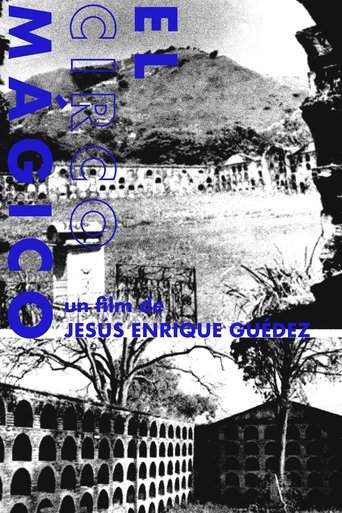 NR
NRA young man visits the grave of his lover.
El circo mágico
1975
 8.0
8.0Pedro Zamora (Miguelangel Landa) is a former guerrilla who returns to Caracas and moves to a pension as a tenant. Despite appearances, he has come to fulfill a secret mission to its ultimate consequences.
Sacred and Obscene
1975