

Directing
Vito Acconci
Born — Died
1940-01-24 — 2017-04-27
Place of birth
New York City, New York, USA
Known for
Directing
Credits
70 titles
Vito Acconci (January 24, 1940 – April 27, 2017) was an American performance, video and installation artist, whose diverse practice eventually included sculpture, architectural design, and landscape design. His performance and video art was characterized by "existential unease," exhibitionism, discomfort, transgression and provocation, as well as wit and audacity, and often involved crossing boundaries such as public–private, consensual–nonconsensual, and real world–art world. His work is considered to have influenced artists including Laurie Anderson, Karen Finley, Bruce Nauman, and Tracey Emin, among others. Acconci was initially interested in radical poetry, creating 0 to 9 Magazine, but…
Known for
 6.6
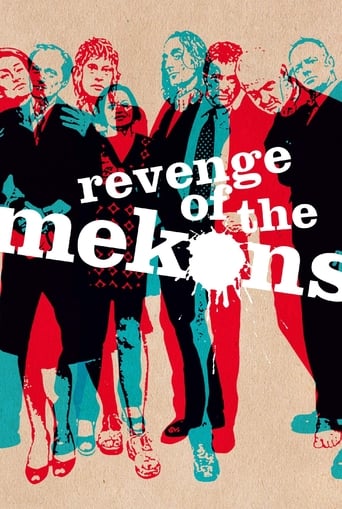
6.6Documentary about the Mekons.
Revenge of the Mekons
2013
 5.7
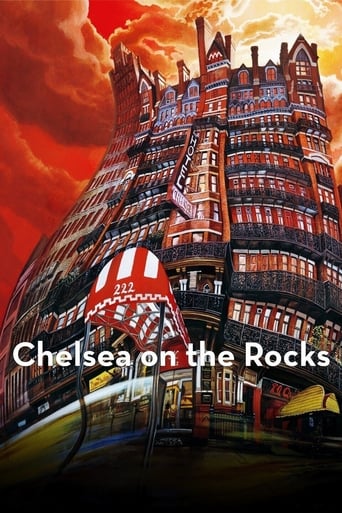
5.7Chelsea on the Rocks celebrates the personalities and artistic voices that have emerged from New York’s legendary Chelsea Hotel. Once considered an untouchable, impenetrable tower for writers, artists, musicians and mavericks, it has been recently claimed as a boutique hotel venture for a management company that shows disregard for its formidable history. –Cannes Film Festival
Chelsea on the Rocks
2008
 5.8
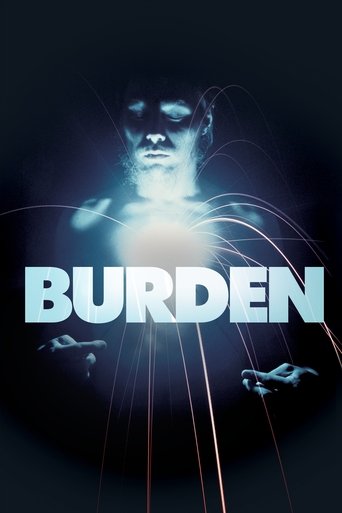
5.8A probing portrait of Chris Burden, an artist who took creative expression to the limits and risked his life in the name of art.
Burden
2016
 8.8
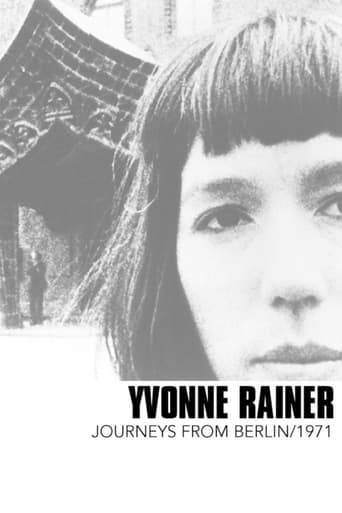
8.8An epic meditation on psychoanalysis, the Baader-Meinhof, feminism, and pre-revolutionary Russia.
Journeys from Berlin/1971
1980
 NR
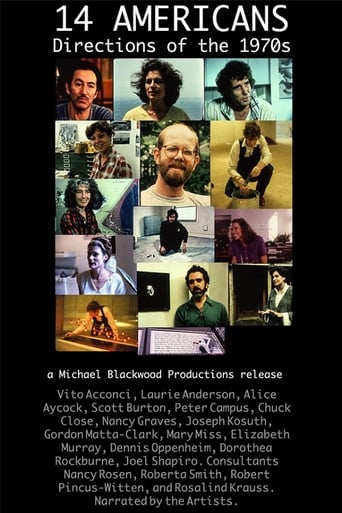
NRThe multiple means of making art after the end of illusionism led these artists to create performances, sculptures, earthworks, tableaux, furniture, shaped canvases, and more, using unusual materials. They explore the process of making forms and giving meanings to those forms. In this idea art, their focus is as often social and psychological as artistic. Some of their activities enlist engineering and construction techniques, others compose texts or scripts that are central to their art. Some cast the viewer in the role of a spectator, while the others demand active participation. The sources for their concepts and art works are equally diverse; the delicate proportions and balance of Early Renaissance painting, the exploration of the surface of the moon, the structure and inventions of vernacular architects, to name only a few.
14 Americans: Directions of the 1970s
1981
 NR
NRCompilation film consisting of material from various artists who are involved in body art
Body Art
1975
Film credits
2010s · 3 titles
6.6Documentary about the Mekons.
Revenge of the Mekons
2013
5.8A probing portrait of Chris Burden, an artist who took creative expression to the limits and risked his life in the name of art.
Burden
2016
 NR
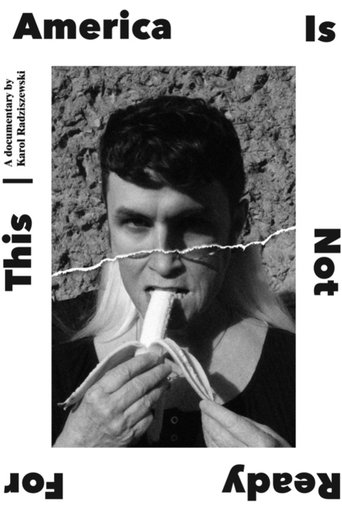
NRThe tradition of modernism and neo-avant-garde are faced in the project, in which Radziszewski is confronting both – Polish and Western – narratives of art history. Starting from the subversive work of Natalia LL, Radziszewski raises a series of questions on issues such as gender, feminist art, conceptual art, queer and East-West relations and their impact on the art world in the context of the Iron Curtain. America Is Not Ready For This is an open archive in search of parallels between the artistic experiences of Natalia LL and Radziszewski, as well as an attempt to examine the rules of the positioning of artists in the art world, both at that time and today.
America Is Not Ready for This
2012
2000s · 3 titles
5.7Chelsea on the Rocks celebrates the personalities and artistic voices that have emerged from New York’s legendary Chelsea Hotel. Once considered an untouchable, impenetrable tower for writers, artists, musicians and mavericks, it has been recently claimed as a boutique hotel venture for a management company that shows disregard for its formidable history. –Cannes Film Festival
Chelsea on the Rocks
2008
 NR
NRExplores some of the most innovative attempts by contemporary artists, filmmakers, architects etc to explore multiple Temporalities and to counter the uniform sense of time promoted by our technology-driven society.
The Art of Time
2009
 NR
NR"You’re Going to Die!" is a children’s story exploring one simple idea ad nauseum bonum. This video treatment by Dennis Palazzolo adapts prose by Timothy Furstnau using original footage and clips lifted from famous movies, and features the close-mic’d muttering voiceover of artist Vito Acconci.
You're Going to Die!
2006
1990s · 2 titles
 6.5
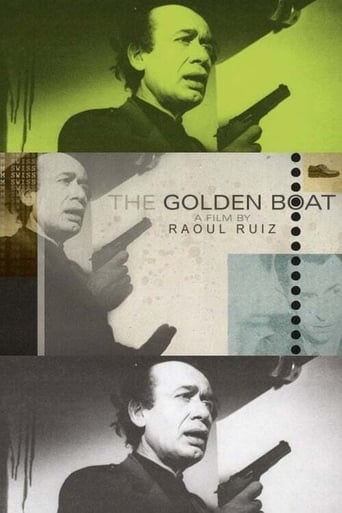
6.5Inspired in form by American police TV shows and soap operas, The Golden Boat is a madcap, surreal dash through the streets of New York city, telling the mysterious and often hilarious story of an aged street-person named Austin, a comically compulsive assassin, as he joins up with a young rock critic and philosophy student named Israel Williams. In the course of their adventures, Austin pursues his object of desire - a Mexican soap opera star - and along the way engages a host of TV characters and bit players, whose repartee range from gangsterish insults to the question of God's existence.
The Golden Boat
1991
 NR
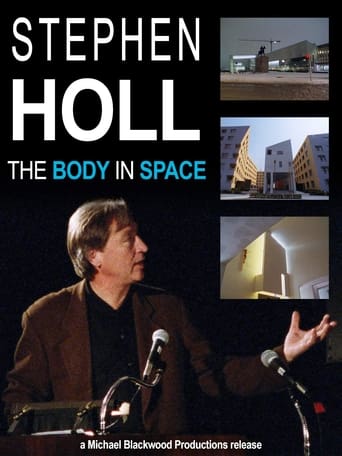
NR"Steven Holl: The Body in Space" explores the career of the innovative, highly renowned American architect. In this portrait Holl presents some of his most acclaimed works, including the Makuhari Housing Complex in Chiba, Japan and the Chapel of St. Ignatius in Seattle. Centered around the completion of Holl's Museum of Contemporary Art in Helsinki, the film observes his process and reasoning throughout the duration of the project
Steven Holl: The Body in Space
1999
1980s · 4 titles
8.8An epic meditation on psychoanalysis, the Baader-Meinhof, feminism, and pre-revolutionary Russia.
Journeys from Berlin/1971
1980
NRThe multiple means of making art after the end of illusionism led these artists to create performances, sculptures, earthworks, tableaux, furniture, shaped canvases, and more, using unusual materials. They explore the process of making forms and giving meanings to those forms. In this idea art, their focus is as often social and psychological as artistic. Some of their activities enlist engineering and construction techniques, others compose texts or scripts that are central to their art. Some cast the viewer in the role of a spectator, while the others demand active participation. The sources for their concepts and art works are equally diverse; the delicate proportions and balance of Early Renaissance painting, the exploration of the surface of the moon, the structure and inventions of vernacular architects, to name only a few.
14 Americans: Directions of the 1970s
1981
 NR
NRA comprehensive documentation of new art movements from 1945 to the present day. Beginning with the "Internationale Situationniste," "Cobra," "Spur," and "Wiener Gruppe" groups in Europe, and moving on to the international Happening and Fluxus movements, including the Viennese Actionists, and from 1970 onward to international Body and Performance Art, which also encompassed media art—film and video—the documentary presents film and photographic material from these art movements.
Aktionskunst International. Dokumente zum Internationalen Aktionismus
1989
With HOW TO FLY, Bowes abandoned plot entirely, finding other forms of structure. He wanted to show that stories do not have to obsessively organize and explain data, and that television’s hundreds of simultaneous, fragmented narratives – news, fiction, commercials, sports, etc. – had prepared audiences for this new type of structure. — Charles Ruas
How to Fly
1981
1970s · 17 titles
NRCompilation film consisting of material from various artists who are involved in body art
Body Art
1975
 NR
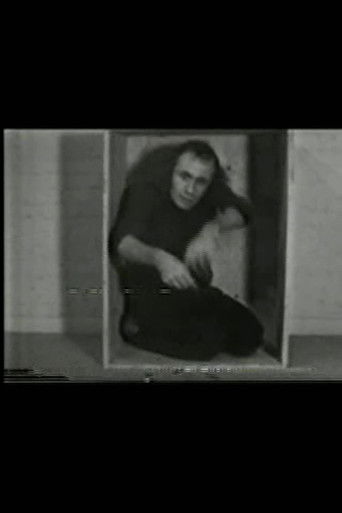
NRThe two-channel piece Remote Control is an exercise in manipulation and control between artist and subject, male and female. On separate channels, the viewer sees Acconci and Kathy Dillon sitting alone in wooden boxes in different rooms, each facing a static camera. Although they can only see and hear each other on separate monitors, they attempt to interact and respond to one another directly, as if their communication were unmediated. Through language and gesture, Acconci tries to manipulate Dillon's actions from his box, as though by remote control.
Remote Control
1971
 NR
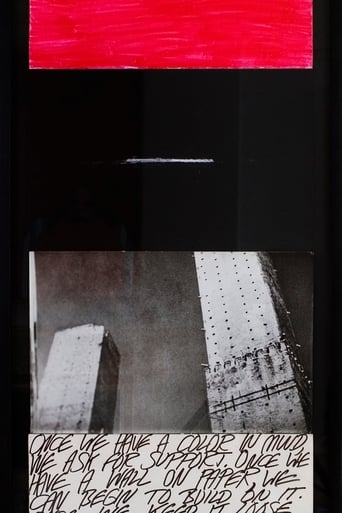
NRA three-part video epic in which avant-garde artist Vito Acconci explores the relationship between the self and national mythology. Through multiple vignettes, Acconci brings together a collage of music, photographs, diorama, experimental theater and his own profile, to tell a semi-autobiographical narrative that, in turn, becomes a critique of the alienated quality of American mythology.
The Red Tapes
1977
This early document is a videotaped interview ("videoview") of Vito Acconci by Willoughby Sharp during which they discuss Acconci's development as an artist. The intimate conversation addresses such concerns as Acconci's thoughts on the exhibition space, his transition from the page to the performance, and the role of video and photo documentation for performance art in general.
Willoughby Sharp Videoviews Vito Acconci
1973
In these three exercises, Acconci plays with trans-gender illusions, manipulating and altering his own body parts to suggest sexual transformations.
Conversions 1
1971
 NR
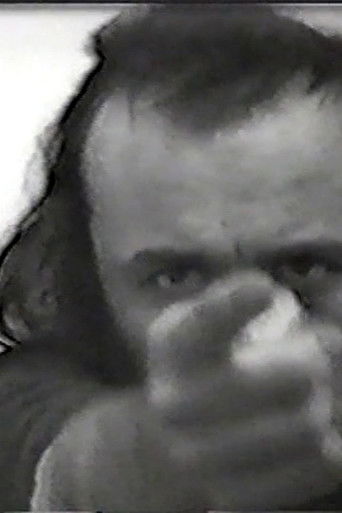
NRPoet and artist Vito Acconci points his finger towards the camera and his own reflection in an offscreen video monitor.
Centers
1971
 NR
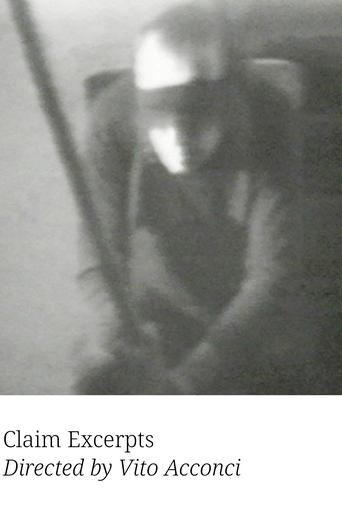
NRA documentation of one of Acconci's most notorious performances, Claim Excerpts is a highly confrontational work, an exercise in self-induced, heightened behavioral states, and an aggressive psychological exploration of the artist/viewer relationship. During the three-hour performance, Acconci sat in the basement of 93 Grand Street in New York, blindfolded, armed with metal pipes and a crowbar. His image was seen on a video monitor in the upstairs gallery space. Staking claim to his territory, he tries to hypnotize himself through language into an obsessive state of possessiveness.
Claim Excerpts
1971
 NR
NR“In this legendary sculpture/performance Acconci lay beneath a ramp built in the Sonnabend Gallery. Over the course of three weeks, he masturbated eight hours a day while murmuring things like, "You're pushing your cunt down on my mouth" or "You're ramming your cock down into my ass." Not only does the architectural intervention presage much of his subsequent work, but all of Acconci's fixations converge in this, the spiritual sphincter of his art. In Seedbed Acconci is the producer and the receiver of the work's pleasure. He is simultaneously public and private, making marks yet leaving little behind, and demonstrating ultra-awareness of his viewer while being in a semi-trance state.” – Jerry Saltz (via: http://www.ubu.com/film/acconci_seedbed.html)
Seedbed
1972
"In this now infamous tape, exemplary of his early transgressive performance style, Acconci sits and relates a masturbatory fantasy about a girl rubbing his legs under the table. Carrying on a rambling dialogue that shifts back and forth between the camera/spectator and himself, Acconci sexualizes the implicit contract between performer and viewer - the viewer serving as a voyeur who makes the performance possible by watching and completing the scene, believing the fantasy."
Undertone
1972
 NR
NRStanding alone among beach dunes, Acconci begins to kick at the sand below him. Over the course of the film's ten minutes, this repeated action displaces sand at a steady rate: as the artist sinks lower into the hole he creates, the mound of sand before him grows in correspondence.
Digging Piece
1970
A documentation of a live performance at New York University, Pryings is a graphic exploration of the physical and psychological dynamics of male/female interaction, a study in control, violation and resistance. The camera focuses tightly on Kathy Dillon's face, as Acconci tries to pry open her closed eyes. Dillon resists, at times protecting her face or fighting to get away. Locked in a silent embrace, the couple's struggle is violent, passionate; Acconci's sadistic coercion is tinged with a sinister tenderness. The body is a vehicle for a literal enactment of the desire for and resistance against intimate contact.
Pryings
1971
 NR
NRThe artist, covered in flour, tries to blow the flour off his skin.
Flour/Breath Piece
1970
In this feature-length silent film, Acconci uses hand-written title cards to present an "interior monologue" about speaking, language, and silence. The written text alternates with images of Acconci, alone in the interior of an urban loft or on a rooftop, with the skyline of downtown New York as a backdrop.
My Word
1974
 NR
NRThe back of Acconci's head is seen in tight close-up. He hums to himself, first lyrically, then aggressively, violently. Suddenly he wheels around to face the camera, his face filling the screen in extreme close-up, squinting at the viewer and speaking breathlessly. When finished, he turns and continues to hum, repeating this cycle again and again.
Turn-On
1974
 NR
NRThree-part short film. In 'Blindfold Catching', a blindfolded Acconci reacts, flinching and lunging, as rubber balls are repeatedly thrown at him from off-screen. In 'Soap & Eyes', he tries to keep his eyes open after dousing his face with soapsuds, resulting in a tragicomic clown face. In 'Hand and Mouth', he repeatedly forces his fist into his mouth until he gags.
Three Adaptation Studies
1970
 NR
NRThe artist, sitting naked, takes water from a pot into his mouth and gargles; he spits it out onto his stomach and groin, transferring the water from one "container" (the pot) to another (his body).
Gargle/Spit Piece
1970
 NR
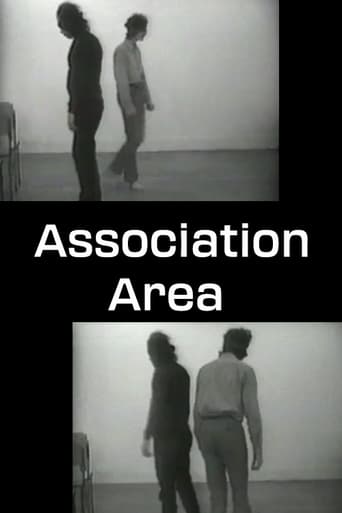
NRThis early performance tape is an example of what Acconci has termed his "quasi-ESP exercises," in which he explores mental concentration and intuition as a means of non-visual and non-verbal perception, interaction and communication. Blindfolded and wearing earplugs, Acconci and another man attempt to intuit and imitate each other's movements and bearing, though they can neither hear nor see.
Association Area
1971

Behind the camera
 2.0
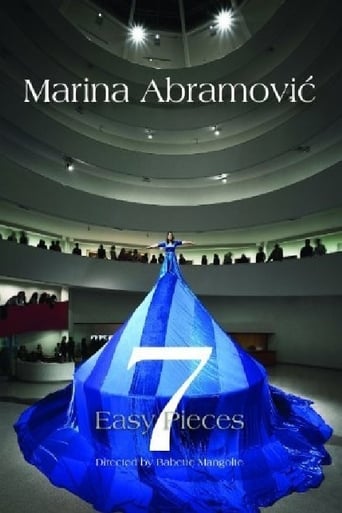
2.0For Seven Easy Pieces Marina Abramovic reenacted five seminal performance works by her peers, dating from the 1960's and 70's, and two of her own, interpreting them as one would a musical score. The project confronted the fact that little documentation exists from this critical early period and one often has to rely upon testimony from witnesses or photographs that show only portions of any given performance. The seven works were performed for seven hours each, over the course of seven consecutive days, November 9 –15, 2005 at the Guggenheim Museum, in New York City. Seven Easy Pieces examines the possibilities of representing and preserving an art form that is, by nature, ephemeral.
Seven Easy Pieces
2007
 NR
NRAcconci's body-based performances are often willfully provocative in their testing of physical limits and controlled actions. Here, as the camera frames Acconci's stomach in close up, he painstakingly pulls out each hair from the skin around his navel.
Openings
1970
"I walk in a circle around the camera: sometimes I'm on screen, sometimes I'm off, sometimes I change direction, leaving the screen on one side and coming back on the same side. Every five minutes or so, the location changes: my circle is continuous while the background shifts: bare walls—a corner with a window on one wall—outside, on a roof, with sky as the ground—outside, on a terrace, with other buildings and windows as the ground—inside, in a living room, bookcase and couch in the background. I'm silent; there's a voice-over, it's my voice: on screen, I'm talking about circling you, wrapping myself around you, as I did around 'her,' a person from my past: a kind of trap. When I go off screen, the talk shifts, becomes dreamier—fantasy talk, quasi-hypnotic—it's as if we're on a beach, we're covered by sand—it's as if we're in a field, we're rolling down a hill."
Full Circle
1974
 NR
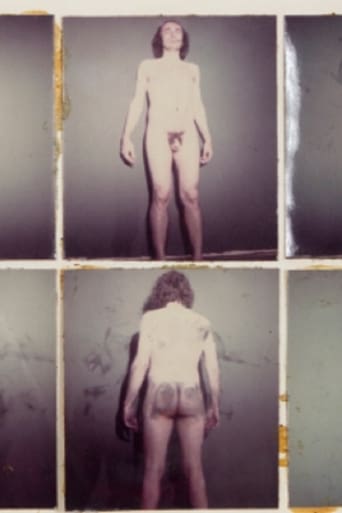
NRA ten minute super-8mm work from 1970 by Vito Acconci.
Run Off
1970
NRThe two-channel piece Remote Control is an exercise in manipulation and control between artist and subject, male and female. On separate channels, the viewer sees Acconci and Kathy Dillon sitting alone in wooden boxes in different rooms, each facing a static camera. Although they can only see and hear each other on separate monitors, they attempt to interact and respond to one another directly, as if their communication were unmediated. Through language and gesture, Acconci tries to manipulate Dillon's actions from his box, as though by remote control.
Remote Control
1971
NRA three-part video epic in which avant-garde artist Vito Acconci explores the relationship between the self and national mythology. Through multiple vignettes, Acconci brings together a collage of music, photographs, diorama, experimental theater and his own profile, to tell a semi-autobiographical narrative that, in turn, becomes a critique of the alienated quality of American mythology.
The Red Tapes
1977
In these three exercises, Acconci plays with trans-gender illusions, manipulating and altering his own body parts to suggest sexual transformations.
Conversions 1
1971
In Conversions II, the second in a trilogy of films interrogating the rigidity of gender binarism, the artist attempts to feminize his unquestionably male body by hiding his genitals between his legs. By casting his own masculinity into question, by performing its absence, Acconci problematizes the dictum that the male (or female) subject is a coherent being.
Conversions 2
1971
 NR
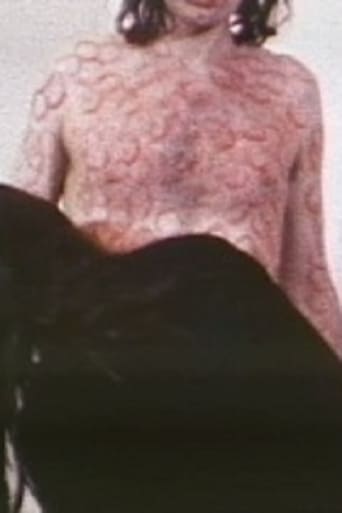
NRA woman kisses Acconci's body, covering him in red lipstick traces. Acconci then rubs his body against another man (Dennis Oppenheim), transferring the stains onto him.
Applications
1970
A super-8mm document (blown up to 16mm) of Acconci's performance of the same name in which he covered almost the entirety of the gallery space with a tarp (except about a two feet perimeter around the tarp where visitors could awkwardly make their way through) that was maybe two feet off the ground as he crawled underneath for six hours confronting himself.
Training Ground
1971
 NR
NR"A long narrow corridor, leading to the camera—at one side, a window—sun streams in, splotches of light and dark, the corridor shimmers. I'm at the far end—walking back and forth, humming, biding my time. Then I talk to the viewer—rather, to a specific viewer: 'So you're finally there—I've waited for you—you had to be there first.' I walk around the camera, still humming, talking now and then, but waiting till I'm close before I come down hard. I'm close up—only my lips on screen—too close, blurred: 'You want to hear about her—her hair is blonde, your hair could never be like hers—she has her own life, I'm interested in what she's thinking, we could never have had a relationship like this.' I back off, leave 'you' hanging, go back to the other end—but I come back, I don't leave 'you' alone." - Vito Acconci
Walk-Over
1973
NRPoet and artist Vito Acconci points his finger towards the camera and his own reflection in an offscreen video monitor.
Centers
1971
 NR
NRDocumentation of an evening of three simultaneous performances (Terry Fox, Dennis Oppenheim, Vito Acconci), in January 1971. In each alcove a light bulb hangs from the ceiling above a canvas that covers the ground. In Acconci's alcove, a clock is hung on the back wall; staring at the second hand, the artist repeats its movement around the light bulb.1971, 2:47 min, color, silent, Super 8mm film on video
Second Hand
1971
 NR
NR"Recording Studio From Air Time is a personal confessional in which video is both a mirror and a mediating device. Alone in an "isolation chamber" in the gallery every day for two weeks, Acconci sat with the camera focused at his reflection in a mirror. To the gallery public, his image was seen on a video monitor, while his voice was heard through audio speakers. Isolated in his confessional, Acconci begins a stream-of-consciousness monologue about his five-year relationship with a woman, recounting explicit details of their life together and his most intimate feelings towards her. "I'm talking to you so that I can see myself the way you see me," he states. "I'm acting something out for them." Becoming increasingly disdainful and cruel, he ultimately decides to end the relationship. In Air Time, video is a vehicle for both an extremely intimate introspection, and for the transmission of this self-examination into the public sphere." - EAI
Recording Studio From Air Time
1973
 NR
NRA super-8mm short from Vito Acconci
Cross-Fronts
1972
 NR
NRFace-Off is an ironic collusion of private and public, of exposure and masking, a tense ritual wherein Acconci divulges and then censors his self-revelations. Acconci turns on a reel-to-reel audiotape recorder and bends down to the speaker to listen to it, his face barely visible in the frame. The audio is a recording of his own voice addressing himself and the viewer, recounting intimate details about his life. However, whenever the material becomes too personal, he tries to drown out his voice and prevent the viewer from hearing, yelling: "No, no, no, don't tell this, don't reveal this...." Reacting to his recorded voice, he becomes increasingly agitated as the tape proceeds.
Face-Off
1973
NRA documentation of one of Acconci's most notorious performances, Claim Excerpts is a highly confrontational work, an exercise in self-induced, heightened behavioral states, and an aggressive psychological exploration of the artist/viewer relationship. During the three-hour performance, Acconci sat in the basement of 93 Grand Street in New York, blindfolded, armed with metal pipes and a crowbar. His image was seen on a video monitor in the upstairs gallery space. Staking claim to his territory, he tries to hypnotize himself through language into an obsessive state of possessiveness.
Claim Excerpts
1971
NR“In this legendary sculpture/performance Acconci lay beneath a ramp built in the Sonnabend Gallery. Over the course of three weeks, he masturbated eight hours a day while murmuring things like, "You're pushing your cunt down on my mouth" or "You're ramming your cock down into my ass." Not only does the architectural intervention presage much of his subsequent work, but all of Acconci's fixations converge in this, the spiritual sphincter of his art. In Seedbed Acconci is the producer and the receiver of the work's pleasure. He is simultaneously public and private, making marks yet leaving little behind, and demonstrating ultra-awareness of his viewer while being in a semi-trance state.” – Jerry Saltz (via: http://www.ubu.com/film/acconci_seedbed.html)
Seedbed
1972
NR“In this legendary sculpture/performance Acconci lay beneath a ramp built in the Sonnabend Gallery. Over the course of three weeks, he masturbated eight hours a day while murmuring things like, "You're pushing your cunt down on my mouth" or "You're ramming your cock down into my ass." Not only does the architectural intervention presage much of his subsequent work, but all of Acconci's fixations converge in this, the spiritual sphincter of his art. In Seedbed Acconci is the producer and the receiver of the work's pleasure. He is simultaneously public and private, making marks yet leaving little behind, and demonstrating ultra-awareness of his viewer while being in a semi-trance state.” – Jerry Saltz (via: http://www.ubu.com/film/acconci_seedbed.html)
Seedbed
1972
The final installment of the Conversions trilogy.
Conversions 3
1971
Vito Acconci
Clouds
—
 NR
NRAcconci's open mouth is framed by the camera in an extreme close-up, bringing the viewer uncomfortably close. A desperate sense of strained urgency comes across as Acconci gasps, "I'll accept you, I won't shut down, I won't shut you out.... I'm open to you, I'm open to everything.... This is not a trap, we can go inside, yes, come inside...." Acconci continues to plead in this way for the length of the tape, his mouth held unnaturally wide open. The pathological psychology of such enforced openness betrays a desperate struggle to accept and be accepted by others. The sustained image of Acconci's open mouth also evidences a sinister, vaguely threatening streak that is more or less evident in much of Acconci's work.
Open Book
1974
 NR
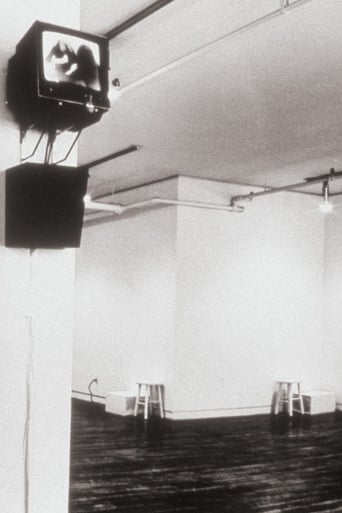
NRSuper-8mm footage documenting the gallery set-up for Acconci's exhibition AIR-TIME at Sonnabend Gallery in 1973.
Air Time
1973
 NR
NR"Acconci spars with his close-up image in a mirror. He then breaks the mirror, destroying his image." - Electronic Arts Intermix
See Through
1970
"In this now infamous tape, exemplary of his early transgressive performance style, Acconci sits and relates a masturbatory fantasy about a girl rubbing his legs under the table. Carrying on a rambling dialogue that shifts back and forth between the camera/spectator and himself, Acconci sexualizes the implicit contract between performer and viewer - the viewer serving as a voyeur who makes the performance possible by watching and completing the scene, believing the fantasy."
Undertone
1972
NRStanding alone among beach dunes, Acconci begins to kick at the sand below him. Over the course of the film's ten minutes, this repeated action displaces sand at a steady rate: as the artist sinks lower into the hole he creates, the mound of sand before him grows in correspondence.
Digging Piece
1970
 NR
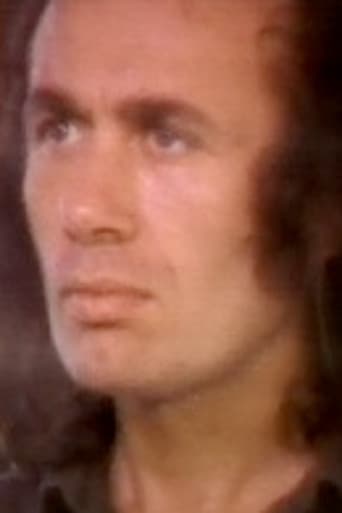
NR"In this exercise in nonverbal communication, Acconci explores facial expressions, and their psychological resonance, as a mode of performance narrative." - Electronic Arts Intermix
Face to Face
1972
A documentation of a live performance at New York University, Pryings is a graphic exploration of the physical and psychological dynamics of male/female interaction, a study in control, violation and resistance. The camera focuses tightly on Kathy Dillon's face, as Acconci tries to pry open her closed eyes. Dillon resists, at times protecting her face or fighting to get away. Locked in a silent embrace, the couple's struggle is violent, passionate; Acconci's sadistic coercion is tinged with a sinister tenderness. The body is a vehicle for a literal enactment of the desire for and resistance against intimate contact.
Pryings
1971
A super-8mm work documenting Acconci's audio installation piece in the Sonnabend gallery in 1972 of the same name.
Anchors
1972
NRThe artist, covered in flour, tries to blow the flour off his skin.
Flour/Breath Piece
1970
In this feature-length silent film, Acconci uses hand-written title cards to present an "interior monologue" about speaking, language, and silence. The written text alternates with images of Acconci, alone in the interior of an urban loft or on a rooftop, with the skyline of downtown New York as a backdrop.
My Word
1974
In this feature-length silent film, Acconci uses hand-written title cards to present an "interior monologue" about speaking, language, and silence. The written text alternates with images of Acconci, alone in the interior of an urban loft or on a rooftop, with the skyline of downtown New York as a backdrop.
My Word
1974
 NR
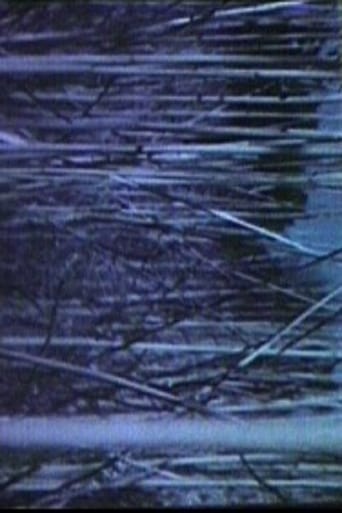
NR"Super-8 camera held out before him as shield and surrogate, Acconci pushes through a landscape of dense reeds and overgrowth. Break-Through records this search for a pause or clearing in what, for the viewer, amounts to an abstracted and scarcely differentiated visual field." - Electronic Arts Intermix
Break-Through
1970
 NR
NRIn this powerful "meta-document," Acconci sits in the dark with his back to a screen, onto which are projected slides of his past works, in chronological order from 1969. He describes each piece briefly. At times he turns to one side and speaks to an absent person in a conspiratorial whisper: "They couldn't possibly know these pieces the way you do... you know how I took what was happening with us and transferred it into the work." At other times he stands in front of the slide projections to face the viewer and addresses his art-making strategies, including the process of making this tape: "There's too much action here, my interest is language. Language can over-analyze things, break things down, over-complicate things."
Home Movies
1973
A super-8mm document (blown up to 16mm) of Acconci's performance of the same name where he laid flat on his stomach blindfolded on a wood platform in the middle of an arts event at a Rhode Island university as students watched videos, listened to music, etc and he spun himself in circles until he reached exhaustion at which point he would point at a random student and wish them dead.
Directions
1971
 NR
NRIn 'Looking Around Piece', the performer stands before a fixed camera, which records his eye and head movements as he follows a moving object outside the frame. In 'Starting Piece', the performer starts too far away to be captured by the camera; as he walks down the hill, he gradually enters the frame. In 'Catching Up', the performer and cameraman walk side by side across a field. Sometimes the performer falls as the camera continues its pace; the performer must make an effort to catch up and return into the frame.
Three Attention Studies
1969
In this performance based tape, Acconci uses his body to explore notions of opening and closure.
Open-Close
1970
NRThe back of Acconci's head is seen in tight close-up. He hums to himself, first lyrically, then aggressively, violently. Suddenly he wheels around to face the camera, his face filling the screen in extreme close-up, squinting at the viewer and speaking breathlessly. When finished, he turns and continues to hum, repeating this cycle again and again.
Turn-On
1974
 NR
NR"Unavailable until recently, Corrections is Acconci's first single-channel video. Back to the camera, with only his head and bare shoulders visible, Acconci lights a match and brings it around to the nape of his neck. The lights dim as the flame nears his body hair, which briefly flares in the darkness, at which point Acconci shakes out the match. This action is repeated for the duration of the piece. Corrections introduces themes that typify Acconci's body-based performance work of the 1970's." - Electronic Arts Intermix
Corrections
1970
 NR
NRIn Two Track, Acconci experiments with direct and peripheral perception of information in the context of communication and interaction. He sits with a man and a woman in front of a microphone. The man and woman each read a different text (a Mickey Spillane novel and a Raymond Chandler novel) simultaneously; Acconci repeats everything the man says. Occasionally an off-screen voice interrupts to question Acconci on what the woman has read, and he tries to answer.
Two Track
1971