
Directing
Roger Blais
Born — Died
1917-02-06 — 2012-11-09
Place of birth
Québec City, Québec, Canada
Known for
Directing
Credits
32 titles
Known for
A demonstration of the basic skills required to ski.
Ski Skill
1946
No synopsis available yet.
Bush Doctor
1955
It's a talent showcase for a singer.
Talent Showcase
1951
 10.0
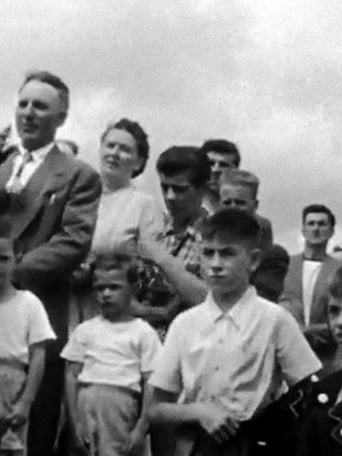
A look at the destruction that follows the breaking of long-neglected dikes and the measures being taken to prevent future problems.
The Dikes
1955
No synopsis available yet.
Jeunesses musicales
1956
A look at Canada's first national Ballet Festival.
Ballet Festival
1949
Behind the camera
A demonstration of the basic skills required to ski.
Ski Skill
1946
No synopsis available yet.
Bush Doctor
1955
It's a talent showcase for a singer.
Talent Showcase
1951
10.0A look at the destruction that follows the breaking of long-neglected dikes and the measures being taken to prevent future problems.
The Dikes
1955
10.0A look at the destruction that follows the breaking of long-neglected dikes and the measures being taken to prevent future problems.
The Dikes
1955
No synopsis available yet.
Jeunesses musicales
1956
A look at Canada's first national Ballet Festival.
Ballet Festival
1949
 7.3
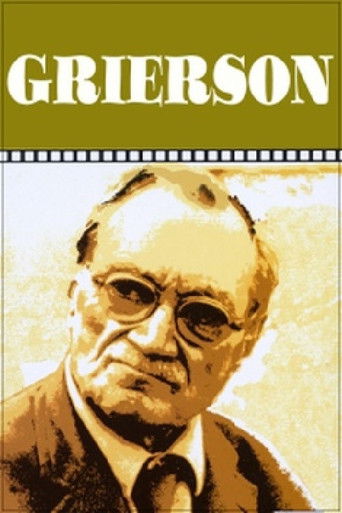
A portrait of John Grierson, the first Canadian Government Film Commissioner and founder of the National Film Board in 1939. Interweaving archival footage, interviews with people who knew him and footage of Grierson himself, this film is a sensitive and informative portrait of a dynamic man of vision. Grierson believed that the filmmaker had a social responsibility, and that film could help a society realize democratic ideals. His absolute faith in the value of capturing the drama of everyday life was to influence generations of filmmakers all over the world. In fact, he coined the term 'documentary film'.
Grierson
1973
7.3A portrait of John Grierson, the first Canadian Government Film Commissioner and founder of the National Film Board in 1939. Interweaving archival footage, interviews with people who knew him and footage of Grierson himself, this film is a sensitive and informative portrait of a dynamic man of vision. Grierson believed that the filmmaker had a social responsibility, and that film could help a society realize democratic ideals. His absolute faith in the value of capturing the drama of everyday life was to influence generations of filmmakers all over the world. In fact, he coined the term 'documentary film'.
Grierson
1973
In the 1940s thousands of immigrants are coming from Europe to Canada offering strength and skills in exchange for hope and a new life. 'The long night is ended, the morning draws nigh,' sums up the feelings of those who are sped through immigration formalities on their way to a fresh existence. Though the language may be different, these new Canadians soon find things in Canada that remind them of Holland, Poland or Belgium. Some immigrants carry on with their old trades--sewing, farming, diamond cutting. Others, on huge projects such as Des Joachims, use their muscles to help build their adopted homeland, while their love of culture and their skilled professions will make valuable contributions to Canada in the future.
Passport to Canada
1949
A National Film Board of Canada production about synchronized swimmers.
Sea Sprites
1961
A dramatized presentation of the work of the Maritime Marshland Rehabilitation Administration in the reclaiming of flooded agricultural regions along the Bay of Fundy. Through the account of a dike-keeper, the film describes the destruction that follows the breaking of long-neglected dikes during autumn rains and shows how M.M.R.A. engineers are cooperating with New Brunswick land-owners in the big task of keeping at bay the inundations of the sea.
Les aboiteaux
1955
A look at the ruins of the ancient city of Angkor. The largest collection of sculptures the world has ever seen - an entire metropolis of palaces and temples recovered from the jungle.
Angkor - The Lost City
1961
A look at the ruins of the ancient city of Angkor. The largest collection of sculptures the world has ever seen - an entire metropolis of palaces and temples recovered from the jungle.
Angkor - The Lost City
1961
 7.0
This colorful archival record of Québec City's Winter Carnival shows that many popular events of today—pageants, parades, boat races, folk dancing, fireworks, and torchlight skiing—were also favorites many years ago.
Carnival in Québec
1956
Highlights of the 1951 visit of Princess Elizabeth and the Duke of Edinburgh to Canada and the United States. - NFB
Highlights from Royal Journey
1953
The Commodores sing Aunt Rhoda, Polly Wolly Doodle, Sweet Genevieve, Loakie's Boat and I've Been Working on the Railroad. The words of the last four songs appear on screen for audience sing-along.
Sing with the Commodores No. 1
1951
Musical short with Neil Chotem.
Music Master (with Neil Chotem)
1951
A short film by Roger Blais.
It's Fun to Sing
1948
No synopsis available yet.
De père en fils
1951
No synopsis available yet.
De père en fils
1951
A journey northward from Mile Zero, where the Alaska Highway begins, through mountain wilderness. This film covers the route of the travelling library van, a free book service of the Public Library Commission of British Columbia. To oil towns, army bases, mining camps and scattered settlements, the bookmobile delivers a wide assortment of reading material.
Journey from Zero
1961
A look at Yoho National Park in Canada.
Yoho: Wonder Valley
1953
A film profile of Healey Willan, composer, conductor, choirmaster, organist and teacher. In this film you see Dr. Willan at his favourite organ in the church where he is choirmaster, at work in his study, and dropping in for a visit with students at the Royal Conservatory of Music in Toronto.
Man of Music
1959
 7.0
No synopsis available yet.
Fridolinons
1945
 7.5
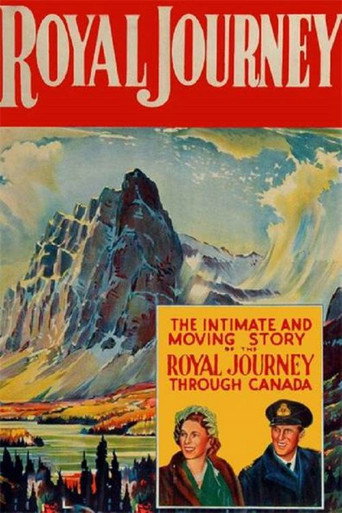
A documentary account of the five-week visit of Princess Elizabeth and the Duke of Edinburgh to Canada and the United States in the fall of 1951. Stops on the royal tour include Québec City, the National War Memorial in Ottawa, the Trenton Air Force Base in Toronto, a performance of the Royal Winnipeg Ballet in Regina and visits to Calgary and Edmonton. The royal train crosses the Rockies and makes stops in several small towns. The royal couple boards HMCS Crusader in Vancouver and watches Native dances in Thunderbird Park, Victoria. They are then welcomed to the United States by President Truman. The remainder of the journey includes visits to Montreal, the University of New Brunswick in Fredericton, a steel mill in Sydney, Nova Scotia and Portugal Cove, Newfoundland.
Royal Journey
1951
The St. Joseph's University boys choir performs several songs.
Voices from Acadia
1952
Canada, rich in uranium, is harnessing atomic science for peacetime living. This film provides a progress report on nuclear research conducted at the atomic energy plant at Chalk River, Ontario, and shows some of the constructive applications of atomic energy carried out in hospitals (including Canada's celebrated "cobalt bomb"), in agricultural experimental stations and in industry. Interior views of the Chalk River plant afford a look at NRX, the atomic pile itself. A brief survey is made of atomic research in Canadian universities.
Canada's Atom Goes to Work
1952
Robert Donnell is a man with an unusual occupation. He is the Carilloneur in the Dominion of Canada Peace Tower in Ottawa. Unseen to the visitors , he serenades them from his room high in the tower with 53 carillon bells ranging in weight from ten pounds to eleven tons.
The Man in the Peace Tower
1951
A tongue-in-cheek archival film documenting a day in the life of a veteran horse-drawn carriage driver. Though the tourists that flock to the historic avenues of the Old City have changed considerably, the Old World charm of Québec City is timeless.
The Calèche Driver
1953
 9.0
A ballet about the settlement of the Canadian West and the fate of a young wife who comes to the prairies with her husband.
Shadow on the Prairie (A Canadian Ballet)
1953
The Leslie Bell Singers work during the day and rehearse at night for the joy they find in singing. Here they present widely differing numbers: Echo Song from 16th-century Italy is followed by the Québec folk song Quand j'étais chez mon père; the black spiritual I Couldn't Hear Nobody Pray contrasts with I'se the Boy That Builds the Boat, from the fishing hamlets of Newfoundland; and finally a special arrangement of Schubert's Ave Maria.
Choral Concert
1948