
Directing
Guy Sherwin
Known for
Directing
Credits
47 titles
Born in 1948, Guy Sherwin studied painting at Chelsea School of Art in London. Inspired by films and expanded cinema from the London Filmmakers’ Co-op, he began making films and acquired laboratory skills while working there during the 1970s. His 16mm films are often highly concentrated in their form, but very diverse in terms of their imagery and approach. The Short Film Series (1975-ongoing) and live performance pieces such as Man with Mirror (1976-ongoing) involve human, animal and natural phenomena transcribed as filmic subjects, while his optical sound films and performances explore a wide variety of abstract audiovisual ideas.
Known for
 6.0
Reflections in fish tanks in the windows of restaurants in Chinatown, San Francisco, accompanied by sounds of foghorns, passers-by, dining and breaking waves. Shot on Super 8, the images oscillate between abstraction, documentary portrait and poetry, with the fish coming in and out of focus, whilst the sound provides a grounding in the setting of San Francisco’s harbour and nearby Chinatown.
Salt Water
1986
 8.0
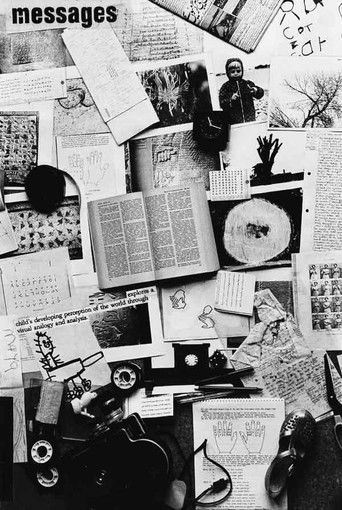
"Made during my daughter’s early childhood. It’s not about her, but it’s a response to her questions about the world that implicitly challenge things we take for granted – the visual appearance of the world, ambiguities in language, the ways we communicate." – Guy Sherwin
Messages
1984
Looking through my outdated film stock for a hand-made project to use in my teaching, I started experimenting with raw colour film. Colour stock is tricky to use because of its Remjet backing which blocks the light from bouncing around during exposure (it is removed in the processing). However, if you scratch lines into both sides of the film, the points at which they cross create points of light, and this registers as sound if it appears in the optical soundtrack area. This is the simple technique that formed the basis of Remjet. The work then was to build up patterns of lines and tones and to organise them into a viable projection performance. The resulting interference patterns suggested the variable frequencies of FM radio as a random element to add to the performance. (Guy Sherwin)
Remjet
2015
 NR
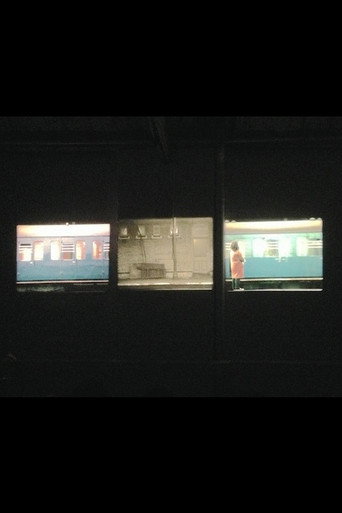
Stationary shots of a station platform repeated across three screens. Trains and people waiting and departing, arriving and leaving.
Camden Road Station
2003
 NR
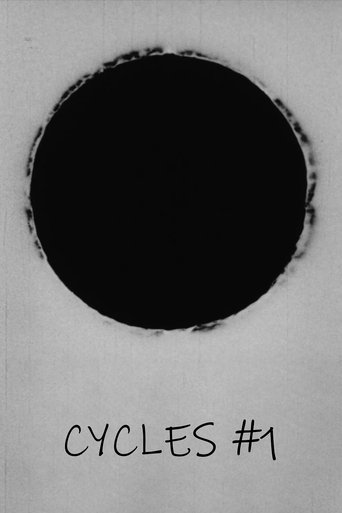
A hand-made film of a circular form that fluctuates in rhythms of light and sound.Cycles 1 is made by sticking paper dots onto the surface of the film and to its (optical) sound track. On projection these separate instants are converted simultaneously into picture and sound.The gaps between the dots gradually decrease until a fusion of the material occurs; the separate image-moments coalesce into a pulsating ball of light; simultaneously we hear rhythmic sounds fusing into a continuous rising drone.These transformations are taking place in our perceptual systems, for if we examine the physical strip of film, no such change is seen. Apparently we register time through our optical and our aural senses in very different ways, one chemical, the other mechanical.
Cycles #1
1972
 NR
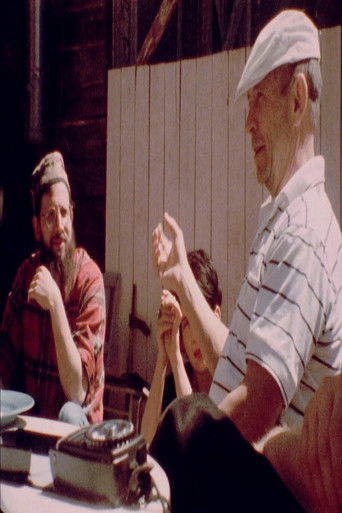
With: Rebecca Barten, David Sherman, Guy Shewin, Barbara Meter, Ross Lipman, Brian Frye, and others Camera: Most of the above and Bruce Baillie Filmed in San Francisco, 1995
Bruce Baillie at Total Mobile Home Talking About All My Life
2004
Film credits
2010s · 2 titles
 8.0
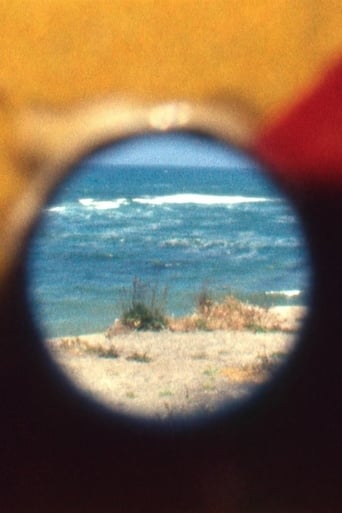
NEW SHORES is a sister film to IN THE STONE HOUSE in many ways. Like the latter film, it consists of earlier footage edited in recent years. It could be seen as a sequel to IN THE STONE HOUSE especially since it begins with a cross-country journey to the West Coast, where I settled, and concludes with a visit, in 1987, to the “stone house” in rural New Jersey. Even though there is some sort of time line that can be imagined, the film stands on its own. It is simply a series of episodes that touch upon facets of living in a new area with new weather, new people, new identities and stubborn old fears. The Bolex camera goes to work across landscapes and living areas, workplaces and gatherings. A dance of images: can beauty partner with dread and death? It’s a film of the coexistences that percolate beneath the surface of ordinary events. A film of useless hopes and baseless fears.
New Shores
2012
 NR
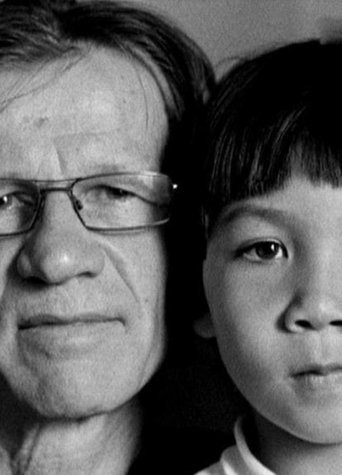
No synopsis available yet.
Guy & Kai
2013
2000s · 1 titles
Behind the camera
6.0Reflections in fish tanks in the windows of restaurants in Chinatown, San Francisco, accompanied by sounds of foghorns, passers-by, dining and breaking waves. Shot on Super 8, the images oscillate between abstraction, documentary portrait and poetry, with the fish coming in and out of focus, whilst the sound provides a grounding in the setting of San Francisco’s harbour and nearby Chinatown.
Salt Water
1986
8.0"Made during my daughter’s early childhood. It’s not about her, but it’s a response to her questions about the world that implicitly challenge things we take for granted – the visual appearance of the world, ambiguities in language, the ways we communicate." – Guy Sherwin
Messages
1984
Looking through my outdated film stock for a hand-made project to use in my teaching, I started experimenting with raw colour film. Colour stock is tricky to use because of its Remjet backing which blocks the light from bouncing around during exposure (it is removed in the processing). However, if you scratch lines into both sides of the film, the points at which they cross create points of light, and this registers as sound if it appears in the optical soundtrack area. This is the simple technique that formed the basis of Remjet. The work then was to build up patterns of lines and tones and to organise them into a viable projection performance. The resulting interference patterns suggested the variable frequencies of FM radio as a random element to add to the performance. (Guy Sherwin)
Remjet
2015
NRStationary shots of a station platform repeated across three screens. Trains and people waiting and departing, arriving and leaving.
Camden Road Station
2003
NRA hand-made film of a circular form that fluctuates in rhythms of light and sound.Cycles 1 is made by sticking paper dots onto the surface of the film and to its (optical) sound track. On projection these separate instants are converted simultaneously into picture and sound.The gaps between the dots gradually decrease until a fusion of the material occurs; the separate image-moments coalesce into a pulsating ball of light; simultaneously we hear rhythmic sounds fusing into a continuous rising drone.These transformations are taking place in our perceptual systems, for if we examine the physical strip of film, no such change is seen. Apparently we register time through our optical and our aural senses in very different ways, one chemical, the other mechanical.
Cycles #1
1972
NRWith: Rebecca Barten, David Sherman, Guy Shewin, Barbara Meter, Ross Lipman, Brian Frye, and others Camera: Most of the above and Bruce Baillie Filmed in San Francisco, 1995
Bruce Baillie at Total Mobile Home Talking About All My Life
2004
Half Light began as a study of light - when at a certain time of the year, and day, a shaft of sunlight would penetrate almost the length of the house and end up as a thin crescent on the curved wall towards the end of the hall. The somewhat surprising shapes this made became further disorientated by the oblique camera movements used in filming. Having printed this negative film several times over and at varying light exposures, the film was initially projected as a simple two-screen film, with camera shots interspersed with passages of light, or white leader. Later I adapted the film into a live performance in which two superimposed projections are disrupted by interventions in the paths of light, with the effect of light spilling over the edges of the projected frame. (Guy Sherwin)
Half Light
2018
In 1995 I was teaching in San Francisco while living in an apartment close to Freeway 101 where it enters the city. Struck by the variety of life continuing regardless beneath this huge structure, I started filming, using fixed camera positions that plot four adjacent streets, always with the freeway in shot. The resulting single-screen film was Under the Freeway. Three years later I returned to San Francisco by which time the top layer of the freeway had been removed (it was now seen as an earthquake liability). I went back to the same locations and filmed again. The resulting two-screen film, After the Freeway, is projected as two discrete time zones, 1995 and 1998. (Guy Sherwin)
After the Freeway
2006
 NR
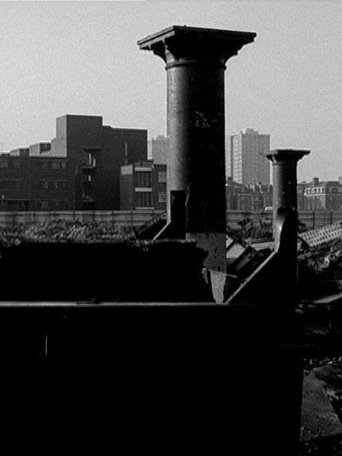
No synopsis available yet.
Columns
1977
 NR
No synopsis available yet.
Chimney
1977
 NR
No synopsis available yet.
Wind & Water
1980
 NR
No synopsis available yet.
Blink
1977
 NR
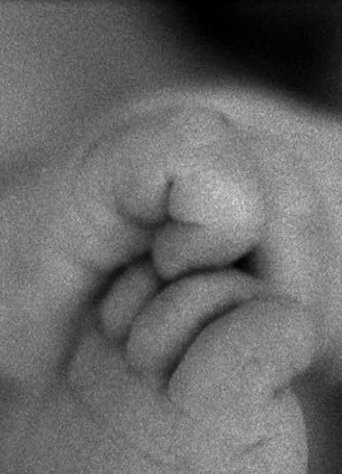
My youngest daughter, Mei, a few days after I helped deliver her (the midwife arrived too late).
Mei
2010
 NR
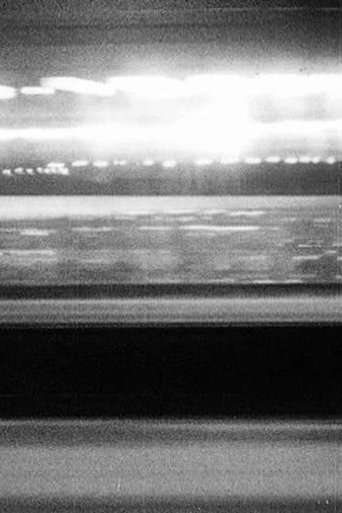
The sound of lights passing through a darkened landscape seen from a moving train.
Night Train
1979
 NR
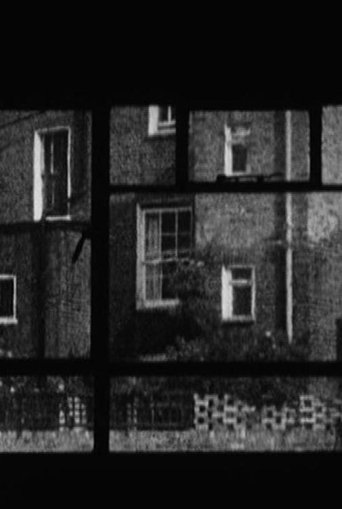
No synopsis available yet.
Window
1976
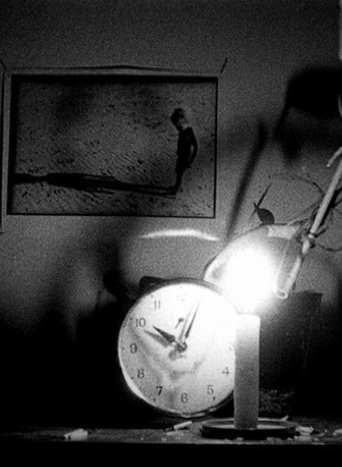 NR
No synopsis available yet.
Candle & Clock
1977
short by Guy Sherwin
Filter Beds
1998
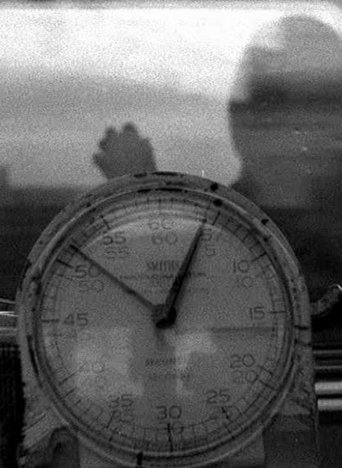 NR
No synopsis available yet.
Clock & Train
1978
short film by Guy Sherwin
Flight
1998
Minimal interventions to a single roll of film can have surprising effects. Overhead cables seen from a moving train are filmed on a three-minute camera roll. The film is printed several times and projected on three projectors as stacked images - one of which is flipped sideways. The second half of the film uses a spare print, sliced down the middle and taped back together with a slight mis-alignment that leaves a vertical fissure running down through the film. This is also printed three times, and also projected with one of the films flipped. The varying running speeds of the projectors create a natural and unpredictable phasing between the three images. (Guy Sherwin)
Split Wires
2022
 NR
No synopsis available yet.
Breathing
1978
 NR
No synopsis available yet.
Handcrank Clock
1976
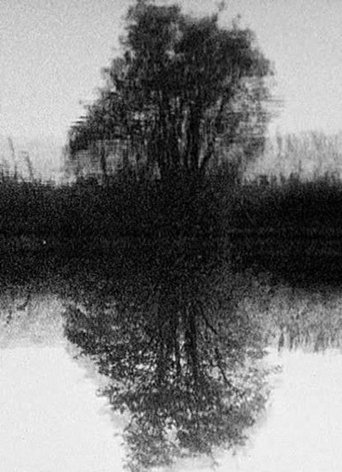 NR
No synopsis available yet.
Tree Reflection
1998
 NR
No synopsis available yet.
Tap
1978
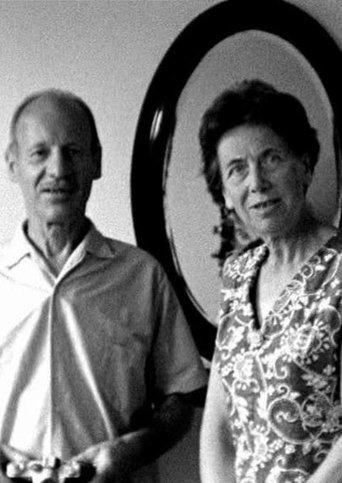 NR
No synopsis available yet.
Portrait with Parents
1975
 6.0
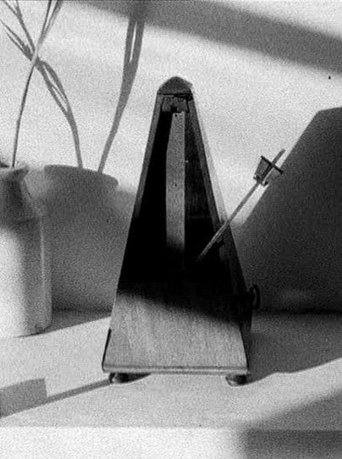
Part of Sherwin's short film series. "...In the shuddering stasis of METRONOME– an illusion caused by the clash between the spring-wound mechanisms of the Bolex camera and of the metronome itself." -Film-Makers' Co-Op
Metronome
1978
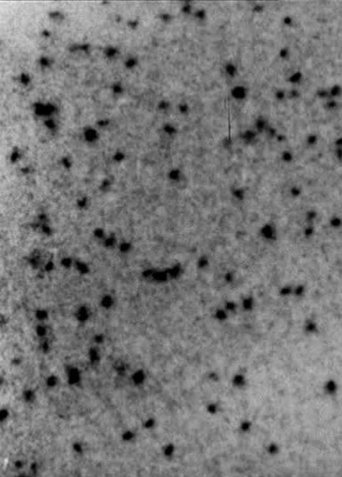 NR
No synopsis available yet.
Gnats
1998
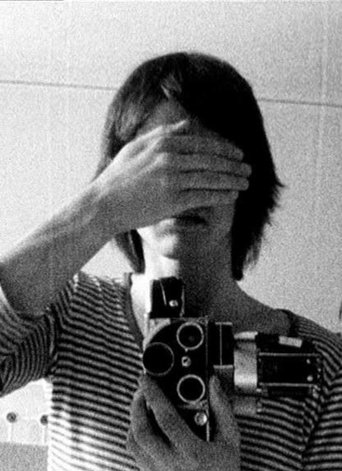 NR
No synopsis available yet.
Hand/Shutter
1976
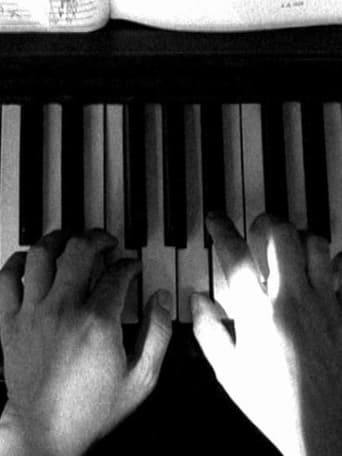 2.0
No synopsis available yet.
Piano
2013
 NR
No synopsis available yet.
Tree & Cloud
1998
 NR
No synopsis available yet.
Maya
1978
 NR
No synopsis available yet.
Swimming
1977
Colour film leader was sandblasted to produce image and optical soundtrack giving the appearance of drifting grain against shifting white noise. The work is designed for a long white wall with projectionist at either end projecting obliquely onto it.
Abrasion Loops
2007
 NR
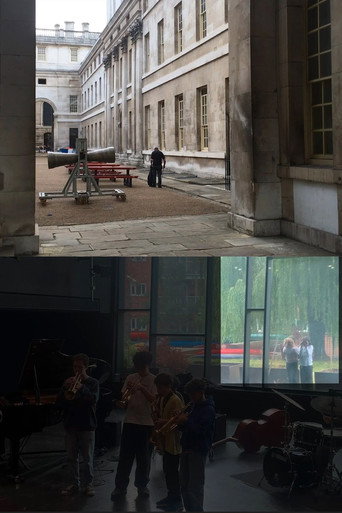
Many of my films evolve from a single shot, and quite often that shot is an immediate response to a situation unfolding in front of me. This is about the closest I get to improvising, a musical form I sometimes aspire to, but is difficult to attain as a filmmaker. That was how I shot the majority of films in this programme, using the convenience of the mobile phone in my pocket. I often sense immediately that something might be made from the situation I find myself in, but only after studying the shots on my computer do I discover the direction they might take. The third film Pause clearly involved some planning, but again, after the initial recording, I had to work with the fragments of sound and image to see where they might lead, in a lengthy process of trial and error. In Interior Music I am using the camera in direct response to music emanating from the Trinity Conservatoire in Greenwich. (EXiS — Experimental Film and Video Festival in Seoul, 2026)
Four Films about Music (Silent Jazz / Orchestra / Pause / Interior Music)
2026
 NR
No synopsis available yet.
Coots
1998
 NR
One of my first 16mm films, made without a camera as an experiment in how to visualize rhythm. It equates four simple shapes with four simple sounds, made by punching shapes into black film and scratching into the film's optical sound track. The film uses a bar structure similar to a music score. Each bar lasts one second (24 frames of film) and is divided into 2, 3, 4 or 6 aural and visual beats per second (bps). These are used in alternating patterns such as: 2/3, 3/4, 3/4/6, 2/3/6 In each section of the film an arbitrary relationship is established between image, sound and beats per second, for example: circle = 12 scratches per frame (high pitch sound) at 6 bps rhombus = 6 scratches per frame (mid pitch sound) at 4 bps triangle = 3 scratches per frame (low pitch sound) at 3 bps rectangle = 1 scratch per frame (percussive sound) at 6 bps A print of the film was hand-painted in 2006 G.S.
Sound Shapes
1972
 6.0
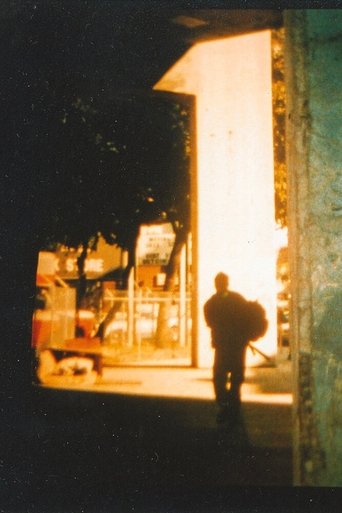
Street-life at a busy intersection beneath a freeway in San Francisco. An urban landscape film with an underlying formal structure.
Under the Freeway
1995
NRNo synopsis available yet.
Guy & Kai
2013
There is something exhilarating about observing an artistic star that shines at the edge of the cosmos, and steadfastly refuses to move to the centre, that even seems to vanish beyond the periphery as time and fashion move on, only for it to become visible again”. Tim Cawkwell.
Why there is something rather than nothing
2019
 NR
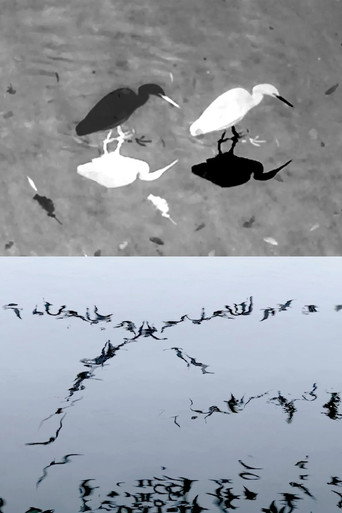
Animal Studies relates to and overlaps the Short Film Series, which I began in 1975. The beauty of working in a series is its flexibility; films can be added to or dropped, the order and manner of projection can be varied. Each film is like a brick, insignificant in itself, but can be combined into all kinds of structures. My filmic interest in animals is that they are unselfconscious, authentic, and can’t act. (EXiS — Experimental Film and Video Festival in Seoul, 2026)
Animal Studies (Egret / Seagull Reflection / Midges / Spider / Swans in a Line)
2026