

Directing
George Griffin
Known for
Directing
Credits
25 titles
Independent animator George Griffin (b.1943) grew up in Knoxville, Tennessee, was drafted into the army, studied political science at Dartmouth, then moved to New York in 1967. He apprenticed in commercial studios while also experimenting with design influenced by Saul Steinberg and animation techniques in the spirit of Robert Breer. Griffin has made over 30 films, 10 seconds to 30 minutes long, cartoon narratives and self-referential documations, melding abstraction and figuration. He also makes viewer-activated, animated objects such as mutoscopes and flipbooks. He received Guggenheim, New York State Council, and National Endowment grants, and published FRAMES and FLIP-PACK. Griffin taught…
Known for
 NR
NRFantastical, larger-than-life puppetry and rambunctiously playful choreography is framed against an Edenic backdrop of Vermont farm country in George Griffin and DeeDee Halleck’s luminous, lyrical short film, which documents the 1974 edition of the Bread and Puppet Theater’s annual Domestic Resurrection Circus, taking place soon after the company’s relocation from downtown Manhattan to the rural New England enclave where it remains headquartered to this day.
The Meadows Green
1975
 NR
NRA documentary about the early days of animation.
Forging the Frame: The Roots of Animation, 1900-1920
2007
 NR
NRA documentary about the early days of animation.
Forging the Frame: The Roots of Animation, 1921-1930
2008
 NR
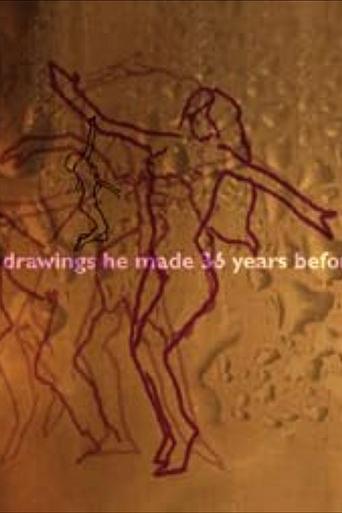
NRA woman behind a translucent, dripping shower curtain; a flipbook of memories of a romance from decades ago. Bach's music to round things out.
The Bather
2009
 NR
NRTri-colored cycle of a dance movement set to a prelude from Bach's well-tempered clavier.
Trikfilm 1
1973
 NR
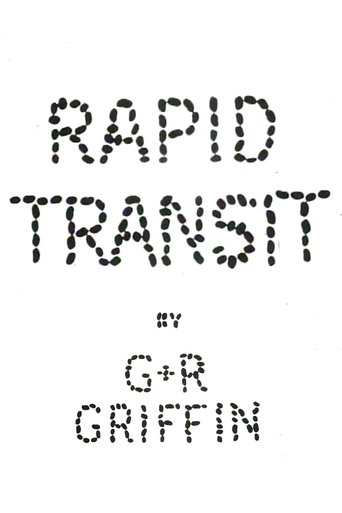
NREdible animation. Silhouettes of black beans creating mandala patterns with frenzied percussion on track.
Rapid Transit
1969
Film credits
2000s · 2 titles
Behind the camera
NRFantastical, larger-than-life puppetry and rambunctiously playful choreography is framed against an Edenic backdrop of Vermont farm country in George Griffin and DeeDee Halleck’s luminous, lyrical short film, which documents the 1974 edition of the Bread and Puppet Theater’s annual Domestic Resurrection Circus, taking place soon after the company’s relocation from downtown Manhattan to the rural New England enclave where it remains headquartered to this day.
The Meadows Green
1975
NRA woman behind a translucent, dripping shower curtain; a flipbook of memories of a romance from decades ago. Bach's music to round things out.
The Bather
2009
NRTri-colored cycle of a dance movement set to a prelude from Bach's well-tempered clavier.
Trikfilm 1
1973
NREdible animation. Silhouettes of black beans creating mandala patterns with frenzied percussion on track.
Rapid Transit
1969
 NR
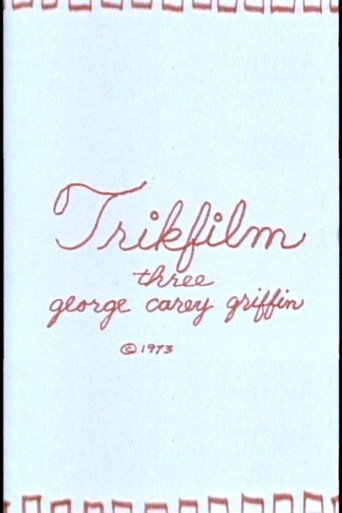
NRA hand draws a flipbook of liquid architecture.
Trikfilm 3
1973
 4.0
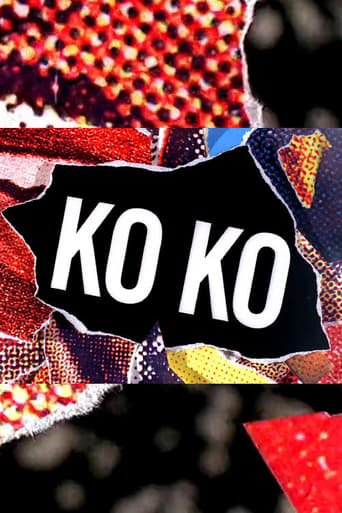
4.0Using a 1945 Charlie Parker song, American indie animator, George Griffin greets us with a dizzying dance of torn Pop Art images. Shreds of consumer culture flash before us, swayed and absorbed by the tempo and power of Parker's horn.
Ko-Ko
1988
 7.0
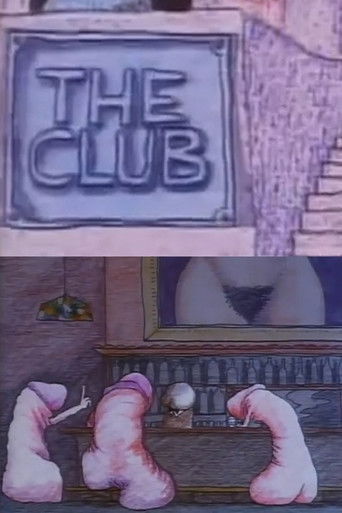
7.0All the members of an old men's club are large phalluses.
The Club
1975
 3.0
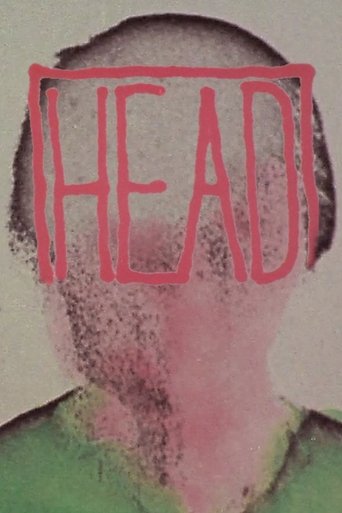
3.0An ingenious, witty essay on making filmed, photographed, drawn, painted, and Xeroxed images move. Reverberating between multi-media versions of the same events, playing with disjunctions between figure and ground, HEAD is a 'trickfilm' meditation on portraiture; the animator, as actor, lives through his drawings, which in turn become actors who influence his own self-image. An insider's diary on the process of creation, HEAD is a brilliant encyclopedic exploration of the circular relationship between the animator and his creation, of the nature of animated illusion itself.
Head
1975
Animator George Griffin recalls racial discord in his eastern Tennessee hometown. A collage of photographs, maps, interviews, cartoons, and jazz highlights the horrors of a hatred that reverberates to this day.
Coal Creek
2015
 NR
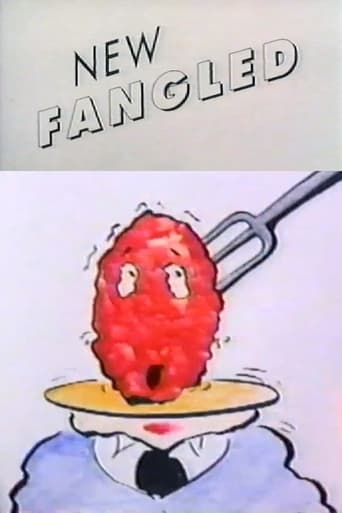
NRA critique of marketing speak in the commercial cartoon industry.
New Fangled
1990
 NR
NRA duplicated documentary of a NYC sidewalk
BLOCK PRINT
1978
Essay on animation's contradictory legacy: comedy and formalism.
Lineage
1979
Essay on animation's contradictory legacy: comedy and formalism.
Lineage
1979
 NR
NRUSA, 1981, colour, sound, 7 min.
Flying Fur
1981
 NR
NRAbstract exercise in pattern recognition.
Displacement
1969
 5.6
5.6Twenty animators from the U.S., Switzerland, Poland and China express their friendship with and love of animation in a series of animated variations on the standard countdown.
Academy Leader Variations
1987
Like many of my films THUMBNAIL SKETCHES began as a flipbook. However this particular book didn't really flip. Each page instead of being one phase in a series (like a frame of film), contained a complete cycle of 8 drawings arranged in a rectangular ring. The reader had to construct the information conceptually not just optically as if it were a mosaic of abstract comic strip panels. The film begins with a 'live' prologue documenting the book's original form; then follows its destruction by scissors, a brief autopsy illustrating the mechanics of movement, and its eventual animated rebirth.
Thumbnail Sketches
1977
 NR
NRAnimated flipbook of endlessly evolving entrancement.
L'Age Door
1975
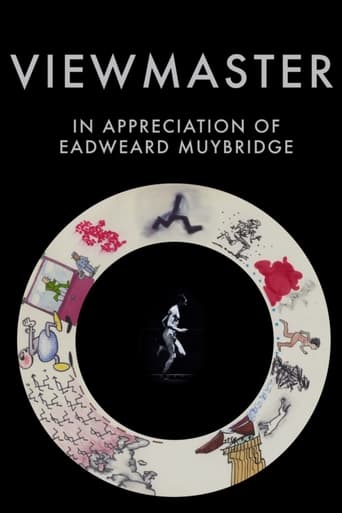 8.0
8.0Inspired by Eadweard Muybridge's series of photographs entitled "Running Man", Griffin creates a whimsical animated poem, using a variety of graphic styles.
Viewmaster
1976
An animated futuristic autobiography of a man born in the year 2000.
It's an O.K. Life
1980
 NR
NRThe man just wants a piece of candy. The candy machine just wants a piece of the man. A cartoon employing a novel xerox technique to combine animation and live action.
The Candy Machine
1972
For any harried parent who has ever been faced with having to put a recalcitrant child to bed, this very sweet and funny tale of nighttime shenanigans will resonate with rueful truth. From songs and stories, to toilet rituals, to creepy things under the bed, A LITTLE ROUTINE perfectly captures the many nuances of the parent-child war zone that is bedtime.
A Little Routine
1994