
Directing
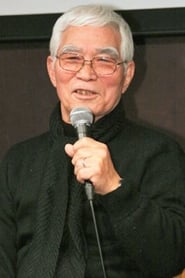
Masao Adachi
Born
1939-05-13 (87)
Place of birth
Fukuoka, Fukuoka Prefecture, Japan
Known for
Directing
Credits
69 titles
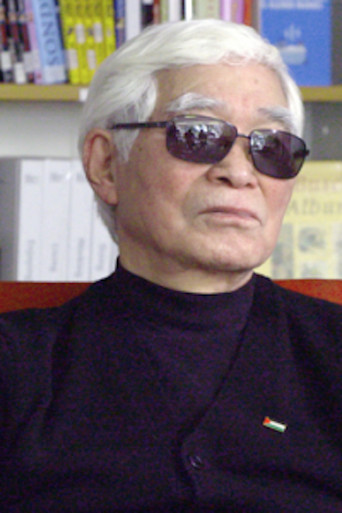
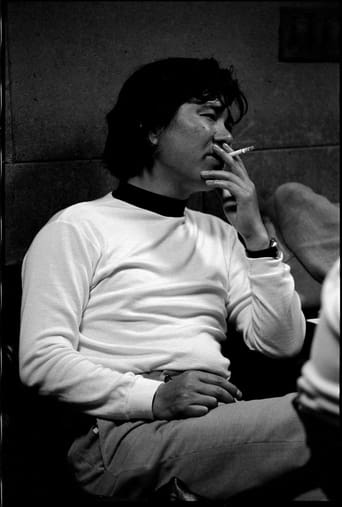
Masao Adachi (足立正生 Adachi Masao, born May 13, 1939) is a Japanese screenwriter and director who was most active in the 1960s and 1970s.
Known for
 7.5
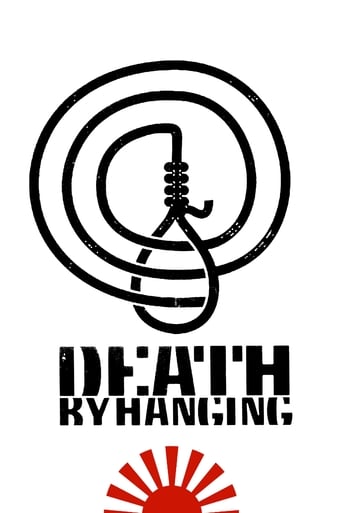
7.5A Korean man is sentenced to death in Japan but somehow survives his execution, sending the authorities into a panic about what to do next.
Death by Hanging
1968
 4.8
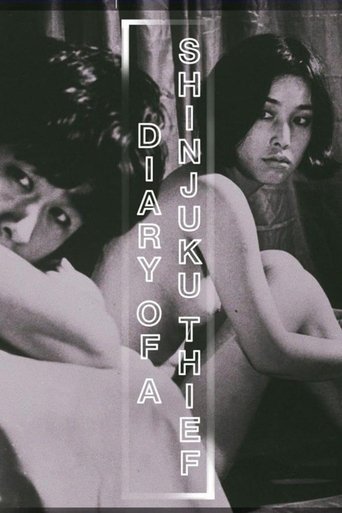
4.8In Tokyo's Shinjuku district, the lives of a young man prone to theft, a young woman he meets at a bookstore, and a kabuki actor intersect.
Diary of a Shinjuku Thief
1969
 4.8
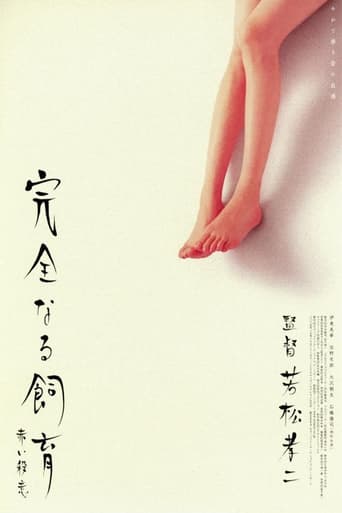
4.8Fumiya owes 5 million yen to a female load shark for a gambling debt, while having affair an with Mrs. Hosoi who offers him 5 million to murder her husband. Fumiya has no choice but to kill Mr. Hosoi. Unfortunately he's see by a neighbor. In the escape, he meets a girl named Akiko. He hides in her house. Later on, Fumiya and Akiko fall in love and have sex. After that, he finds that the house owner Shin kidnapped Akiko whem she was a little girl and has kept her in the house for over a decade. Fumiya is determined to take her away from Shin's brutal confinement. A battle of wills between jailer, prisoner and accidental savior begins….
Perfect Education 6
2004
 NR
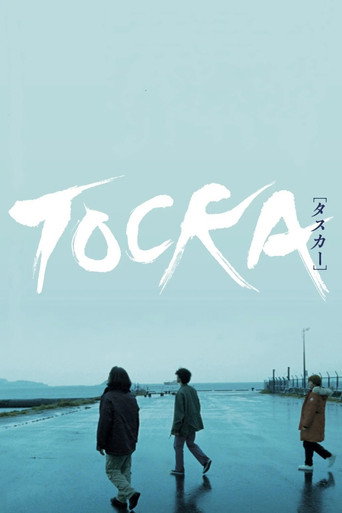
NRShoji runs a store in a desolate town in northern Japan. After the death of his wife, he longs to end his life so that his daughter will receive his life insurance money. But suicide is not covered by his contract, so he seeks help and meets Saki, who is also suicidal. Yoshitaka Kamada raises profound questions about life, death, and the importance of humanity.
TOCKA
2023
 4.7
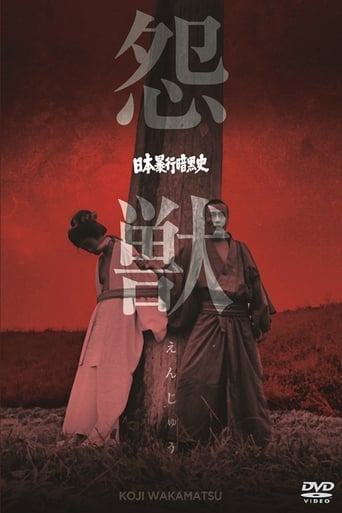
4.7In the Edo era, two man arrive in a village and engage in criminal activity. While one of them becomes successful and rich, the other gets betrayed and ends up in prison, burning for revenge. The truth changes with the viewpoint in this Wakamatsu film, which has inspired comparisons to Rashomon.
The Hateful Beast
1970
 6.1
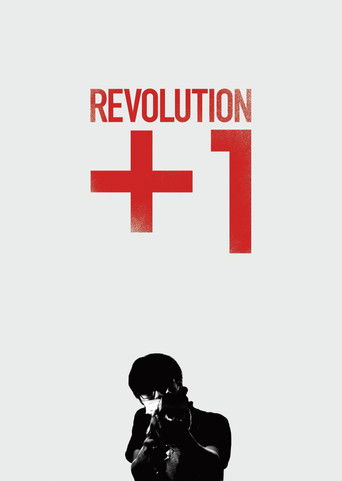
6.1Tatsuya Kawakami's mother becomes a member of a religious group after her husband commits suicide, and makes a large donation to the organization. Her three children are forced to live in poverty, and her eldest son, who is blind in one eye due to illness, takes his own life. Kawakami comes to believe that the religious group has ruined his life, so he creates a homemade gun and carries out an assassination plot against former prime minister Shinzo Abe, who has close ties to the religious group, which has been accused of siphoning off money from its members.
REVOLUTION+1
2023
Film credits
2020s · 5 titles
NRShoji runs a store in a desolate town in northern Japan. After the death of his wife, he longs to end his life so that his daughter will receive his life insurance money. But suicide is not covered by his contract, so he seeks help and meets Saki, who is also suicidal. Yoshitaka Kamada raises profound questions about life, death, and the importance of humanity.
TOCKA
2023
 7.7
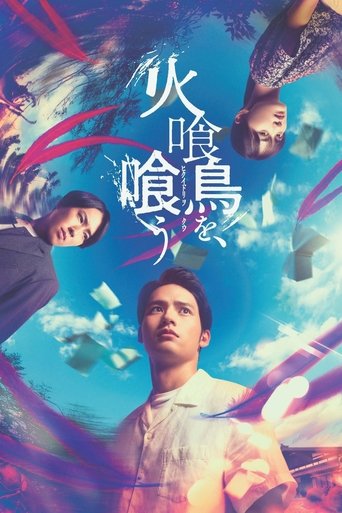
7.7Yuji and Yuriko's peaceful life shatters when an old diary belonging to Yuji's great-uncle Sadaichi, who died in the war, is discovered. The pages are full of an obsession with life... and one strange phrase: "I want to devour the bird—Hikuidori." From that day on, eerie phenomena start to haunt those connected to the diary. As the nightmare deepens, a strong will to live—once buried with Sadaichi—begins to twist the past and bleed into reality.
The Bird Is Calling
2025
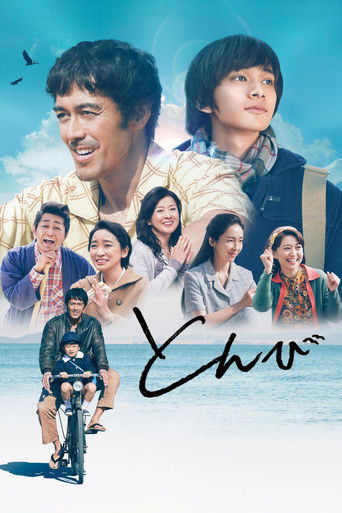 8.0
8.0Yasuo (Hiroshi Abe) grew up as an orphan. He married a woman he loved and they had a son Akira (later played by Takumi Kitamura). Yasuo's life seemed great at the time, but his life totally changed after his wife died in accident. Since that time, Yasuo, who never experienced parents' love himself, has to raise his son Akira alone.
Tonbi
2022
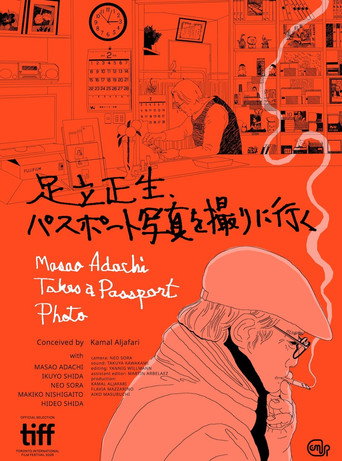 NR
NRA deeply personal portrait of one of the most enigmatic and influential figures in Japanese cinema: filmmaker, writer, and revolutionary Masao Adachi.
Masao Adachi Takes a Passport Photo
2026
 NR
NRNo synopsis available yet.
シネマスコーレを解剖する。 コロナなんかぶっ飛ばせ
2022
2010s · 8 titles
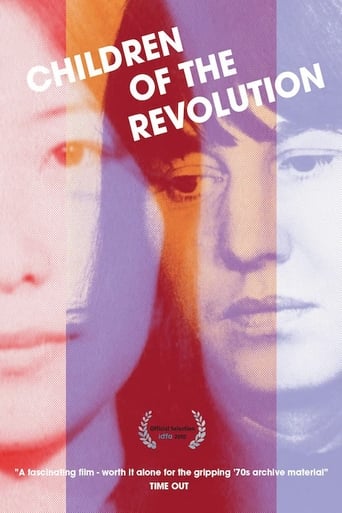 6.7
6.7Inspired by the student revolutions of 1968, two women in Germany and Japan set out to plot world revolution as leaders of the Baader Meinhof Group and the Japanese Red Army. What were they fighting for and what have we learned?
Children of the Revolution
2011
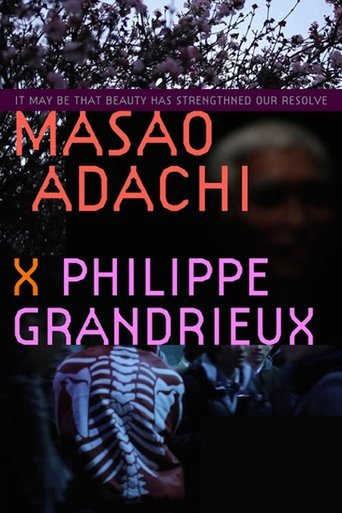 6.1
6.1The first in a planned series of films about radical filmmakers by film critic Nicole Brenez and filmmaker Philippe Grandrieux, It May Be That Beauty Has Strengthened Our Resolve is a portrait of Masao Adachi, who emerged during the Japanese New Wave of the 1960s as a screenwriter for Nagisa Oshima and Koji Wakamatsu, and directed a series of avant-garde films that grafted radical politics to the sexploitation genre. A 1971 visit to a Popular Front for the Liberation of Palestine (PFLP) training camp while on the way back from Cannes resulted in Adachi's most infamous film, the agit-prop documentary Red Army/PFLP: Declaration of World War, which he co-directed with Wakamatsu. Soon after, Adachi joined a splinter cell of the Japanese Red Army in Lebanon, where he stayed from 1974 until he was deported to Japan in 1997 to serve time for passport violations.
It May Be That Beauty Has Strengthened Our Resolve - Masao Adachi
2011
 6.3
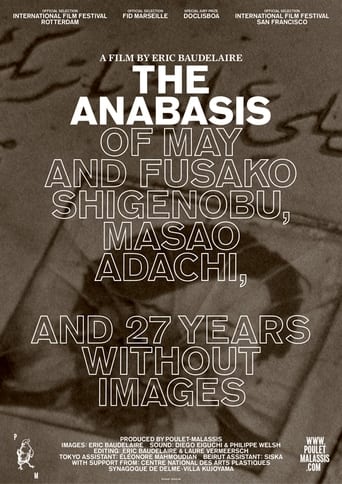
6.3A film on exile, revolution, landscapes and memory, Anabasis brings forth the remarkable parallel stories of Adachi and May, one a filmmaker who gave up images, the other a young woman whose identity-less existence forbade keeping images of her own life. Fittingly returning the image to their lives, director Eric Baudelaire places Adachi and May’s revelatory voiceover reminiscences against warm, fragile Super-8mm footage of their split milieus, Tokyo and Beirut. Grounding their wide-ranging reflections in a solid yet complex reality, Anabasis provides a richly rewarding look at a fascinating, now nearly forgotten era (in politics and cinema), reminding us of film’s own ability to portray—and influence—its landscape.
The Anabasis of May and Fusako Shigenobu, Masao Adachi, and 27 Years Without Images
2011
 NR
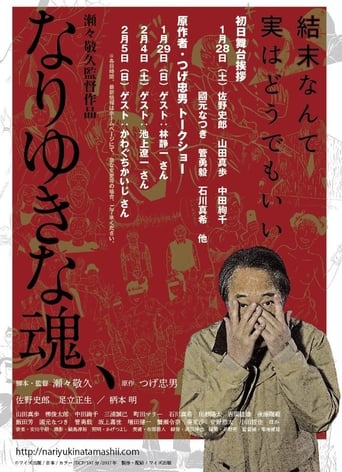
NRQuestioning the meaning of people's lives, the multiple stories include the work of a manga artist, old men get involved in a fight and a murder, a bus incident which affects those who survive it, fishing, cherry-blossom viewing and more
Random Lives
2017
 5.2
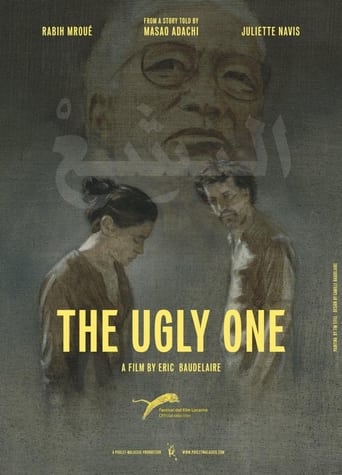
5.2Adashi, ex-member of the Japanese Red Army, narrates a story taking place in Beirut. The melancholy of war, the pain of disillusionment. A story being written and rewritten, open to interpretation. When the time comes, return to reality can only be cruel.
The Ugly One
2013
 NR
NRMasao Adachi, the author and director of experimental works and pinku-eiga in the 1960s, was a member of the Japanese New Left that shifted from being a filmmaker to a guerrilla fighter. In 1974, he joined the Japanese Red Army in Lebanon, which worked closely with the Popular Front for the Liberation of Palestine. Filmmaker Lutz Dammbeck met Adachi in Tokyo in 2018 and talked with him about a wide range of topics, including art, revolution, the influence of western avant-garde art and American underground; the Japanese Red Army; collaboration with secret services; the role of the Left after 1968; and the reasons for failures of leftist ideas and strategies.
Bruno & Bettina
2018
 10.0
10.0The late Fujio Akatsuka is revered by many Japanese artists and scholars for his developments to early comedy manga, but his contributions aren't just limited to the world of print media. Featuring commentary from family, friends, colleagues, and celebrity fans, Fujio Akatsuka's story is told with archival footage and animation, showcasing the life of the man who went beyond manga.
The Man Who Went Beyond Manga: Fujio Akatsuka
2016
 NR
NRThis is a documentary produced for Al Jazeera Documentary by May Shigenobu. May revisits the Japanese leftist activism in the 60s and the 70s, to understand why some Japanese students decided to dedicate their lives to the Palestinian cause by talking to the then leaders and visiting iconic locations of the time. It includes exclusive interviews with some leaders in the students' movements in Japan, Adachi Masao, as well as PFLP leaders such as Layla Khaled and Abu Ahmed Fouad. The documentary also talks about the Japanese Red Army members and their families living underground.
Stars of Orion: Japanese Martyrs for Palestine
2012
2000s · 3 titles
 6.4
6.4Documentary filmmaker Kenjiro Fujii takes a look at the history of a distinctly Japanese brand of softcore pornography in this extensive examination of the "pinku eiga" genre (ピンク映画 Pinku eiga or Pinkeiga). For more than 40 years, so-called "pink" films have served as both a key source of revenue for the Japanese film industry as well as a launching pad for the careers of such mainstream filmmakers as Kiyoshi Kurosawa. After providing a detailed history of the still-profitable and popular genre through interviews with a variety of behind-the-scenes players and clips from such classic pink films as Fish Bait Boobies, director Fujii shifts his focus to the production of an upcoming pink film to offer a glimpse into the creative and stylistic evolution of the genre.
Pink Ribbon
2004
Making-of documentary for Masao Adachi's "Prisoner/Terrorist"
Prisoners
2006
 1.0
1.0A documentary on sixties counterculture in Japan featuring Donald Richie, Tadanori Yokoo, Masao Adachi, Koji Wakamatsu, Toshio Matsumoto and Akaji Maro among others.
Under the Skin
2002
1970s · 4 titles
 5.2
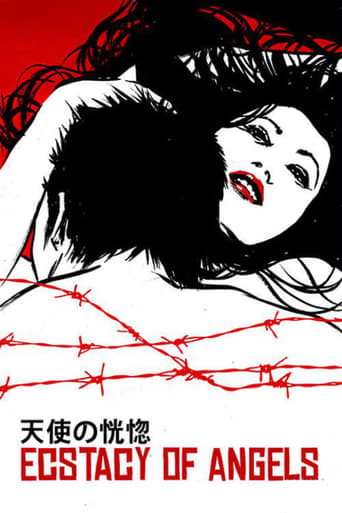
5.2A militant revolutionary group is torn apart by betrayal as its members descend into paranoia and sexual decadence.
Ecstasy of the Angels
1972
 6.5
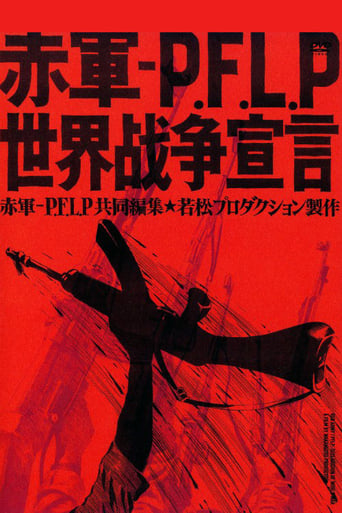
6.5On their way back from the Cannes Film Festival in 1971, filmmakers Wakamatsu Koji and Adachi Masao visited Lebanon to meet Japan's Red Army faction and the Popular Front for the Liberation of Palestine to shoot a newsreel film promoting the Palestinian resistance. Conceived as a ‘declaration of world war’ that implicates us all, the directors capture the everyday banality of military training and preparation exercises for imminent battle.
Red Army/PFLP: Declaration of World War
1971
 5.7
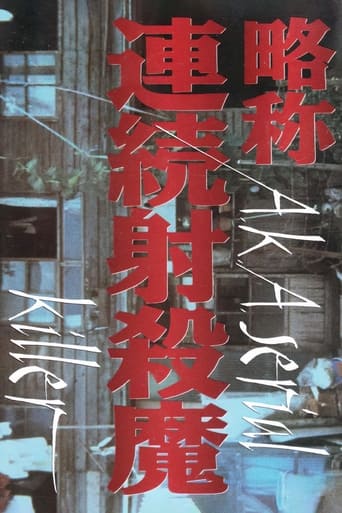
5.7AKA Serial Killer documents the social upheaval and political oppression that roiled Japan in the 1960s, profiling a nineteen-year-old serial killer Norio Nagayama. An indictment of media sensationalism, the film humanizes the young man by situating his crimes in the larger context of his environment.
A.K.A. Serial Killer
1975
 5.0
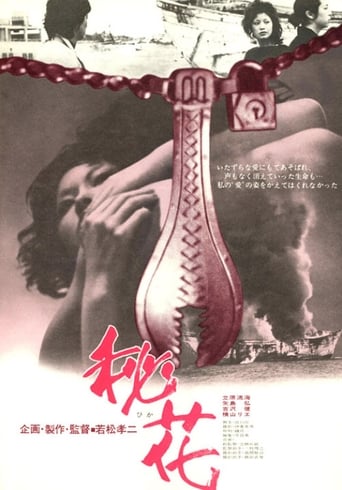
5.0A woman who has just missed her suicide and a couple which has just left its political movement meet on a beach...
Secret Flower
1971
1960s · 9 titles
7.5A Korean man is sentenced to death in Japan but somehow survives his execution, sending the authorities into a panic about what to do next.
Death by Hanging
1968
 5.0
5.0A detective investigating a serial rapist discovers that he and the perpetrator come from the same lineage of depraved individuals, a genealogy of violent and sexually perverse deviants that stretches through the Meiji, Taisho and Showa eras and can even be traced back to the Edo era.
Abnormal Blood
1967
 6.1
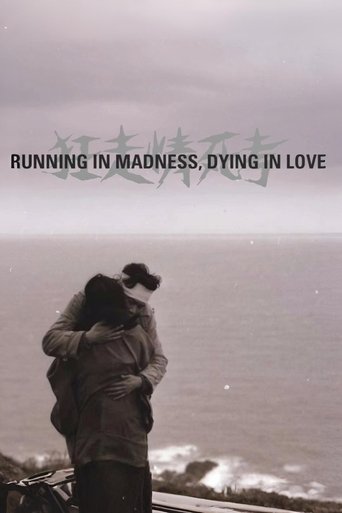
6.1During clashes between demonstrators and police that rage on the streets of Tokyo, a young man hides in the house of his brother - a police officer. The latter is accidentally shot by his wife, which forces the young man to flee with her.
Running in Madness, Dying in Love
1969
 5.7
5.7Three students spend their holidays at the seaside where they are mistaken for Koreans, a minority which is looked down on in Japan. The action develops into a crime story.
Three Resurrected Drunkards
1968
 6.0
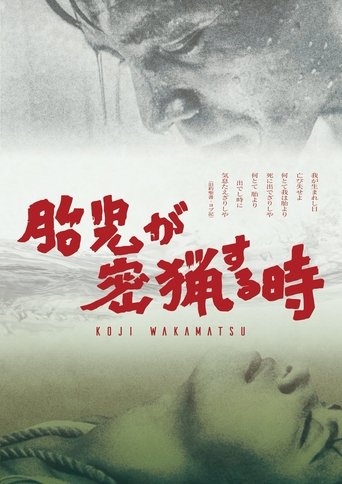
6.0A man keeps his girlfriend tied up in his small apartment and tortures her. She is undressed, subjected to various types of bondage, whipped, and tortured with a razor blade.
The Embryo Hunts in Secret
1966
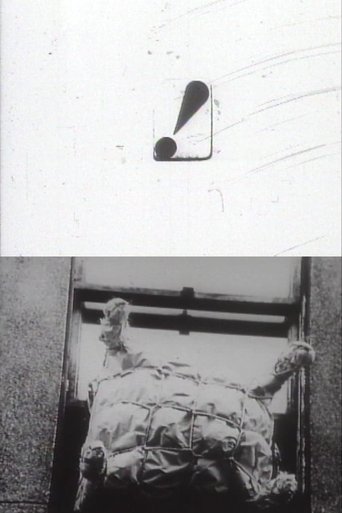 NR
NRHi-Red Centre were comprised of Genpei Akasegawa, Natsuyuki Nakanishi and Jiro Takamatsu, who enacted ‘happening’-style performance art in unusual spaces during the early 1960s in Japan. The film is an extremely rare document of one of their early events, where they hired out a room in the Imperial Hotel and invited many friends and professionals in the art scene to participate in the occasion. The performance parodies Cold War fears and the construction of private bomb-shelters, as they diligently measure each guest’s weight and proportions in pretence that they are to build human-size shelters for each individual. Key figures of the art scene make an appearance, including Yoko Ono, video-artist Nam June Paik, noise artist Yasunao Tone, filmmaker Masao Adachi and graphic designer Tadanori Yokoo. A rarely seen and exceptional insight into the Japanese art scene of the era, Jonouchi records the event in his characteristically erratic style.
Hi-Red Centre Shelter Plan
1964
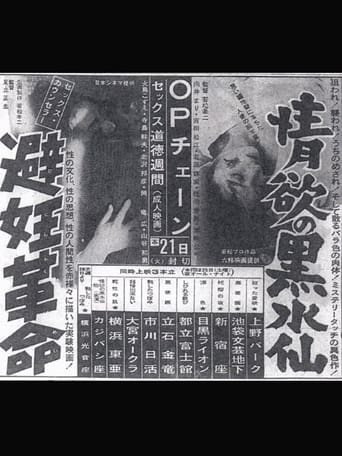 3.7
3.7Pinku from 1967.
Black Narcissus of Lust
1967
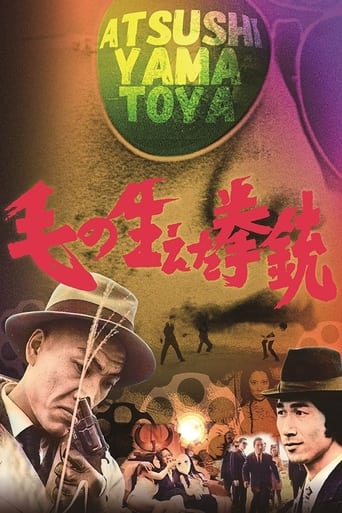 7.0
7.0Shirō raids the office of the organization that attacked his lover, wreaking havoc and escaping with a stolen handgun. In retaliation, the organization hires two killers to get rid of Shirō. The duo begin to develop a strange kinship with their target...
The Pistol That Sprouted Hair
1968
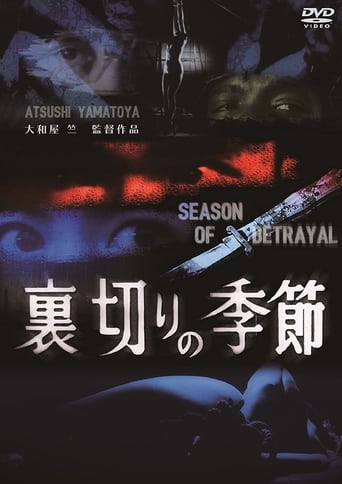 8.0
8.0A press photographer returns to Japan from the war in Vietnam after losing his friend and fellow photographer on the battlefield.
Season of Betrayal
1966
Behind the camera
4.8In Tokyo's Shinjuku district, the lives of a young man prone to theft, a young woman he meets at a bookstore, and a kabuki actor intersect.
Diary of a Shinjuku Thief
1969
4.8Fumiya owes 5 million yen to a female load shark for a gambling debt, while having affair an with Mrs. Hosoi who offers him 5 million to murder her husband. Fumiya has no choice but to kill Mr. Hosoi. Unfortunately he's see by a neighbor. In the escape, he meets a girl named Akiko. He hides in her house. Later on, Fumiya and Akiko fall in love and have sex. After that, he finds that the house owner Shin kidnapped Akiko whem she was a little girl and has kept her in the house for over a decade. Fumiya is determined to take her away from Shin's brutal confinement. A battle of wills between jailer, prisoner and accidental savior begins….
Perfect Education 6
2004
4.7In the Edo era, two man arrive in a village and engage in criminal activity. While one of them becomes successful and rich, the other gets betrayed and ends up in prison, burning for revenge. The truth changes with the viewpoint in this Wakamatsu film, which has inspired comparisons to Rashomon.
The Hateful Beast
1970
6.1Tatsuya Kawakami's mother becomes a member of a religious group after her husband commits suicide, and makes a large donation to the organization. Her three children are forced to live in poverty, and her eldest son, who is blind in one eye due to illness, takes his own life. Kawakami comes to believe that the religious group has ruined his life, so he creates a homemade gun and carries out an assassination plot against former prime minister Shinzo Abe, who has close ties to the religious group, which has been accused of siphoning off money from its members.
REVOLUTION+1
2023
6.1Tatsuya Kawakami's mother becomes a member of a religious group after her husband commits suicide, and makes a large donation to the organization. Her three children are forced to live in poverty, and her eldest son, who is blind in one eye due to illness, takes his own life. Kawakami comes to believe that the religious group has ruined his life, so he creates a homemade gun and carries out an assassination plot against former prime minister Shinzo Abe, who has close ties to the religious group, which has been accused of siphoning off money from its members.
REVOLUTION+1
2023
5.0A detective investigating a serial rapist discovers that he and the perpetrator come from the same lineage of depraved individuals, a genealogy of violent and sexually perverse deviants that stretches through the Meiji, Taisho and Showa eras and can even be traced back to the Edo era.
Abnormal Blood
1967
 5.0
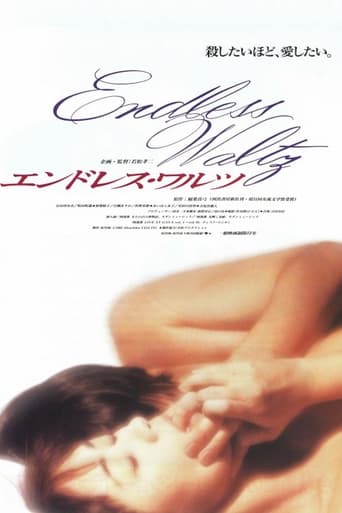
5.0Biopic about jazz saxophonist Kaoru Abe and his wife, noted writer Izumi Suzuki.
Endless Waltz
1995
 6.7
6.7Go, Go, Second Time Virgin is the story of two damned and abused teenagers who meet and fall in mutant love on a Tokyo rooftop. Their only hope is to cement their love with an escape into oblivion.
Go, Go Second Time Virgin
1969
 4.7
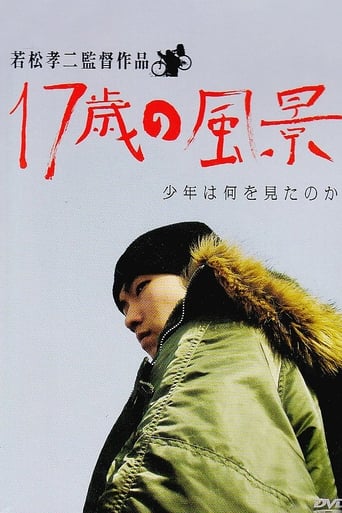
4.7A Japanese teenager bicycles aimlessly through the countryside after killing his mother.
Cycling Chronicles: Landscapes the Boy Saw
2004
 5.8
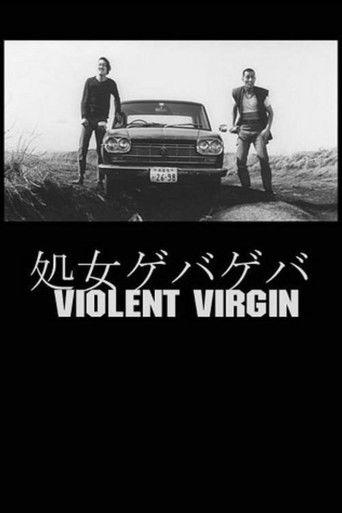
5.8A bunch of young hipsters kidnaps a loving couple and keeps them trapped in a barren landscape. To the sounds of free jazz they are performing various experiments with the couple. In the distance is a yakuza gang keeping track of the youths. Who are really experimenting with whom?
Violent Virgin
1969
6.1During clashes between demonstrators and police that rage on the streets of Tokyo, a young man hides in the house of his brother - a police officer. The latter is accidentally shot by his wife, which forces the young man to flee with her.
Running in Madness, Dying in Love
1969
 6.2
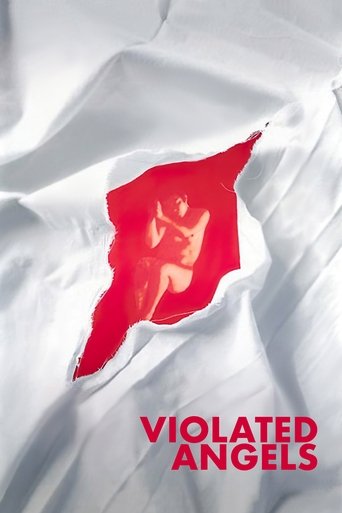
6.2Based on the mass murder spree of Richard Speck in 1966, a young man who broke into a nurses’ home in Chicago, mutilating and killing several of the inmates, Wakamatsu’s film is a precise, sad delineation of a particular aspect of masculine sexual consciousness.
Violated Angels
1967
 5.4
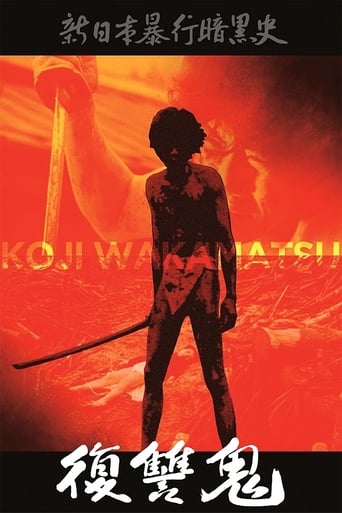
5.4A brother and sister live as outcasts from their hamlet due to a belief that mental illness runs in their family. A group of villagers plot to steal their property by beating and hanging the brother and gang-raping the sister. Believing the brother to be dead, scheming to kill the sister, and making both deaths look like accidents... unbeknownst to them, the brother survives and proceeds on a mission to slaughter those responsible in the hamlet.
New Underground History of Japanese Violence: Vengeance Demon
1969
 5.1
5.1A gynecologist attempts to rid the world of sexual problems by separating sex on the one hand and reproduction, which he feels should be left to artificial wombs.
Abortion
1966
5.1A gynecologist attempts to rid the world of sexual problems by separating sex on the one hand and reproduction, which he feels should be left to artificial wombs.
Abortion
1966
5.7Three students spend their holidays at the seaside where they are mistaken for Koreans, a minority which is looked down on in Japan. The action develops into a crime story.
Three Resurrected Drunkards
1968
5.2A militant revolutionary group is torn apart by betrayal as its members descend into paranoia and sexual decadence.
Ecstasy of the Angels
1972
 4.6
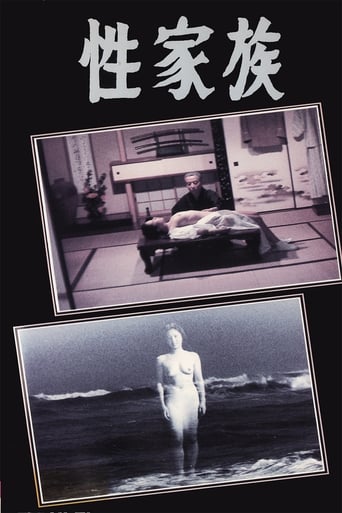
4.6A critique of the Japanese family, seen here as militaristic, absurdly incestuous and patriarchal with the father dominating his family sexually and violently. Nihilistic destruction by the young ones seems to be the only way out.
Sex Family
1971
 7.0
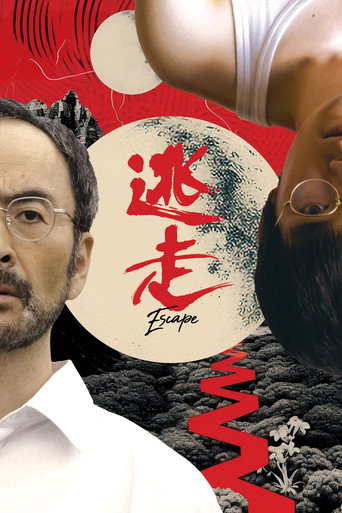
7.0In 1970s Japan, Satoshi Kirishima was a member of the "Scorpion Cell" of the East Asian Anti-Japan Armed Front, a recently formed left-wing extremist group. Wanted for a series of corporate bombings, he spent half a century evading capture while living under an assumed identity. What did he discover in the depths of his loneliness? What did he spend his life chasing?
Escape
2025
7.0In 1970s Japan, Satoshi Kirishima was a member of the "Scorpion Cell" of the East Asian Anti-Japan Armed Front, a recently formed left-wing extremist group. Wanted for a series of corporate bombings, he spent half a century evading capture while living under an assumed identity. What did he discover in the depths of his loneliness? What did he spend his life chasing?
Escape
2025
 4.8
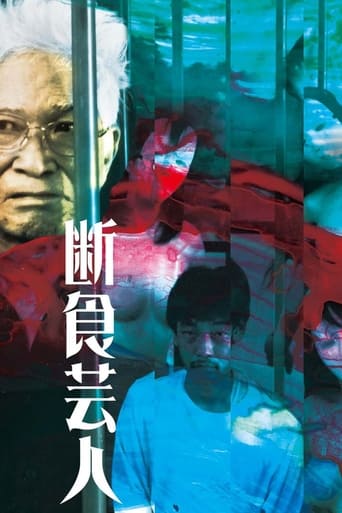
4.8A wordless man stages an unexplained hunger strike and the people surrounding him exploit his silence to further their own cause...
Artist of Fasting
2016
4.8A wordless man stages an unexplained hunger strike and the people surrounding him exploit his silence to further their own cause...
Artist of Fasting
2016
 5.0
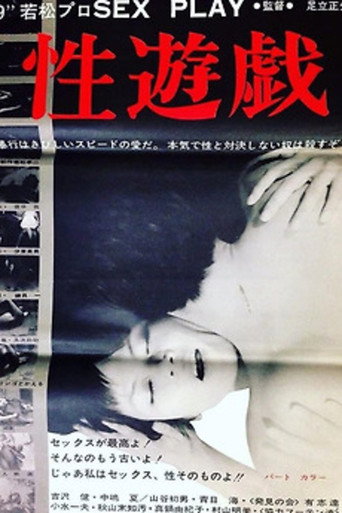
5.0A masterpiece of militant cinema of 1968, filmed on the actual barricades of Adachi's very own Nihon University during the period of social struggles. The film begins in a lengthy free-love session taking the form of a 'play' rape being enacted by a group of aimless, listless and political apathetic students. The subtext intended by Adachi informs the rest of the film – that there is a world of difference between direct action politics, and merely talking the talk.
Sexual Play
1969
5.0A masterpiece of militant cinema of 1968, filmed on the actual barricades of Adachi's very own Nihon University during the period of social struggles. The film begins in a lengthy free-love session taking the form of a 'play' rape being enacted by a group of aimless, listless and political apathetic students. The subtext intended by Adachi informs the rest of the film – that there is a world of difference between direct action politics, and merely talking the talk.
Sexual Play
1969
6.0A man keeps his girlfriend tied up in his small apartment and tortures her. She is undressed, subjected to various types of bondage, whipped, and tortured with a razor blade.
The Embryo Hunts in Secret
1966
 8.0
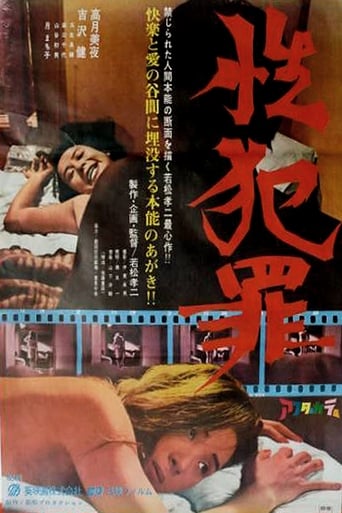
8.0Young slacker couple accidentially kills a friend. They burn his body and hang out on a beach.
Sex Crimes
1968
6.5On their way back from the Cannes Film Festival in 1971, filmmakers Wakamatsu Koji and Adachi Masao visited Lebanon to meet Japan's Red Army faction and the Popular Front for the Liberation of Palestine to shoot a newsreel film promoting the Palestinian resistance. Conceived as a ‘declaration of world war’ that implicates us all, the directors capture the everyday banality of military training and preparation exercises for imminent battle.
Red Army/PFLP: Declaration of World War
1971
6.5On their way back from the Cannes Film Festival in 1971, filmmakers Wakamatsu Koji and Adachi Masao visited Lebanon to meet Japan's Red Army faction and the Popular Front for the Liberation of Palestine to shoot a newsreel film promoting the Palestinian resistance. Conceived as a ‘declaration of world war’ that implicates us all, the directors capture the everyday banality of military training and preparation exercises for imminent battle.
Red Army/PFLP: Declaration of World War
1971
 5.4
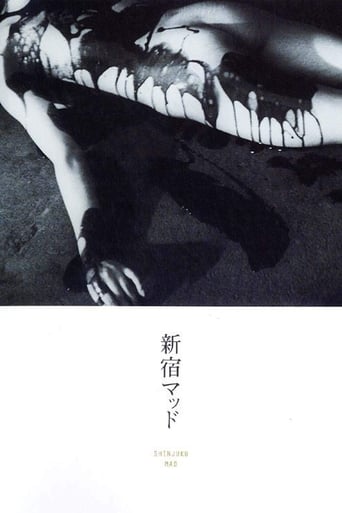
5.4A salesman is looking in the city of Tokyo for his lost son. But he becomes increasingly angry at the young and radical hippies, who are not the least helpful.
Shinjuku Mad
1970
 5.3
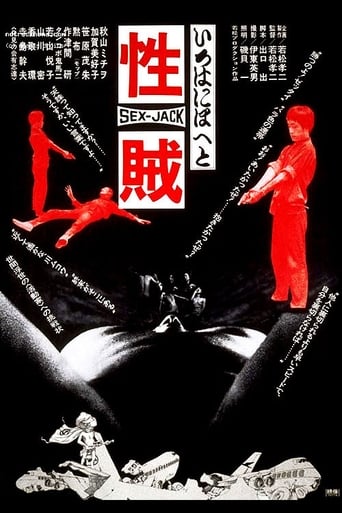
5.3A small gang of revolutionary students is hidden away by a small-time thief. While they are in hiding, everyone except the thief takes turns engaging in sexual activities with a girl who appears unhappy and perhaps unwilling, having had the misfortune of getting involved with them.
Sex Jack
1970
 5.4
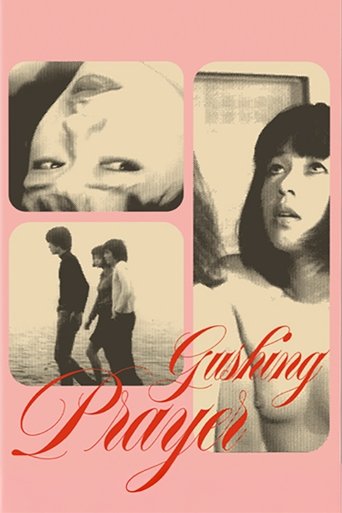
5.4After 15-year-old Yasuko has her first orgasm with a teacher, she and her disillusioned group of friends decide to turn to prostitution to gain a better understanding of what emotions truly are.
Gushing Prayer
1971
5.4After 15-year-old Yasuko has her first orgasm with a teacher, she and her disillusioned group of friends decide to turn to prostitution to gain a better understanding of what emotions truly are.
Gushing Prayer
1971
 5.0
5.0During a militant attack on an airport, the hand grenade of 'M', one of three terrorists, malfunctions, leading to him being captured and held indefinitely in prison. Exposed to mistreatment behind bars, he slowly loses his grip on reality as he is forced to confront his ideological convictions.
Prisoner/Terrorist
2007
5.0During a militant attack on an airport, the hand grenade of 'M', one of three terrorists, malfunctions, leading to him being captured and held indefinitely in prison. Exposed to mistreatment behind bars, he slowly loses his grip on reality as he is forced to confront his ideological convictions.
Prisoner/Terrorist
2007
 4.3
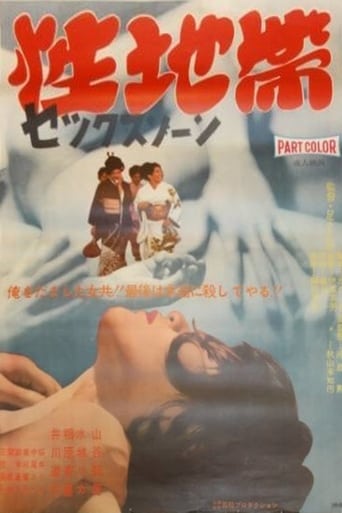
4.3Inspired by the true story of a Geisha murdered in a city famous for its baths, Adachi forged here his favorite style, a kind of conceptual documentary recounting the incident in monotone. The same event that at the beginning of Violated Angels escaped every principle of causality, is portrayed here as a singular anti-spectacle.
Sex Zone
1968
4.3Inspired by the true story of a Geisha murdered in a city famous for its baths, Adachi forged here his favorite style, a kind of conceptual documentary recounting the incident in monotone. The same event that at the beginning of Violated Angels escaped every principle of causality, is portrayed here as a singular anti-spectacle.
Sex Zone
1968
 6.0
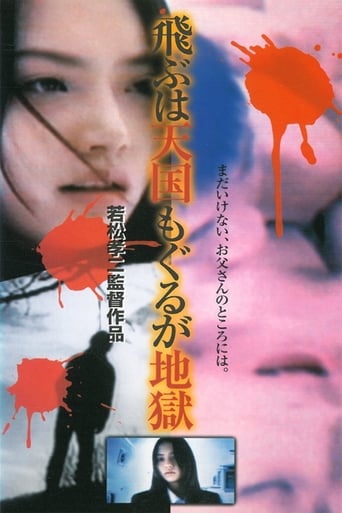
6.0A bus full of cult members gets stuck in snow. The cult has to stay in a mountain hotel. Strange things start to happen...
Heaven and Hell
1999
5.7AKA Serial Killer documents the social upheaval and political oppression that roiled Japan in the 1960s, profiling a nineteen-year-old serial killer Norio Nagayama. An indictment of media sensationalism, the film humanizes the young man by situating his crimes in the larger context of his environment.
A.K.A. Serial Killer
1975
5.7AKA Serial Killer documents the social upheaval and political oppression that roiled Japan in the 1960s, profiling a nineteen-year-old serial killer Norio Nagayama. An indictment of media sensationalism, the film humanizes the young man by situating his crimes in the larger context of his environment.
A.K.A. Serial Killer
1975
5.7AKA Serial Killer documents the social upheaval and political oppression that roiled Japan in the 1960s, profiling a nineteen-year-old serial killer Norio Nagayama. An indictment of media sensationalism, the film humanizes the young man by situating his crimes in the larger context of his environment.
A.K.A. Serial Killer
1975