
Directing
Walter Ungerer
Born — Died
1935-08-26 — 2024-06-24
Place of birth
New York City, New York, USA
Known for
Directing
Credits
41 titles
Walter Ungerer was born in New York City in 1935 of German immigrants. He studied art and architecture at Pratt Institute, receiving a BFA degree in 1958. He went on to Columbia University receiving an MA and PD in 1964. His first film "The Tasmanian Devil" was made in 1965 while living in a loft in the "flower district" of New York City. His third film "Meet Me, Jesus" gained him national recognition as a film artist through exposure at the Ann Arbor Film Festival. In 1969 "Ubi Est Terram Oobiae?" was included in a world-wide MoMA touring program that furthered his reputation. That year Ungerer moved to Vermont. In 2003 Ungerer moved to Maine, where he continues to produce his work. His mos…
Known for
 NR
NRThe film title is an abbreviation for no comment. With all due respects I find this to be an appropriate description of this film, which is based on abstract drawings, obscure images, and distorted sounds.
noCOM
2014
 NR
NRThe film parallels the short treatise The Awakening of Faith by Asvaghosha which provides a comprehensive summary of the essentials of Mahayana Buddhism. That treatise discusses the question of how man can transcend his finite state and participate in the life of the infinite while still remaining in the midst of the phenomenal order.
The Awakening
2002
 NR
NRThe film begins with abstract images of continuously changing in color, shape and texture. Slowly it reveals the source and real identity of the original subject-matter, and in so doing has transcended the abstract world for reality. Yet, they co-exist. Time lapse video clips form the basis of this work.
Ici
2013
 NR
NRLos Angeles is called “City of the Angels”. On this visit in December 2012 what I recorded became the substance of this film. It is an exploration of inanimate objects: toys, dolls, and figurines, and locations with people: LA auto show, city streets, Getty Museum, a memorabilia shop, and the LA observatory. These were interwoven in such a way as to suggest a correlation between the animate and inanimate, the real and the unreal.
City of the Angels
2013
 NR
NRAbstract contemporary sculptures at a museum, male and female mannequins at a downtown mall, the Venice Beach and Santa Monica Promenades with their various attractions of hawkers, exhibitionists and vendors; these are all the subjects of this film. Added to the collection are a ride on a carousel composed of beautifully restored antique horses, a tram ride to the heights of the Getty Museum, an inner city LA bus ride, and the journey to the Boston airport from Maine. This material is blended together by layering, multiplying and repeating sequences to produce a array of colors, shapes, objects and sounds. that reflect the effects of a brief visit to Los Angeles.
Blue Parrot
2009
 NR
NRDigital stills and video footage of a child on a beach in Cape Cod, Massachusetts, are manipulated and obscured to create a nostalgic atmosphere of remembrances. The Amiga computer has now been replaced by the Macintosh. The editing program is the Media 100.
Kingsbury Beach
1999
Film credits
Behind the camera
NRThe film title is an abbreviation for no comment. With all due respects I find this to be an appropriate description of this film, which is based on abstract drawings, obscure images, and distorted sounds.
noCOM
2014
NRThe film parallels the short treatise The Awakening of Faith by Asvaghosha which provides a comprehensive summary of the essentials of Mahayana Buddhism. That treatise discusses the question of how man can transcend his finite state and participate in the life of the infinite while still remaining in the midst of the phenomenal order.
The Awakening
2002
NRThe film begins with abstract images of continuously changing in color, shape and texture. Slowly it reveals the source and real identity of the original subject-matter, and in so doing has transcended the abstract world for reality. Yet, they co-exist. Time lapse video clips form the basis of this work.
Ici
2013
NRLos Angeles is called “City of the Angels”. On this visit in December 2012 what I recorded became the substance of this film. It is an exploration of inanimate objects: toys, dolls, and figurines, and locations with people: LA auto show, city streets, Getty Museum, a memorabilia shop, and the LA observatory. These were interwoven in such a way as to suggest a correlation between the animate and inanimate, the real and the unreal.
City of the Angels
2013
NRAbstract contemporary sculptures at a museum, male and female mannequins at a downtown mall, the Venice Beach and Santa Monica Promenades with their various attractions of hawkers, exhibitionists and vendors; these are all the subjects of this film. Added to the collection are a ride on a carousel composed of beautifully restored antique horses, a tram ride to the heights of the Getty Museum, an inner city LA bus ride, and the journey to the Boston airport from Maine. This material is blended together by layering, multiplying and repeating sequences to produce a array of colors, shapes, objects and sounds. that reflect the effects of a brief visit to Los Angeles.
Blue Parrot
2009
NRDigital stills and video footage of a child on a beach in Cape Cod, Massachusetts, are manipulated and obscured to create a nostalgic atmosphere of remembrances. The Amiga computer has now been replaced by the Macintosh. The editing program is the Media 100.
Kingsbury Beach
1999
 1.0
1.0A sensuous woman, an angry artist, a mysterious puppet maker, suspicious townspeople, mischievous kids; these are the characters in the film.
The House Without Steps
1979
1.0A sensuous woman, an angry artist, a mysterious puppet maker, suspicious townspeople, mischievous kids; these are the characters in the film.
The House Without Steps
1979
1.0A sensuous woman, an angry artist, a mysterious puppet maker, suspicious townspeople, mischievous kids; these are the characters in the film.
The House Without Steps
1979
Though birds and people appear to have some similar qualities; affection, caring, tolerance, aggressiveness, belligerence, combativeness; in the scheme of things, we are all waiting our turn in the queue.
QUEUE
—
 NR
NRHow the universe evolved, and how humans developed are questions that arise with our awareness of life on the planet. There seems always to be much conjecture about it, but no clear answers. Mystery and wonder are pervasive. This film stems from my thoughts about it. As the images I created evolved into continuous sequences, it pursued a direction hitherto unknown by me until it was a film, and finished.
Green Eye
2013
 5.8
5.8A man meets a woman at a deserted railroad station somewhere in northern New England. It is the middle of winter; snow is falling. The two drive to a remote farmhouse. Two strange children, who never speak, appear at the window; an old woman calls them away.
The Animal
1976
5.8A man meets a woman at a deserted railroad station somewhere in northern New England. It is the middle of winter; snow is falling. The two drive to a remote farmhouse. Two strange children, who never speak, appear at the window; an old woman calls them away.
The Animal
1976
 NR
NROne of a collection of experimental shorts shot on VHS, miniDV or created in the computer, where the results were edited and manipulated by filmmaker Walter Ungerer with various computer software programs.
The Window
1997
 NR
NRMeditations on human destruction composed at land's end.
Epitaph
2008
 5.0
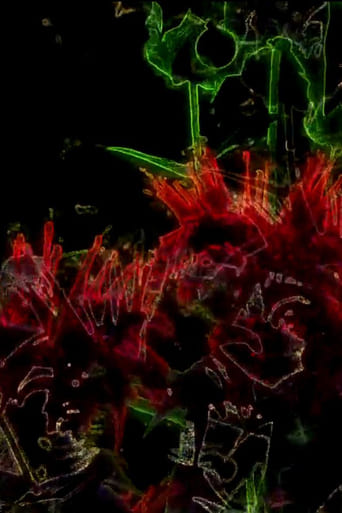
5.0Walter Ungerer’s Monarda (2010) has been screening across the country as part of the 2011 Black Maria Film Festival, a traveling program of new experimental cinema. Like much of Ungerer’s work, the 10-minute Monarda explores the mystifying qualities of nature. Beginning with a shot of grass, Ungerer quickly abstracts his images through digital manipulation until they are barely recognizable. Traces of natural forms (leaves, twigs) ground what is an otherwise indescribable procession of images. Though the visuals evade literal synopsizing, there’s a simplicity and concision to the film that allows the viewer to get caught up in their own experience rather than get sidetracked on decoding the filmmaker’s intentions. Monarda instills a feeling of both apprehension and wonder in the viewer. It’s a disquieting film, but one whose subtle craft and atmosphere becomes more impressive over multiple viewings.
Monarda
2010
Someone attempts to find Oobieland. The realm of artificial sound encountered in the first film (INTRODUCTION TO OOBIELAND) is left behind; there is a terrible silence. The television studio of the second film (UBI EST TERRAM OOBIAE?) is also left behind; big trees and snow populate the visible world in SOLSTICE. Somewhere a boundary is crossed; the viewer is caught up in a cycle of meetings with strange inhabitants of that short space of time we call winter solstice.
Solstice
1971
A film about a daydreaming young man in pursuit of the elusive woman of his dreams, where the dreamer is continually thwarted by the intrusion of the filmmaker's own tricks.
A Lion’s Tale
—
A daily record of one year at Mount Battie, Maine. It is a record of the seasons, the changing light from dawn to evening, sunrise and sunset; the changing weather from bright sun to overcast skies, fog, rain and snow; and the changing visitors that come by foot, bicycle, motorcycle, car, truck and camper to make a pilgrimage to the mountain vista that overlooks a small harbor on the coast of Maine, the North Atlantic coastal islands, and the expansive Atlantic Ocean.
All the Days of the Year
2011
 NR
NRThe film explores the different shapes and colors of clouds. It probes the space clouds occupy. Through the use of haunting ethereal sounds and ghostlike imagery, the experience of seeing the heavens is interpreted.
Clouds
2012
 NR
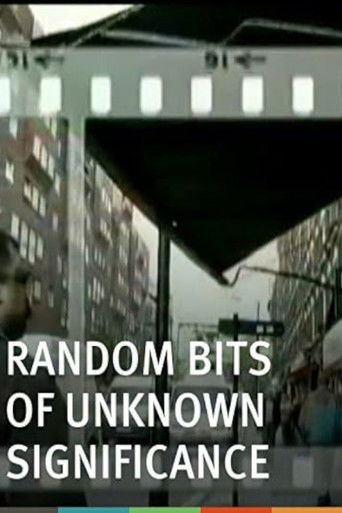
NRFilmmaker Walter Ungerer shot RANDOM BITS OF UNKNOWN SIGNIFICANCE with an inexpensive digital still camera capable of shooting short video bursts. The inobtrusiveness of the camera afforded Ungerer the opportunity to record unguarded moments in people's lives while he was on a trip to England, Germany, and Switzerland in 2006.
Random Bits of Unknown Significance
2008
NRFilmmaker Walter Ungerer shot RANDOM BITS OF UNKNOWN SIGNIFICANCE with an inexpensive digital still camera capable of shooting short video bursts. The inobtrusiveness of the camera afforded Ungerer the opportunity to record unguarded moments in people's lives while he was on a trip to England, Germany, and Switzerland in 2006.
Random Bits of Unknown Significance
2008
 7.0
7.0THE WINTER THERE WAS VERY LITTLE SNOW is a visual mood poem using the barest narrative form to convey the feeling and time of crisis for a man in middle age. His marriage has collapsed; he is without a job; and his father has just died. There is no reality, only an indistinguishable mixture of images and moments drawn from some space in time that could be his past, his present, or his future.
The Winter There Was Very Little Snow
1982
 NR
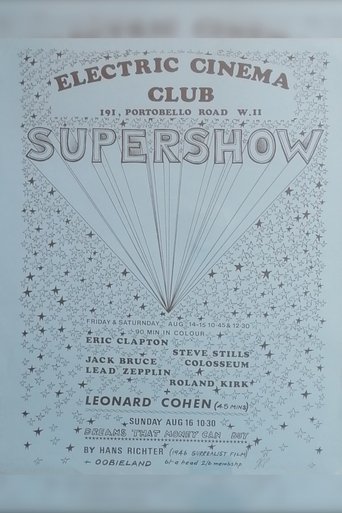
NRUsing hand-painted film, animation and an inventive soundtrack, INTRODUCTION TO OOBIELAND is an exploration of gateways: a repeated series of movements from the familiar and safe to the unknown and dangerous. Cycles are left incomplete. Chases are never consummated; the day ends with no promise of rebirth. In this way the film touches on our oldest instincts, leaving us saddened and scared by the knowledge of a world that will never know freedom through the completion of action; safety through the sanctification of place.
Introduction to Oobieland
1969
 NR
NRArthur, a 21 year old American male has been drafted into the army. It is the time of the Viet Nam War. Slowly we are introduced to three sets of characters whose decisions ultimately determine the course of Arthur's resolution to his dilemma, and thus his life. First comes a group of non-Americans. Then a second group consisting of actual friends, family and acquaintances of Arthur the actor. Finally, the third group, a cross-section of Americans: teenie boppers, suburbanites, Green Berets, an artist and a Spanish American War vet. The final solution is brought about by bringing the non-Americans together in an auditorium, showing them all the previously shot footage and asking them to vote on what they think Arthur should do.
Keeping Things Whole
1970
NRArthur, a 21 year old American male has been drafted into the army. It is the time of the Viet Nam War. Slowly we are introduced to three sets of characters whose decisions ultimately determine the course of Arthur's resolution to his dilemma, and thus his life. First comes a group of non-Americans. Then a second group consisting of actual friends, family and acquaintances of Arthur the actor. Finally, the third group, a cross-section of Americans: teenie boppers, suburbanites, Green Berets, an artist and a Spanish American War vet. The final solution is brought about by bringing the non-Americans together in an auditorium, showing them all the previously shot footage and asking them to vote on what they think Arthur should do.
Keeping Things Whole
1970
NRArthur, a 21 year old American male has been drafted into the army. It is the time of the Viet Nam War. Slowly we are introduced to three sets of characters whose decisions ultimately determine the course of Arthur's resolution to his dilemma, and thus his life. First comes a group of non-Americans. Then a second group consisting of actual friends, family and acquaintances of Arthur the actor. Finally, the third group, a cross-section of Americans: teenie boppers, suburbanites, Green Berets, an artist and a Spanish American War vet. The final solution is brought about by bringing the non-Americans together in an auditorium, showing them all the previously shot footage and asking them to vote on what they think Arthur should do.
Keeping Things Whole
1970
Walter Ungerer's A Warm Day Comes After A Cold Winter is among a series of experimental films the filmmaker created in the 90s that utilize computer animation and assorted "lo-fi" video artifacts.
A Warm Day Comes After A Cold Winter
1995
 NR
NRThe film is an improvised story about a young man who meets a young woman in a public place. He attempts to establish a friendship. This situation is played out three times, each time with different characters and different actors in different locations. What occurs unfolds differently with each story. In each situation the actors don't know each other. They respond spontaneously as they create the dialogue and the narrative.
6 X 6
1993
 NR
NRIt is a film in four parts: underground, city, rural countryside, fog and ocean. Though the parts are separate, they are bound by the film; as earth, air, fire and water were separate are bound by the concept of universe for ancient Greece.
Such as It Is
2007
 NR
NRA short animation based on the drawings of an elephant and a giraffe by the filmmaker's seven year old daughter Anna.
Anna's Amazing Moving Animals
1994
 NR
NRThe film is an observation of activities in Maine. One Town, Portland is celebrating "First Friday Art Walk" where people go to the museum and art galleries. The second town, Belfast is celebrating the boat launching of three rebuilt sailboats. By using a small digital camera, people are canidly recorded talking and eating at a restaurant, viewing artwork, and just walking about town.
THE SALT SHAKER AND THE MOON
2009
Part five, EPILOGUE TO OOBIELAND is a 40 second animation punctuating the entire series much like a period ends a sentence. All together the five parts exhibit an array of techniques in animation, live action theatrical presentation and sound.
Epilogue to Oobieland
1972
This documentary records the events and aftermath of the terrorist attacks on the World Trade Center in New York on September 11, 2001 through news footage and material shot at Ground Zero twelve days later. It goes on to present views on why the attacks occurred through the perceptions of people in Vermont. It asks them questions about the root causes of the attacks, about the government's policy to deal with the crisis, about the meaning of patriotism, about the effects of globalization, about the media and its coverage of the crisis, about the government's energy policy and foreign policy, and about how the rest of the world perceives the United States.
and all this madness
—
Shot in Connecticut, New Hampshire, New York, Vermont, and Montreal; the film follows filmmaker Guido Gruczeck as he begins to piece together his newest project. A film within a film. Leaving The Harbor illustrates how art immitates life, how everyday occurrences and conversations in Ungerer's life become scenes and dialogue for Gruczeck's film.
Leaving The Harbor
1992
Shot in Connecticut, New Hampshire, New York, Vermont, and Montreal; the film follows filmmaker Guido Gruczeck as he begins to piece together his newest project. A film within a film. Leaving The Harbor illustrates how art immitates life, how everyday occurrences and conversations in Ungerer's life become scenes and dialogue for Gruczeck's film.
Leaving The Harbor
1992
Shot in Connecticut, New Hampshire, New York, Vermont, and Montreal; the film follows filmmaker Guido Gruczeck as he begins to piece together his newest project. A film within a film. Leaving The Harbor illustrates how art immitates life, how everyday occurrences and conversations in Ungerer's life become scenes and dialogue for Gruczeck's film.
Leaving The Harbor
1992
UNTITLED 2.1.2 uses abstract, hardly recognizable shapes and colors to create a person's emotions as they experience tension and chaos.
Untitled 2.1.2
2002
This work is an exploration of digital still camera motion clips I recorded while visiting the downtown art district of Los Angeles. In retrospect one can say the end result is very different from the beginning, as is so often the case. Initially, material shot with a digital still camera of a visit through the art district of downtown LA during “art walk” day, was the starting point. Once it was transferred into a computer editing system, the realistic imagery of people, places and things, was transformed into explorations of shapes, patterns, colors, text, rhythms and sounds. It was stretched, squeezed, turned upside down, continuously repeated and otherwise distorted both in picture and sound…with playful intentions. Some obscured somewhat recognizable images do remain: a face, eyes, sunglasses, a street corner, a police car, a woman singer and an outdoor concert, another woman eating a piece of cherry pie at a restaurant.
Parva sed apta mihi
2012
 NR
NRA woman and a man, both no longer young of age, follow basic routines in their home. Outside at the birdfeeders, birds follow basic routines. As the sun rises and moves across the sky, life passes for all. The film uses a combination of stop motion and time lapse to record. This creates a visual staccato effect, which is also very apparent in the audio track when the two people are talking. Using this technique only small intermittent bits of a conversation are recorded. Much of the talking is omitted leaving newly constructed sentences and meanings.
The Bird Feeders
2008