
Directing
Mary Field
Born — Died
1896-01-01 — 1968-12-23
Place of birth
Wimbledon, London, England, UK
Known for
Directing
Credits
40 titles
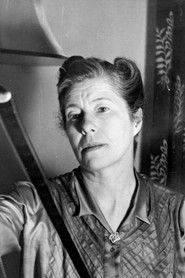
British director and screen writer, she is not to be confused with the American actress of the same name. Mary Field is best known for directing short educational and nature films. Field became the series director of Secrets of Nature in 1929. Previously a history teacher, she joined the film industry as an historical consultant in 1925, working for British Instructional Films. Although she had no training in science or filmmaking, Field quickly proved herself to be a first-class film director, developing a unique style that fused education and instruction. Field insisted that nature films were more than just a series of impressive images: they were the result of a painstaking process that…
Known for
 NR
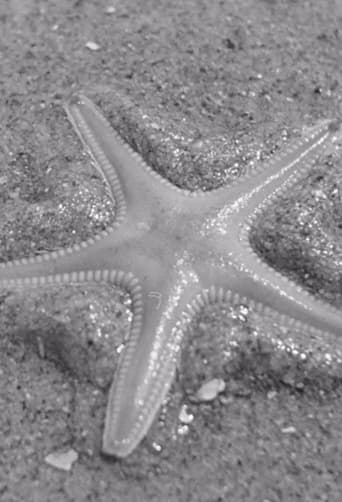
NRGo with the flow: to gentle but spellbinding effect this innovative natural history film glimpses marine life astride rising tides at Millport on the Isle of Cumbrae. Urchins, lugworm, weaver-fish and crabs are the shy-but-elegant stars coaxed onto the screen (with the assistance of Millport’s local research station) for this archetypal edition of Gaumont-British Instructional’s 1930s cinema series Secrets of Life.
Ebb-tide
1948
The birdlife of Northumberland's Farne Islands comes under the spotlight.
Nursery Island
1936
Short nature documentary by Mary Field and F. Percy Smith.
Lupins
1936
Birds of the Farne Islands.
Bird Sanctuary
1936
"Shows how the hedgerows are used by many animals and birds to conceal their homes."
Hedgerows
1935
 NR
NRShows how a nursery school enables children to play, eat, rest, look after themselves and indulge their curiousity at their own pace during a typical day.
Double Thread
1943
Behind the camera
NRGo with the flow: to gentle but spellbinding effect this innovative natural history film glimpses marine life astride rising tides at Millport on the Isle of Cumbrae. Urchins, lugworm, weaver-fish and crabs are the shy-but-elegant stars coaxed onto the screen (with the assistance of Millport’s local research station) for this archetypal edition of Gaumont-British Instructional’s 1930s cinema series Secrets of Life.
Ebb-tide
1948
The birdlife of Northumberland's Farne Islands comes under the spotlight.
Nursery Island
1936
Short nature documentary by Mary Field and F. Percy Smith.
Lupins
1936
Birds of the Farne Islands.
Bird Sanctuary
1936
"Shows how the hedgerows are used by many animals and birds to conceal their homes."
Hedgerows
1935
NRShows how a nursery school enables children to play, eat, rest, look after themselves and indulge their curiousity at their own pace during a typical day.
Double Thread
1943
 NR
NRMosses are seen on walls, old roofs and in hedgerows.
Gathering Moss
1933
Micro-cinematography is used to show how plants transform their secretions into other substances.
Plant Magic
1927
A Secrets of Life short.
Water Baby
1939
This promotional film bills the market town of Newark as central to the farming industry, with an array of regional produce and livestock. It was sponsored by the British Council and intended for an international audience.
Market Town
1942
A Secrets of Life short to which the BFI gave this description: "The film falls into two related sections: the first part shows, by fast motion... the germination, growth-characteristic and fertilisation of the wild cabbage; the second part shows how the varied forms of cultivated cabbage - Savoys, Brussels sprouts, cauliflowers, sprouting broccoli - are related to the wild form, by illustrating the particular feature of the wild form that is present to an exaggerated degree in the cultivated variety... A very good example of how to deal with familiar gardening knowledge in an interesting manner, while at the same time using everyday facts to bring home the scientific lessons that can be drawn therefrom... Perhaps the most striking portions of the whole film are the sections showing which parts of the wild form have been greatly developed to produce the Brussels sprouts, cauliflower, or the Savoy cabbage."
Cabbage
1935
A Secrets of Life short similar to the ealier work, Climbing Plants.
Climbers
1942
 NR
NRShort film showing (with limited accuracy) the life-cycle of myxomycetes.
Magic Myxies
1931
Using diagrams, 'Atlantic' explores the history of the empires surrounding the Atlantic Ocean over the last 600 years.
Atlantic
1941
A study of the Spear Thistle demonstrating the processes of fertilisation.
Thistledown
1935
 NR
NR'An unwary young woman led astray by a grinning gentleman on a motorcycle ends up with a sexually transmitted disease in this straight-talking female-focused silent public information film drama. Her doctor recounts - in a series of ominous flashbacks - sad tales of other women in similar situations who foolhardily let gonorrhoea and syphilis go untreated.' (BFI Player)
The Irresponsibles
1929
 NR
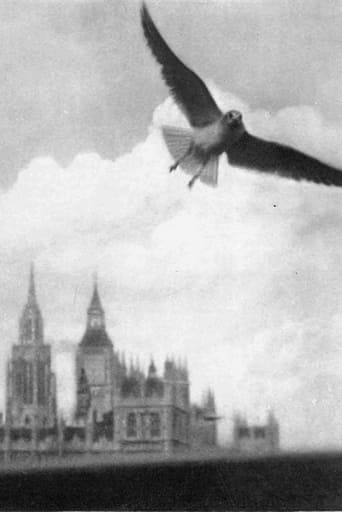
NRThe film takes us to the North of England to follow the migration of the black-headed gull down to London. There, the narrator asks viewers to "listen to their gossip", before demonstrating the bird’s flight in slow motion. We see a polecat feasting on gull eggs, and then a man collecting the eggs for human consumption, with the film telling us that they are considered a “delicacy” in London. Indeed, according to the British Trust for Ornithology, around 300,000 gull’s eggs were sold every year in Leadenhall Market in London during the 1930s, when London Visitors was made.
London Visitors
1936
 NR
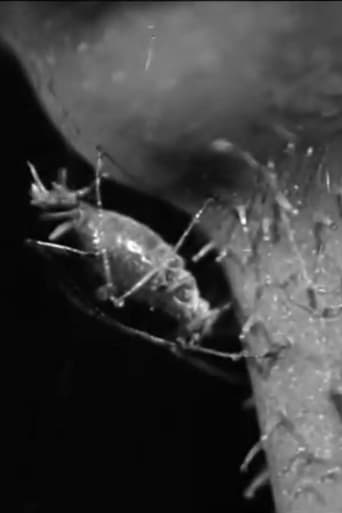
NRThe life cycle of the rose aphid (Macrosiphum Roseus).
The Aphis
1930
A Secrets of Life short.
Fish Face
1936
The first in the Secrets of Life series of short films.
Roots
1934
A Secrets of Nature short.
Amazing Maize
1933
A Secrets of Life documentary about bathing time at the zoo. The film was registered on the Board of Trade's official list under Section 6 of the Films Act as 883ft long (roughly 9 minutes if projected at 24 frames per second) It is a remake, or update, of the short "Bath Time at the Zoo" from Secrets of Nature.
Mixed Bathing
1935
A Secrets of Nature short.
Water Folk
1932
A Secrets of Life short.
Living Lies
1935
A Secrets of Nature short.
Friendly Flies
1931
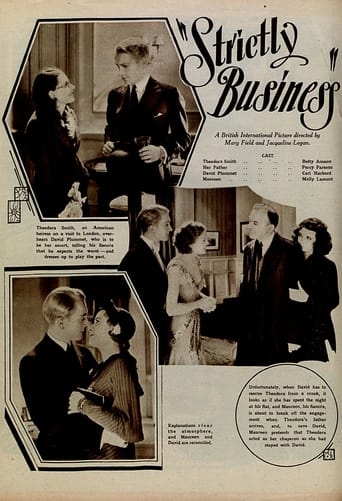 8.0
8.0The daughter of an American leather magnate is sent on a series of sightseeing tours in London with her father's business associate, but finds herself targeted by an opportunistic blackmailer.
Strictly Business
1931
 NR
NRPoetic tribute to Mrs Turner's vegetable growing prowess, plus the delights of "wartime steaks".
Mrs. T. and Her Cabbage Patch
1941
A Secrets of Life short about a raven.
Ravenous Roger
1935
The perky Cockneys are London sparrows, who star in this natural history film.
Perky Cockney
1938
A Secrets of Life short about the swan.
Swan Song
1938
A Secrets of Life short.
Overlooked
1942
 7.0
7.0A brisk visual summary of the changing faces of the English town throughout the ages, from the ancients and their hill-forts to the Second World War -- enlivened by the appearance of ghostly denizens to defend their eras against the narrator's various strictures!
Development of the English Town
1943
A Secrets of Life short about ants.
Community Life
1936
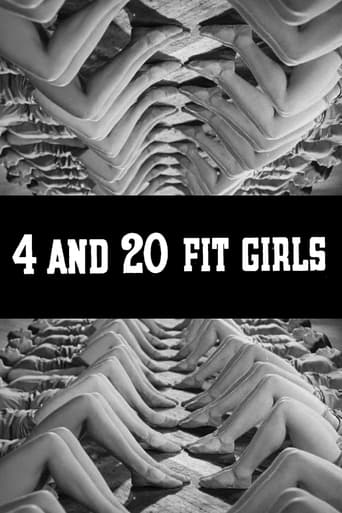 6.0
6.0Flock to your local keep fit class - there's a war on and Britain needs its citizens in tip-top shape.
4 and 20 Fit Girls
1940
 NR
NRShort documentary showing infusoria in a wine-glass.
The World in a Wine-Glass
1931
A Secrets of Life short, potentially the second in the series about the Lupin.
Old Blue
1939
 NR
NRHistory - and natural history - filmed on location in Selborne, East Hampshire. This unusual edition of the long-running series Secrets of Life tells the story of the village's famous son, Rev Gilbert White, whose 1789 book The Natural History and Antiquities of Selborne is a classic of natural history. The film follows in his footsteps, with camera rather than quill in hand, focusing on nature but also taking in views of the village and its human inhabitants. The ingenious close coverage of bird, reptile and other wildlife was the stock-in-trade of the filmmakers at Gaumont-British Instructional, producers of the series. Under the direction of the redoubtable Mary Field, the behind-screen talent here includes legendary 'cine-biologists' Percy Smith and Oliver Pike. A tribute by one generation of pioneering naturalists to another, it's a quietly moving film in spite of its clipped English reserve - or perhaps partly because of it.
Memories
1944
A Secrets of Life short of which the BFI gave this description: "The first part of the film is a speeded-up picture of germination and growth of the tomato plant, ending with the fertilization of the flower and the growth of the fruit. The white flies are then shown in action on the plant, and by skilful micro-photography their life cycle is shown, together with the means by which they injure the plant. A natural parasite—small species of wasp—is also shown in action by means of micro-photography,and its method of parasitism is clearlybrought out. The film concludes with apictorial demonstration of the means forridding tomato glass-houses infested withwhite fly by the use of hydrocyanic gas."
White Flies and Tomatoes
1935
Captures the lives, habits and habitats of London’s pigeon population.
Living in London
1938
A Secrets of Life short of which the BFI described "a delightful study of a single family which leaves one with a feeling of satisfaction and a determination to watch at least one garden nest consistently when spring returns. The views from inside the nesting box are particularly interesting and one is left wondering how the lighting was managed so well. Young children would be relieved to hear that the parents continued to feed all their young ones and not only the few which kept their balance on the branch. Useful in nature study, biology and gardening classes"
We Are Seven
1935