
Acting
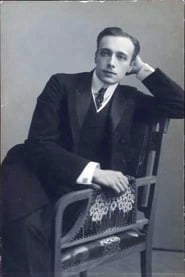
Vladimir Maksimov
Born — Died
1880-07-27 — 1937-03-22
Known for
Acting
Credits
22 titles
Popular and critically acclaimed actor of the silent era in Russia and the USSR.
Known for
 NR
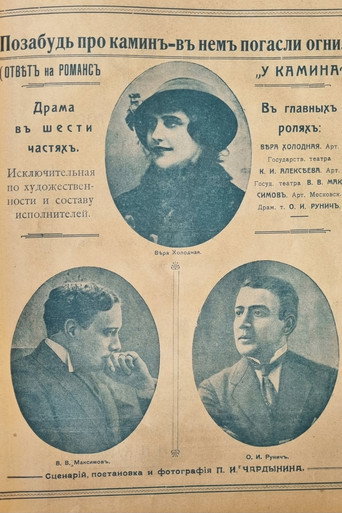
NRContinuation of Chardynin's drama By the Fireplace. Lost film.
Forget the Fireplace; the Lights Went out in It ...
1917
 NR
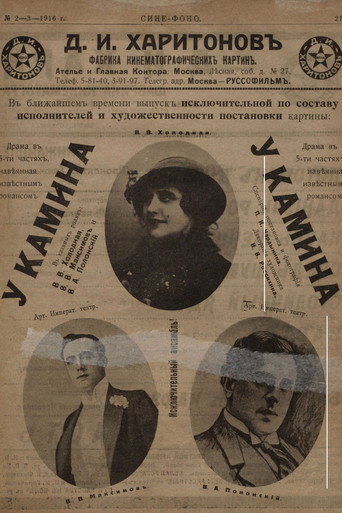
NRLost film.
By the Fireplace
1917
 10.0
10.0No synopsis available yet.
The Woman Who Invented Love
1918
Foreign intelligence is trying to establish a spy organization on the territory of the Soviet Union. Their activities will be detected by the security agencies and the enemy will be harmed. the film is lost
Man to man is wolf
1923
German war film. This film is considered lost.
The House Without a Door
1914
 4.0
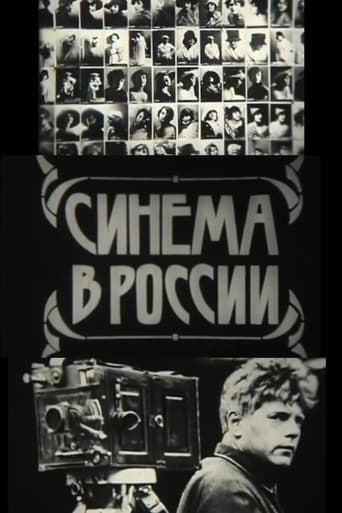
4.0Documentary film about early years of Russian cinema: its first directors, cameramen, producers and actors. Includes rare fragments of pre-revolutionary feature films, newsreels and Starewicz's animation.
Cinema in Russia
1979
Film credits
1920s · 3 titles
Foreign intelligence is trying to establish a spy organization on the territory of the Soviet Union. Their activities will be detected by the security agencies and the enemy will be harmed. the film is lost
Man to man is wolf
1923
 8.0
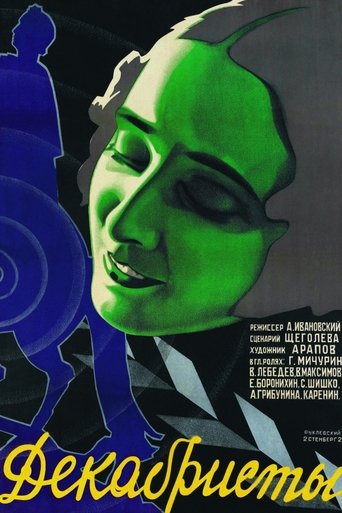
8.0The film recreates episodes from the December Uprising of 1825. Against the backdrop of the uprising, a love story unfolds between the Decembrist Annenkov and Polina Gebl.
The Decembrists
1927
 7.0
7.0The Government of the fictional country Norland has unleashed a war with the neighboring Galikania and is suffering one defeat after another. A group of conspirators who were dissatisfied with this state of affairs, led by the Social Democrat Frank Frey arrange a coup to overthrew the emperor of Norland. But the working class does not like the new order either. Workers expose Frank Frey's policy of continuing the war and a revolution breaks out in the country. The leader of the socialist revolution becomes a mechanic of the name Franz Stark.
Locksmith and Chancellor
1924
1910s · 18 titles
NRContinuation of Chardynin's drama By the Fireplace. Lost film.
Forget the Fireplace; the Lights Went out in It ...
1917
NRLost film.
By the Fireplace
1917
10.0No synopsis available yet.
The Woman Who Invented Love
1918
German war film. This film is considered lost.
The House Without a Door
1914
 NR
NRFive-episode adaptation of the eponymous Russian novel, directed by Pyotr Chardynin et al.
Petersburg Slums
1915
 NR
NRNo synopsis available yet.
At The Beauty's Altar
1917
 9.5
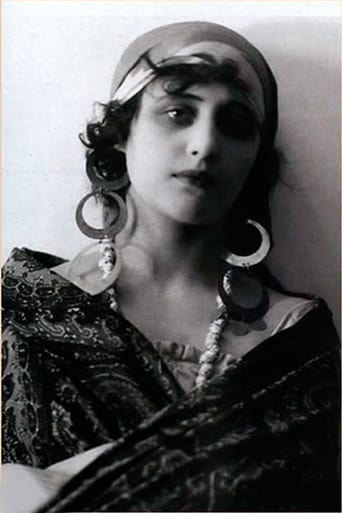
9.5"The Living Corpse" - Fedor Protasov is tormented by the thought that his wife Liza never really made a clear choice between him and Victor Karenin, a more conventional rival for her hand. He wants to kill himself, but doesn't have the nerve. Running away from his life, he falls in with Gypsies, and into a sexual relationship with a Gypsy singer Mascha. Meanwhile, his wife Liza, presuming him dead, marries the other man, Victor.
A Corpse Living
1918
 NR
NRThe film is based on the words of a song performed by Iza Kremer in Odessa.
The Last Tango
1918
 NR
NRNo synopsis available yet.
How They Lie
1917
 5.1
5.1First film ever that was shot by two cameras. Set in 1854-1855, in Sevastopol and Yalta during the Crimean War. Admirals Kornilov (Mozzhukhin) and Nakhimov (Gromov) organize the defense during the siege of Sevastopol. Both admirals are killed during the battle, and the city of Sevastopol is taken by the alliance of British, French, Sardinian, and Turkish troops. The legendary feat of Sailor Koshka (Semenov) was staged at original location. The 100 minute-long film was premiered in 1911 at the Livadia, Yalta, palace for the Tsar Nicholas II.
Defence of Sevastopol
1911
 6.0
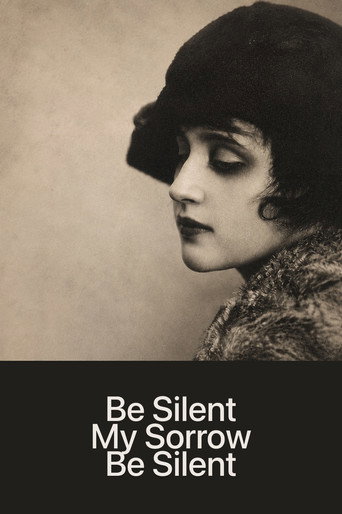
6.0Paula is a circus performer married to the alcoholic clown-acrobat Lorio. Lorio's heavy drinking leads to him being severely injured during a performance. This forces Paula and the now-crippled Lorio to become street musicians. This film formerly ran to 81 minutes – regrettably, the second half is considered lost.
Be Silent, My Sorrow, Be Silent
1918
The Kostomarov family falls apart when a female relative joins the household.
Anfisa
1912
A group of young people made a bet, according to the terms of which they had to visit a cemetery at midnight.
At Midnight in the Graveyard
1910
 NR
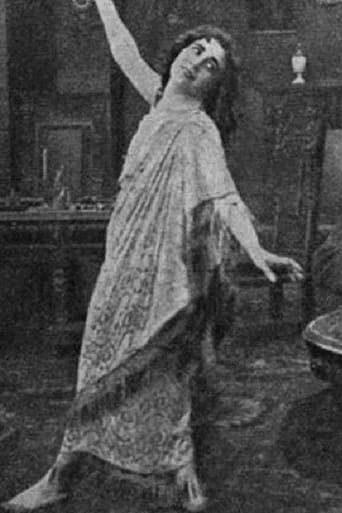
NRDirected by Vladimir Gardin and Yakov Protazanov, this two-part epic was the most expensive Russian film at the time and smashed box office records. It is now considered lost, with only a 4 minute clip surviving.
The Keys to Happiness
1913
 NR
NRThis is a Russian silent feature film by Vladimir Krivtsov, which marked the beginning of the "Russian Golden Series". The film is lost.
Corpse No. 1346
1912
 NR
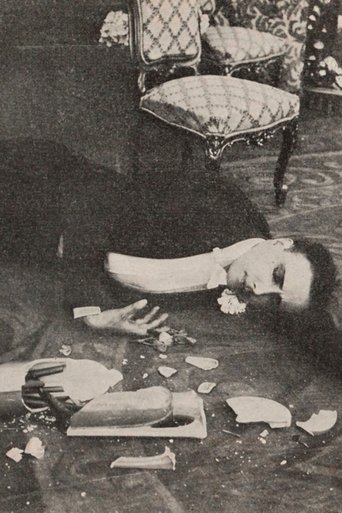
NRNo synopsis available yet.
The Broken Vase
1913
 10.0
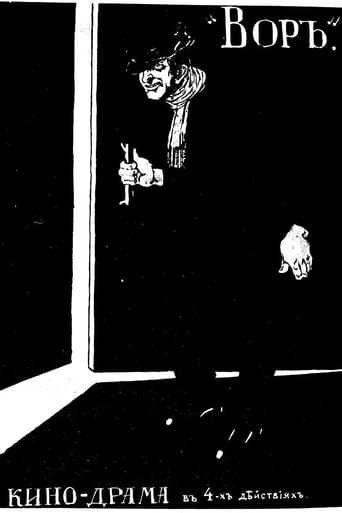
10.0No synopsis available yet.
Thief
1917
 NR
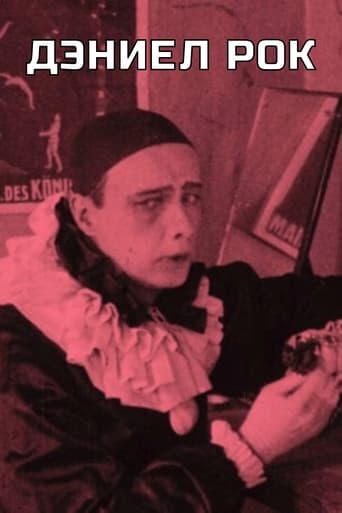
NRThe film discovered in 1916, is the second part of two circus-themed films released in the same year. Daniel Rok is pulp fiction, one of the many attempts to create an action film, following the footsteps of the Danish, the French, and the Americans. A good quarter of Russian pre-revolutionary film industry consisted of pictures like this. A circus drama was almost a sub-genre of its own. What distinguishes this film is the involvement of actual circus performers, some of the biggest names in the industry, many of them having never made another film. One could only wish that all of them would perform their signature acts, like Sergei Alperov and his son Dmitry Alperov, the legendary acrobats. Instead, Williams Truzzi, arguably the most famous Russian circus jockey of his time, plays the villain, Tamara Gamsakurdia, a horseback dancer, appears as his innocent victim, and Nikolai Nikitin, who would soon become the owner and director of the Moscow circus, becomes the noble hero.
Daniel Rok
1916