
Acting
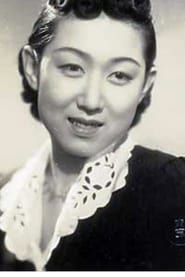
Hisako Yamane
Born — Died
1921-04-11 — 1990-09-15
Place of birth
Tokyo, Japan
Known for
Acting
Credits
60 titles
Known for
 7.8
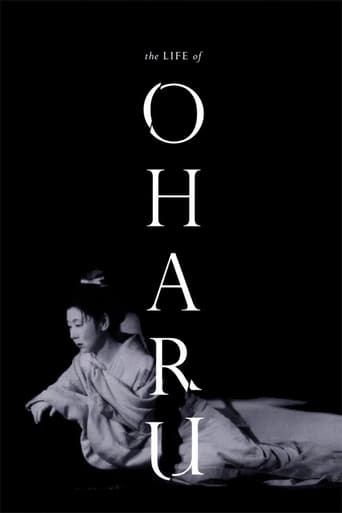
7.8During the Edo Period, a noblewoman's banishment for her love affair with a lowly page signals the beginning of her inexorable fall.
The Life of Oharu
1952
 5.9
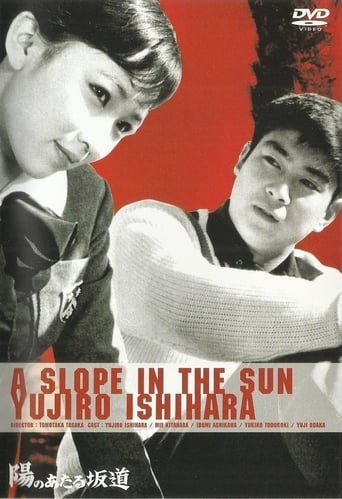
5.9The young Takako Kuramoto has come to Tokyo to study and starts working for the rich Tashiro family as tutor of the daughter, Kumiko, while she receives attention from her two older brothers, Yukichi and Shinji. Meanwhile, the exact parentage of Shinji comes to light.
A Slope in the Sun
1958
 NR
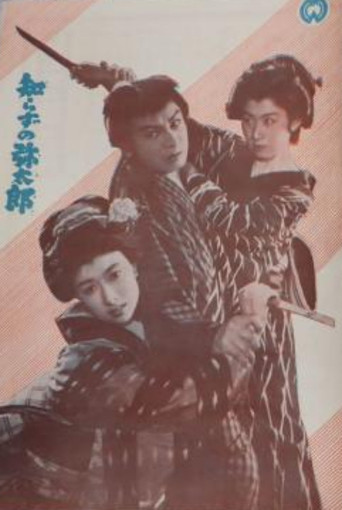
NRNo synopsis available yet.
Shirazu no Yatarō
1954
 NR
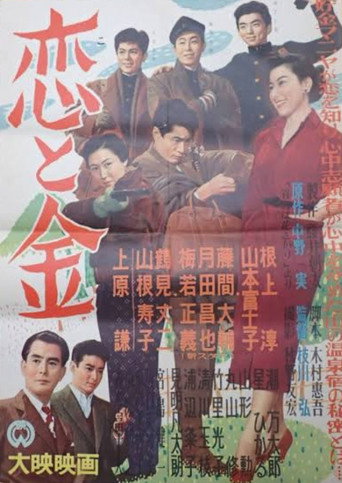
NRA lighthearted comedy featuring city dwellers flocking to a remote mountain hot spring inn, all entangled in the mystery of hidden gold bars.
The Buried Treasure
1956
 6.9
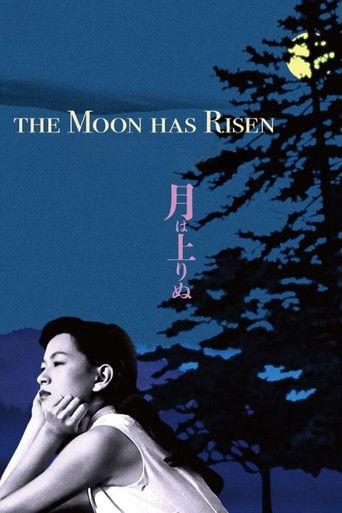
6.9Mokichi Asai is a widowed father living in Nara with three daughters—Chizuru, Ayako, and Setsuko. The youngest, Setsuko, plays matchmaker for her older sisters, leading to humorous and awkward romantic entanglements.
The Moon Has Risen
1955
 6.6
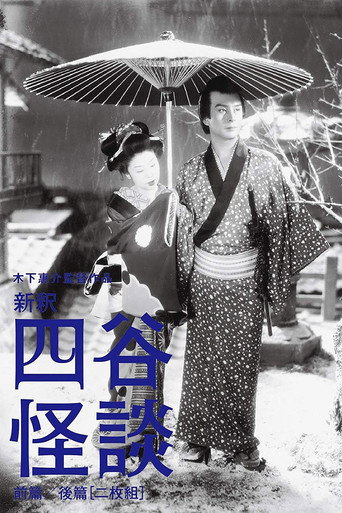
6.6Iemon Tamiya is an impoverished masterless samurai who craves a better life, which he cannot have because of his marriage to Oiwa, who is completely devoted to her husband.
Yotsuya Ghost Story Part 1
1949
Film credits
1950s · 38 titles
7.8During the Edo Period, a noblewoman's banishment for her love affair with a lowly page signals the beginning of her inexorable fall.
The Life of Oharu
1952
5.9The young Takako Kuramoto has come to Tokyo to study and starts working for the rich Tashiro family as tutor of the daughter, Kumiko, while she receives attention from her two older brothers, Yukichi and Shinji. Meanwhile, the exact parentage of Shinji comes to light.
A Slope in the Sun
1958
NRNo synopsis available yet.
Shirazu no Yatarō
1954
NRA lighthearted comedy featuring city dwellers flocking to a remote mountain hot spring inn, all entangled in the mystery of hidden gold bars.
The Buried Treasure
1956
6.9Mokichi Asai is a widowed father living in Nara with three daughters—Chizuru, Ayako, and Setsuko. The youngest, Setsuko, plays matchmaker for her older sisters, leading to humorous and awkward romantic entanglements.
The Moon Has Risen
1955
 7.5
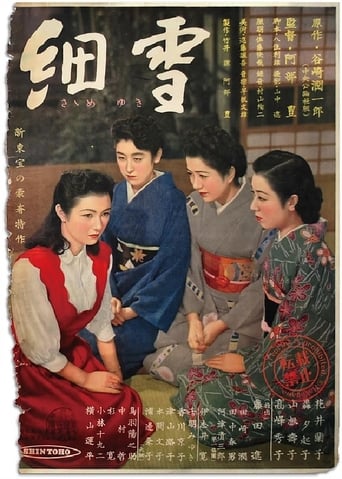
7.5No synopsis available yet.
Snow-Flake
1950
 NR
NRNo synopsis available yet.
Midori no nakama
1954
 NR
NRNo synopsis available yet.
Hana no sando gasa
1954
 NR
NRNo synopsis available yet.
Hana no kenkajō
1953
 8.0
8.0No synopsis available yet.
This Day's Life
1957
 NR
NREisuke Narita, a painter, visits a hot spring town in Tohoku, and for some reason, he is reminded of the events of ten years ago.
Lovers
1956
 6.0
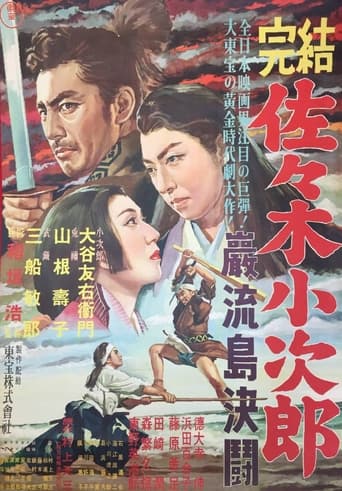
6.0Director Hiroshi Inagaki's early version of the life and death of famed swordsman Sasaki Kojiro. Otani Tomoemon gives a brilliant performance as Sasaki Kojiro, who rises from humble beginnings to national fame, and a young Toshiro Mifune appears as the legendary master swordsman Miyamoto Musashi for the first time and essentially sets the standard for future portrayals.This masterpiece is based on the original story as written by noted author Murakami Genzo and is far superior to any other versions. Following Kojiro from his earliest days through his fateful meeting with Musashi, this movie is filled with exciting and dramatic moments culminating in the best version of the final duel ever seen on film.
Sasaki Kojiro
1951
 9.0
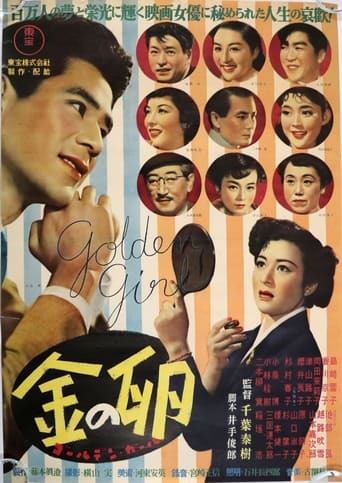
9.0Once an average and seemingly ordinary Tokyo girl, she suddenly finds herself as a TV star owing to her discovery by a casting company, which noticed photographs that her cousin had sent. When another actress falls ill she is given the role instead. Her first film is a success propelling the young actress to popularity, her own fans, money and a house. While everything looks dandy from the outside not all is well within the family however.
Kin no tamago: Golden Girl
1952
 NR
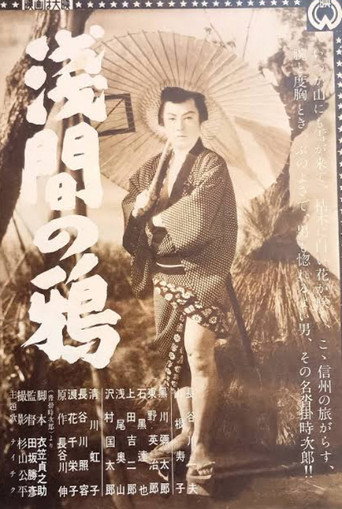
NRAfter killing a man who owed him neither a debt of gratitude nor a grudge, Tokijiro decides to leave the yakuza life behind in accordance with the code of honor—but becomes an assistant to yakuza for the sake of the man’s orphaned child his mother.
Asama no karasu
1953
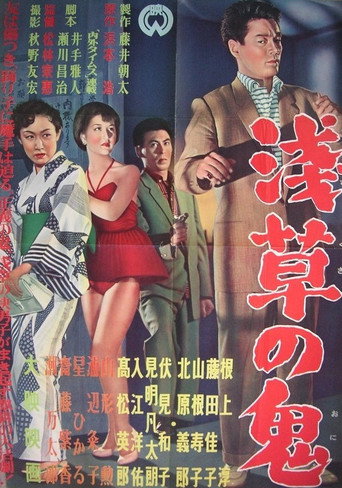 NR
NROn the night of the Sanja Festival, a bloodstained wallet left in the hands of a female pickpocket… The boss’s sinister grasp closing in on an innocent dancer, and the passion and deadly battle unleashed by the righteous hero of Asakusa…
Troupers of Asakusa
1955
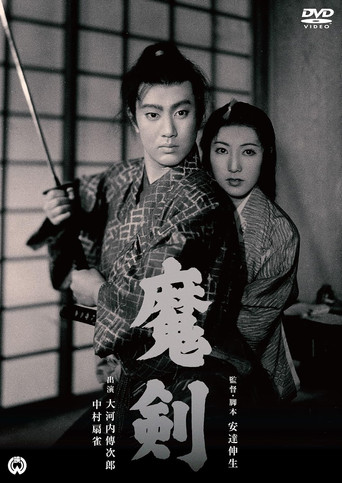 NR
NRA young swordsman takes on the mysterious, deadly “Demon Sword” wielded by a nihilistic master swordsman who trusts neither human compassion nor a woman’s heart… What is the fate of the undefeated Demon Sword?
Demon Sword
1953
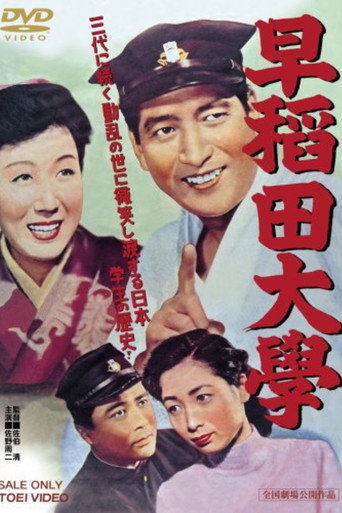 NR
NRIn the 15th year of the Meiji era (1882), Ōkuma Shigenobu, expelled from the Council of State by the Satsuma-Chōshō clique, poured his personal fortune into establishing the Tokyo Professional School in a tea field in Waseda Village. With seven professors, including Takada Sanae and Tsubouchi Yūzō, and eighty-seven students, government interference extended even to finances; Ono Azusa, who tirelessly worked to secure funding, died from overwork.
Waseda University
1953
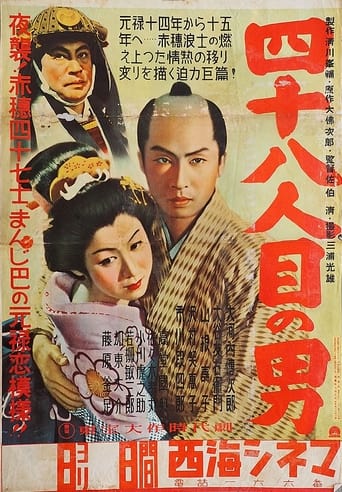 8.0
8.0Jidai-geki by Kiyoshi Saeki
Forty-Eight Man
1952
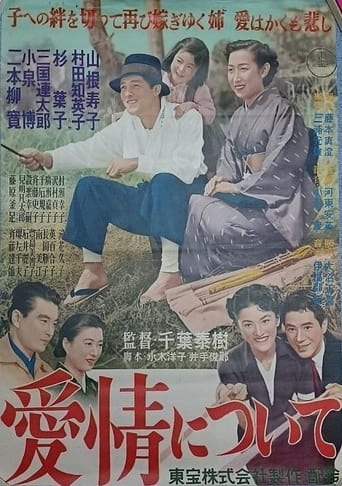 10.0
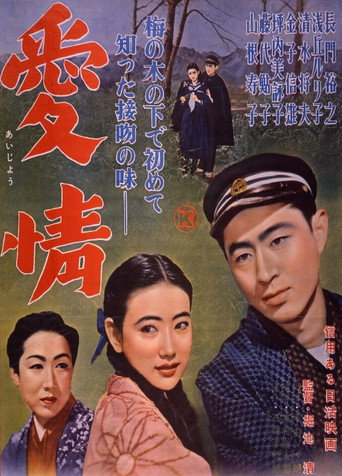
10.0Michiko Asakura was married to the eldest son of the Sakuma family, an unsealed family in Shinshu, but died from her husband and returned to her parents' house in Tokyo with her five-year-old daughter Yoshiko.
About Love
1953
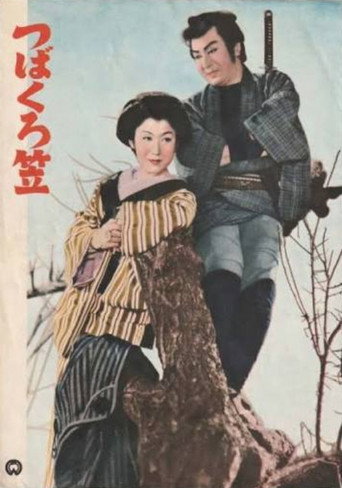 NR
NRNo synopsis available yet.
Tsubakuro kasa
1955
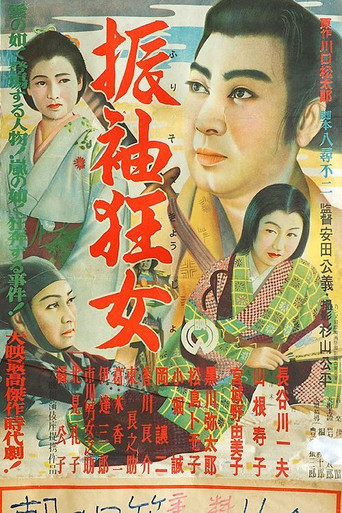 NR
NRA handsome man and a beautiful woman who seek to restore the Toyotomi clan by taking in the orphaned Princess Tsuru.
Furisode kyōjo
1952
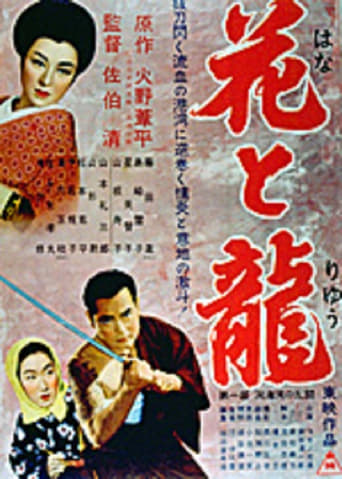 NR
NRDai-ichi-bu: Dôkai-wan no rantô - Kiyoshi Saeki directed movie.
Hana to ryû - Dai-ichi-bu: Dôkai-wan no rantô
1954
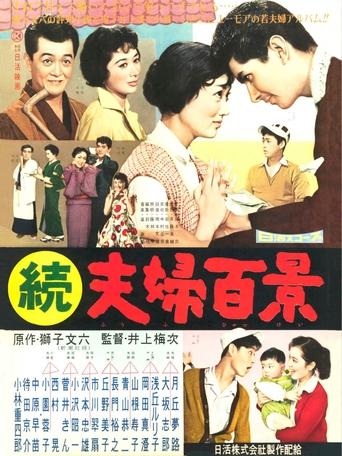 NR
NRIn this sequel to The Husband Wore the Apron, househusband Soma wins a children's literature award, bringing in a windfall of prize money. Meanwhile, the Kurata couple find jobs that bring further complications into their married life.
Zoku fûfu hyakkei
1958
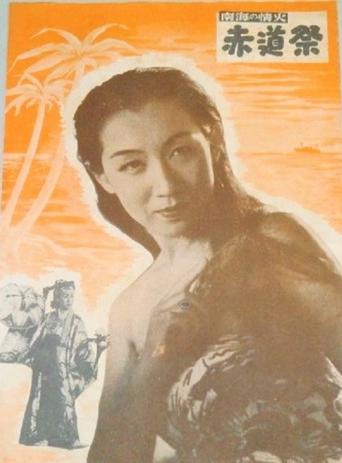 NR
NRNo synopsis available yet.
Sekidô matsuri
1951
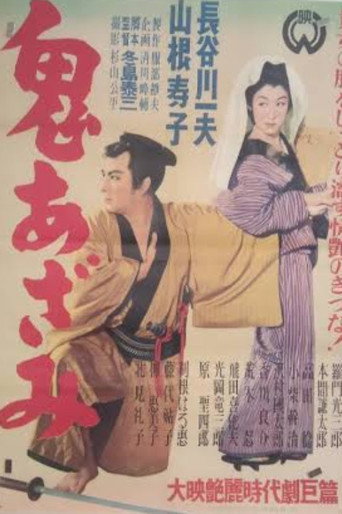 NR
NRFive years after parting ways, two people who had once envisioned a life together met again: he was a yakuza out of work, and she was a woman of the night.
Oni azami
1950
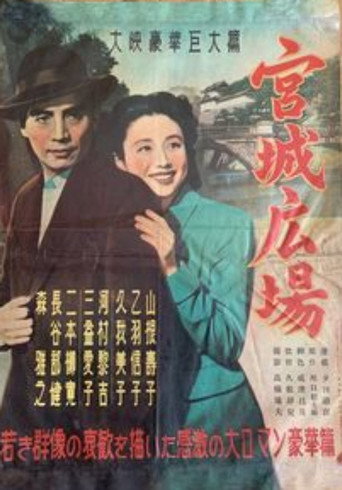 NR
NRNo synopsis available yet.
Kyūjō hiroba
1951
 7.0
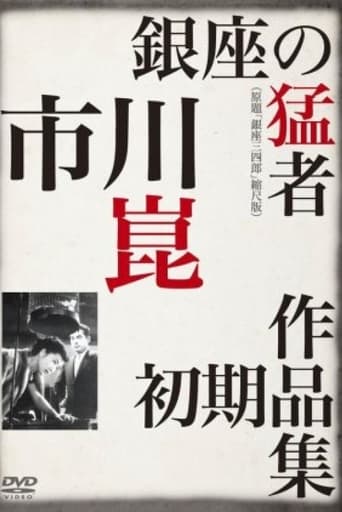
7.0An early film by Kon Ichikawa
Sanshiro of Ginza
1950
 10.0
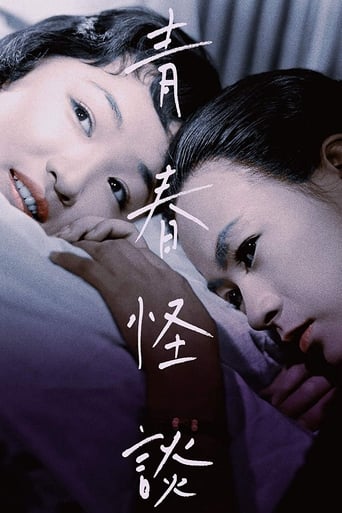
10.0A melodrama of the ups and downs of youth, based on Bunroku Shishi’s popular novel. Chiharu, a ballerina, and Shinichi, a thorough rationalist and childhood friend. A woman named Tomi Funakoshi appears in front of the two, who are thinking of getting married someday.
Ghost Story of Youth
1955
 7.0
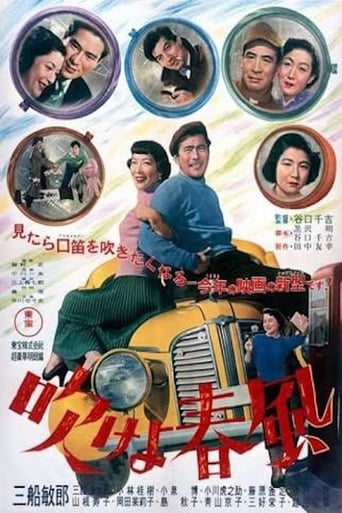
7.0No synopsis available yet.
My Wonderful Yellow Car
1953
 NR
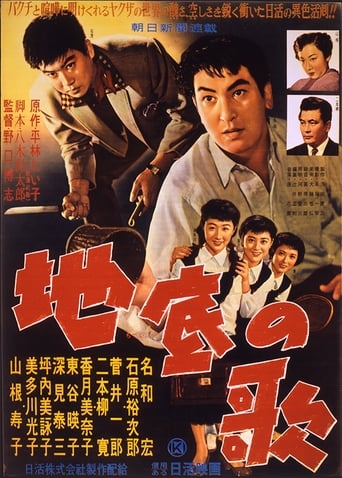
NRA conflict between two yakuza families in Tokyo, the Izus and the Yoshidas, has recently broken out. When an Izu underling starts a fight with a Yoshida man, Fuyu, the Izu family sends Tsuruta, a senior member of the clan, to make a personal apology to Fuyu. Tsuruta discovers that the woman he is in love with is Fuyu's sister, Tatsuko. Tsuruta ends up gambling with a swindler, who is in fact Tatsuko's husband. (The general plot of the film was re-used for Seijun Suzuki's Kanto Wanderer).
Song of the Underworld
1956
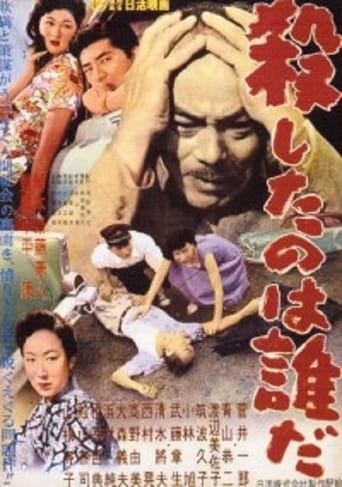 10.0
10.0Film about a car dealer who gets into financial trouble.
Who's the Real Killer
1957
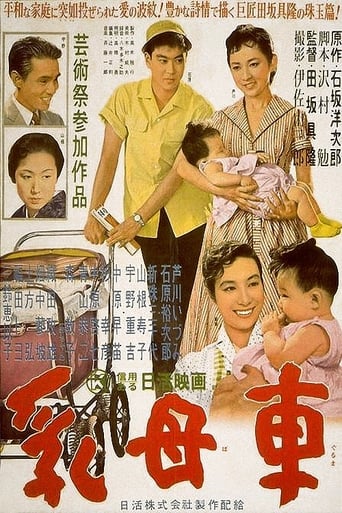 8.0
8.0Upon discovering that her father has a mistress, a young girl befriends the "other woman" and her child. Realizing that her half-sister is doomed to being regarded as an outcast, the heroine sets about to spiritually legitimize the girl.
The Baby Carriage
1956
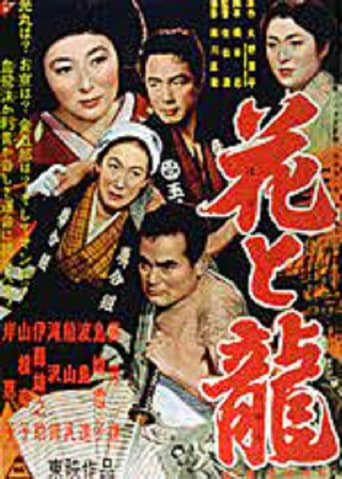 NR
NRDai-ni-bu: Aijô ruten: Kiyoshi Saeki directed movie
Hana to ryû - Dai-ni-bu: Aijô ruten
1954
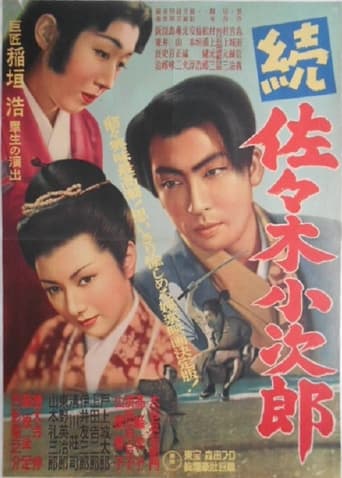 7.0
7.01951 Japanese movie
Zoku Sasaki Kojiro
1951
 NR
NRBittersweet shomin-geki drama by Keigo Kimura
Farewell to Spring
1952
 9.0
9.01952 Japanese movie
One Thousand Ryo Ship in the Wind and Clouds
1952
 6.0
6.0Adapted from the original work by the literary giant Yasunari Kawabata. Through the lives of three sisters each following their own path, the film offers a richly poetic exploration of what constitutes happiness for women.
Windy Street
1959
Japanese film released to commemorate the 7th anniversary of Shintoho's founding.
Kenkyō edo-murasaki
1954
1940s · 20 titles
6.6Iemon Tamiya is an impoverished masterless samurai who craves a better life, which he cannot have because of his marriage to Oiwa, who is completely devoted to her husband.
Yotsuya Ghost Story Part 1
1949
6.6Part 2 starts where the first film ended, with Iemon disposing of the bodies of his wife and Kohei, marrying upward, and being blackmailed by the evil Naosuke.
Yotsuya Ghost Story Part 2
1949
 7.0
7.0No synopsis available yet.
A Man's Flower Road of Triumph
1941
7.0No synopsis available yet.
A Man's Flower Road of Triumph
1941
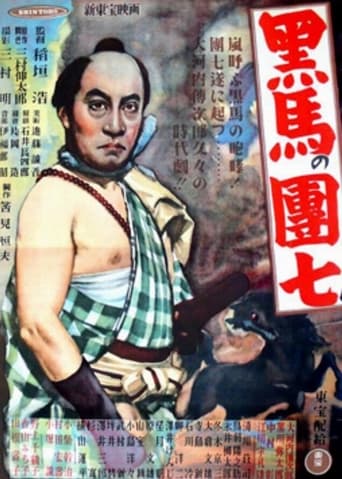 9.0
9.0No synopsis available yet.
Kuro-uma no danshichi
1948
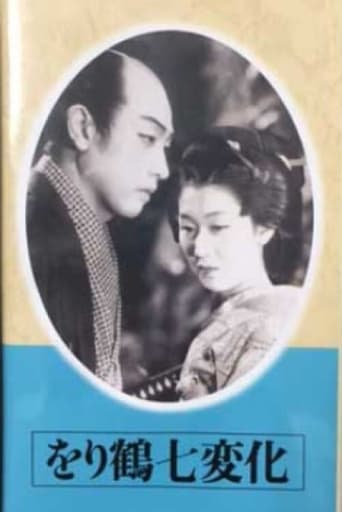 5.0
5.0The story is based on the serial novel by Tsunoda Kikuo.
The Seven Changes of a Paper Crane (Part 1)
1941
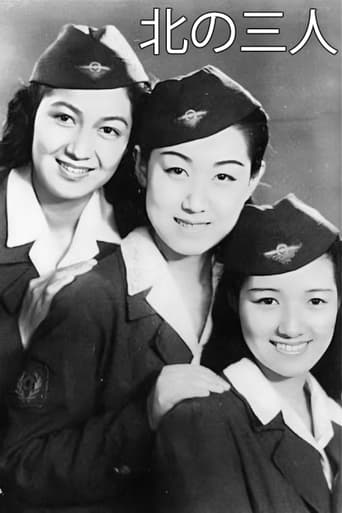 10.0
10.0The story of an airport and its air traffic control crew in a remote and northern Japanese town. Three of the air traffic controllers are female with one of them working with her dead fiancé's sister. The engaged man had gone to war and never returned.
Three Women of the North
1945
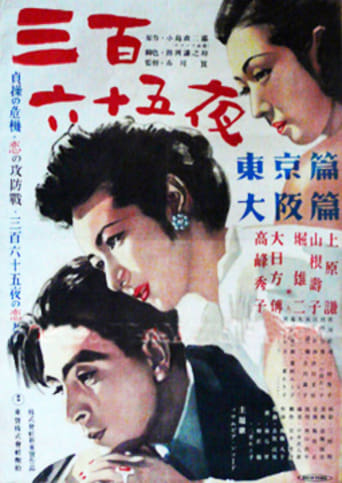 6.7
6.7A young man rents an apartment in Tokyo and discover it was built by his father. He falls in love with the daughter of the mistress of the house and decides to marry her. Only to discover that his father is is in debt and wants him to marry Ranko so that she may help his company by granting 1.5 million yen. Teruko decides to borrow money from a greedy bar owner who lends her money on certain conditions and photographs her without her consent. A love traingle forms between Koroku, Ranko, and Teruko. Things complicate when Koroku marries Teruko and Tsugawa threatens them for the money causing many twists and turns.
365 Nights
1948
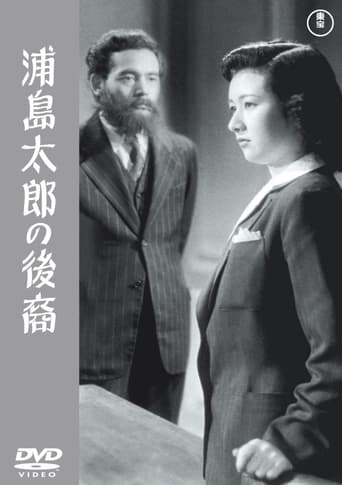 7.5
7.5Reputedly based on Frank Capra’s 1939 film Mr. Smith Goes to Washington, A Descendant of Tarô Urashima is about a repatriated soldier who becomes populist politician in the Japanese Happiness Party.
A Descendant of Urashima Taro
1946
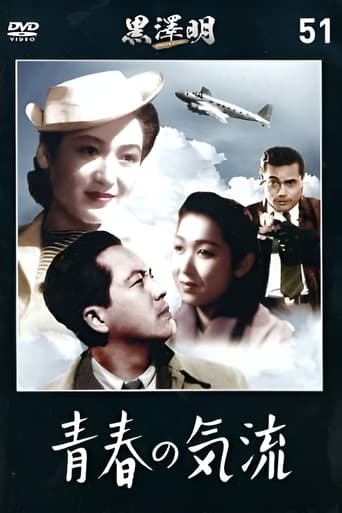 9.0
9.0It was supposed to be about a love story, but it was and was not. An aircraft mechanic working for the government is matched by his boss with the latter man's daughter (Setsuko Hara) who is both beautiful and aggressive. Yet, he picks a woman who is less assertive as his bride.
Currents of Youth
1942
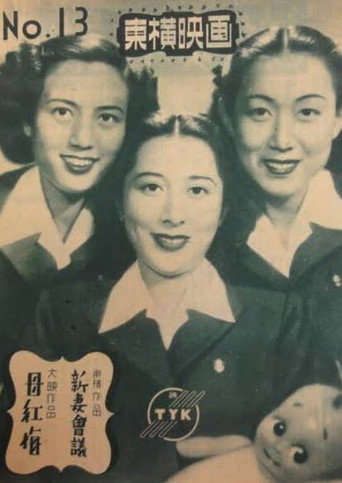 NR
NRKeiko, Kirie, and Toshi, a trio of close friends, go their separate ways after graduation, vowing to hold a “New Wives’ Meeting” once they are all married.
New Wives’ Meeting
1949
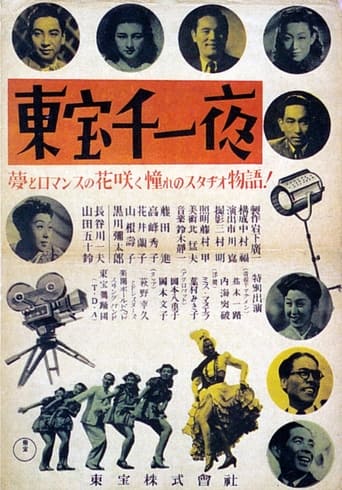 8.0
8.0The debut film of Shin Toho Productions
A Thousand and One Nights with Toho
1947
 8.0
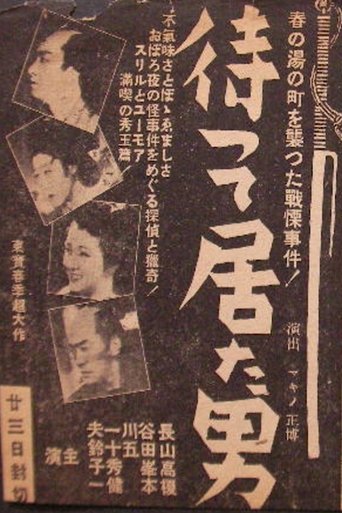
8.0A bizarre murder at a hot springs resort threatens to disrupt an Edo detective's (Hasegawa) vacation. When his hot-blooded wife (Yamada) starts snooping around, however, he finds himself reluctantly drawn in to the case.
The Man Who Waited
1942
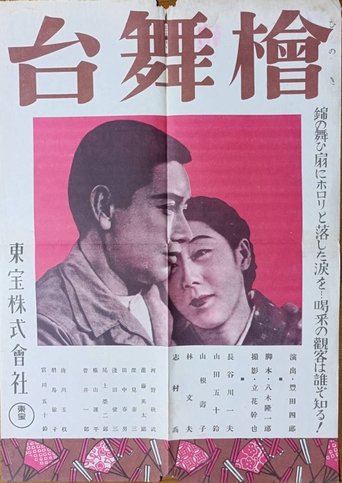 NR
NRThe story is set in a rural village, where the village mayor gives a speech at the local community center as a theater troupe visits the village for the first time in several years.
Hinoki Butai
1946
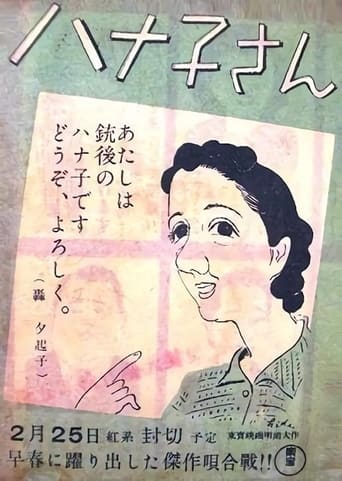 9.0
9.0Hanakosan (1943, TOHO, MAKINO Masahiro), a thoroughly light and joyful musical comedy, influenced by Busby Berkeley films, against the national policy under the wartime, was made into a film from comic serials by SUGIURA Yukio published in a magazine.
Miss Hanako
1943
 6.3
6.3A small community in wartime Japan learn how to make do with less.
This Happy Life
1944
 6.4
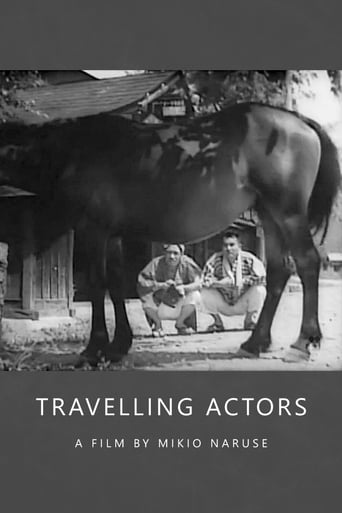
6.4This film depicts a troupe of wandering kabuki players traveling through rural Japan.
Travelling Actors
1940
 8.0
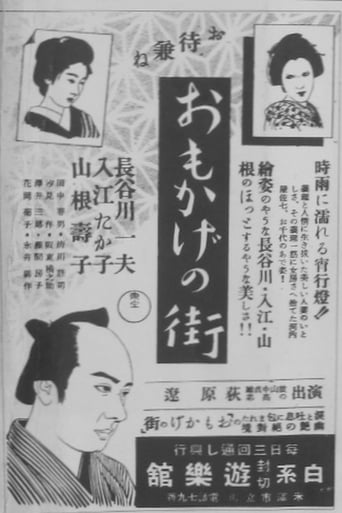
8.0A 1942 film.
Omokage no machi
1942
1942 adaptation of Izumi Kyoka's novel.
Onna keizu
1942
 8.0
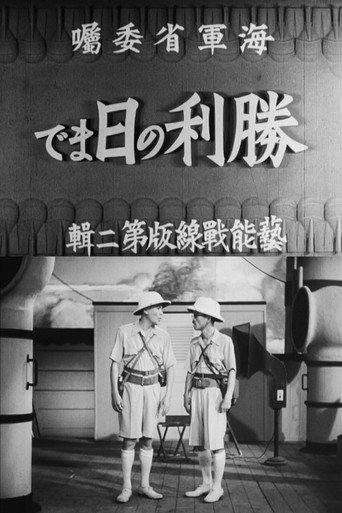
8.0An Invention laboratory is working on the creation of a performance 'bomb' in the shape of a rocket that could be delivered to the front in order to entertain and amuse the national troops. Inside this rocket would be tiny performers. Once launched from the laboratory and landed amidst the Japanese troops the soldiers could enjoy the performers. The laboratory succeeds and the rocket is built. It bears the insignia, 'until the victory days.' The Japanese government began a program of shooting and disseminating propaganda and entertainment movies for its troops during World War II. Only 15 minutes of the film survives.
Until Victory Day
1945
1930s · 2 titles
Song of the White Orchid was a co-production of Toho and Mantetsu, the railway that served the colonial region of Manchuria, and the first film in the Kazuo Hasegawa/Shirley Yamaguchi (Ri Koran) “Continental Trilogy.” Handsome Hasegawa (representing Japan) runs up against an impertinent Yamaguchi (representing the continent); not surprisingly, in the course of the film the woman comes around and realizes the benevolent intentions of the Japanese. In Song of the White Orchid Yamaguchi leaves Hasegawa, who plays an expatriate working for the railway, because of a misunderstanding. She joins a communist guerilla group plotting to blow up the Manchurian railway. Learning of the subterfuge that led to the misunderstanding, she renews her faith in Hasegawa—and by extension Japan—and tries to undermine the plot.
Song of the White Orchid
1939
 8.0
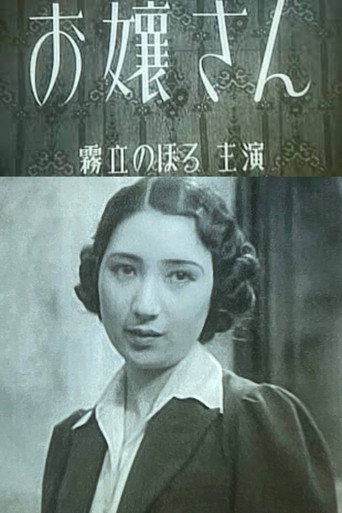
8.0The story deas with the experiences of an exceptionally strong-willed, middle class Tokyo "ojōsan" who comes to teach in a middle school in the countryside.
Young Lady
1937