
Directing
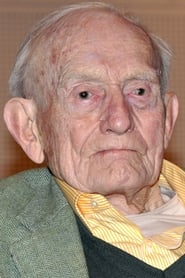
Richard Leacock
Born — Died
1921-07-18 — 2011-03-23
Place of birth
London, UK
Known for
Directing
Credits
58 titles
Richard Leacock (July 18, 1921 – March 15, 2011) was a pioneering American-born filmmaker, widely regarded as one of the founding figures of the cinéma vérité movement. He was a key influence on the development of observational documentary filmmaking, known for his innovative use of handheld cameras and his emphasis on capturing spontaneous, real-time events. Leacock's most notable works include Primary (1960), which followed John F. Kennedy and Hubert Humphrey during the 1960 Democratic primary campaign, and Chronicle of a Summer (1961), co-directed with Jean Rouch, a landmark film in the cinéma vérité genre. Throughout his career, Leacock collaborated with other influential filmmakers, inc…
Known for
 6.2
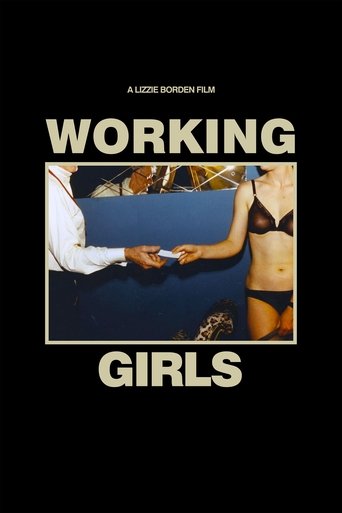
6.2A lesbian college graduate, trying to bankroll her own photography business, works as a high-priced New York City escort.
Working Girls
1987
 7.8
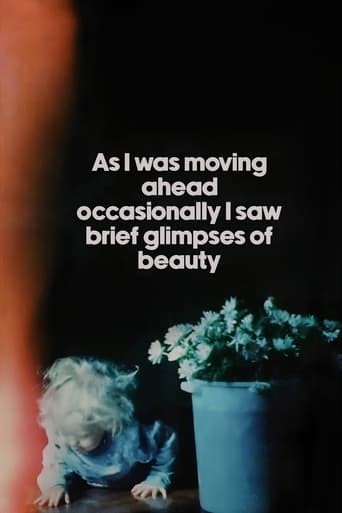
7.8A compilation of over 30 years of private home movie footage shot by Lithuanian-American avant-garde director Jonas Mekas, assembled by Mekas "purely by chance", without concern for chronological order.
As I Was Moving Ahead Occasionally I Saw Brief Glimpses of Beauty
2000
 6.9
6.9During a two-day period before and after the University of Alabama integration crisis, the film uses five camera crews to follow President John F. Kennedy, attorney general Robert F. Kennedy, Alabama governor George Wallace, deputy attorney general Nicholas Katzenbach and the students Vivian Malone and James Hood. As Wallace has promised to personally block the two black students from enrolling in the university, the JFK administration discusses the best way to react to it, without rousing the crowd or making Wallace a martyr for the segregationist cause. Preserved by the Academy Film Archive in partnership with The Film Foundation in 1999.
Crisis: Behind a Presidential Commitment
1963
 5.5
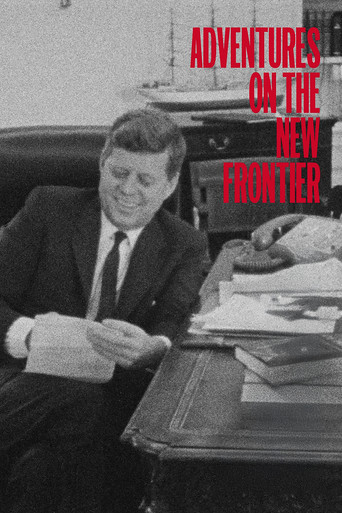
5.5A look at the daily business of U.S. President John F. Kennedy, with a focus on some of the political issues he faces six weeks into his term. Preserved by the Academy Film Archive in 2007.
Adventures on the New Frontier
1961
 7.0
7.0Jonas Mekas assembles 160 portraits, appearances, and fleeting sketches of underground and independent filmmakers captured between 1955 and 1996. Fast-paced and archival in spirit, the film celebrates the avant-garde as its own “nation of cinema,” a vital community existing outside the dominance of commercial film.
Birth of a Nation
1997
 6.3
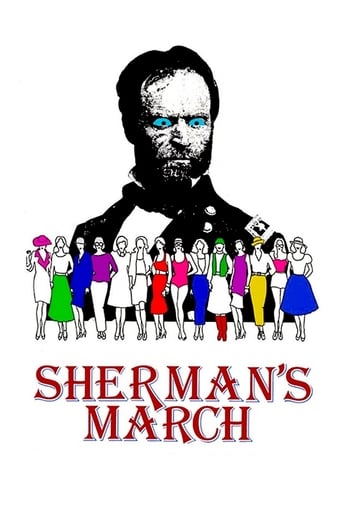
6.3Documentarian Ross McElwee originally set out to make a travelogue of sorts tracing General William T. Sherman's infamous scorched-earth march through the Confederacy in the latter stages of the Civil War. Instead, haunted by a recent breakup with a girlfriend, McElwee ends up documenting his progress -- or lack thereof -- in starting a new relationship. His journey then becomes one of self-reflection and self-discovery rather than a historical/sociological exploration.
Sherman's March
1986
Film credits
2010s · 6 titles
In 1998, documentary filmmaker Robert Drew and his associates attend the Museum of Tolerance.
Robert Drew & Associates at the Museum of Tolerance
2016
 4.8
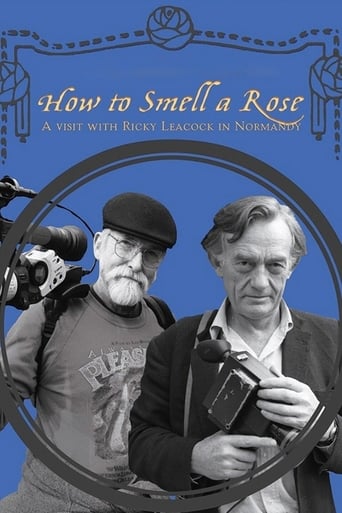
4.8In the year 2000, Les Blank, along with co-filmmaker Gina Leibrecht, visited Richard Leacock (1921-2011) at his farm in Normandy, France and recorded conversations with him about his life, his work, and his other passion: cooking! With the flair of a seasoned raconteur, Leacock recounts key moments in his seventy years as a filmmaker and the innovations that he, D.A. Pennebaker, Albert Maysles and others invented that revolutionized documentary filmmaking, and explores the mystery of creativity. With the passing of both Blank and Leacock, the documentary is a moving insight into the lives of two seminal figures in the history of film.
How To Smell A Rose: A Visit with Ricky Leacock at his Farm in Normandy
2014
 NR
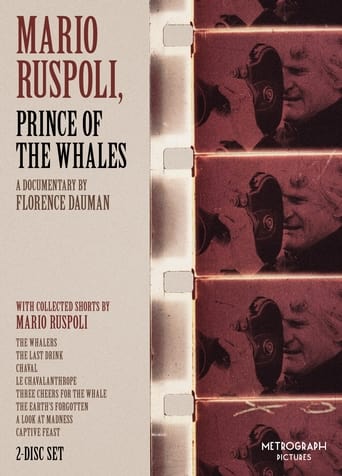
NRColleagues, friends and specialists pay tribute to the filmmaker Mario Ruspoli in a portrait that mixes encounters, archive images and film excerpts. With testimonies from Richard Leacock, Albert Maysles, Edgar Morin, D.A. Pennebaker and others.
Mario Ruspoli, Prince of the Whales
2011
 NR
NRRobert Flaherty is credited with being the father of the modern documentary after making "Nanook of the North" and classics such as "Man of Aran" and "Louisiana Story", but he is also criticized for engaging in distortion and stereotyping.
A Boatload of Wild Irishmen
2010
 NR
NRFor some time I had been thinking about doing something with my Paris footage, of which I have many many hours. So [curator Danièle Hibon’s] suggestion [to make a new work celebrating 20 years of cinema at the Jeu de Paume museum] came just in time. I spent some three months going through my Paris footage and I managed to reduce it to the length you will be seeing, two hours and 39 minutes. It was very very hard to do so. I have so many friends in Paris, so many memories – and it’s all on video. So this is my love letter to Paris. To its streets, to the river Seine, to its cafes, bistros, bars, to the jambon de Paris, and, especially, to all of you, my Paris friends!
My Paris Movie
2011
A 38-year journey that the director began in 1972 as a young filmmaker and, shooting off and throughout many years, the director filmed many and various encounters between Ricky, his friends and contemporaries including Henri Langlois, Jean Rouch, Jean-Luc Godard, DA Pennebaker, Robert Drew, and others. Mixing her own footage with film clips and rare images from Leacock's personal film archives, this film pays homage to the director's mentor and, most importantly, allows him to tell us the story of his long film making career in his own words.
Ricky on Leacock
2012
2000s · 3 titles
7.8A compilation of over 30 years of private home movie footage shot by Lithuanian-American avant-garde director Jonas Mekas, assembled by Mekas "purely by chance", without concern for chronological order.
As I Was Moving Ahead Occasionally I Saw Brief Glimpses of Beauty
2000
 NR
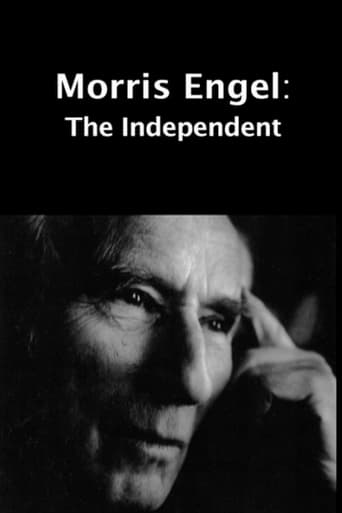
NRShort documentary on the life and work of photographer and filmmaker Morris Engel
Morris Engel: The Independent
2008
Documentary by Jan Sebening and Daniel Sponsel.
The Last Documentary
2000
1990s · 2 titles
7.0Jonas Mekas assembles 160 portraits, appearances, and fleeting sketches of underground and independent filmmakers captured between 1955 and 1996. Fast-paced and archival in spirit, the film celebrates the avant-garde as its own “nation of cinema,” a vital community existing outside the dominance of commercial film.
Birth of a Nation
1997
An intimate window into one of the great movements in film history that brought about an evolution in the art of cinema. The documentary portrays the movement with insight on the lives and works of Jean-Luc Godard, François Truffaut and other principal players in the New Wave.
Cinéma! Cinéma! The French New Wave
1992
1980s · 5 titles
6.2A lesbian college graduate, trying to bankroll her own photography business, works as a high-priced New York City escort.
Working Girls
1987
6.3Documentarian Ross McElwee originally set out to make a travelogue of sorts tracing General William T. Sherman's infamous scorched-earth march through the Confederacy in the latter stages of the Civil War. Instead, haunted by a recent breakup with a girlfriend, McElwee ends up documenting his progress -- or lack thereof -- in starting a new relationship. His journey then becomes one of self-reflection and self-discovery rather than a historical/sociological exploration.
Sherman's March
1986
A portrait of the two documentary filmmakers Jerzy Bossak and Richard Leacock.
Ein Film für Bossak und Leacock
1984
 NR
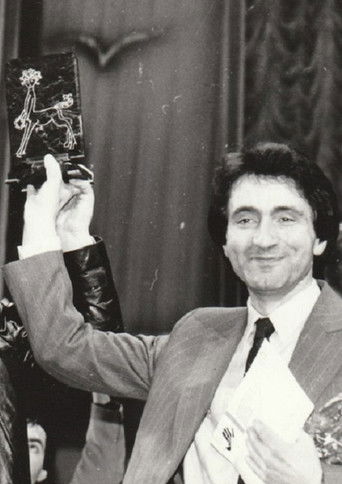
NRIn January 1989 the first Message to Man International Film Festival took place in Leningrad. This film, made during the festival, is a record of its events, guests and participants, such as the American director Leo Hurwitz, the Latvian director Ivars Seleckis, and the ballerina Natalya Makarova, among others. It also shows the “engine room” of the festival: the work of the main office and the PROKKa professional cinematographers’ club, guests being greeted and seen off. A charity evening with Natalya Makarova, a memorial service to commemorate the victims of the war and excerpts of documentary films presented at the festival are also featured.
Message to Man
1989
 7.6
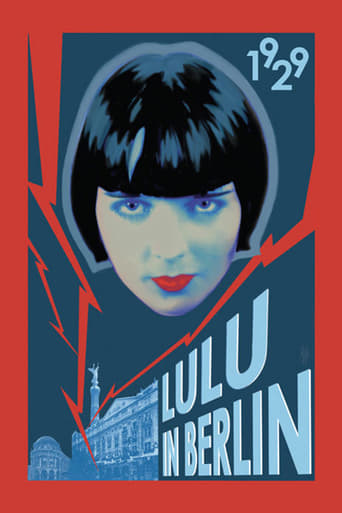
7.6Vérité documentarian Richard Leacock’s LULU IN BERLIN features one of the few long interviews ever done with actor Louise Brooks. It took place in her apartment in Rochester, New York, in 1971.
Lulu in Berlin
1984
1970s · 3 titles
 6.2
6.2Lighter and livelier than the films Jean-Luc Godard had made in France, his U.S. collaboration with Direct Cinema documentarian D. A. Pennebaker was meant to be One A.M., as in “one American movie”; but Godard quit the project and the U.S., where to his dismay he discovered that revolution wasn’t imminent, and Pennebaker edited Godard’s material, to which he and Richard Leacock even added a bit more, releasing the result as One P.M., as in “one parallel movie.” It’s a stunning mixture of cinéma-vérité, political theater, and interviews of key sixties figures.
1 P.M.
1971
 5.9
5.9Fulton made the film during his brief time at Harvard, where he had been invited to teach by Robert Gardner, his friend and collaborator (Fulton would later serve as a cinematographer on Gardner’s 1981 documentary Deep Hearts, among others). Reality’s Invisible could be described as a portrait of the Carpenter Center, yet it is a portrait of an extremely idiosyncratic and distinctive sort. Fulton moves us through the concrete space of the Center’s Le Corbusier-designed building—the only structure by the architect in North America—but, more centrally, presents us footage of students making and discussing their work alongside figures like Gardner, theorist Rudolf Arnheim, artist Stan Vanderbeek, filmmaker Stan Brakhage, and graphic designer Toshi Katayama.
Reality's Invisible
1972
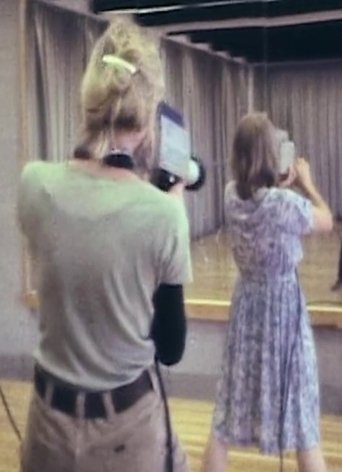 NR
NRSuper 8 film. Observations of the Institute on Film, Video & Photography, Amherst, MA, summer 1975. Among the cast of characters, in order of appearance, are Robert Breer, John Terry, Steve Ascher, Richard Leacock, Jon Rubin, Frank Daniel, Ed Emshwiller, Ann McIntosh, Terry Lockhart, Standish Lawder, Jerome Liebling.
Solstice and Solyanka
1975
Behind the camera
6.9During a two-day period before and after the University of Alabama integration crisis, the film uses five camera crews to follow President John F. Kennedy, attorney general Robert F. Kennedy, Alabama governor George Wallace, deputy attorney general Nicholas Katzenbach and the students Vivian Malone and James Hood. As Wallace has promised to personally block the two black students from enrolling in the university, the JFK administration discusses the best way to react to it, without rousing the crowd or making Wallace a martyr for the segregationist cause. Preserved by the Academy Film Archive in partnership with The Film Foundation in 1999.
Crisis: Behind a Presidential Commitment
1963
5.5A look at the daily business of U.S. President John F. Kennedy, with a focus on some of the political issues he faces six weeks into his term. Preserved by the Academy Film Archive in 2007.
Adventures on the New Frontier
1961
 8.0
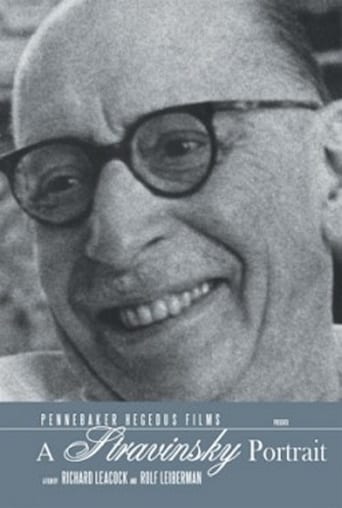
8.0This documentary follows composer and conductor Igor Stavinsky at his home in California, in London, and in Hamburg where he conducts an orchestra rehearsal. Includes conversations with a variety of friends and musical collaborators. Includes footage of Stravinsky and Balanchine discussing the Variations (in memoriam Aldous Huxley) and rehearsing their ballet Apollo with Suzanne Farrell.
A Stravinsky Portrait
1967
 10.0
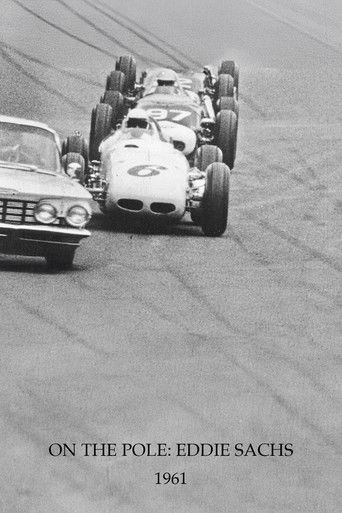
10.0A direct-cinema portrait of Indianapolis 500 driver Eddie Sachs, filmed before, during, and after the 1960 race as he competes from pole position. Using pioneering mobile camera and sound techniques, the film captures the psychological intensity of racing and the personal cost of high-speed competition.
On the Pole: Eddie Sachs
1961
 5.9
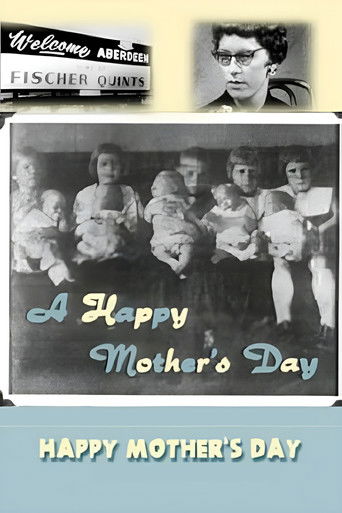
5.9A cinéma vérité documentary observing the Fischer family of Aberdeen, South Dakota, following the 1963 birth of the first surviving American quintuplets. Filmed shortly after the event, the film contrasts civic promotion, media attention, and commercial interest with the private fatigue and quiet suffering of Mrs. Fischer, revealing the tensions between spectacle and family life.
A Happy Mother's Day
1963
Toby is a heartwarming and entertaining portrait of one of the last travelling variety shows in the United States. Every summer, Toby, the troupe's charming, down-to-earth owner/lead actor takes his small band of performers to towns across the Midwest to perform under a massive tent. Leacock captures the heat of the summer night on the faces of the appreciative audiences, the thrill of the live performances and the challenge of the set-up.
Toby and the Tall Corn
1954
Toby is a heartwarming and entertaining portrait of one of the last travelling variety shows in the United States. Every summer, Toby, the troupe's charming, down-to-earth owner/lead actor takes his small band of performers to towns across the Midwest to perform under a massive tent. Leacock captures the heat of the summer night on the faces of the appreciative audiences, the thrill of the live performances and the challenge of the set-up.
Toby and the Tall Corn
1954
6.2Lighter and livelier than the films Jean-Luc Godard had made in France, his U.S. collaboration with Direct Cinema documentarian D. A. Pennebaker was meant to be One A.M., as in “one American movie”; but Godard quit the project and the U.S., where to his dismay he discovered that revolution wasn’t imminent, and Pennebaker edited Godard’s material, to which he and Richard Leacock even added a bit more, releasing the result as One P.M., as in “one parallel movie.” It’s a stunning mixture of cinéma-vérité, political theater, and interviews of key sixties figures.
1 P.M.
1971
6.2Lighter and livelier than the films Jean-Luc Godard had made in France, his U.S. collaboration with Direct Cinema documentarian D. A. Pennebaker was meant to be One A.M., as in “one American movie”; but Godard quit the project and the U.S., where to his dismay he discovered that revolution wasn’t imminent, and Pennebaker edited Godard’s material, to which he and Richard Leacock even added a bit more, releasing the result as One P.M., as in “one parallel movie.” It’s a stunning mixture of cinéma-vérité, political theater, and interviews of key sixties figures.
1 P.M.
1971
 NR
NRFilm produced and directed by Ricky Leacock, Edward Pincus, and MIT Center for Advanced Visual Studies documenting the Centerbeam kinetic sculpture project and its first installation at documenta 6 in Kassel, Germany in 1977
Centerbeam
1977
 NR
NRA documentary on the KKK
Ku Klux Klan—The Invisible Empire
1965
 NR
NR55-Minute BBC Arena documentary on the film actress Louise Brooks
Louise Brooks
1986
 7.5
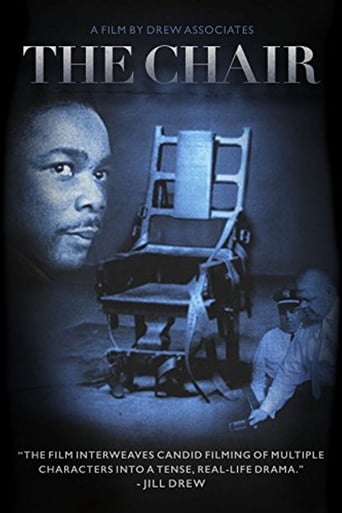
7.5Follows a crusading lawyer as he embarks on a campaign to save an African-American man, Paul Crump, from the electric chair. Preserved by the Academy Film Archive in partnership with The Film Foundation in 2007.
The Chair
1963
 6.0
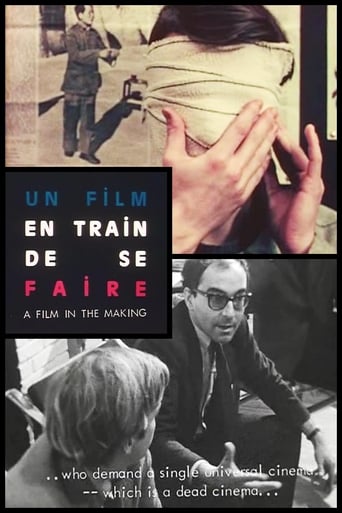
6.0Jean-Luc Godard visits NYU in order to discuss his latest feature "La chinoise" with graduate students on filmmaking and politics.
Two American Audiences: La Chinoise - A Film in the Making
1968
 NR
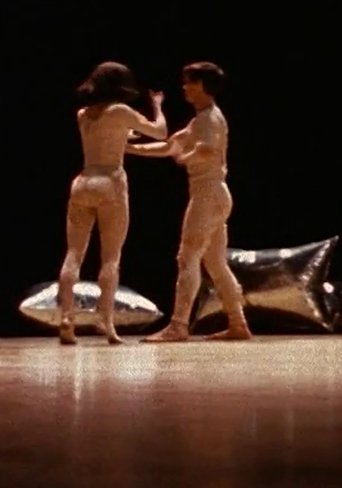
NRLeacock and Pennebaker filmed choreographer Merce Cunningham’s dance “RainForest” as part of the 1968 Buffalo Arts Festival’s program “Whose Afraid of the Avant-Garde” presenting experimental art, music, dance, poetry and theater. The dance composition also featured music by David Tudor, costumes by Jasper Johns and sets by Andy Warhol.
RainForest
1968
 NR
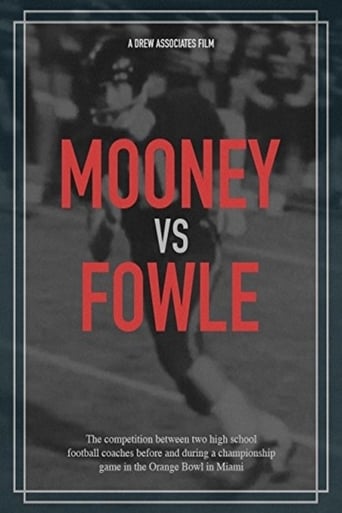
NRThe doc brings us back to a 1961 football game played in front of 40,000 people at the Orange Bowl. A high school football game, pitting Miami High against their rivals from Edison High. The title refers to the coaches of each, and the film follows them separately, with their real families and their clan of players, in the days leading up to the big event. And then at last it astonishingly chronicles the game from all kinds of angles you wouldn’t expect from even the newly mobile tools of the Drew crew. Today’s television coverage doesn’t come nearly as close to capturing the spirit of the sport and its fans the way Lipscomb does here. (Nothing But the Doc)
Mooney vs. Fowle
1962
Jazz vocalist Dave Lambert auditions a new group of singers at RCA Studios in 1964.
Lambert & Co.
1964
A film focusing on a day in the life of two identical twin girls, one of whom is blind and mentally handicapped
Elizabeth and Mary
1965
 5.0
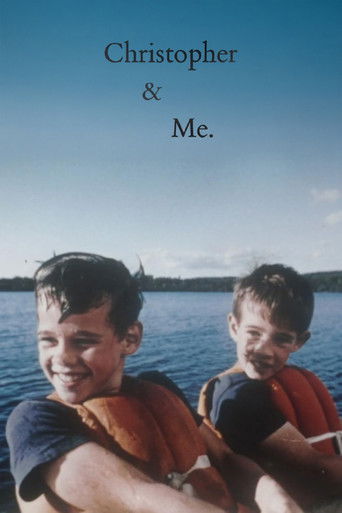
5.0A short documentary in which twins Christopher and David describe how an unplanned sailing trip led them into the midst of a boat race. Told largely from the children’s point of view, the film reflects Richard Leacock’s observational approach and includes contributions from Shirley Clarke and D. A. Pennebaker.
Christopher and Me
1960
 10.0
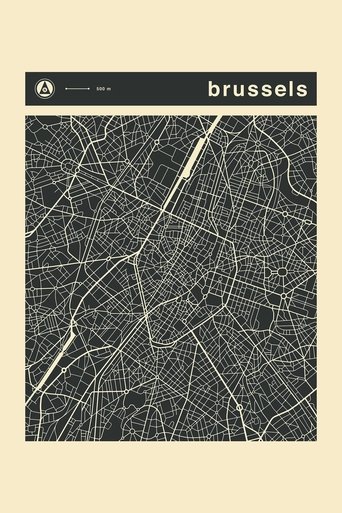
10.0A collection of twenty short films, averaging 2-3 minutes, by various filmmakers depicting American life, intended to be shown in a continuous loop at the American Pavilion of the 1958 Brussels World’s Fair. Some releases of the film include ten extra minutes of rough cuts.
Brussels Loops
1958
 9.0
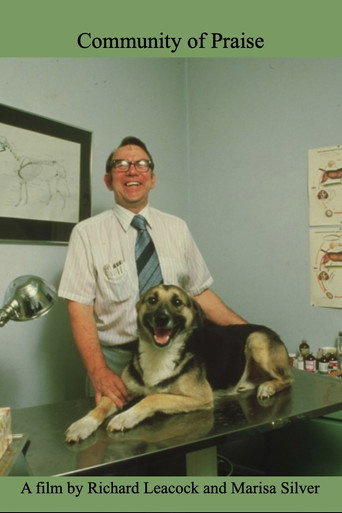
9.0This documentary examines one family's desperate search for faith and religious meaning in Muncie, Indiana.
Community of Praise
1983
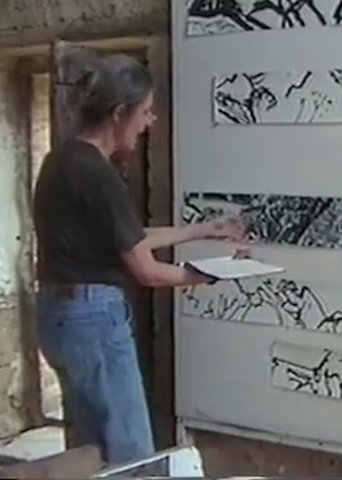 NR
NRFlora Natapoff, known for her large collages of urban and industrial motifs, due to MS begins to work on a smaller scale that is no less powerful. She speaks of her way of looking, the impact of landscape, and a new sense of narrative and composition. A legendary teacher at Harvard, her compelling account introduces us to her highly original work.
Flora Natapoff - An American Painter
1999
7.6Vérité documentarian Richard Leacock’s LULU IN BERLIN features one of the few long interviews ever done with actor Louise Brooks. It took place in her apartment in Rochester, New York, in 1971.
Lulu in Berlin
1984
7.6Vérité documentarian Richard Leacock’s LULU IN BERLIN features one of the few long interviews ever done with actor Louise Brooks. It took place in her apartment in Rochester, New York, in 1971.
Lulu in Berlin
1984
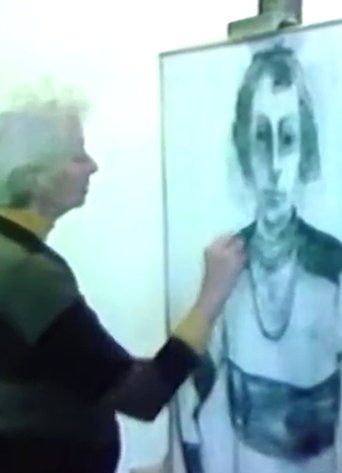 NR
NRThis 23-minute, 16mm color film by Nancy V. Raine (Producer/Co-Director) and Richard Leacock (Co-Director/Cinematographer) is a poetic, lyrical, impressionistic collaboration by Raine, a poet and writer, Leacock, a leading figure in the direct cinema movement, and Maud Morgan, the film’s subject, a Boston-area visual artist who was 78 years old when the film premiered at the Boston Museum of Fine Arts on October 21, 1980.
Light Coming Through: A Portrait of Maud Morgan
1980
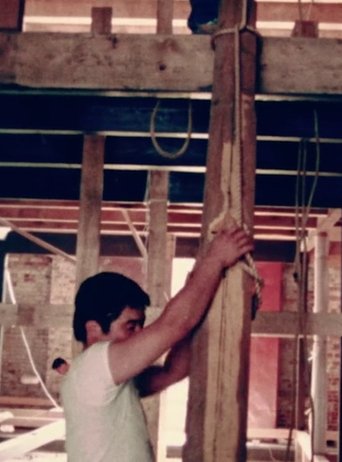 NR
NRFive Japanese carpenters came to Boston that summer to reconstruct a Kyoto silkweaver's 150 year old townhouse that had been packed in crates and shipped to Boston Children's Museum. This first-hand observation of traditional tools and woodworking techniques chronicles the assembly process. In the progress of construction the contractor performed three Shinto housebuilding ceremonies.
Rebuilding an Old Japanese House
1981
 7.0
7.0Inspired by both new love and Gulliver's Travels, Les Oeufs à la Coque (aka Richard Leacock's Soft-Boiled Eggs), is a ravishingly beautiful, important film about nothing in particular, a love song dedicated to France, French women in general and one Frenchwoman in particular, and a montage portrait of quotidian life in a country at peace.
Les oeufs à la coque de Richard Leacock
1991
A film by the Drew-Leacock team.
Kenya: Land of the White Ghost
1962
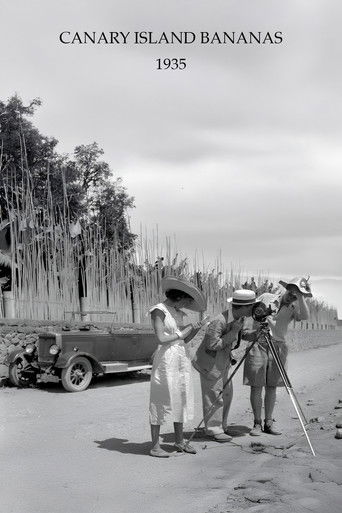 8.0
8.0A short documentary made by Richard Leacock at the age of fourteen on his father’s banana plantation in the Canary Islands. Inspired by Soviet industrial films such as Turksib, the film traces the planting, harvesting, and preparation of bananas for shipment, using fluid pans and tilts to organize labor into a continuous visual sequence. Often cited as Leacock’s earliest completed film, it attracted the attention of Robert Flaherty and foreshadowed Leacock’s later observational documentary style.
Canary Island Bananas
1935
8.0A short documentary made by Richard Leacock at the age of fourteen on his father’s banana plantation in the Canary Islands. Inspired by Soviet industrial films such as Turksib, the film traces the planting, harvesting, and preparation of bananas for shipment, using fluid pans and tilts to organize labor into a continuous visual sequence. Often cited as Leacock’s earliest completed film, it attracted the attention of Robert Flaherty and foreshadowed Leacock’s later observational documentary style.
Canary Island Bananas
1935
An educational physics film utilizing a fascinating set consisting of a rotating table and furniture occupying surprisingly unpredictable spots within the viewing area, Leacock’s Frames of Reference (1960), features fine cinematography by Abraham Morochnik, and funny narration by University of Toronto professors Donald Ivey and Patterson Hume, in a wonderful example of the fun a creative team of filmmakers can have with a subject other, less imaginative types might find pedestrian.
Frames of Reference
1960
An educational physics film utilizing a fascinating set consisting of a rotating table and furniture occupying surprisingly unpredictable spots within the viewing area, Leacock’s Frames of Reference (1960), features fine cinematography by Abraham Morochnik, and funny narration by University of Toronto professors Donald Ivey and Patterson Hume, in a wonderful example of the fun a creative team of filmmakers can have with a subject other, less imaginative types might find pedestrian.
Frames of Reference
1960
A harrowing portrait of the struggle for school desegregation in New Orleans against the violent protests of white parents.
The Children Were Watching
1961
 NR
NRThe first candid film made on a foreign chief of state, three weeks in the life of Jawaharlal Nehru.
Nehru
1962
 NR
NRThis brief portrait follows 28-year-old campaign manager John Grenier as he maps out strategies for Barry Goldwater’s 1964 presidential run and engineers a takeover of the Republican convention.
Campaign Manager
1964
 NR
NRIn 1970 I went to New Orleans with Noel Parmentel to shoot fragments of the “The Moviegoer.” While we were down there my daughter Elspeth and I went to visit some friends of mine whose teenager daughter was to be Queen of a fancy Mardi Gras ball. I didn’t know anything about this, but my friends thought it would be a nice idea if we filmed it. So we went over for an evening; black tie, dinner gown and all the rest of it. We changed a few light bulbs in the house and unobtrusively filmed the evening. I ended up making a 12-minute short with my daughter Elspeth taking sound. – Richard Leacock
Queen of Apollo
1970
 7.2
7.2Filmed at the October 1968 meeting in Hawaii of several hundred police chiefs of the International Association of Chiefs of Police as they watch demonstrations of gruesome anti-riot weapons, sing patriotic songs, and defend their policies in front of the camera. Although filmed with the permission of the chiefs, the view is unsympathetic, sometimes funny, and more often frightening.
Chiefs
1968
 NR
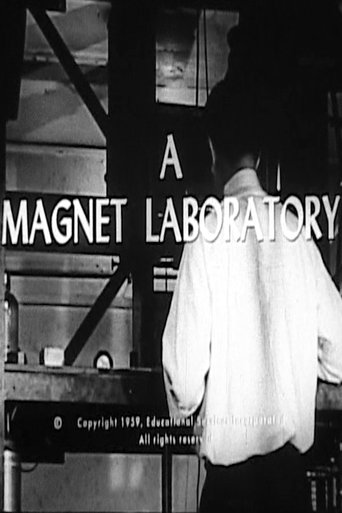
NRIn the hands of another director, the inner-workings of a magnet laboratory could have caused a whole classroom to fall asleep of boredom. No so when Leacock was hired to produce this twenty-minute version of lab mayhem. Try this: six researchers in a lab at MIT in the late 1950's show-off the power of electro-magnets, and in the process, accidentally set an experiment on fire. Or this: half way through the film the phone rings off screen, and host Francis Bitter says "tell 'em I'll call 'em back later" while he's looking at the camera, discussing bus bars. Leacock’s fleshed out all the personalities here, from "Beans" Bardo, who cranks up the generator to nearly explosive proportions, to the mysterious Mr. Lin, who barely peeks over his shoulder at us, seemingly in mockery, disdain, or curiosity.
A Magnet Laboratory
1959