
Sound
Erkki Kurenniemi
Born 1941-07-10 · Hämeenlinna, Finland
Acting credits
Christmas mystery
Christmas mystery
1969
No synopsis available yet.
Sommerreise
2006
 6.7
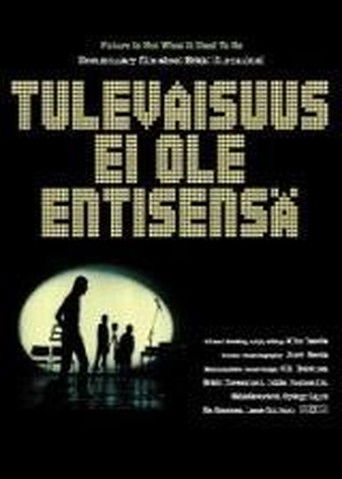
6.7A documentary film about Erkki Kurenniemi (b. 1941), whose career represents a surprisingly natural blend of music, film, computers, robotics, science and art.
The Future Is Not What It Used to Be
2002
Behind the camera
 6.0
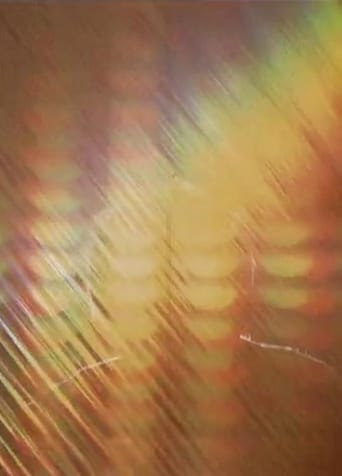
6.0One of several experimental films shot in the late '60s and early '70s by the recently deceased computer music pioneer Erkki Kurenniemi, Florence is a dazzling, abstract travelogue shot between Italy, Switzerland, and the artist's home in Finland.
Florence
1970
6.0One of several experimental films shot in the late '60s and early '70s by the recently deceased computer music pioneer Erkki Kurenniemi, Florence is a dazzling, abstract travelogue shot between Italy, Switzerland, and the artist's home in Finland.
Florence
1970
 NR
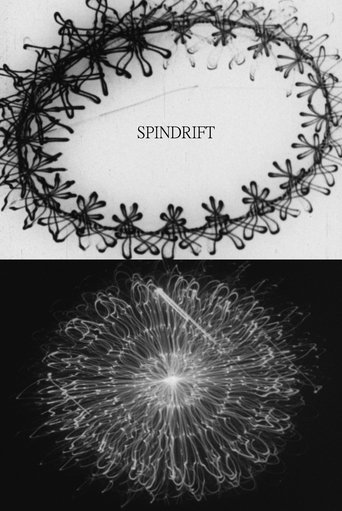
NRIn 1965, Swedish composer/musician Jan Bark proposed an experiment for a new kind of 'music for black-and-white TV'. Bark's friend Erkki Kurenniemi programmed the animations. The original version was lost: this reconstruction was made with the help of Bark's diaries, laboratory notes and reminiscences from people involved.
Spindrift
2013
 NR
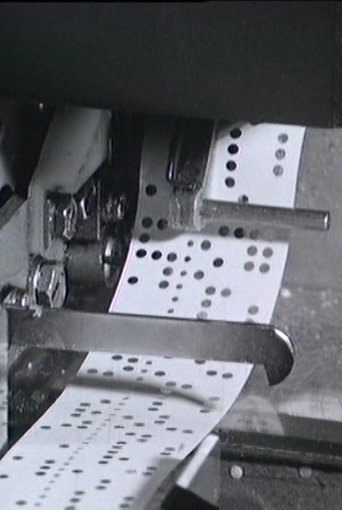
NRShot at the Department of Nuclear Physics at the University of Helsinki, the images of The Punched Tape of Life illustrate the beauty of 1960s information technology. These decorative scenes parallel a set of ”summer interludes” which document Kurenniemi’s entourage.
The Punched Tape of Life
1964
Christmas mystery
Christmas mystery
1969
 NR
NRFlora & Fauna embraces the dark charms of nature. Rich, colourful close-ups of flowers, leaves, ants, spiders, and inchworms blend into the silent mystique of water and woods.
Flora & Fauna
1965
 NR
NRA spontaneous street movie, a record of ‘swinging London’ where Erkki Kurenniemi had travelled to assess the commercial potential of his instrument DIMI-A.
Carnaby Street
1971
 NR
NRThe film stars two computers: Elliott 803 (in the Department of Nuclear Physics, the University of Helsinki) and IBM 1130 (in the computer centre at the University of Turku). At times, the coexistence of man and machine provokes suffocating frustration. This is only the starting point for something more subtle: the art created with computers.
Computer Music
1966
 NR
NRErkki Kurenniemi was arguably one of the first artists to propose or fantasise about a complete cultural surrender to cyber existence, and his entire career, covering such diverse fields as artificial intelligence, music, engineering, film, dance or rhetorics, testifies to this desire to escape the limits of the human body and transgress into a different dimension, bordering on techno-fetishism. In his 1964 short Electronics in the World of Tomorrow, Kurenniemi presents a slideshow of the most aseptic signs of technological imagination: diagrams, chips, machines, cold surfaces. But footage of human warmth also comes up - mostly in black and white, as if to give humans the status of a memory. Originally silent, the film was in this version endowed with a electronic music piece by Kurenneimi himself: a cold, aggressive soundtrack that could be said to present technology as a potentially menacing affair, although this is a reading that the director would certainly refute.
Electronics in the World of Tomorrow
1964