

Directing
Mohamed Bouamari
Born — Died
1941-01-01 — 2006-12-01
Place of birth
Guidjel, Algérie
Known for
Directing
Credits
16 titles
Born in Guidjel, near Sétif in Algeria in 1941, Mohamed Bouamari (محمد بوعمري) is an Algerian actor and director. Self-taught, in 1961 he received a scholarship from the UNEF to study film set careers in France. Returning to Algiers in 1965, he became an assistant to the filmmaker Mohamed Lakhdar-Hamina on "Le Vent des Aurès" in 1966, then to Costa Gavras on "Z" in 1969 and to Jean-Louis Bertucelli on "Remparts d'Argile" in 1969). Bouamari made his first feature film as director in 1972, with "Le Charbonnier", a film which was selected in several international festivals, including La Semaine de la Critique in Cannes, and which attracted attention. In the wake of this first work which ranks…
Known for
 5.0
5.0No synopsis available yet.
Ciné regards
1978
 10.0
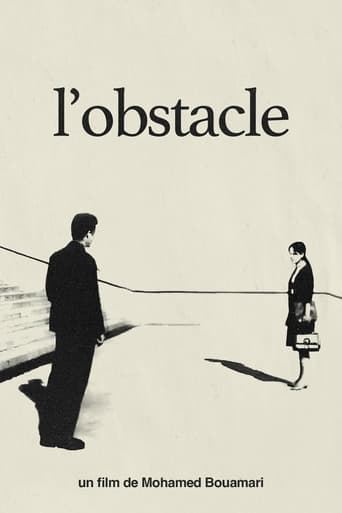
10.0Algerian youth of the 1960s, straddling traditional South Mediterranean and Western culture and the desire for emancipation of younger generations to find true love.
L'Obstacle
1965
 6.5
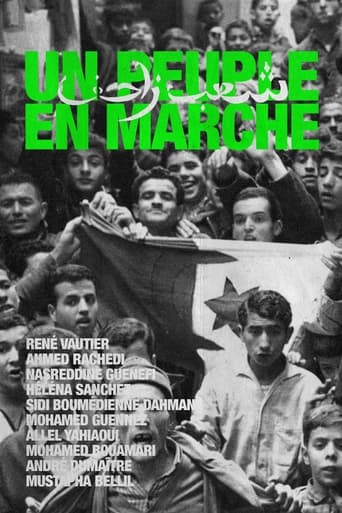
6.5Collectively directed by the members of the Centre audiovisuel d'Alger at Ben Aknoun, the film traces, in two parts, Algeria's recent history, from colonial repression to the birth of the National Liberation Army, and the country's postwar reconstruction, framed in sympathy with the socialist project of Ahmed Ben Bella's government. Released in 1964, the film was banned and sealed after Houari Boumediene's June 1965 coup, precisely because of its favorable treatment of Ben Bella.
A People on the March
1963
 9.5
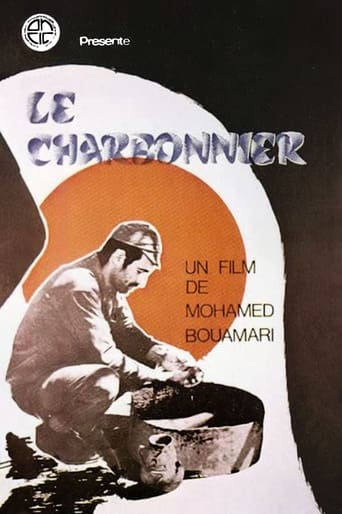
9.5Film describes the miserable existence of a charcoal-burner who is barely able to feed his family. His search for work in town ends in failure and he is forced to return to his village.
The Charcoal Maker
1973
Reel 13 of Gérard Courant's on-going Cinematon series.
Cinématon XIII
1981
 NR
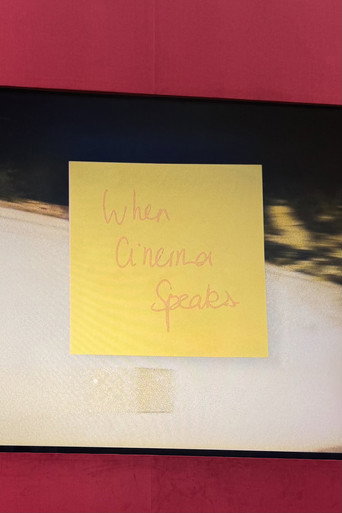
NRZineb Sedira pays tribute to the history of African Cinema and the filmmakers who had inspired her.
WHEN CINEMA SPEAKS...
2026
Film credits
2020s · 2 titles
NRZineb Sedira pays tribute to the history of African Cinema and the filmmakers who had inspired her.
WHEN CINEMA SPEAKS...
2026
 NR
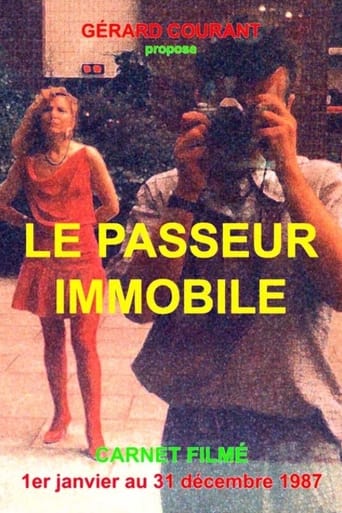
NRLe Passeur immobile, which covers the year 1987, is a Booklet filmed stuck between The Days and the Nights (1986) and The Artifice and the Fake (1988). These Notebooks have been punctuating my activity as a filmmaker for about fifteen years. They are like a life parallel to my other films and film series (Cinema, Group Portrait, Read, etc.). They are also like a letter to the spectators.
Le Passeur immobile
2021
1980s · 3 titles
Reel 13 of Gérard Courant's on-going Cinematon series.
Cinématon XIII
1981
 4.9
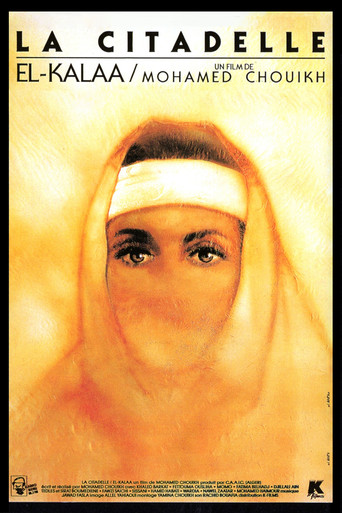
4.9El Kalaa, a village in southern Oran. Although already married, old Sidi planned to marry another. He sets his sights on the beautiful Aïssa, with whom Kaddour, his adopted son, is in love. The old man decides to play a trick on Kaddour to teach him never to covet a woman that an elder wants to marry...
The Citadel
1988
 10.0
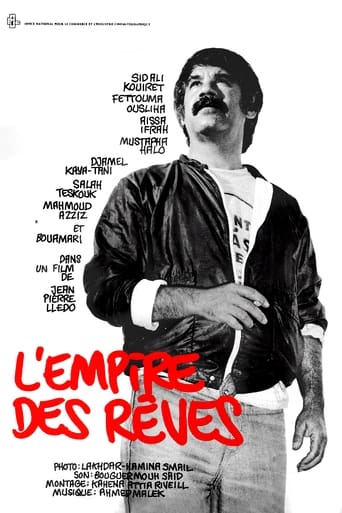
10.0A stubborn director who wants to rediscover the Algiers of his childhood comes up against the “Hollywood” fantasies of his characters, non-professionals all hoping to be able to become “someone else”, at least for the duration of a film… Mise en abyme for a journey into megalomania…
The Empire of Dreams
1982
Series credits
Behind the camera
10.0Algerian youth of the 1960s, straddling traditional South Mediterranean and Western culture and the desire for emancipation of younger generations to find true love.
L'Obstacle
1965
10.0Algerian youth of the 1960s, straddling traditional South Mediterranean and Western culture and the desire for emancipation of younger generations to find true love.
L'Obstacle
1965
6.5Collectively directed by the members of the Centre audiovisuel d'Alger at Ben Aknoun, the film traces, in two parts, Algeria's recent history, from colonial repression to the birth of the National Liberation Army, and the country's postwar reconstruction, framed in sympathy with the socialist project of Ahmed Ben Bella's government. Released in 1964, the film was banned and sealed after Houari Boumediene's June 1965 coup, precisely because of its favorable treatment of Ben Bella.
A People on the March
1963
9.5Film describes the miserable existence of a charcoal-burner who is barely able to feed his family. His search for work in town ends in failure and he is forced to return to his village.
The Charcoal Maker
1973
9.5Film describes the miserable existence of a charcoal-burner who is barely able to feed his family. His search for work in town ends in failure and he is forced to return to his village.
The Charcoal Maker
1973
 9.5
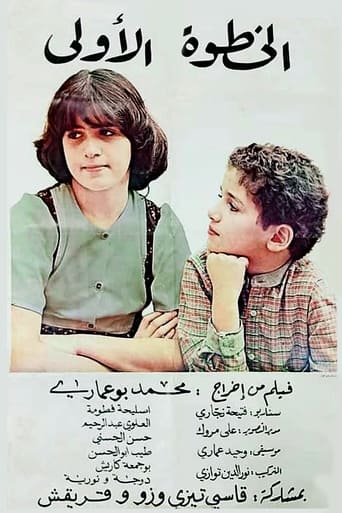
9.5A modern couple seeks to find marital happiness in a context where Algerian society is taking the “first step” towards female emancipation. A woman becomes president of a popular municipal assembly. Will she find happiness ?
First Step
1980
 10.0
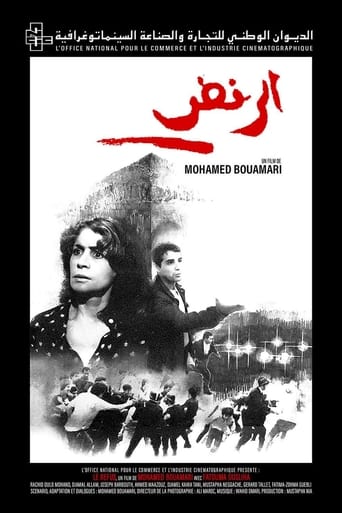
10.0In 1971, the Algerian government nationalized hydrocarbons. The consequences of this decision on the community of Algerians in France are numerous. The Galti family is prey to these economic problems. The father, Khaled, former member of the F.L.N. in France, does not escape the sentence. Sharazade, his wife and comrade in combat, finds herself torn between her role as wife, mother and nostalgia for a country and a bygone past. As for his son Karim, a victim of socio-cultural division, all he has left is refusal.
The Refusal
1982
10.0In 1971, the Algerian government nationalized hydrocarbons. The consequences of this decision on the community of Algerians in France are numerous. The Galti family is prey to these economic problems. The father, Khaled, former member of the F.L.N. in France, does not escape the sentence. Sharazade, his wife and comrade in combat, finds herself torn between her role as wife, mother and nostalgia for a country and a bygone past. As for his son Karim, a victim of socio-cultural division, all he has left is refusal.
The Refusal
1982
 9.0
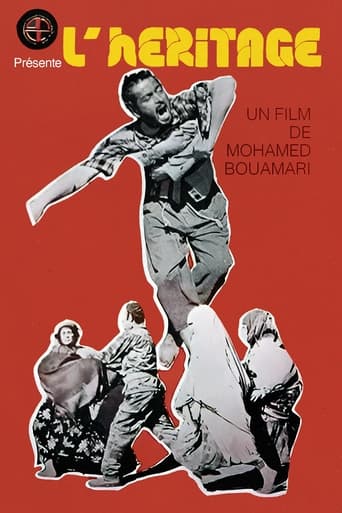
9.0A harrowing picture of the heritage of colonialism, focusing on a man driven mad by torture but saved by his wife, who restores his sanity and leads the progressive forces to rebuild the village.
The Inheritance
1975
9.0A harrowing picture of the heritage of colonialism, focusing on a man driven mad by torture but saved by his wife, who restores his sanity and leads the progressive forces to rebuild the village.
The Inheritance
1975