
Directing
Karel Doing
Canberra, Australia
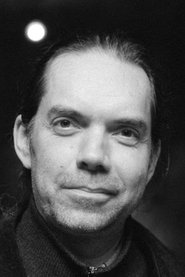
Karel Doing (1965, Canberra, Australia) is an independent artist, filmmaker and researcher. His interest in experimental film and expanded cinema is reframed within a critical approach toward modernity and post-modernity, in search of new meanings of the real and the material. Through the study of (phyto)chemical process, the recording of oral history and the (re)use of cinematic heritage he explores alternative knowledge systems. In many of his works the rhythmical, painterly and performative qualities of the analogue film medium are foregrounded.
Acting credits
 NR
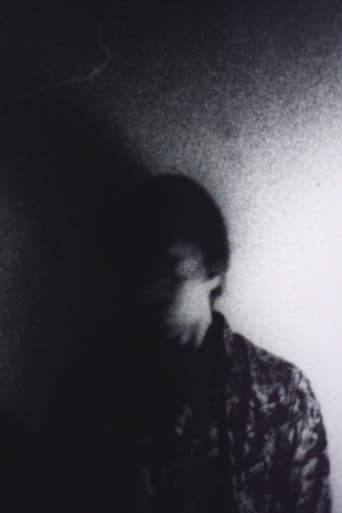
NRFilm portrait of dutch director Karel Doing
Portrait of Karel Doing
1994
 NR
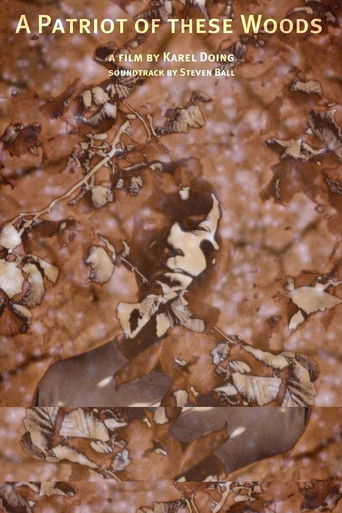
NRA Patriot of These Woods is a film inspired by the novel The Baron in the Trees by Italo Calvino. Calvino’s book tells the adventure of a boy who climbs up a tree to spend the rest of his life inhabiting an arboreal kingdom. He dives into the vegetal world, undertaking his own journey into the trees around him using his body as a metaphorical soldier who defends the trees and plants that grow around him. An otherwise concealed world opens up revealing the symbiotic relationship between humans and plants. A hybrid creature emerges, partially plant, partially human, their bodies merged, their thoughts processes entangled. These woods respect no borders.
A Patriot of These Woods
2025
Behind the camera
The 'four eyes' are playing with musical toys and the ABC of cinema. The music has references to western traditional music that is usually ignored, like the music you used to produce as a child when biking with a piece of cardboard in the rearwheel, or whizzing with the help of a fast turning button on a string. The images refer to different filmgenres stripped from their storylines, lost in a rhythmical evolving universe. A video-system is used to project films and music on the screen; sound and vision are playing together. Analogue and digital techniques are combined.
Four Eyes
2004
In Maas Observation Doing and Pope demonstrate their fascination in the bizarre landscape of the port of Rotterdam, a stretch of 'neo-nature' with little place for humans, where huge machines seem to move around according to a logic of their own. The film begins with images of windmills on the edge of the Maas plain in a montage sequence based on the steady rhythm of the rotating sails. The focus gradually shifts towards activities on the river further upstream. The montage tempo slows down as the mechanical motion gives way to the play of reflections in the water.
Maas Observation
1997
 NR
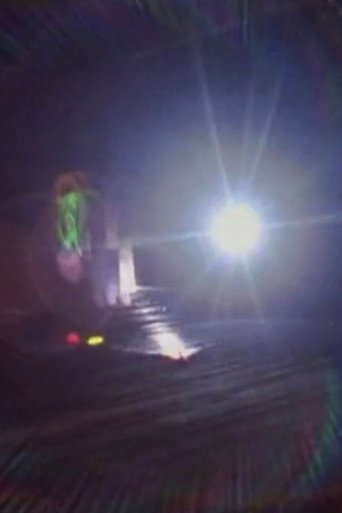
NRThe origins of the film came from documents shot during the preparations and the executions of several collective performances performed by the British group Loophole and the Dutch artist Karel Doing, Using frame by frame, long exposures and optical effects, these performances were manipulated and intensified. The essence of cinema, writing with light, is portrayed as a hallucination.
Whirlwind
1998
A mosaic of organic forms that tumble on top of each other.
Agapanthus
2024
 NR
NR"In Vivo" is an assemblage of found footage. Doing doesn't provide much in the way of conventional context as to how these varied sources interrelate or how they should be read. But in editing them together at all, he asserts a radical subjectivity, an authorial presence that is autobiographical even when the images themselves are clearly borrowed from another vault. Doing positions himself, and the histories through which he has lived, within a much vaster narrative, implied through the other-realm textures of analogue footage as much as the actual content of his archival excerpts.
In Vivo
2021
NR"In Vivo" is an assemblage of found footage. Doing doesn't provide much in the way of conventional context as to how these varied sources interrelate or how they should be read. But in editing them together at all, he asserts a radical subjectivity, an authorial presence that is autobiographical even when the images themselves are clearly borrowed from another vault. Doing positions himself, and the histories through which he has lived, within a much vaster narrative, implied through the other-realm textures of analogue footage as much as the actual content of his archival excerpts.
In Vivo
2021
 6.0
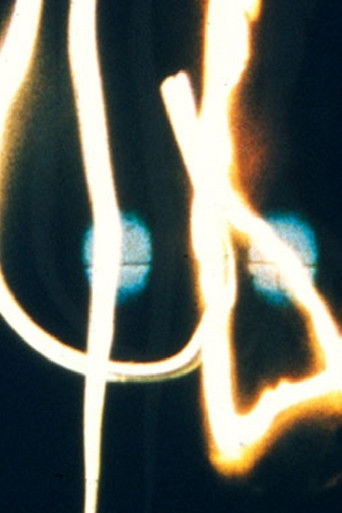
6.0Abstract lightplay that slowly reveals it's secrets. The film consists of three layers: animation of streetlights, filmstrip treated with bleach and a performance shot with long shutter speeds. The electronic music by Joost Rekveld is based on radio-signals.
Lichtjaren
1993
This short film offers a discontinuous journey through a labyrinthian space, inspired by Italo Calvino's novel Invisible Cities. An anxious boy wanders through desolate territories and empty streets. The eerie presence of death contrasts with the dynamic living world around him. Stone walls throw dark shadows on winding staircases, while surreal northern landscapes vibrate in perpetual twilight.
The dead
—
 NR
NRReworked landscape images slide across the screen in a rhythmic pattern, accompanied by minimal violin music by Danish composer Martin Hall.
Nature Trail
1993
 NR
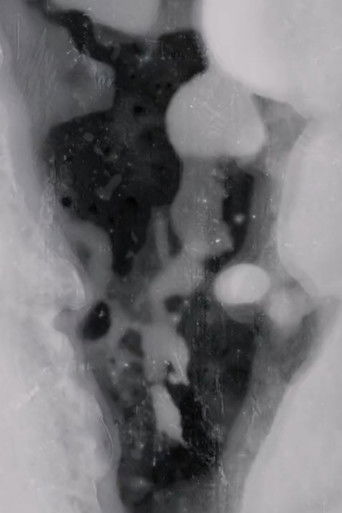
NRA couple of years ago I have discovered new possibilities for the creation of images on film-emulsion by using the internal chemistry of plants. This technique is a combination of photograms and chemigrams and because of the lack of an accurate term I have named this method 'phytogram'. I have worked with this idea in my back garden, using available plants and weeds. Dandelions turned out yield particularly good results. This short film is entirely dedicated to the power and beauty of this humble plant.
Dandelion
2018
The expanded cinema performance Pattern/Chaos is a negotiation between the unpredictability of organic processes and the regularity of frames, optics and motors. Images that are at first glance perceived as abstract turn out to be concrete precipitation from phenomena that surround us in every day life. The work can be understood as an attempt to undermine the assumption that the natural world and the human world are opposites. Moving images on celluloid are made aided by salt, moss, branches and grass. Kinetic and shadow objects made from found and recuperated materials are used to break-up and expand the film-frame and create an environmental experience. Field recordings registered in a tropical rainforest are employed to create an immersive soundtrack.
Pattern/Chaos
2015
 NR
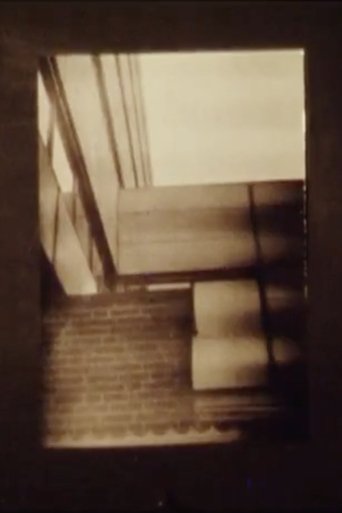
NRIn modern warfare massmurder is just another number in the papers. The count-down for the next war already started. A film and an installation made as protest against the first gulf-war.
Ultimatum
1991
 7.5
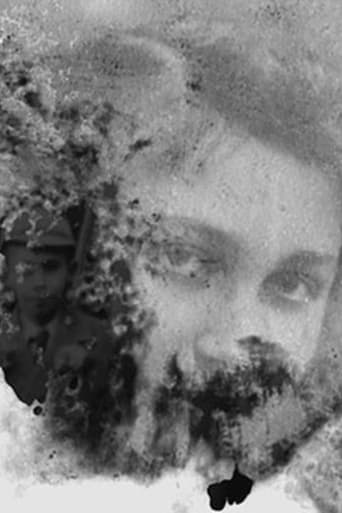
7.5This personal film is made up of landscape photos from the archive of the director's father, through which he returns to his life while exploring the material possibilities for creating "landscapes": the film itself is exposed to the effects of yeast, salt, leaves and seaweed. By reacting with the film emulsion, each foreign element creates a new and different image quality, while the noise on the soundtrack underscores the fragility of incomplete memories.
Dark Matter
2014
No synopsis available yet.
Groepsportret
2005
 NR
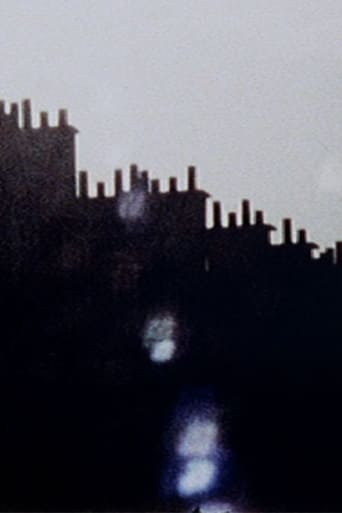
NRDreamy images, often in slow motion, stirred or stirring, filmed along the banks of the Seine. Close-ups of water, blurred outdoor shots, shadows and silhouettes of people. A phenomenological portrait of the city, in a joint project with Andrea Emonds, whose voice enhances synesthetic experience.
Rêve Rive
2003
 NR
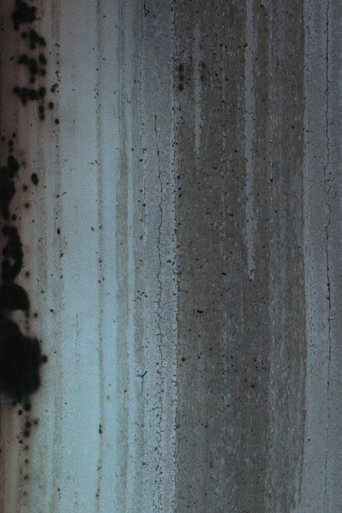
NRBlades of grass are racing across the screen.
Oxygen
2023
 7.0
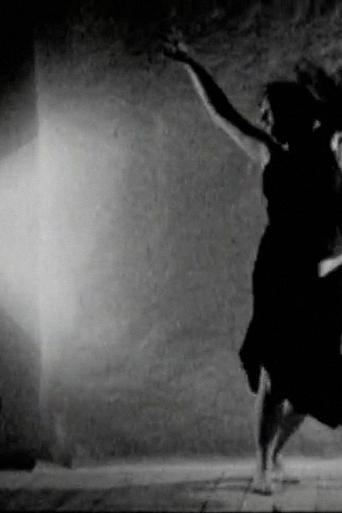
7.0A girl dancing, repeated movements; Two layers of film superimposed and shifting in a complex rhythm, accompanied by an African drum. The making of MENI consisted of an obsessive unraveling of a series of dance movements. The movements were cut into very short fragments (0.5 to 1.5 seconds). These fragments are edited into repeating patterns. Through exchanging fragments and double exposure the film becomes an intriguing and complex rhythm.
Meni
1994
 NR
NRA found footage film is a collage of documentary and training films from the first half of the 20th century. What connects them is the idea of progress and technological development and exploitation of the natural and human resources. The film is congenially complemented by the mechanical rhythms by a French composer Pierre Bastien.
Energy Energy
1999
 NR
NRNo synopsis available yet.
Elvenland
2009
NRNo synopsis available yet.
Elvenland
2009
 NR
NRNo synopsis available yet.
Jinx
2005
 NR
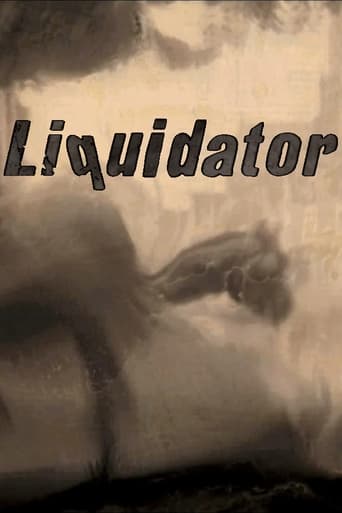
NRA project making innovative use of existing archive images of Willy Mullens’ silent film Haarlem (1922). The original film shows the city in straightforward shots and camera movements. Due to deterioration these images changed in a dramatic way. In the adaption Karel Doing zooms in on these effects with the aid of digital techniques like optical flow and morphing. Michal Osowski collaborated on the project with sound that is directely linked to the image, he used the changes in density of the film to control complex filters and distortion effects.
Liquidator
2010
 NR
NRDaily life repeats itself. Small actions, like smoking a cigarette, opening the fridge (...), a wave crashing on the beach.
Zonder Krokkodillen
1993
 NR
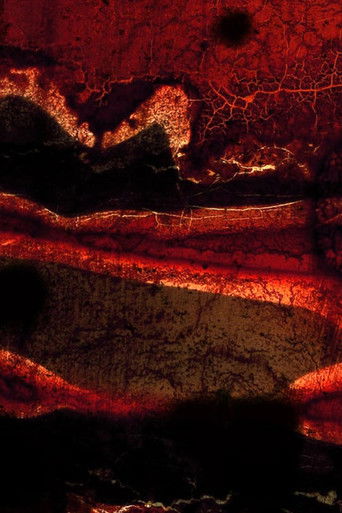
NRBy using plants, mud and salt in conjunction with alternative photochemistry, images are 'grown' on motion picture film. What at first glance is perceived as abstract turns out to be a concrete precipitation from phenomena that surround us in everyday life. The 'aliveness' of the images is underlined by Andrea Szigetvári's evocative sound-design.
Wilderness Series
2017