
Directing
Mark Daniels
Place of birth
Clamart, Hauts-de-Seine, France
Known for
Directing
Credits
13 titles
French film writer, director and cameraman.
Known for
 6.7
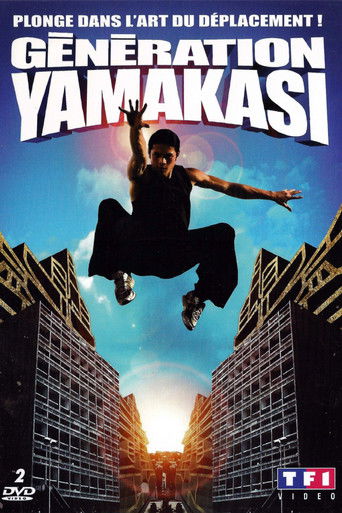
6.7For the Yamakasi the "Art of Displacement" is a way of life. Racing through the new cities that ring Paris, climbing walls, swinging from balconies and leaping across rooftops, they transform the oppressive concrete architecture into places of fantasy, possibility and play. The heart of our documentary is the story of how the Yamakasi are transforming the youth of the suburbs, and themselves, through discipline, will and desire. Now, as the Art of Displacement is being embraced as an extreme sport and urban pastime, will the social message be transmitted as well? What is it for the new generation?
Generation Yamakasi
2006
 5.4
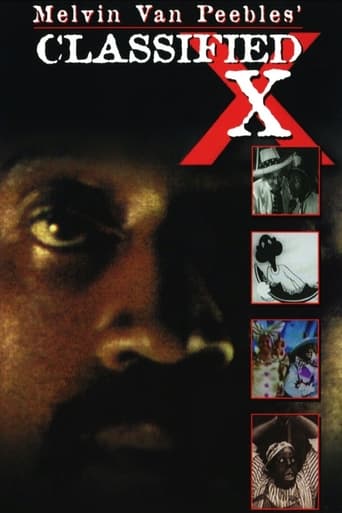
5.4A history of the racially stereotyped portrayal of African Americans in cinema, hosted by film pioneer Melvin Van Peebles.
Classified X
1998
An examination of the how television news in the US has covered war from Vietnam to the present day
Enemy Image
2005
 5.9
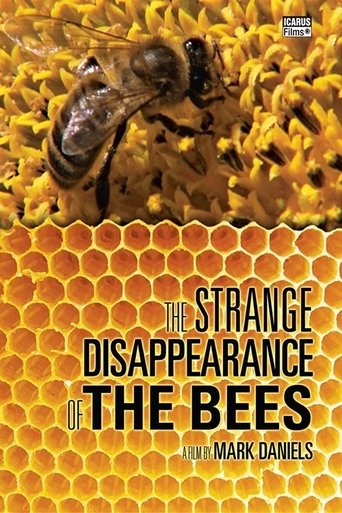
5.9Investigation into a global ecological disaster that could endanger the entire human race. Today, a third of our food depends directly on bees, the most important agricultural pollinator* on our planet. Yet, for several years now, millions of bees have been mysteriously disappearing. Why? Will we be able to cope with this predicted catastrophe?
The Strange Disappearance of the Bees
2010
 4.8
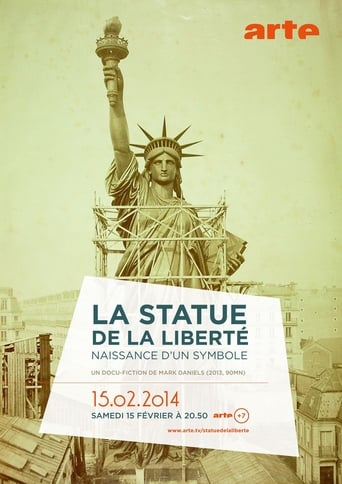
4.8April 1865. A handful of Republicans, ardent admirers of American democracy, gather in Glatigny to celebrate the abolition of slavery in the United States and pay tribute to President Lincoln, who was assassinated six days earlier. During dinner, Édouard de Laboulaye, the politician behind this discreet gathering, spoke passionately about the idea of a colossal statue, a symbol of freedom, as a gift from France to America. His impassioned speech captivated a young sculptor among the guests: Auguste Bartholdi. The project for the future Statue of Liberty was born. It was a seemingly impossible undertaking, to which the Colmar-born sculptor would devote twenty years of his life, moving heaven and earth on both sides of the Atlantic to ensure that his Liberty Enlightening the World would tower over New York Harbor on October 28, 1886.
La Statue de la Liberté, naissance d'un symbole
2014
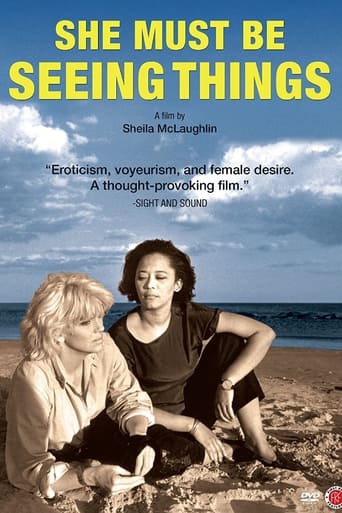 5.5
5.5Agatha is an international lawyer, Jo a filmmaker. The two women are lovers. While Jo is on the road showing her films, Agatha discovers and reads her diaries. Problems ensue as Agatha's transgressions lead to jealousy and a spiraling cycle of sexual obsession.
She Must Be Seeing Things
1988
Film credits
Behind the camera
6.7For the Yamakasi the "Art of Displacement" is a way of life. Racing through the new cities that ring Paris, climbing walls, swinging from balconies and leaping across rooftops, they transform the oppressive concrete architecture into places of fantasy, possibility and play. The heart of our documentary is the story of how the Yamakasi are transforming the youth of the suburbs, and themselves, through discipline, will and desire. Now, as the Art of Displacement is being embraced as an extreme sport and urban pastime, will the social message be transmitted as well? What is it for the new generation?
Generation Yamakasi
2006
5.4A history of the racially stereotyped portrayal of African Americans in cinema, hosted by film pioneer Melvin Van Peebles.
Classified X
1998
An examination of the how television news in the US has covered war from Vietnam to the present day
Enemy Image
2005
An examination of the how television news in the US has covered war from Vietnam to the present day
Enemy Image
2005
5.9Investigation into a global ecological disaster that could endanger the entire human race. Today, a third of our food depends directly on bees, the most important agricultural pollinator* on our planet. Yet, for several years now, millions of bees have been mysteriously disappearing. Why? Will we be able to cope with this predicted catastrophe?
The Strange Disappearance of the Bees
2010
5.9Investigation into a global ecological disaster that could endanger the entire human race. Today, a third of our food depends directly on bees, the most important agricultural pollinator* on our planet. Yet, for several years now, millions of bees have been mysteriously disappearing. Why? Will we be able to cope with this predicted catastrophe?
The Strange Disappearance of the Bees
2010
4.8April 1865. A handful of Republicans, ardent admirers of American democracy, gather in Glatigny to celebrate the abolition of slavery in the United States and pay tribute to President Lincoln, who was assassinated six days earlier. During dinner, Édouard de Laboulaye, the politician behind this discreet gathering, spoke passionately about the idea of a colossal statue, a symbol of freedom, as a gift from France to America. His impassioned speech captivated a young sculptor among the guests: Auguste Bartholdi. The project for the future Statue of Liberty was born. It was a seemingly impossible undertaking, to which the Colmar-born sculptor would devote twenty years of his life, moving heaven and earth on both sides of the Atlantic to ensure that his Liberty Enlightening the World would tower over New York Harbor on October 28, 1886.
La Statue de la Liberté, naissance d'un symbole
2014
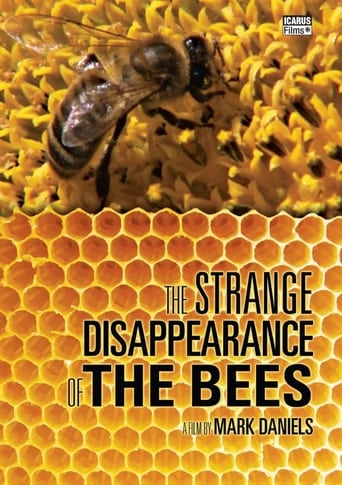 NR
NRThe future of our food resources depends on one small insect - the western honey bee, or Apis mellifera. Indeed, it is the most important agricultural pollinator on our planet, given that one third of our food supply depends directly on pollination from bees. This documentary tells the story of a worldwide ecological disaster that has been waiting to happen for several generations.
The Mystery of the Disappearing Bees
2010
 7.4
7.4Did Leonardo da Vinci come up with all of his ideas and inventions by himself or did he also borrow some of them from ancient scientists including those who lived 1,700 years before him.
Leonardo: The Man Who Saved Science
2017
 NR
NRDocumentary short for Larry Fessenden's 1991 feature film, NO TELLING.
The Making of 'No Telling'
2001
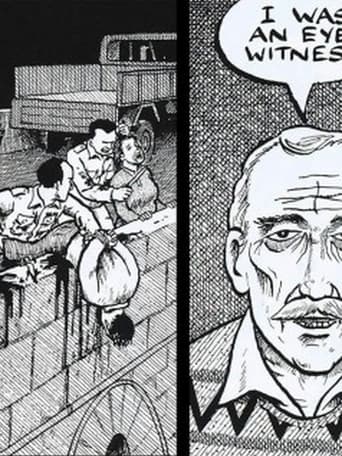 6.0
6.0The universe of comic books is a worldwide pop mythology, a Pantheon in cheap newsprint and saturated colors. For almost 100 years comic books have provided fantasy, escape, and compensation for adolescents who often feel powerless and misunderstood in their daily lives. Fantasies of power are inevitably violent, but the violence in comic books has no consequences. After all, it's just the stroke of a pen... But what happens when the comic book meets real war? In this age of hundreds of television stations, 24-hour news, worldwide instantaneous satellite transmission and thousands of web sites updated hourly, the lowly comic book has become a documentary medium, providing a real understanding of the human dimensions of war, genocide and revolution. It's a new journalistic form. Comic Books Go To War explores the journalistic, aesthetic and political implications of reporting the most violent and terrible of human experiences through "comix."
Comic Books Go to War
2010
6.0The universe of comic books is a worldwide pop mythology, a Pantheon in cheap newsprint and saturated colors. For almost 100 years comic books have provided fantasy, escape, and compensation for adolescents who often feel powerless and misunderstood in their daily lives. Fantasies of power are inevitably violent, but the violence in comic books has no consequences. After all, it's just the stroke of a pen... But what happens when the comic book meets real war? In this age of hundreds of television stations, 24-hour news, worldwide instantaneous satellite transmission and thousands of web sites updated hourly, the lowly comic book has become a documentary medium, providing a real understanding of the human dimensions of war, genocide and revolution. It's a new journalistic form. Comic Books Go To War explores the journalistic, aesthetic and political implications of reporting the most violent and terrible of human experiences through "comix."
Comic Books Go to War
2010