
Directing
Richard Serra
Born — Died
1938-11-02 — 2024-03-26
Place of birth
San Francisco, California, USA
Known for
Directing
Credits
32 titles
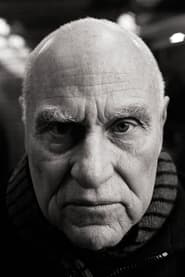
Richard Serra (November 2, 1938 – March 26, 2024) was an American artist known for his large-scale abstract sculptures made for site-specific landscape, urban, and architectural settings, whose work has been primarily associated with Postminimalism. Described as "one of his era's greatest sculptors", Serra became notable for emphasizing the material qualities of his works and exploration of the relationship between the viewer, the work, and the site. Serra pursued English literature at the University of California, Berkeley, before shifting to visual art. He graduated with a B.A. in English Literature from the University of California, Santa Barbara, in 1961, where he met influential murali…
Known for
 6.0
6.0No synopsis available yet.
Kulturplatz
2004
 NR
NRA short film by Richard Serra
Tina Turning
1969
 8.0
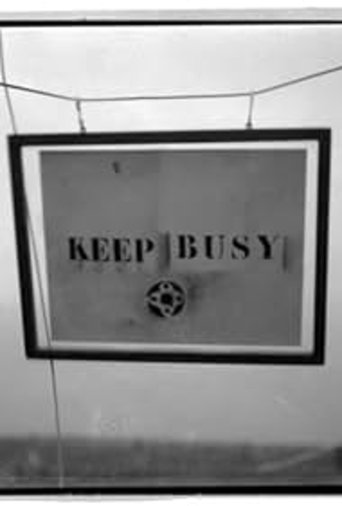
8.0The protagonists’ astounding verbal gymnastics and often incomprehensible interactions tend to descend into nonsense, and with the syncopated rhythm of its action and dialogue, this film is reminiscent of the playful and parodying elements of the Beat fantasy Pull My Daisy. The interweaving of documentary and fiction with the syncopated rhythm of its action and dialogue presents an absurd buzz of activity reminiscent of Beckett’s abstract comic grotesque.
Keep Busy
1975
 NR
NRThe film is an adaptation from two sources: Kinesics and Context by Ray L. Birdwhistell, and Choreomania, a performance by Joan Jonas
Paul Revere
1971
 NR
NRHome movies shot on Super 8mm by W+B Hein over 10 years.
Home Movies 1971-81
1985
 7.6
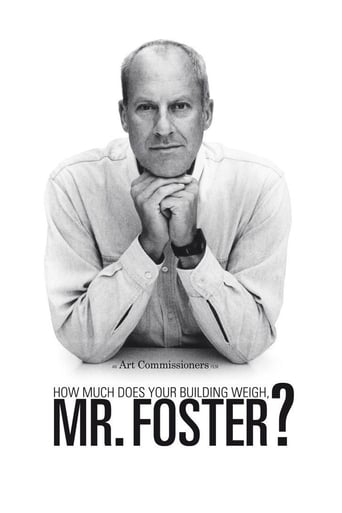
7.6The film traces the rise of one of the world's premier architects, Norman Foster, and his unending quest to improve the quality of life through design.
How Much Does Your Building Weigh, Mr Foster?
2010
Film credits
2010s · 2 titles
7.6The film traces the rise of one of the world's premier architects, Norman Foster, and his unending quest to improve the quality of life through design.
How Much Does Your Building Weigh, Mr Foster?
2010
 NR
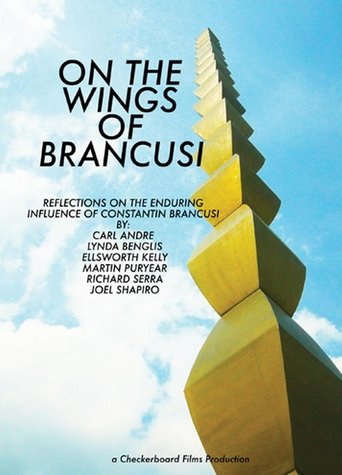
NRConstantin Brancusi (1876-1957), the most important sculptor of the first half of the 20th century, has been a fascinating and enduring influence on a generation of contemporary American artists. Insights into Brancusi’s legacy are presented by Carl Andre, Lynda Benglis, Ellsworth Kelly, Martin Puryear, Richard Serra, and Joel Shapiro, with additional commentary on Dan Flavin, Donald Judd, Roy Lichtenstein, Isamu Noguchi,and Claes Oldenburg. In 1995, Anne d’Harnoncourt, Director Emeritus of the Philadelphia Museum of Art, asked Checkerboard to document the PMA’s acclaimed retrospective on Brancusi for the Museum’s archive. The resulting footage became the genesis of the documentary.
On The Wings of Brancusi
2018
2000s · 5 titles
 6.6
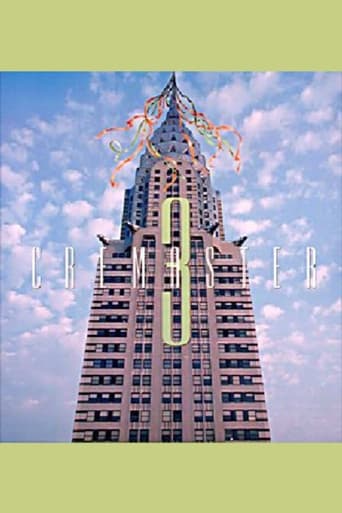
6.6CREMASTER 3 is set in New York City and narrates the construction of the Chrysler Building, which is in itself a character - host to inner, antagonistic forces at play for access to the process of (spiritual) transcendence. These factions find form in the struggle between Hiram Abiff or the Architect...
Cremaster 3
2002
 6.0
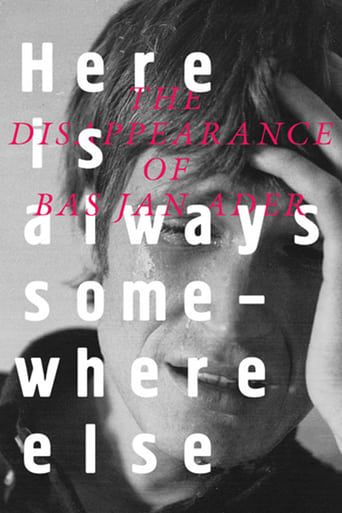
6.0The life and work of enigmatic Dutch/Californian conceptual artist Bas Jan Ader, who in 1975 disappeared under mysterious circumstances at sea in the smallest boat ever to cross the Atlantic. As seen through the eyes of fellow emigrant filmmaker René Daalder, the picture becomes a sweeping overview of contemporary art films as well as an epic saga of the transformative powers of the ocean.
Here Is Always Somewhere Else
2007
Charlie Rose joins sculptor Richard Serra at the Museum of Modern Art for a walk-through of a retrospective of the past four decades of Serra's work. Serra describes the destruction of his public sculpture "Tilted Arc" and reflects on his early artistic influences. Guest host Michael Kimmelman talks to Hal Foster, chairman of the art and archaeology department at Princeton University, about Serra's work.
The MoMA Retrospective: Charlie Rose Interview
2007
Sculptor and giant of modern art Richard Serra discusses his extraordinary life and work. A creator of enormous, immediately identifiable steel sculptures that both terrify and mesmerise, Serra believes that each viewer creates the sculpture for themselves by being within it. To this end, a Japanese family are reminded of the Temples of Kyoto, a Londoner finds sanctuary in the Serra near Liverpool Street station, and most movingly, a Holocaust survivor sees one piece as a wall separating the living from the dead. Contributors include Chuck Close, Philip Glass and Glenn D Lowry, Director of MoMA.
Richard Serra: Man of Steel
2008
"Film Portrait of Richard Serra was shot during the making of The Camera: Je but I felt that the footage showed such complicity between Richard and me that I decided it was a film on its own. I shot the film title in 1977 but only finished the film in 2007 in digital video. Richard and I had met in Rome in 1972, and in January 1974 I moved into the building where he had lived and worked since the 1960s, so we were neighbors. We liked each other and the film shows that."
A Film Portrait of Richard Serra
2007
1970s · 3 titles
8.0The protagonists’ astounding verbal gymnastics and often incomprehensible interactions tend to descend into nonsense, and with the syncopated rhythm of its action and dialogue, this film is reminiscent of the playful and parodying elements of the Beat fantasy Pull My Daisy. The interweaving of documentary and fiction with the syncopated rhythm of its action and dialogue presents an absurd buzz of activity reminiscent of Beckett’s abstract comic grotesque.
Keep Busy
1975
 10.0
10.0Like the three "Hands" films by Richard Serra (1968), the subject of "Color Aid" are fingers as actors of real time activity. Monochrome colour cards lying on top of each other and filling the whole screen are being pulled away individually with a swishing sound by a single finger, each time bringing a new colour into view.
Color Aid
1971
 NR
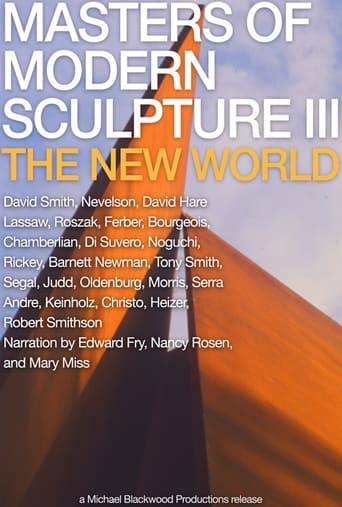
NRThe Masters of Modern Sculpture series concludes with a look at post- World War II America, where sculpture became a deeply innovative art form. Using the objects at their disposal and the inspiration surrounding them, artists such as George Rickey, Claes Oldenburg, and Louise Nevelson cast sculptor in a new light. The New World observes the sculptors creatively utilizing wood, metals, and junkyard finds, bringing forth lively and shocking work. America's remote spaces, discarded objects and abundant materials enabled them to add to the concepts of European modernism in daringly unique ways.
Masters of Modern Sculpture Part III: The New World
1978
1960s · 2 titles
 8.0
8.0In "Hands Scraping" we see two male pairs of hands, those of Serra and Phil Glass, sweeping up steel filings strewn on the wooden floor with their bare hands, and carrying the gathered heap in their hands out of the picture.
Hands Scraping
1968
 8.0
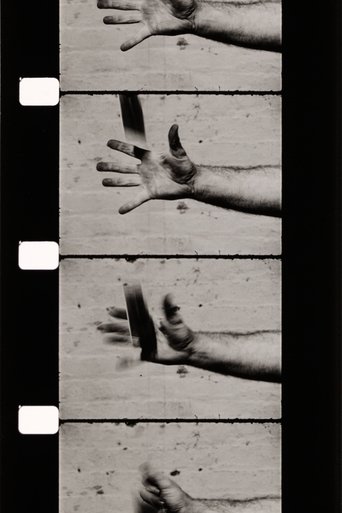
8.0Echoing the vertical movement of the film through the projector, pieces of sheet lead fall into the image field. Serra’s hand opens and closes as it tries to catch them, and when it succeeds, immediately lets them go again.
Hand Catching Lead
1968
Series credits
Behind the camera
NRA short film by Richard Serra
Tina Turning
1969
NRThe film is an adaptation from two sources: Kinesics and Context by Ray L. Birdwhistell, and Choreomania, a performance by Joan Jonas
Paul Revere
1971
 NR
NROriginally broadcast on public television in Amarillo, TX, Richard Serra’s BOOMERANG features Nancy Holt framed in a medium shot with a pair of headphones on her ears. We observe her as she speaks and then hears her words relayed back to her through a delayed transmission. Remarkably eloquent for one caught in such a feedback loop, Holt provides a monologue on experiencing time, thought, and oneself through technology. She remarks, “I have a double take on myself. I am once removed from myself … we are hearing and seeing a world of double reflections and double refractions.”
Boomerang
1974
 8.0
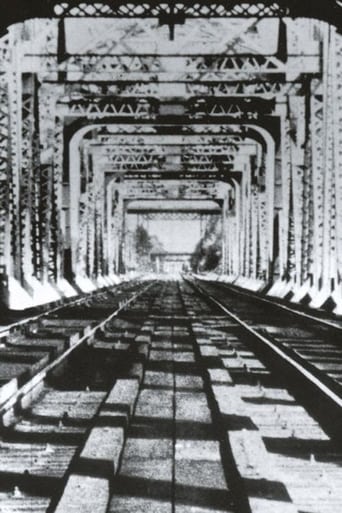
8.0“…Railroad Turnbridge is about the meeting of machine and machine [camera and bridge] and how they and their movements, sometimes parallel, sometimes in opposition, frame the landscape which surrounds them. A shot of the landscape seen through the rectangles of the bridge’s opening, the bridge [becomes], in movement, a giant extension of the camera viewfinder…” Amy Taubin, Soho News
Railroad Turnbridge
1976
Made in collaboration with Gerry Schum
China Girl
1972
 10.0
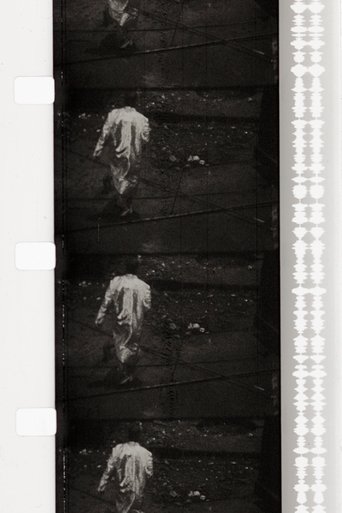
10.0Serra’s film about the production of his sculpture Berlin Block (for Charlie Chaplin) (1977) at the Henrichshütte Hattingen steelworks in the Ruhr Valley, begun roughly one year before the first major wave of strikes in the German steel industry since the war, combines conventions from documentary film, agitprop, black-and-white photographic studies and architectural film.
Steelmill/Stahlwerk
1979
Artists Nancy Holt and Charlemagne Palestine attempt to have a conversation with one another while their voices are distorted.
Match-Match Their Courage
1974
10.0Like the three "Hands" films by Richard Serra (1968), the subject of "Color Aid" are fingers as actors of real time activity. Monochrome colour cards lying on top of each other and filling the whole screen are being pulled away individually with a swishing sound by a single finger, each time bringing a new colour into view.
Color Aid
1971
 NR
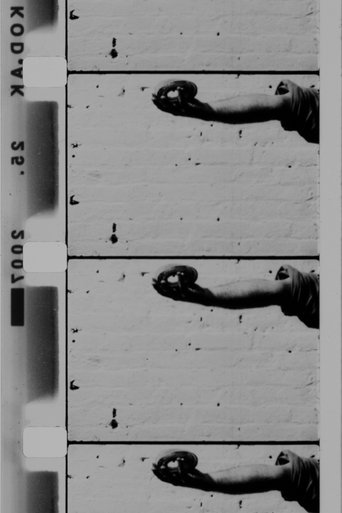
NRFootage of an arm and a hand holding a block of lead
Hand Lead Fulcrum
1968
 NR
NRA pair of one person's hands toss a block of lead back and forth.
Surprise Attack
1973
 NR
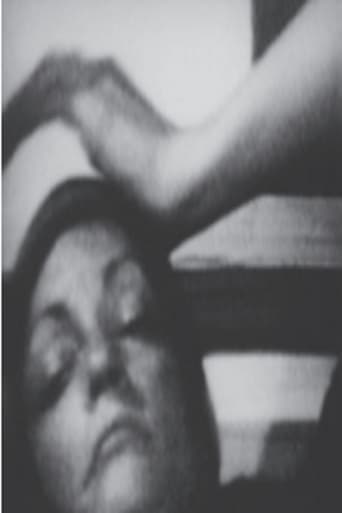
NRSoundtrack by Philip Glass
Anxious Automation
1971
 10.0
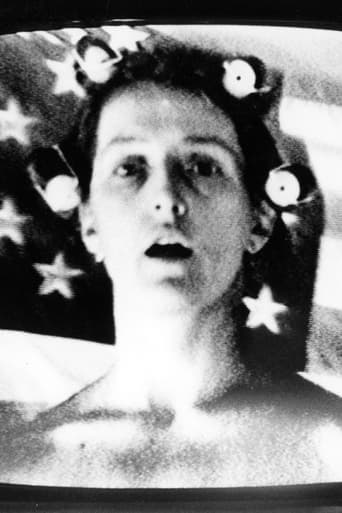
10.0A two-part tape of a video performance done on January 22, 1974, at 112 Greene Street (as part of the Video Performance Exhibition), structured on a problem in game theory, a non-zero-sum game, in which both players can win or lose at the same time, one can win more than the other, and one can win at the others expense. Serra and Bell have used game theory as a way of dealing with genres of commercial TV: cops and robbers in the first part, and a quiz program in the second.
Prisoner's Dilemma
1974
Made in collaboration with Joan Jonas.
Veil
1971
 10.0
10.0A subject struggles to break free from a cord restraint
Hands Tied
1968
 10.0
10.0In Frame (1969), Richard Serra emphasizes the disconnect bewteen the real space of the cinema and the illusory space of the screen. We first see Serra's hands methodically measuring and marking the boundaries of the film frame, followed by the projected image of a blank surface whose perimeter is similarly marked. The surface is then moved aside to reveal a window which looks out upon a bustling city street. The In the final stage, Serra interacts with the projected image of the window, remeasuring and remarking its borders.
Frame
1969
8.0In "Hands Scraping" we see two male pairs of hands, those of Serra and Phil Glass, sweeping up steel filings strewn on the wooden floor with their bare hands, and carrying the gathered heap in their hands out of the picture.
Hands Scraping
1968
Television Delivers People is a seminal work in the now well-established critique of popular media as an instrument of social control that asserts itself subtly on the populace through “entertainments,” for the benefit of those in power—the corporations that mantain and profit from the status quo. While canned Muzak plays, a scrolling text denounces the corporate masquerade of commercial television to reveal the structure of profit that greases the wheels of the media industry. Television emerges as little more than a insidious sponsor for the corporate engines of the world. By appropriating the medium he is criticizing—using television, in effect, against itself—Serra employs a characteristic strategy of early, counter-corporate video collectives—a strategy that remains integral to video artists committed to a critical dismantling of the media’s political and ideological stranglehold.
Television Delivers People
1973
8.0Echoing the vertical movement of the film through the projector, pieces of sheet lead fall into the image field. Serra’s hand opens and closes as it tries to catch them, and when it succeeds, immediately lets them go again.
Hand Catching Lead
1968