

Directing
Thanasis Rentzis
Place of birth
Aigio, Achaea, Greece
Known for
Directing
Credits
12 titles
Thanasis Rentzis was born in 1947 in Aigio, Achaea, Greece. He was a director and writer, known for Electric Angel (1981), Corpus (1979) and Vio-grafia (1975). He died on August 13, 2025.
Known for
 4.2
A young man (Giorgos Tsemperopoulos) arrives in Athens to study at the School of Fine Arts. He doesn’t let the events at the Polytechnic in November 1973 affect his studies, and he also begins an affair with a girl. Initially, he gets a job in a gallery and then in an advertising company.
Black - White
1973
 9.0
An experimental film using a mixture of techniques to portray the different views of the human body. It consists of seven parts, each one presenting an ideotype of the human body, from the beginning of civilization up to the present time. The body as a concept or dogma is simply the embodied reflection of every civilization, upon which man himself is established. The anthropomorphism that characterizes the sum total of perception, in a clear or latent state, comes from the fact that the human body, as reality, idea and expression, comprises the ultimate reference.
Corpus
1979
 7.0
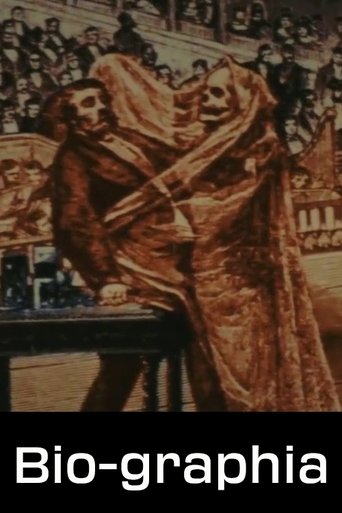
With a title that expresses the connection/disagreement of bios (βίος) = life, and graphi (γραφή) = writing, this film of Rentzis has as a subject “the passage from homo universalis to homo industrialis”. Based on a visual material provided by the collage book of the Basque Chumy Chúmez, the film forms, out of cultural deposits of the industrial era, a novative oneirographic discourse, through the audacious and unprecendeded claim of a combinatorial optimization of collage/montage techno-poetics. Viewing the body as historical ideotype ‘the sublime point of reference, a matrix and a refusal of all signs’, Rentzis, dissects the body of film, makes an inter-parody of historical utopias and certainties and moves between animation and expanded cinema in order to reflect on the broader social, political question of our social coexistence condition, the unity and rupture.
Bio-graphia
1975
 4.9
A typical experimental film, in which a variety of audiovisual techniques are used to create the sense of polymorphic eroticism as developed by European and Mediterranean cinematography of the 20th century. Combining the methods of “animation” and “live action”, this intricate work embodies the idea of an “ars combinatoria”. The structure is loose, with neither a central axis nor a point where everything converges, contributing greatly to the open-ended character of the film, where rhythm is the key element.
Electric Angel
1981
 7.0
A documentary about cinema censorship during the dictatorship in Greece (1967- 1974), based on never-before-seen state archives. The film includes clips of films which were either censored or banned, newsreels of that era, interviews with famous directors and also secret documents from the reports of the Censorship Committee that are made public for the first time, portraying a revealing picture of the system’s control mechanisms and providing a fresco of that time.
Affection to the People
2013
 NR
Made for Expo Arte at Bari.
Fiction
1977
Film credits
Behind the camera
4.2A young man (Giorgos Tsemperopoulos) arrives in Athens to study at the School of Fine Arts. He doesn’t let the events at the Polytechnic in November 1973 affect his studies, and he also begins an affair with a girl. Initially, he gets a job in a gallery and then in an advertising company.
Black - White
1973
9.0An experimental film using a mixture of techniques to portray the different views of the human body. It consists of seven parts, each one presenting an ideotype of the human body, from the beginning of civilization up to the present time. The body as a concept or dogma is simply the embodied reflection of every civilization, upon which man himself is established. The anthropomorphism that characterizes the sum total of perception, in a clear or latent state, comes from the fact that the human body, as reality, idea and expression, comprises the ultimate reference.
Corpus
1979
7.0With a title that expresses the connection/disagreement of bios (βίος) = life, and graphi (γραφή) = writing, this film of Rentzis has as a subject “the passage from homo universalis to homo industrialis”. Based on a visual material provided by the collage book of the Basque Chumy Chúmez, the film forms, out of cultural deposits of the industrial era, a novative oneirographic discourse, through the audacious and unprecendeded claim of a combinatorial optimization of collage/montage techno-poetics. Viewing the body as historical ideotype ‘the sublime point of reference, a matrix and a refusal of all signs’, Rentzis, dissects the body of film, makes an inter-parody of historical utopias and certainties and moves between animation and expanded cinema in order to reflect on the broader social, political question of our social coexistence condition, the unity and rupture.
Bio-graphia
1975
4.9A typical experimental film, in which a variety of audiovisual techniques are used to create the sense of polymorphic eroticism as developed by European and Mediterranean cinematography of the 20th century. Combining the methods of “animation” and “live action”, this intricate work embodies the idea of an “ars combinatoria”. The structure is loose, with neither a central axis nor a point where everything converges, contributing greatly to the open-ended character of the film, where rhythm is the key element.
Electric Angel
1981
NRMade for Expo Arte at Bari.
Fiction
1977