
Directing
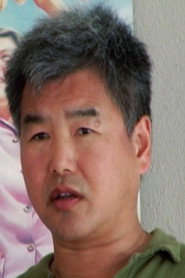
Curtis Choy
Curtis Choy is an accomplished filmmaker and cinematographer best known for telling Asian/Asian American histories. He is one filmmaker who has been in the Asian American movement from the very beginning, and remains active to this day. To call him an unsung hero is not exactly correct: everyone in the Asian American film world acknowledges his skill and stature. He worked on Wayne Wang’s seminal Chan is Missing (1982), Arthur Dong’s award-winning Forbidden City U.S.A. (1989), Wang’s breakthrough The Joy Luck Club (1993), Chris Chan Lee’s beloved Yellow (1998), Tony Bui’s international hit Three Seasons (1999), Gene Cajayon’s immortal The Debut (2000), and of course Justin Lin’s game-changing Better Luck Tomorrow (2002). He’s Curtis Choy, sound recordist and sound mixer. And he’s got the most impressive resume in all of Asian American cinema.
Acting credits
Behind the camera
 NR
NRA collection of film clips of what would become Curtis Choy’s seminal documentary The Fall of the I-Hotel. This work-in-progress documentary includes In-depth interviews with Manongs – an Illocano term of respect for elders – and community leaders as they fought to stop the mass eviction of Asian American elders from the International Hotel and the destruction of San Francisco’s Manilatown.
Manongs Film Project
1979
Curtis Choy’s early free-wheeling experimental shorts are a portrait of a vital San Francisco arts scene and a blistering, tongue-in-cheek comic assault on all those powers that (still) need checking. In seven wildly contrasting episodes — including “Burros at Taco Bell” and “Hip-Shaking C-Town” — race, cultural politics and place are skewered with Choy’s mondo-humor, where revolutionaries take a bao break, and macho men get down. Appearances by Janice Mirikitani, Lane Nishikawa, Marc Hayashi and more.
Snipers in the Trees
1985
 8.0
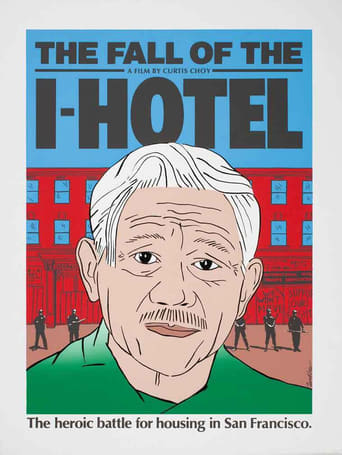
8.0The Fall of the I-Hotel brings to life the battle for housing in San Francisco. The brutal eviction of the International Hotel's tenants culminated a decade of spirited resistance to the razing of Manilatown. The Fall of the I-Hotel works on several levels. It not only documents the struggle to save the I-Hotel, but also gives an overview of Filipino American history.
The Fall of the I-Hotel
1983
This insightful documentary explores the life of Frank Chin, the godfather of modern Asian Americanism. Taking a look at his own story and the many controversies raging over him during the past thirty years, the film reveals the much larger implications of the literary, ideological and cultural changes taking place in Asian America.
What's Wrong with Frank Chin?
2005
 NR
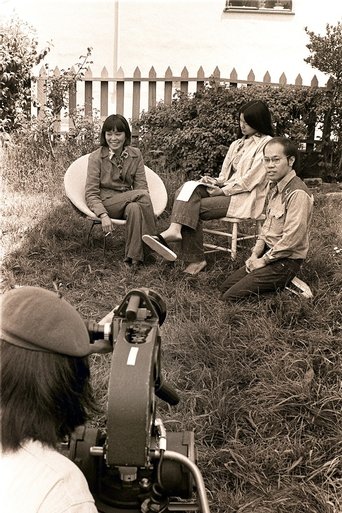
NROn February 4, 1974, the Symbionese Liberation Army kidnapped newspaper heiress Patricia Hearst. A month later, SLA members and Hearst robbed a bank in San Francisco. After the telecast shootout with police in Los Angeles, two remaining SLA members and Hearst fled to rural Pennsylvania, where they met Wendy Yoshimura. Wendy was eluding authorities who had indicted her on weapons and explosives charges in 1972. After 3 years on the run, Wendy was captured with Hearst in a San Francisco apartment, where the FBI threatened to "blow Wendy's head off". She was kept in isolation for 40 days, then jailed for 3 months until the Wendy Yoshimura Fair Trial Committee came to her aid.
Wendy... Uh... What's Her Name
2006
 8.0
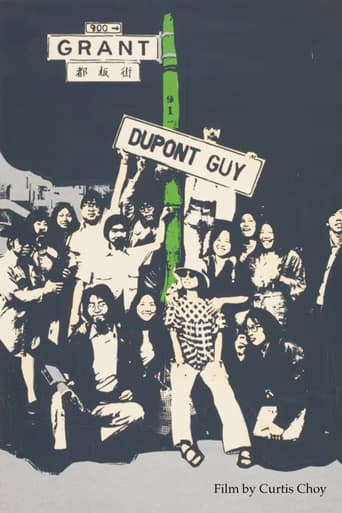
8.0WHO WE ARE forms the unifying theme of "Dupont Guy". It affirms the legitimacy of Chinese-American (nee Chonk) culture, exploring cross cultural currents of San Francisco's Chinatown: assimilation, self-contempt, schizophrenic language, duplicitous behavior.
Dupont Guy: The Schiz of Grant Avenue
1976
8.0WHO WE ARE forms the unifying theme of "Dupont Guy". It affirms the legitimacy of Chinese-American (nee Chonk) culture, exploring cross cultural currents of San Francisco's Chinatown: assimilation, self-contempt, schizophrenic language, duplicitous behavior.
Dupont Guy: The Schiz of Grant Avenue
1976
8.0WHO WE ARE forms the unifying theme of "Dupont Guy". It affirms the legitimacy of Chinese-American (nee Chonk) culture, exploring cross cultural currents of San Francisco's Chinatown: assimilation, self-contempt, schizophrenic language, duplicitous behavior.
Dupont Guy: The Schiz of Grant Avenue
1976