
Directing
Toshio Hirata
Born — Died
1938-02-16 — 2014-08-25
Place of birth
Tendo, Yamagata, Japan
Known for
Directing
Credits
19 titles
Known for
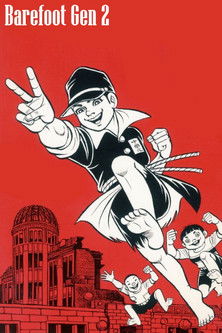 6.9
6.9Three years after the Hiroshima bombing, a teenager helps a group of orphans to survive and find their new life.
Barefoot Gen 2
1986
 10.0
10.0"Kin no Tori" is an adaptation of the homonymous fairy tale "The Golden Bird" by Brothers Grimm. A golden apple is stolen from the King's garden. The King orders his three sons to guard the apples in turn and to find out who is the thief. When the youngest son, Hans, presents a feather that he got from the golden bird that stole the apple the king sends his three sons to bring this bird to him and so Hans' journey begins.
The Golden Bird
1987
 7.0
7.0When Unico, a young unicorn, is banished from his family by a pantheon of manipulative gods, his powers of joy and happiness are tested as he explores the lands with his friends Beezle and Katy.
The Fantastic Adventures of Unico
1981
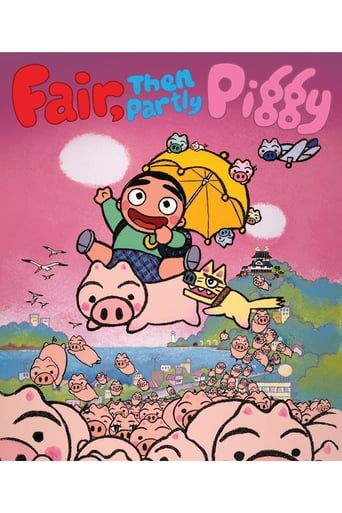 4.0
4.0Noriyasu seems like an average third-grader, but his life goes haywire after he catches his mother reading his private daily journal. In an effort to astonish her, he begins writing outlandish lies about a giant snake in the bathroom, cooking pencils for dinner, and a rain of pigs, but Noriyasu is the one who's shocked when his writings play out in reality and everyone else treats the events as normal. Things become even more chaotic when he takes several stabs at being a newspaperman, producing “fake news” that become the talk of the town and one resulting in an apocalyptic porcine holiday.
Fair, then Partly Piggy
1988
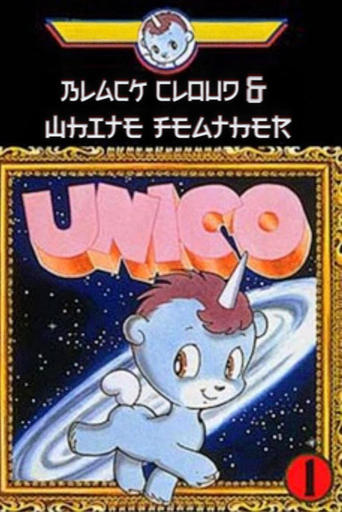 6.8
6.8The Goddess Venus is jealous of the beautiful human girl Psyche and blames her pet unicorn, Unico, as Psyche's source of good luck that keeps her from the harm of the goddess' cruel intentions. Unico has the amazing power to make anyone he meets happy. Whether it's because of his personality or the powers of his horn, no one knows. Venus has Unico banished, and the West Wind now takes Unico from one place and time to the next. Taken to a heavily polluted city, Unico meets a sickly girl named Chiko who is suffering because of the pollution of a nearby factory that darkens the entire sky. Unico then is determined to cheer her up, cure her, and destroy the nearby factory.
Unico: Black Cloud and White Feathers
1979
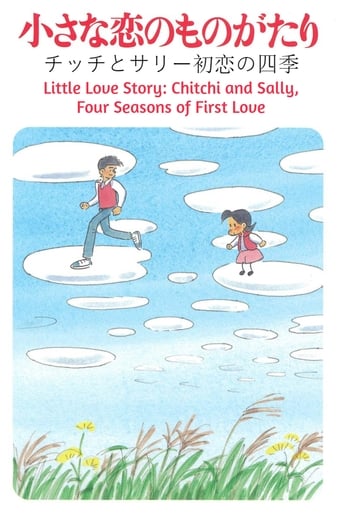 1.0
1.0Ogawa Chiiko (Chitchi to her friends) is a vertically-challenged high school student. She's only 132 cm tall (4' 4"), and she's frequently teased by her classmates, except for her loyal friend Tonko. Chitchi's problems are compounded when she falls hopelessly in love with one of the most popular boys in her school, the 6-foot-tall Murakami Satoshi (Sally to his friends). Chitchi succeeds in becoming Sally's friend - he thinks of her as a kind of mascot - but she aspires to be something more. She follows him to his clubs, arranges similar vacations, and pursues her quest from the opening of school in the spring to spring of the following year. She experiences the joys and agonies of first love, while all too keenly aware that she is stuck, despite Tonko's encouragement and help, in Sally's "friend zone."
Little Love Story: Chitchi and Sally, Four Seasons of First Love
1984
Behind the camera
6.9Three years after the Hiroshima bombing, a teenager helps a group of orphans to survive and find their new life.
Barefoot Gen 2
1986
10.0"Kin no Tori" is an adaptation of the homonymous fairy tale "The Golden Bird" by Brothers Grimm. A golden apple is stolen from the King's garden. The King orders his three sons to guard the apples in turn and to find out who is the thief. When the youngest son, Hans, presents a feather that he got from the golden bird that stole the apple the king sends his three sons to bring this bird to him and so Hans' journey begins.
The Golden Bird
1987
7.0When Unico, a young unicorn, is banished from his family by a pantheon of manipulative gods, his powers of joy and happiness are tested as he explores the lands with his friends Beezle and Katy.
The Fantastic Adventures of Unico
1981
4.0Noriyasu seems like an average third-grader, but his life goes haywire after he catches his mother reading his private daily journal. In an effort to astonish her, he begins writing outlandish lies about a giant snake in the bathroom, cooking pencils for dinner, and a rain of pigs, but Noriyasu is the one who's shocked when his writings play out in reality and everyone else treats the events as normal. Things become even more chaotic when he takes several stabs at being a newspaperman, producing “fake news” that become the talk of the town and one resulting in an apocalyptic porcine holiday.
Fair, then Partly Piggy
1988
6.8The Goddess Venus is jealous of the beautiful human girl Psyche and blames her pet unicorn, Unico, as Psyche's source of good luck that keeps her from the harm of the goddess' cruel intentions. Unico has the amazing power to make anyone he meets happy. Whether it's because of his personality or the powers of his horn, no one knows. Venus has Unico banished, and the West Wind now takes Unico from one place and time to the next. Taken to a heavily polluted city, Unico meets a sickly girl named Chiko who is suffering because of the pollution of a nearby factory that darkens the entire sky. Unico then is determined to cheer her up, cure her, and destroy the nearby factory.
Unico: Black Cloud and White Feathers
1979
1.0Ogawa Chiiko (Chitchi to her friends) is a vertically-challenged high school student. She's only 132 cm tall (4' 4"), and she's frequently teased by her classmates, except for her loyal friend Tonko. Chitchi's problems are compounded when she falls hopelessly in love with one of the most popular boys in her school, the 6-foot-tall Murakami Satoshi (Sally to his friends). Chitchi succeeds in becoming Sally's friend - he thinks of her as a kind of mascot - but she aspires to be something more. She follows him to his clubs, arranges similar vacations, and pursues her quest from the opening of school in the spring to spring of the following year. She experiences the joys and agonies of first love, while all too keenly aware that she is stuck, despite Tonko's encouragement and help, in Sally's "friend zone."
Little Love Story: Chitchi and Sally, Four Seasons of First Love
1984
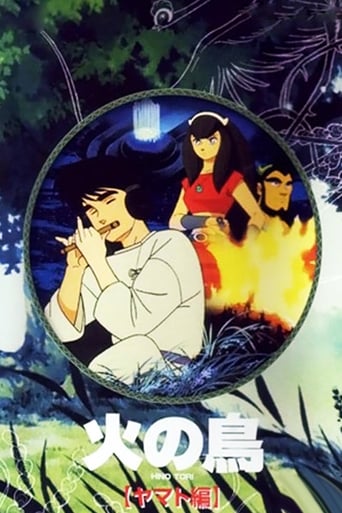 6.0
6.0The story of a young prince and young princess from opposing tribes, as they struggle to deal with their lives and the hardship brought on by their position in their respective families.
Phoenix: Yamato Chapter
1987
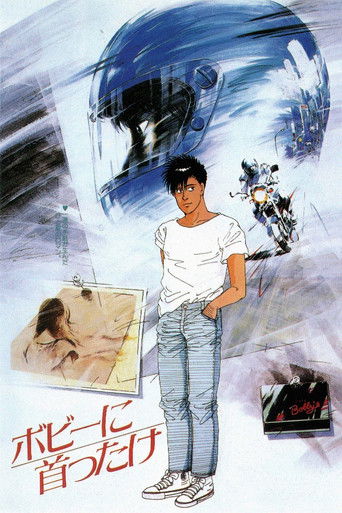 7.4
7.4Bobby is an underachieving high school kid with a deep love for motorcycles. His most recent achievement seems to have been getting photos of himself on a road trip printed in a motorcyclist hobby magazine. When he gets a letter from a girl his age, he decides to write her back.
Bobby's Girl
1985
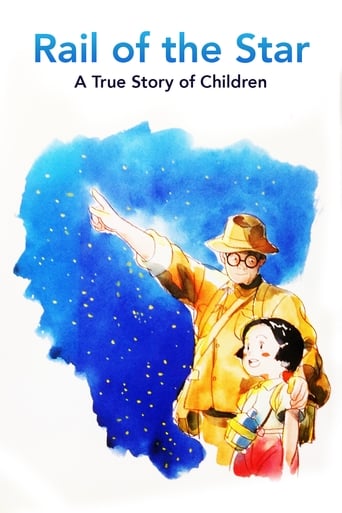 6.1
6.1A young Japanese actress remembers her war childhood in Korea. Her father goes to fight, her baby sister Miko dies of typhoid, her beloved Korean maid Ohana is fired due to a mistake which could cost Chiko her life... By and by Chiko realizes that the country is being ruled by the Japanese and the Koreans are persecuted. When the war ends, the Koreans chase the Japanese rule and the roles change. Now Chiko's family is unwanted. But then the Russians come and this is the end. They have to burn all the pictures to avoid all suspicions... even Miko's picture. But when the Russians come to their house, they decide to flee over the 38th Parallel towards freedom. A group of men, women, children struggles along the mountains, led by the light of the Northern Star. Along the way they meet a Korean man, who is willing to help them to escape the Russian soldiers although his family was killed by the Japanese.
Rail of the Star - A True Story of Children and War
1993
 NR
NRA feature-length animation of the popular work "Niko Niko, Pun", which began broadcasting in the 1980s as a corner of NHK's educational program "Okaasan to Issho". The original "Niko Niko, Pun" was a live-action puppet show in costume, but in this anime version, the three main characters are voiced by the same voice actors, including Kaneta Kimotsuki. One day, Porori hears from her mother that she has a new baby brother. With the help of Jajamaru and Pikkoro, they set off on a boat to find their brother, but for some reason, the three of them end up on an island inhabited by pirates.
It's the Sea! Let's Set Sail! Niko Niko, Pun
1990
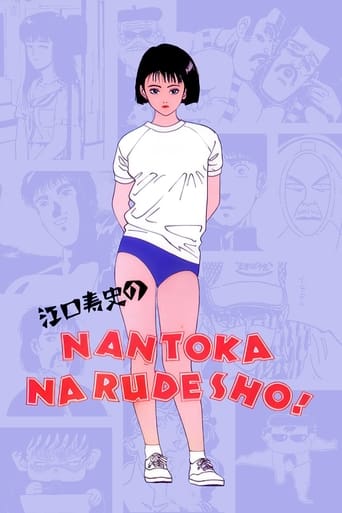 5.0
5.0Adapted from the manga of the same name by Hisashi Eguchi, and directed by Minoru Kawasaki and Rintaro, this is a series of random skits featuring anime, live action, and puppet show segments, exploring love, sex, death and many other sometimes controversial subjects.
Hisashi Eguchi's It Will All Work Out!
1990
 NR
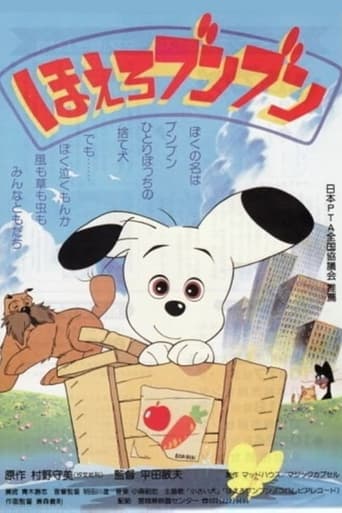
NRAbandoned in a wooden box, Bun-Bun is an innocent new born puppy. Picked up by a stray dog called Uncle Tyke, Bun-Bun is taught how to look for food, heal sickness, fight off other stray dogs and, in general, how to live on the edge of society.
Yap! Bun Bun
1987
 3.5
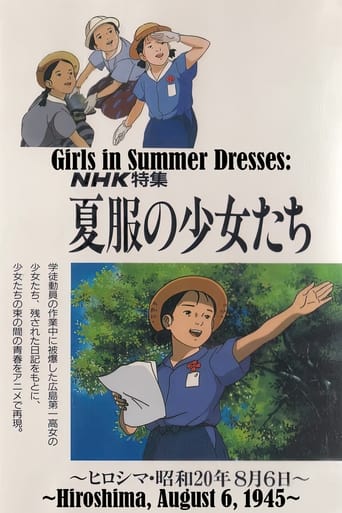
3.5In 1945, the second- and third-year students of a Hiroshima girls' school are taken away to work in war factories. The remaining 220 girls of the first year try to make the best of their new-found status as the only teenagers in an almost deserted town, even amid the deprivations of wartime. On the seventh of August, an American bomber changes their lives forever. Broadcast on the 43rd anniversary of Hiroshima in memory of "the girls who lost their lives to the atom bomb." (Source: Anime Encyclopedia)
Girls in Summer Dresses: Hiroshima, August 6, 1945
1988
 NR
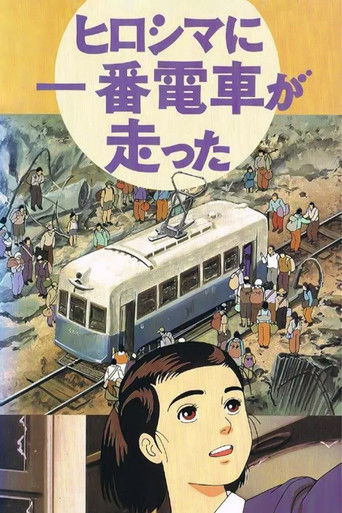
NRWorking as a tram supervisor always filled a hard-working young girl in Hiroshima with joy during the Second World War … but times are changing. The atomic bomb dropped on Hiroshima devastated the city, and nothing is as it once was. How will their lives change after this catastrophe?
The First Tram Runs to Hiroshima
1993
 4.0
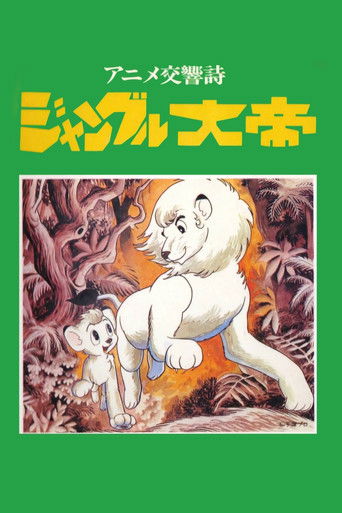
4.0After a spoken introduction describing the various musical instruments used, the film tells the story of Kimba the White Lion, from his birth, to his escape from a ship intended to take him far from home. The story is told entirely without dialogue, and showcases a symphonic tome poem composed by Isao Tomita, based in incidental music he composed for the original television series "Jangaru taitei" (1965)
Kimba the White Lion: Symphonic Poem
1991
 5.5
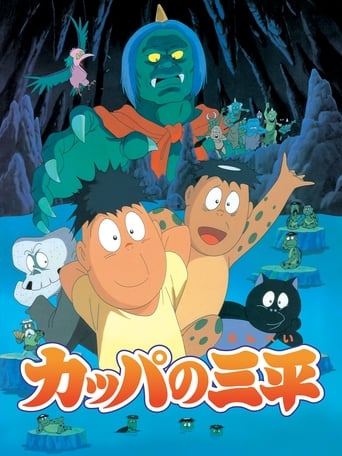
5.5Adapted from Shigeru Mizuki's classic manga from the 1960s, 'Kappa no Sanpei', the anime tells a story of a young boy, Sanpei, who lives in the beautiful countryside with his grandfather. One day, he is caught in the muddy streams of the river and wakes up in the land of goblins. Sanpei makes friends with a goblin named Gartaro, who bears striking resemblance to himself. Thus, the adventure begins.
Kappa: A River Goblin and Sampei
1993
 NR
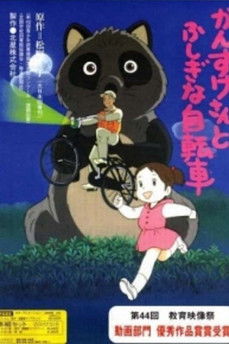
NRBased on the children's book by Masako Matsuno.
Kansuke-san to Fushigi na Jitensha
1997
 6.0
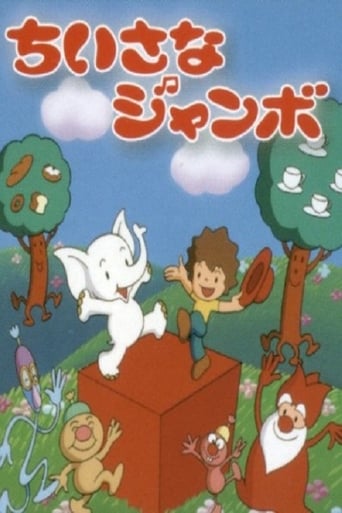
6.0Adrift at sea a boy and his pet white elephant, Jumbo, wash up on an island that is between two other islands at war with one another in this musical fantasy film.
Little Jumbo
1977
 NR
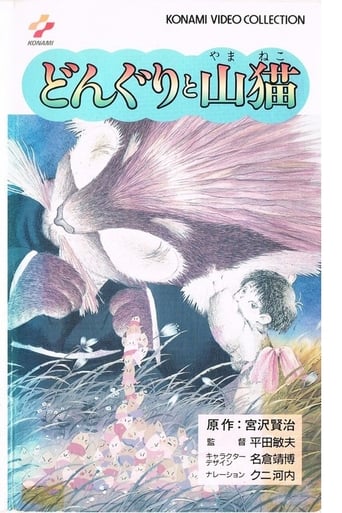
NRThe Acorns and the Wildcat is a unique short film in picture-book format from the creator of Night on the Galactic Railroad and Gauche the Cellist. Unusually for an anime, a narrator reads Kenji's story aloud while the action is played out on the screen by a succession of warm and evocative illustrations brought to life by subtle touches of animation. If the film feels somehow familiar yet you can't put your finger on the reason why, it's probably the sumptuously minimalist animation by Yasuhiro Nagura, who was the animation director of Mamoru Oshii's artsy 1986 feature Angel's Egg. That, and Kenji's wildcat is said to have been the inspiration for Miyazaki's Panda/Totoro creature. The idea of reading Kenji's story aloud instead of playing it out as a drama is quite refreshing, and Kenji's magical language and narrative style are entirely sufficient to sustain interest. Combined with the spacey music and breathtaking art, the result is a pleasantly unassuming little gem of a film.
The Acorns and the Wildcat
1988