
Directing
Steina Vasulka
Known for
Directing
Credits
53 titles
Steina Vasulka is an early pioneer of video art, producing work since the early 1960s.
Known for
 NR
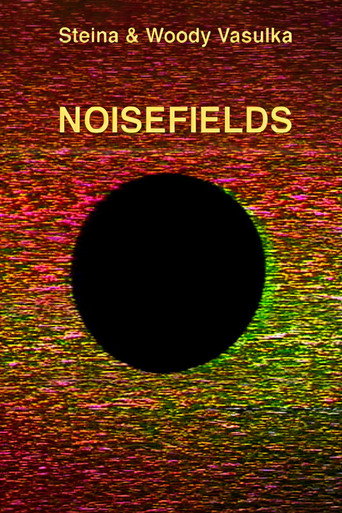
NRThis is an attempt to process abstract images without the use of camera. The central circle divides the creen into two parts that continually vibrate hypnotically and change colors to the accompanying rumbling of modulated sound.
Noisefields
1974
 NR
NRA short documentary on the life and art of Steina and Woody Vasulka, produced in 1996. The Vasulkas speak candidly about their work and worldviews, and the piece features excerpts from their early works and a glimpse into their '90s output.
Binary Lives
1996
 NR
NRProduced by the National Endowment for the Arts, along with the Jerome Foundation, this showcase is hour-long collection of shorts from six prominent video artists, all commissioned to the state of Minnesota.
Minnesota Landscapes
1980
 NR
NRThis is a documentary about video artists Bill & Louise Etra, Woody & Steina Vasulka, and Kit Fitzgerald & John Sanborn.
Group Portrait: Six Artists in Video
1978
 NR
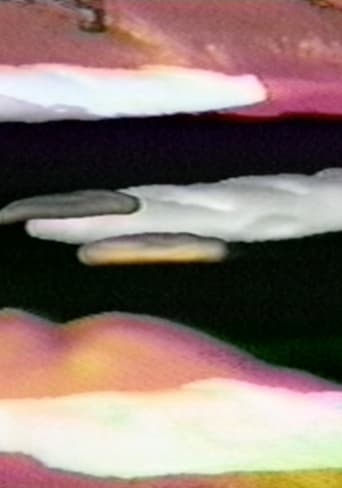
NRThe work is inspired by the surrealist René Magritte's unsettling painting La Legende doree, depicting French baguettes flitting in a window frame. Woody and Steina used a three-camera construction and through the use of horizontal deflection created objects migrating through a landscape. Maureen Turim called this work "a meta-discourse on painting and video".
Golden Voyage
1973
 NR
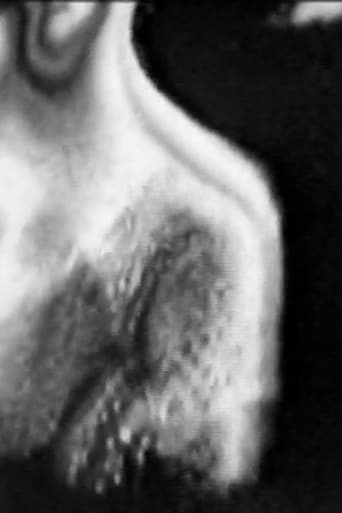
NRIn Studies cycle, abstract studies are assembled, which document the Vasulka's early work with electronic material. The visual aspect of Tissues is the work of Steina, whereas Woody engineered the sound.
Tissues
1970
Film credits
2000s · 2 titles
 NR
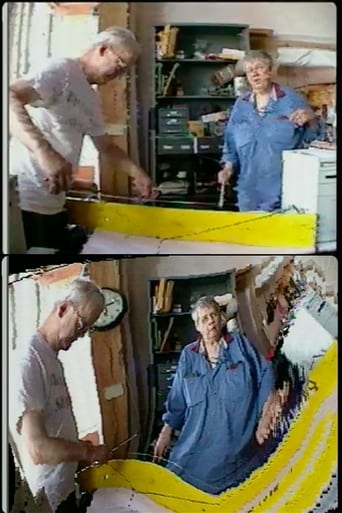
NRA recording of a meeting in the studio where Jeffrey Schier and Woody show colleagues and teachers a new tool. Between 1976 and 1980, Woody and Schier designed a prototype device, the Vasulka Imaging System, or Digital Image Articulator. It was one of the first digital audiovisual tools to generate image algorithms and convert them to an analog signal. In the 1970s and 1980s, the Department of Media Study at the State University of New York at Buffalo became one of these places of, teaching and mediating, in the area of Media Art, developing into what was perhaps to the most influential school for media in the twentieth century. Teaching there under the leadership of the founder Gerald O’Grady were the (meanwhile canonized) structuralist, avantgarde filmmakers Hollis Frampton, Tony Conrad, and Paul Sharits, documentary filmmaker James Blue, video artists Steina and Woody Vasulka, and Peter Weibel.
Funtime at the Vasulkas
2006
 NR
NRFellow violinist and artist Tony Conrad, in collaboration with software engineer Tom Demeyer, made for Steina the instrument seen in this title. Conrad and the Vasulkas all taught at the University at Buffalo in the Media Study Department from 1976 to 1979.
Music in the Afternoon
2002
1970s · 8 titles
NRThis is a documentary about video artists Bill & Louise Etra, Woody & Steina Vasulka, and Kit Fitzgerald & John Sanborn.
Group Portrait: Six Artists in Video
1978
 NR
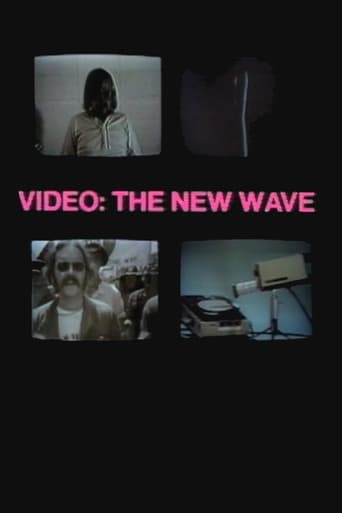
NRThe New Wave is the seminal compendium of independent video work in the early 1970s. Written and narrated by Brian O'Doherty, this overview of the emerging video field includes examples of guerrilla television and "street" documentaries, early explorations with image-processing and synthesis, and performance video. This historical anthology includes excerpts of tapes by the following video pioneers: Stephen Beck and Warner Jepson, Peter Campus, Douglas Davis, Ed Emshwiller, Bill Etra, Frank Gillette, Don Hallock, Joan Jonas, Richard Serra, Paul Kos, Nam June Paik, Otto Piene, Willard Rosenquist, Dan Sandin, James Seawright, Steina Vasulka, TVTV, Stan Vanderbeek and William Wegman.
Video: The New Wave
1975
 NR
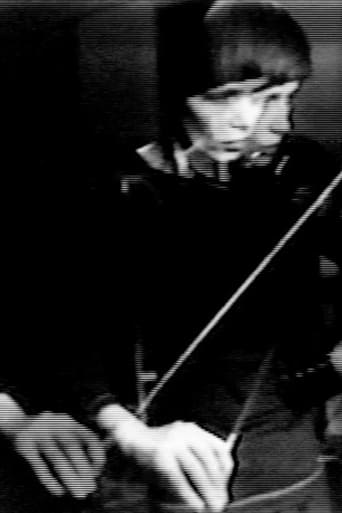
NRSteina trained as a classical violinist, pushing her experience as a professional musician into the electronic realm with this seminal work. Originally performed in the late 1970s as a live recital with monitors, "Violin Power" began with the idea of generating a video image solely through the sound and movement of the bow. This signal switch, from audio to visual, grew in possibilities and variances as technology continued to expand in the ensuing decades. The most recent iteration of this performance involved Steina working with a MIDI violin and laptop.
Violin Power
1978
 NR
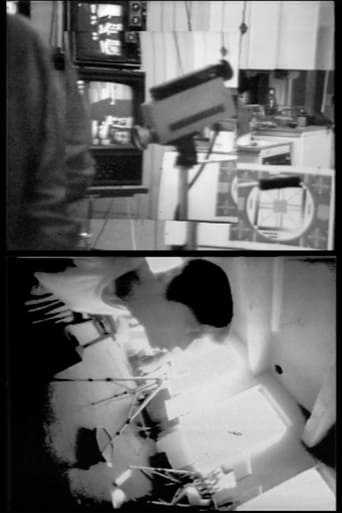
NRDocumentation and experimentation in real time, "Orbital Obsessions" is an example of early video self-portraiture, eerie and calm in its radical implications for the medium. The Vasulkas were interested in the building of control systems for the manipulation of electronic signals, resulting in their collaborations with several designers and engineers. One such example was the Multi-Level Keyer, a tool designed in 1973 by George Brown at the request of the Vasulkas, who were interested in expanding their range of source imagery. Steina’s manipulation of the image through keying, layering, and the manual control of luminance is seen here.
Orbital Obsessions
1977
 NR
NRIn 1977 the Vasulkas were commissioned by public television to create six half-hour programs (Steina, Objects, Digital Images, Transformations, Vocabulary, Matrix) for broadcast on WNED in Buffalo, New York. The resulting series, entitled Vasulka Video, is innovative and informative television. The Vasulkas introduce and contextualize their works and discuss their processing techniques, providing invaluable insights into their groundbreaking experiments with electronic image and sound manipulation.
Vasulka Video
1978
 7.0
7.0A broadcast presentation of Steina and Woody Vasulka's experiments with the electronic image. Featuring a 15-minute "jam session" of improvised video feedback art.
Homemade TV: The Electronic Image
1975
 NR
NRB&W Vasulka project with a rotating camera, keyed and alternating directions. This experiment is excerpted in their 1977 work Orbital Obsessions.
Switch! Monitor! Drift!
1976
 NR
NRDescription from Portable Channel catalog: "This Program is a unique broadcast presentation of the Vasulka's recent experiments with the electronic image. It is not "video on TV" but a "videobroadcast" direct from the Vasulkas' loft in Buffalo, New York." The broadcast does in fact feature 3 Vasulka projects in their entirety: The Matter, Soundgated Images, and C-Trend.
Homemade TV: Vasulkas II
1975
Behind the camera
NRThis is an attempt to process abstract images without the use of camera. The central circle divides the creen into two parts that continually vibrate hypnotically and change colors to the accompanying rumbling of modulated sound.
Noisefields
1974
NRProduced by the National Endowment for the Arts, along with the Jerome Foundation, this showcase is hour-long collection of shorts from six prominent video artists, all commissioned to the state of Minnesota.
Minnesota Landscapes
1980
NRThe work is inspired by the surrealist René Magritte's unsettling painting La Legende doree, depicting French baguettes flitting in a window frame. Woody and Steina used a three-camera construction and through the use of horizontal deflection created objects migrating through a landscape. Maureen Turim called this work "a meta-discourse on painting and video".
Golden Voyage
1973
NRIn Studies cycle, abstract studies are assembled, which document the Vasulka's early work with electronic material. The visual aspect of Tissues is the work of Steina, whereas Woody engineered the sound.
Tissues
1970
No synopsis available yet.
Sexmachine
1970
Although the video artwork Evolution cites the well-known image of hominid evolution, it is more interested in the evolution of the media than in the evolution of the human species. Through the feedback of a system of video devices and the search for image imitation, it creates a layered (self-)reflection of the media used. It illustrates the gradual peeling back of artistic and technical possibilities in sound, from which an image is generated by directly manipulating the surface of the filmstrip, and in images that generate sound in video feedback.
Evolution
1969
 NR
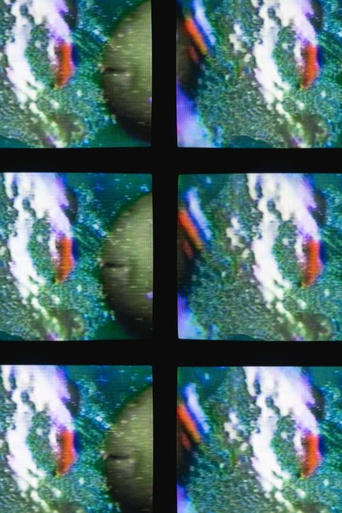
NRMatrix II explores the properties of images and sounds in the medium of video. Geometric shapes travel across a ‘matrix’ (grid) of cathode ray tube (CRT) screens. CRT televisions, which use manipulated electron beams to display images on a fluorescent screen, remained in widespread use until the early 2000s. The Vasulkas sought to test the limits of each monitor, creating a fluid motion resembling the behaviour of electronic signals. Matrix II is an early example of video art, which first developed in the late 1960s and 1970s as artists came into contact with new consumer technologies for capturing moving images.
Matrix II
1974
 NR
NRAn Interface not only between two continually switched over images but also between documentary tape, imagery taken from "reality", and its transformation in the electronic sphere.
Interface
1970
No synopsis available yet.
Telc
1974
NRSteina trained as a classical violinist, pushing her experience as a professional musician into the electronic realm with this seminal work. Originally performed in the late 1970s as a live recital with monitors, "Violin Power" began with the idea of generating a video image solely through the sound and movement of the bow. This signal switch, from audio to visual, grew in possibilities and variances as technology continued to expand in the ensuing decades. The most recent iteration of this performance involved Steina working with a MIDI violin and laptop.
Violin Power
1978
“Selected Treecuts” is a formal examination of the distinction between camera-generated and digital images, and a layered juxtaposition of contrasting representations of reality. The methodology of the tape is simple: a zoom lens moves slowly in and out on a group of trees, alternating between digitized and camera-generated, “real” images. The movement in the tape is produced by the automated zoom lens and rotating prism; the images switch rhythmically between camera images and digital images held briefly in computer memory. The contrast between the “real” camera images of trees and the frozen, digital computer images forms an essay in motion and stillness, the organic and the synthetic, tracing a trajectory from the photographic to the electronic.
Selected Treecuts
1980
 NR
NRUsing one half of a convex mirror mounted within a glass cylinder, Steina trains the video camera eye dead center as she records the space immediately around her. “Steina playfully does gymnastics with her camera and its mirrored lens attachment as a means of producing a 360-degree image of a torso wrapped around the camera lens . . . an exercise in an immersive space” for both maker and viewer. —Yvonne Spielmann
Somersault
1982
 6.0
6.0Real time development of a video feedback, processed and controlled through a video keyer. Sound results from video signals, interfaced with audio synthesizer.
Distant Activities
1972
NRDocumentation and experimentation in real time, "Orbital Obsessions" is an example of early video self-portraiture, eerie and calm in its radical implications for the medium. The Vasulkas were interested in the building of control systems for the manipulation of electronic signals, resulting in their collaborations with several designers and engineers. One such example was the Multi-Level Keyer, a tool designed in 1973 by George Brown at the request of the Vasulkas, who were interested in expanding their range of source imagery. Steina’s manipulation of the image through keying, layering, and the manual control of luminance is seen here.
Orbital Obsessions
1977
Cantaloup is an informal documentary on the Vasulkas' Digital Image Articulator, an imaging device they designed with Jeffrey Schier. Using a cantaloup and the three artist/designers as source material, Steina explains the capabilities of the machine, including its real-time imaging ability and the articulation of images in a digital code. She describes the varying sizes of pixels (picture elements), the layers (or slices) of color and tone that can be derived from one image, and techniques such as "grabbing" the image and multiplying it. This document offers an informative demonstration of a complex imaging device.
Cantaloup
1980
 NR
NRWith Voice Windows (1986), Steina renews her efforts to generate a complex sound-image interface
Voice Windows
1986
 NR
NROne of the works assembled in the series Sketches. These early sketches, created not without the irony, examine ways of manipulating the video image. They indicate that the documentary trend in the Vasulkas' work was from the beginning mingled with free experimentation. These short tapes were modified from the early documentary tapes.
Thierry
1970
 NR
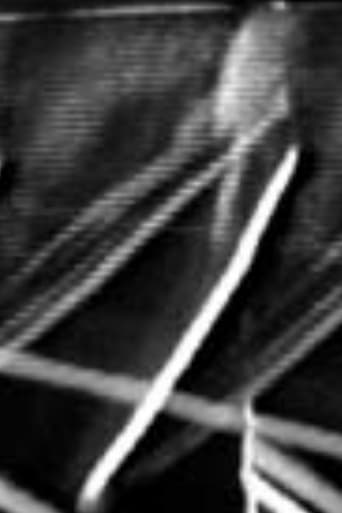
NRIn Discs, originally made as installation for a set of monitors, the creators experiment with the phenomenon of horizontal drift trhough the indtroduction of purposeful time error. The result is the repetitive abstract pattern of a distorted magnetic field. Furthermore, this horizontal stream also travels thorugh a set of TV screens stacked on top of each other, giving the work a vertical dimension as well. The image thus demonstrates the flexibility of the frame in video.
Discs
1970
 NR
NRA film by Steina and Woody Vasulka
Calligrams
1970
 NR
NRProgeny is a collaboration with sculptor Bradford Smith. Smith's organic and sensual sculptural forms are transformed by the merging of one of Steina's Machine Vision devices — a rotating, mirrored sphere with pre-programmed camera movements and optical transpositions — with Woody's digital processing.
Progeny
1981
Soundsize continues the Vasulkas' investigation into the relationship of sound and image. Here a pattern of dots is modulated by sounds generated from a synthesizer, changing size and shape in a visual manifestation of electronic sound.
Soundsize
1974
 NR
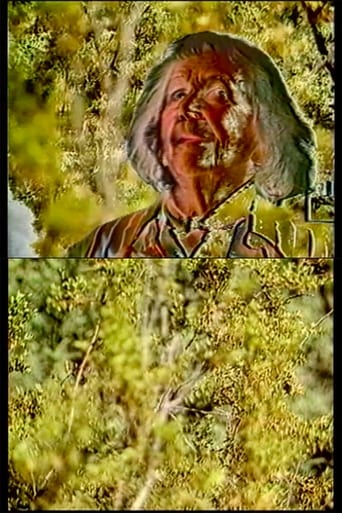
NRAgainst a field of swaying and halting yellow vegetation, another processed field: the image of the eponymous subject (performed by painter Doris Cross) riles and emits unintelligibly to the viewer. Conjuring the mystical biblical character Lilith, Steina's video layers both sound and image to produce an ever-shifting, frustrated presence.
Lilith
1987
 5.0
5.0No synopsis available yet.
C-Trend
1974
 NR
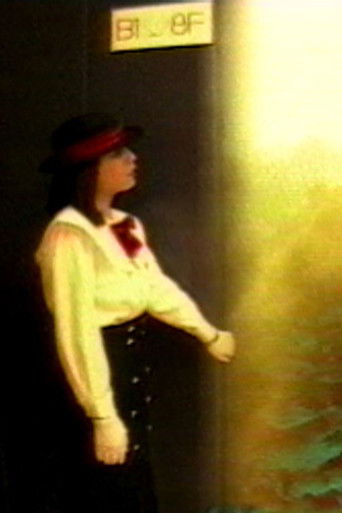
NRIn the Land of the Elevator Girls uses the elevator as a metaphorical vehicle to reveal an outsider's gaze into contemporary Japanese culture. The continual opening and closing of elevator doors serves as a succinct formal device, as the viewer is offered brief glimpses of a series of landscapes — natural, urban, cultural and domestic. Doors open onto doors to reveal layers of public and private vision, transporting the viewer from theatrical performances and street scenes to an elevator surveillance camera's recording of everyday life.
In the Land of the Elevator Girls
1989
NRA recording of a meeting in the studio where Jeffrey Schier and Woody show colleagues and teachers a new tool. Between 1976 and 1980, Woody and Schier designed a prototype device, the Vasulka Imaging System, or Digital Image Articulator. It was one of the first digital audiovisual tools to generate image algorithms and convert them to an analog signal. In the 1970s and 1980s, the Department of Media Study at the State University of New York at Buffalo became one of these places of, teaching and mediating, in the area of Media Art, developing into what was perhaps to the most influential school for media in the twentieth century. Teaching there under the leadership of the founder Gerald O’Grady were the (meanwhile canonized) structuralist, avantgarde filmmakers Hollis Frampton, Tony Conrad, and Paul Sharits, documentary filmmaker James Blue, video artists Steina and Woody Vasulka, and Peter Weibel.
Funtime at the Vasulkas
2006
NRIn 1977 the Vasulkas were commissioned by public television to create six half-hour programs (Steina, Objects, Digital Images, Transformations, Vocabulary, Matrix) for broadcast on WNED in Buffalo, New York. The resulting series, entitled Vasulka Video, is innovative and informative television. The Vasulkas introduce and contextualize their works and discuss their processing techniques, providing invaluable insights into their groundbreaking experiments with electronic image and sound manipulation.
Vasulka Video
1978
 NR
NRSTEINA: “My background is in music. For me, it is the sound that leads me into the image. Every image has its own sound and in it I attempt to capture something flowing and living. I apply the same principle to art as to playing the violin: with the same attitude of continuous practice, the same concept of composition.
Orka
1997
 NR
NRIn Warp, Steina makes use of her two favourite features of the Image/ine software, written by Tom Demeyer. The first feature – ‘warp’ – is a time delay software, which scans one line at the time, leaving the rest of the image motionless. With the second feature – ‘slit scan’ – a point or line in a continuously moving image is captured and streamed forward.
Warp
2000
 NR
NRIn Flux, Steina films a river from a wide angle, deforming the image to the point of creating a sort of radiating, aqueous ball - like a liquid planet turning in space. Steina alternately shows fairly rapid shots, always taken at a very wide angle, which film the river once in one direction and then once in the other; she thus obtains a simple visual and very efficient equivalent of the energy of the water. The close succession of the shots, like the use of the reprocessed soundtrack of running water, are all variations on the texture of the aquatic substance. Under the façade of a work far removed from realism, Steina in fact offers a work that is in total contrast with the traditional images of running water, but, with her video vision, comes very close to literary and pictorial visions of romanticism. She manages to translate the entire mythology of water into images without using narrative or symbolism, but by simply using the possibilities provided by her camera and machines.
Flux
1977
 NR
NRNo synopsis available yet.
Vocabulary
1973
NRFellow violinist and artist Tony Conrad, in collaboration with software engineer Tom Demeyer, made for Steina the instrument seen in this title. Conrad and the Vasulkas all taught at the University at Buffalo in the Media Study Department from 1976 to 1979.
Music in the Afternoon
2002
7.0A broadcast presentation of Steina and Woody Vasulka's experiments with the electronic image. Featuring a 15-minute "jam session" of improvised video feedback art.
Homemade TV: The Electronic Image
1975
 NR
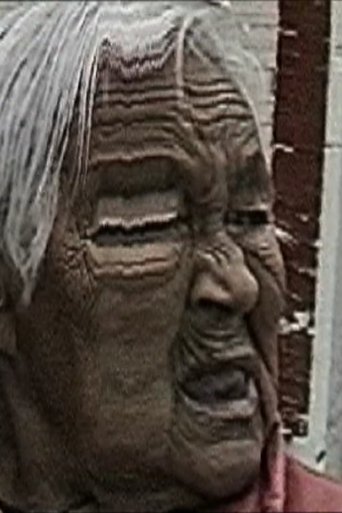
NRA 3-minute study of a wrinkle-faced old woman by one or both of the Vasulkas, produced late-career.
Old Lady El Toppo
—
 9.0
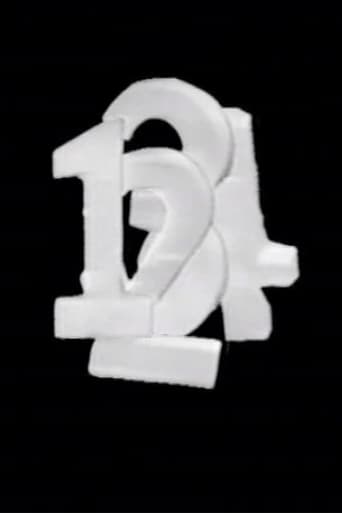
9.0This work shows paradoxical space relations in electonic depths, where the common space coordinates no longer apply and where the images become objects in space. The numerals on the cakes were captured by four cameras and then processed with the Multikeyer.
1-2-3-4
1974
NRB&W Vasulka project with a rotating camera, keyed and alternating directions. This experiment is excerpted in their 1977 work Orbital Obsessions.
Switch! Monitor! Drift!
1976
NRDescription from Portable Channel catalog: "This Program is a unique broadcast presentation of the Vasulka's recent experiments with the electronic image. It is not "video on TV" but a "videobroadcast" direct from the Vasulkas' loft in Buffalo, New York." The broadcast does in fact feature 3 Vasulka projects in their entirety: The Matter, Soundgated Images, and C-Trend.
Homemade TV: Vasulkas II
1975
 NR
NRThis period compilation of documentaries shot with a Portapak camera from the early era of video experimentation offers an immediate view of the independent New York art scene (concerts and theater perfomances on the streets and in the clubs of downtown). It is a sort of summary of Steina and Woody Vasulka's first creative period, a period of fascination with the more bizarre aspects of "new American decadence". Thanks to the video camera and its revolutionary implications, the creators were able to penetrate into spheres where the documentarians of more classical media were neither allowed nor interested to enter, thereby helping to expand the ideas of documentary possibilities. Steina has remarked that she learned the craft of camerawork as documentarian thanks to these celebratory, countercultural scenes of the "sexual avant-garde"-- Participation also features a pulsing light show projection at the Fillmore East, and a scene from Off-Broadway drag theater.
Participation
1971
electro / opto / mechanical / environment
Floor to Walls to Ceiling
1975
 NR
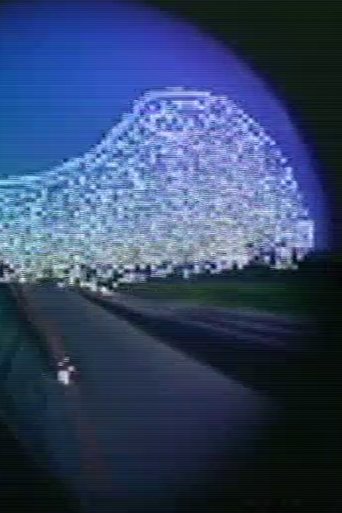
NRThis symbolic journey evokes the personal creative wandering of the Vasulkas. The landscape, shot from a car window while driving in the Santa Fe area, is gradually transformed with more and more complicated imagery techniques.
In Search of the Castle
1981
 NR
NRIn this early formal experiment with analog image processing, the Vasulkas investigate multiple camera set-ups and keyers to articulate spatial, temporal and sound/image manipulation. Solo for 3 is a playful technical exercise in which three cameras were trained on three different images of the number three. Image planes are layered, arranged and sequenced; the result is a multifaceted choreography of numbers.
Solo for 3
1974