

Directing
Sandra Werneck
Born
1951-05-05 (75)
Place of birth
Rio de Janeiro, Rio de Janeiro, Brazil
Known for
Directing
Credits
30 titles
Sandra Werneck (Rio de Janeiro, May 5, 1951) is a Brazilian film director known for Cazuza: Time Doesn’t Stop (2004), Little Book of Love (1997) and Possible Lovers (2001).
Known for
 7.7
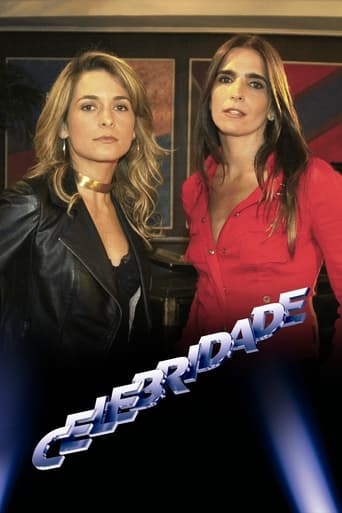
7.7A successful businesswoman in the music industry sees her life fall apart after a young and mysterious woman starts work as her secretary. The scheming girl is totally obsessed by the famous businesswoman and she tries to steal everything from her, including her career.
Celebrity
2003
 5.9
5.9Fifteen year ago, Carlos went to the cinema to meet Júlia, his university colleague with whom he was in love. She never showed up. Carlos was left waiting in the lobby alone. While he waits, something happens which will change his life. A scene, an encounter, an unfinished sentence... Something insignificant, but which will determine the character's life. Fifteen years later, we follow three completely different versions of Carlos's life. In one, he is a man divided between the stability of a secure life in a lukewarm marriage, and the growing desire to live a great love affair. In the second, he is homosexual and places passion above all else. In the third possible life, Carlos is a man who hasn't yet discovered love, and lives through successive disastrous relationships in search of the perfect woman. One of them is his real life. Another is not his life. And a third is the life he'd like to lead. Which is his true life ?
Possible Loves
2001
 7.1
7.1Inspired by the moving book “Só as Mães São Felizes”, by Lucinha Araújo, Cazuza's mother, the film covers a little more than 10 years of the singer’s crazy and brief life – from the beginning of his career in the Circo Voador venue, in 1981, to the huge success and the apotheosis of his shows with the Barão Vermelho band, his solo career, his relations with his parents, friends, lovers and passions, and the courage he had to face his final years, with HIV, until his death, in 1990.
Cazuza: Time Doesn't Stop
2004
 5.7
5.7Jessica, Sabrina and Daiane have dreams, just like all young people of any social class or place in the world. They live in a low-income neighborhood in the periphery of Rio de Janeiro and find in prostitution a way to survive and satisfy their consumer desires. However, even faced with the trials of absolute uncertainty and lack of hope, Jessica, Sabrina and Daiane insist on loving, having fun and planning their future.
Stolen Dreams
2009
 NR
NRThe film follows four digital influencers: Jout Jout, Bispo Arnaldo, Rita Von Hunty and Spartakus Santiago.
You Tubers
2020
 NR
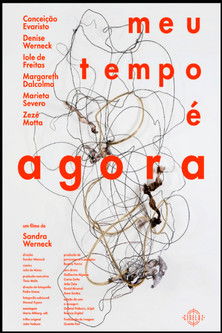
NRFilmmaker Sandra Werneck interviews remarkable women such as Marieta Severo, Zezé Motta, Margareth Dalcolmo, Conceição Evaristo, Denise Werneck, and Iole de Freitas for a journey of shared experiences that challenge stereotypes of female aging. From work to love life, from health to sexuality, these women share their stories, reflections, and life lessons, offering inspiration and raising questions about what truly matters when one reaches maturity, while also highlighting the hardships and misfortunes of aging.
My Time Is Now
2025
Film credits


Series credits
Behind the camera
5.9Fifteen year ago, Carlos went to the cinema to meet Júlia, his university colleague with whom he was in love. She never showed up. Carlos was left waiting in the lobby alone. While he waits, something happens which will change his life. A scene, an encounter, an unfinished sentence... Something insignificant, but which will determine the character's life. Fifteen years later, we follow three completely different versions of Carlos's life. In one, he is a man divided between the stability of a secure life in a lukewarm marriage, and the growing desire to live a great love affair. In the second, he is homosexual and places passion above all else. In the third possible life, Carlos is a man who hasn't yet discovered love, and lives through successive disastrous relationships in search of the perfect woman. One of them is his real life. Another is not his life. And a third is the life he'd like to lead. Which is his true life ?
Possible Loves
2001
5.9Fifteen year ago, Carlos went to the cinema to meet Júlia, his university colleague with whom he was in love. She never showed up. Carlos was left waiting in the lobby alone. While he waits, something happens which will change his life. A scene, an encounter, an unfinished sentence... Something insignificant, but which will determine the character's life. Fifteen years later, we follow three completely different versions of Carlos's life. In one, he is a man divided between the stability of a secure life in a lukewarm marriage, and the growing desire to live a great love affair. In the second, he is homosexual and places passion above all else. In the third possible life, Carlos is a man who hasn't yet discovered love, and lives through successive disastrous relationships in search of the perfect woman. One of them is his real life. Another is not his life. And a third is the life he'd like to lead. Which is his true life ?
Possible Loves
2001
7.1Inspired by the moving book “Só as Mães São Felizes”, by Lucinha Araújo, Cazuza's mother, the film covers a little more than 10 years of the singer’s crazy and brief life – from the beginning of his career in the Circo Voador venue, in 1981, to the huge success and the apotheosis of his shows with the Barão Vermelho band, his solo career, his relations with his parents, friends, lovers and passions, and the courage he had to face his final years, with HIV, until his death, in 1990.
Cazuza: Time Doesn't Stop
2004
5.7Jessica, Sabrina and Daiane have dreams, just like all young people of any social class or place in the world. They live in a low-income neighborhood in the periphery of Rio de Janeiro and find in prostitution a way to survive and satisfy their consumer desires. However, even faced with the trials of absolute uncertainty and lack of hope, Jessica, Sabrina and Daiane insist on loving, having fun and planning their future.
Stolen Dreams
2009
5.7Jessica, Sabrina and Daiane have dreams, just like all young people of any social class or place in the world. They live in a low-income neighborhood in the periphery of Rio de Janeiro and find in prostitution a way to survive and satisfy their consumer desires. However, even faced with the trials of absolute uncertainty and lack of hope, Jessica, Sabrina and Daiane insist on loving, having fun and planning their future.
Stolen Dreams
2009
5.7Jessica, Sabrina and Daiane have dreams, just like all young people of any social class or place in the world. They live in a low-income neighborhood in the periphery of Rio de Janeiro and find in prostitution a way to survive and satisfy their consumer desires. However, even faced with the trials of absolute uncertainty and lack of hope, Jessica, Sabrina and Daiane insist on loving, having fun and planning their future.
Stolen Dreams
2009
NRThe film follows four digital influencers: Jout Jout, Bispo Arnaldo, Rita Von Hunty and Spartakus Santiago.
You Tubers
2020
NRThe film follows four digital influencers: Jout Jout, Bispo Arnaldo, Rita Von Hunty and Spartakus Santiago.
You Tubers
2020
NRThe film follows four digital influencers: Jout Jout, Bispo Arnaldo, Rita Von Hunty and Spartakus Santiago.
You Tubers
2020
NRFilmmaker Sandra Werneck interviews remarkable women such as Marieta Severo, Zezé Motta, Margareth Dalcolmo, Conceição Evaristo, Denise Werneck, and Iole de Freitas for a journey of shared experiences that challenge stereotypes of female aging. From work to love life, from health to sexuality, these women share their stories, reflections, and life lessons, offering inspiration and raising questions about what truly matters when one reaches maturity, while also highlighting the hardships and misfortunes of aging.
My Time Is Now
2025
 10.0
10.0“Touch one, touch us all” is a slogan of the women who took over the streets in Brazil and organized themselves in social networks to face male chauvinist and conservatism. Through testimonies of women who have been subjected to violence, the documentary reveals that, despite legal achievements, the woman still remains vulnerable. Amongst other deponents are Maria da Penha, Joanna Maranhão, Luíza Brunet, and Clara Averbuck.
Mexeu com uma, mexeu com todas
2017
No synopsis available yet.
Canal Clic
1987
Pornography is a film-manifesto. An outburst against the summary execution of Brazilian cinema. It is simple and straightforward: explicit sex, on-screen text, National Anthem.
Pornography
1992
 NR
NRA documentary dramatized on the daily life of a women's prison: Instituto Penal Talavera Bruce, in Bangu, Rio de Janeiro. The film reveals the struggle for survival within this micro-society that is formed between the walls, the relationship of these women with the penal institution, with justice and with the outside world. Through work, leisure, leisure, affective relationships and the social and sexual roles that each one assumes in prison, the film shows the relationship between people, the struggle for survival within this micro-society that is formed between the walls, the relationship of these women with the penal institution, with justice, and with the outside world.
Pena Prisão
1984
 NR
NRThe training process of professional soccer players has become part of a powerful economic system. The case of Pintinho illustrates the drama not only of soccer players, but all those gifted with talent and potential who permanently struggle against the social and economic conditions in which they live and which hinder their personal realization. The film shows soccer as one of the few ways of escaping poor social conditions, as well as the high price of success, the problems in overcoming personal limitations and bearing the pressures of premature expectations.
Pintinho
1994
 NR
NRNo synopsis available yet.
Profissão: Criança
1993
 4.0
4.0Fifteen years after their split, a man and woman reconnect during a chance encounter and reconsider their new loves and lives.
Little Book of Love 2
2015
A documentary on cover artists.
Os Outros
2016
 NR
NRThere is a silent and not officially declared war. A minefield where there is a battle of unequal forces. A combat without causes, disputes or conquests, where the combatants do not even distinguish their enemies.
Children's War
1991
NRThere is a silent and not officially declared war. A minefield where there is a battle of unequal forces. A combat without causes, disputes or conquests, where the combatants do not even distinguish their enemies.
Children's War
1991
 5.6
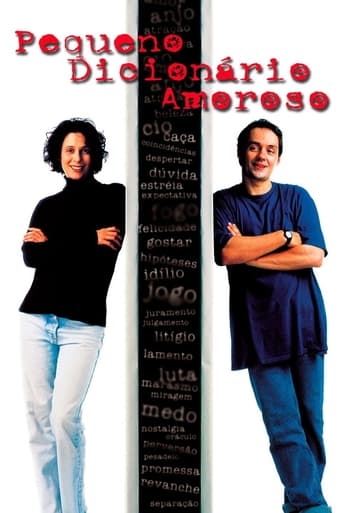
5.6Luiza is an architect who just got out of a ruinous relationship. Gabriel is a biologist and he has finished a long marriage with divorce. When they both meet, chances that they can do well together are not that big. But they will try to, even if their friends Barata (a convict bachelor totally skeptical when it comes to love) and Marta (a mathematic analyst who wishes that human relations were just as exact as numbers are) think otherwise.
Little Book of Love
1997
5.6Luiza is an architect who just got out of a ruinous relationship. Gabriel is a biologist and he has finished a long marriage with divorce. When they both meet, chances that they can do well together are not that big. But they will try to, even if their friends Barata (a convict bachelor totally skeptical when it comes to love) and Marta (a mathematic analyst who wishes that human relations were just as exact as numbers are) think otherwise.
Little Book of Love
1997
Evelin, 13, is pregnant from a 22-year-old who recently left the drug trade. Luana, 15 years old, declares that she planned her pregnancy, as she wanted to have a child of her own. Edilene, 14 years old, is expecting Alex's child, who also got her neighbor Joice pregnant. Over the course of a year, the daily lives of these three young women are followed.
Girls
2006
Evelin, 13, is pregnant from a 22-year-old who recently left the drug trade. Luana, 15 years old, declares that she planned her pregnancy, as she wanted to have a child of her own. Edilene, 14 years old, is expecting Alex's child, who also got her neighbor Joice pregnant. Over the course of a year, the daily lives of these three young women are followed.
Girls
2006
 NR
NRThe transvestites of the Rio nights in testimony about their professional difficulties, moralism, repression and stardom
Rite of Passage
1981
 NR
NRMixing fiction and documentary, DAMAS DA NOITE tells the story of Júlia, a street girl who wanders around the city fighting for survival. She sells chewing gum, commits small thefts, until, due to lack of option, she begins to prostitute herself.
Damas da Noite
1987
NRMixing fiction and documentary, DAMAS DA NOITE tells the story of Júlia, a street girl who wanders around the city fighting for survival. She sells chewing gum, commits small thefts, until, due to lack of option, she begins to prostitute herself.
Damas da Noite
1987