
Directing
Patrice Kirchhofer
Born — Died
1953-04-03 — 2019-08-20
Place of birth
Maison Laffitte, Yvelines, France
Known for
Directing
Credits
36 titles
Known for
 NR
NRFirst film made outside of pure animation, with all that it is possible to put and omit in a first film essay, which contains authoritatively - and without knowing it at the beginning - images made by others long before and not the least, with trifles that make a whole.
Sensitométrie II
1974
 5.0
5.0I saw people flee in fright before the force of Chromaticité I, during which I remained fastened to my seat, in the clutches of fear. The last image, the screen turns white: I glance at my neighbour, immobilised just as myself. (Bernard Weidmann, Rhizome Hérétique, 1980)
Chromaticité I
1977
 NR
NRA test film shot in super 8 mm and 16 mm inflated for copying. A first film "long", made with nothing, "hypnotic", slow and repetitive as it was at the time fascinating and usual to do, as an exercise in style mandatory. A period film.
Sensitométrie VI
1976
 NR
NRFound footage, edited from international news footage.
Anorexie III
1979
Roland Barthes evokes a pastry named Jesuit.
Edison IV
2005
 NR
NRFirst part of the trilogy on language, on the birth of writing.
Écriture
2019
Film credits
Behind the camera
NRFirst film made outside of pure animation, with all that it is possible to put and omit in a first film essay, which contains authoritatively - and without knowing it at the beginning - images made by others long before and not the least, with trifles that make a whole.
Sensitométrie II
1974
5.0I saw people flee in fright before the force of Chromaticité I, during which I remained fastened to my seat, in the clutches of fear. The last image, the screen turns white: I glance at my neighbour, immobilised just as myself. (Bernard Weidmann, Rhizome Hérétique, 1980)
Chromaticité I
1977
NRA test film shot in super 8 mm and 16 mm inflated for copying. A first film "long", made with nothing, "hypnotic", slow and repetitive as it was at the time fascinating and usual to do, as an exercise in style mandatory. A period film.
Sensitométrie VI
1976
NRFound footage, edited from international news footage.
Anorexie III
1979
Roland Barthes evokes a pastry named Jesuit.
Edison IV
2005
NRFirst part of the trilogy on language, on the birth of writing.
Écriture
2019
 NR
NRDuring a vacation, Gilles Deleuze questions the concept of "knowing how to swim" and the relationship with the wave.
Edison II
2005
Second part of the trilogy on language, on the non-representation of man in Paleolithic art.
De Imago
2019
 NR
NRA cinema encyclopedia. Yet another history of film.
Anorexie II
1979
 NR
NRLarge visual elaborations of Kirchhofer means most simple devices and childish in cinema archeology, Thaumatrope the Praxinoscope, all optical toys. This fundamental investigation of the batch becomes particularly clear in Sensitométrie III (Sensitometry III), where work on the range is very pure because it is accentuated by the open opposition between positive and negative. But the difference is that, where other devices seeking forms of regularity and stability to swallow motionless in the mobile, film Kirchhofer rather explore all possible rhythms, so to enhance the irregularity, difference, discontinuous. The parade always comes up against the still image, continuity serves monumentalize Meanwhile, the optical illusion is stripped and the beauties of the irregular explode. Nicole Brenez - Portrait Arte - May 2006
Sensitométrie III
1975
 6.5
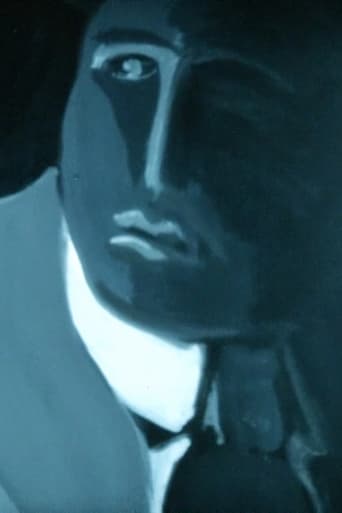
6.5An experiment transposing a painting by the artist Jacqueline Bosson into film. A particularly delicate exercise which consists of preserving the quality of both the colors and the range of blacks and whites, of directing the gaze to a single part of an ensemble predefined by one of the many factors involved in “making visible”, without turning away from the the fact that one’s attention is liberated from the noises and distractions of the gallery, of the museum, of the world… — different and similar from those the screening room — an inevitability of light.
Resultante I
1980
 NR
NR“Breaking in. Patrice Kirchhofer’s Anorexie 4 continues on the path of the narrated narrative (a short story by Chandler) and Décembre 79 on the path of photography. At the end of these two journeys, the film becomes the subject and the trace of the same act of breaking in. In Anorexie 4 the voice shapes the images (the play of chess and of light) and in Décembre 79, shot in the same abandoned mining region, the photos shape the film: chemical deposits, fossils instantaneously striped and imprinted by signs of life and haunted by their ghostly presence. A space of dreary grey, of desolation, which is in a never-ending process of dying because the place, even before being filmed, already went through a vampire-like depletion. In accepting the invitation of these tracking shots of abandoned factories, the spectator is summoned to riverbanks similar to those of Dreyer’s Vampyr and Murnau’s Nosferatu.” Charles TESSON. Festival de Digne. Cahiers du Cinéma n° 314 – Juillet–Août 1980.
Décembre 1979
1980
 NR
NRNo synopsis available yet.
PUNK
1978
No synopsis available yet.
Edison III
2005
 NR
NRThere are also film-shots, like "L'Envers", admirable montage between 1988 and 2005 from the voice of Jean-Luc Godard, Bob Dylan or Marlon Brando. (Nicole Brenez - Portrait Arte - May 2006.)
L'envers
2001
 NR
NRTo approach a photo printed by Patrice Kirchhofer is frightening. I have long seen in them an agression by negligence. With patience, I found in them the solution that fancy lab prints could not convey. Patrice K manipulates the marks made irrationally, entirely by chance. When being photocopied, an overexposed photo reacts better than a carefully made print. It is this image, the photocopy, that K. used for his film. His films are characterized by accidental marks. And K. knows how to relate to one mark rather than another. (Bernard WEIDMANN - RHIZOME HERETIQUE - March 3rd, 1980.)
Anorexie I
1979
 NR
NRSecond film of the series, from a few images - some photocopied - and a soundtrack full of noise (of war) and fury - the Vietnam War to be precise - guns, aircraft carrier take-offs, noise from napalm bombs, hair-dryers and zippos lighters. The horror ! The horror !
Chromaticité II
1978
 NR
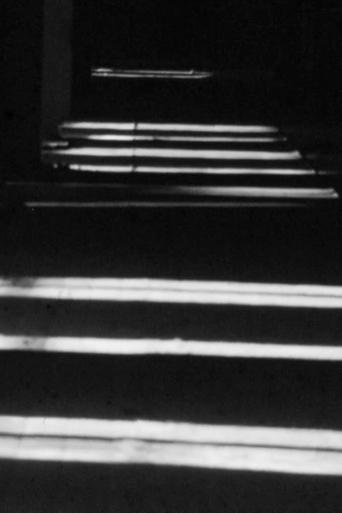
NRSENSITOMETRIE V, the first film that I saw by K., bored me to death… A black screen, a few rare profiles of a window… I couldn’t take any more, so I left the theater, unable to wait until the twenty-minute “duration” of the film had elapsed… Bernard WEIDMANN - RHIZOME HERETIQUE - March 3rd, 1980.
Sensitométrie V
1976
 NR
NRI had the sudden urge to run through the forest while watching ATARAXIE I. Upon returning home, I went straight to my dictionary to look up the meaning of the title: “Tranquility of the soul. For the Stoics, a state of mind that nothing can disrupt: the ideal of the sage.” (Bernard WEIDMANN - RHIZOME HERETIQUE - March 3rd, 1980.)
Ataraxie I
1977
Digital film
Edison I
2005
 NR
NRRail Ditch and Fence. - Auteuil racetrack, Paris France
Rémanence I
1978
 NR
NR"In this work in progress, which will never be completed, even though he has screened it in public several times, the filmmaker discusses with the writer France Huser the difficulty of filming / women / of letters / and of making a frontal portrait, which will inevitably have to be reworked." - Gisèle Rapp-Meichler
28035
1978
 NR
NRThe fist movie of the series "Sensitométrie" is an animated film. Animation techniques offers incredible possibilities of de-structuring an image. Even in classical animated films, there is no pre-existing "real". One must reconstruct something based on the study of forms and movements.
Sensitométrie I
1973
 NR
NRA barbaric feast of "Mad Masters" of our country hardly unexplored, originally on a very repetitive "kraft" music ....
Sensitométrie VII
1976
 NR
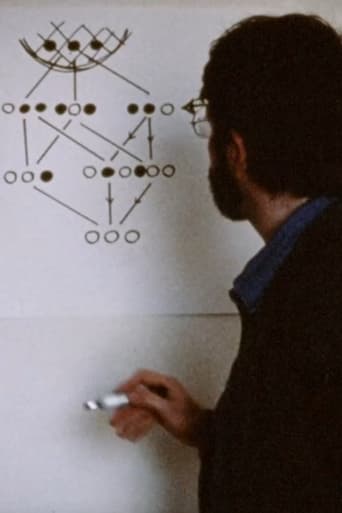
NRFilm by Patrice Kirchhofer.
Pour un temps
1984
 NR
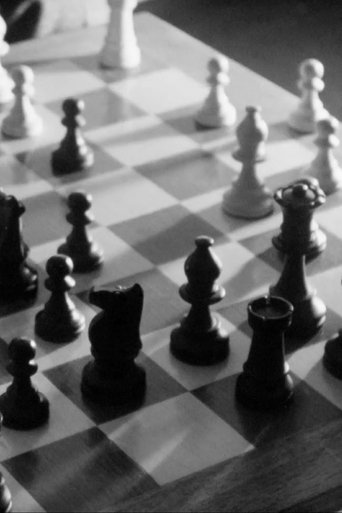
NR“Breaking in. Patrice Kirchhofer’s Anorexie 4 continues on the path of the narrated narrative (a short story by Chandler) and Décembre 79 on the path of photography. At the end of these two journeys, the film becomes the subject and the trace of the same act of breaking in. In Anorexie 4 the voice shapes the images (the play of chess and of light) and in Décembre 79, shot in the same abandoned mining region, the photos shape the film: chemical deposits, fossils instantaneously striped and imprinted by signs of life and haunted by their ghostly presence. A space of dreary grey, of desolation, which is in a never-ending process of dying because the place, even before being filmed, already went through a vampire-like depletion. In accepting the invitation of these tracking shots of abandoned factories, the spectator is summoned to riverbanks similar to those of Dreyer’s Vampyr and Murnau’s Nosferatu.” Charles TESSON. Festival de Digne. Cahiers du Cinéma n° 314 – Juillet–Août 1980.
Anorexie IV
1979
Radio interview with Nicolas Sarkozy.
Edison V
2005
 NR
NRAnarchism, Castroism, Maoism, while mingled. But what survives is Nihilism ! Alain Peyrefitte in the National Assembly, May 9, 1968
Sensitométrie IV
1976
Homage to the painting Nu descendant un escalier by Marcel Duchamp.
NDUE
2014
No synopsis available yet.
Anorexie V
1979
 NR
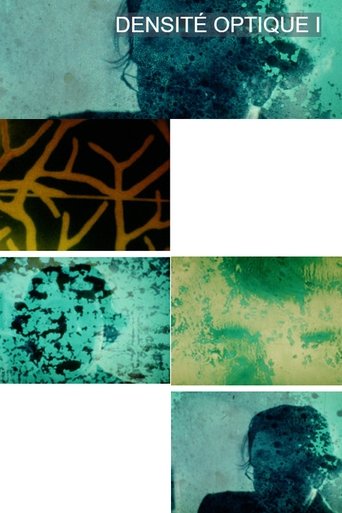
NRDensité Optique I (Optical Density I) mark a chromatic decomposition of the image. The choice to show a scrolling film movie as an extreme slow motion, frame by frame voluntarily directs the gaze on the work of the image. This aesthetic can remember those photographs retouched by painting. However, this type of image is obtained by a chemical decomposition of the film emulsion. Indeed, it is composed of three colored layers deposited on a transparent plastic substrate. Light passing through these layers is tinged with the colors and optical density, recreates the images and colors of the frames. Certain mixtures of chemistries acids attack these layers in the decolorizer, diluting in different aspects.
Optical Density I
1977
The misappropriation and use of information.
Modulation de fréquence P.P.U.
1977
 NR
NRHors Titre I (Off-Title I) is a hermetic movie deliberately mysterious. Figure interpreted by Stuart Sherman shines in the first part of the film by his anonymity. The man drowned in the crowd, activity, all this urban life that is foreign to him. It expresses nothing, does nothing, to the point of appearing to blur the image. In the second part, it works. Always very mysteriously. The viewer built himself a sense of all these actions cut by the film. Whatever it is, its activity is internalized: slide analysis, reading, writing. The outlines of this figure then draw, and blend back into the urban landscape, this time in the open. The character became somebody through a symbolic initiation: nighter? read de Sade? photographic activity? maybe three at a time, perhaps in a dream. The key is in becoming.
Hors Titre I
1981
 NR
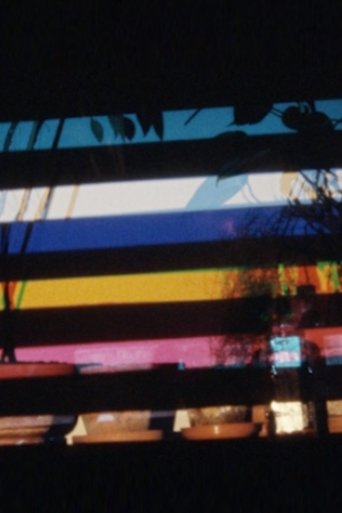
NRAn experiment with color fields.
Densité Optique II
1979