
Directing
Yu Hyun-mok
Born 1925-07-02 · Sariwon, Hwanghae Province, North Korea
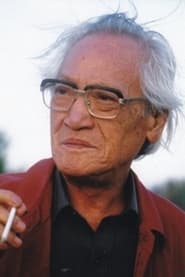
Yu Hyun-mok (July 2, 1925 – June 28, 2009) was a South Korean film director. Born in Sariwon, Hwanghae, Korea (North Korea today), he made his film debut in 1956 with Gyocharo (Crossroads). According to the website koreanfilm.org, his 1961 film Obaltan "has repeatedly been voted the best Korean film of all time in local critics' polls." Yu attended the San Francisco International Film Festival in 1963, where Variety called Obaltan a "remarkable film", and praised Yu's "[b]rilliantly detailed camera" and the film's "probing sympathy and rich characterizations." His dedication to the intellectual side of film and interest in using film to deal with social and political issues led him to have difficulties both with box-office-oriented producers, and with Korea's military government during the 1960s and 1970s. Korean critics have said his directing style is "in the tradition of the Italian Neorealists," yet "the terms 'modernist' or 'expressionistic' [are] just as applicable to his works." Besides his directing activities, he has taught film, and made a significant contribution to Korean animation by producing Kim Cheong-gi's 1976 animated film, Robot Taekwon V. A retrospective of Yu's career was held at the 4th Pusan International Film Festival in 1999. Yu died from a stroke on June 28, 2009.
Acting credits
Behind the camera
 7.0
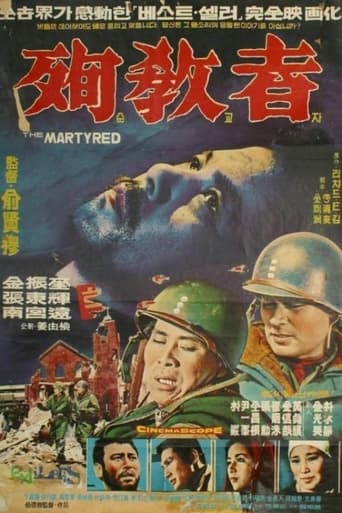
7.0Out of fourteen ministers taken away by the communist troop, only two come back alive. The mystery behind their survival is at the issue here. Told through one of the survivor's testimony, depicts images of men troubled between the war and the religion. Although laden with anti-Communist notions from the 60's military regime.
The Martyrs
1965
 8.0
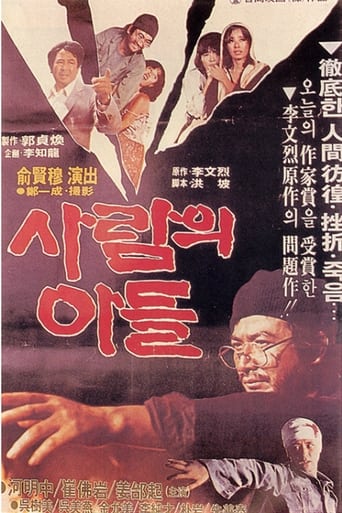
8.0A detective searching for the cause of a young man's death uncovers a melodramatic story involving prostitutes and religion.
Son of a Man
1980
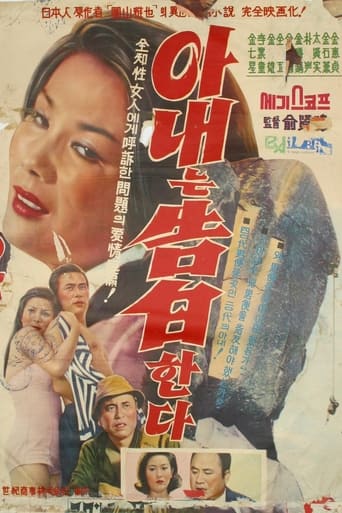 7.0
7.0The professors' wife lives as abused mentally by her husband. One day the couple goes climbing with a young man, who works for a pharmaceutical company and often visits them on business. While they scales a cliff holding a rope, her husband under them loses his footing and falls down. When they all are about to fall, she cut the rope, so the husband died in a fall. She stands at the bar, but the court decides the case is an emergency evacuation. So she obtains an acquittal, but murderous intent in her mind must work on her.
Wife's Confession
1964
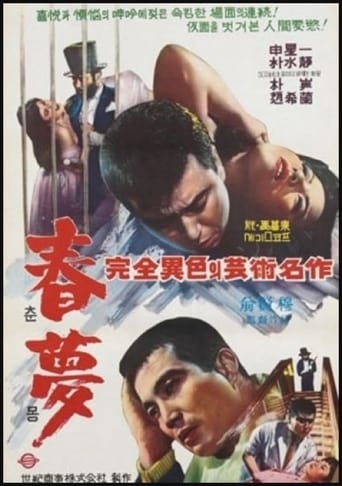 9.0
9.0While under the effects of anasthesia in a dentist's office, a young man and woman fantasize a romantic triangle between themselves and the dentist.
An Empty Dream
1965
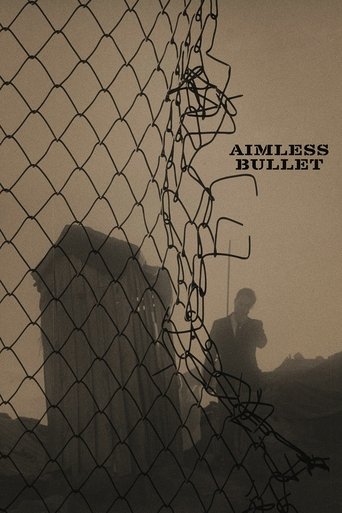 7.1
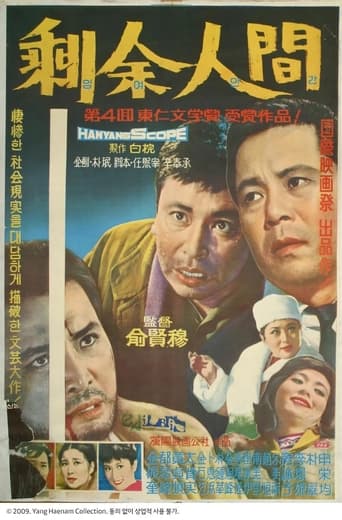
7.1Two brothers—Cheol-ho, an accountant with a toothache and a pregnant wife, and Yong-ho, an unemployed ex-soldier wounded in battle—navigate life in post-war Korea.
Aimless Bullet
1961
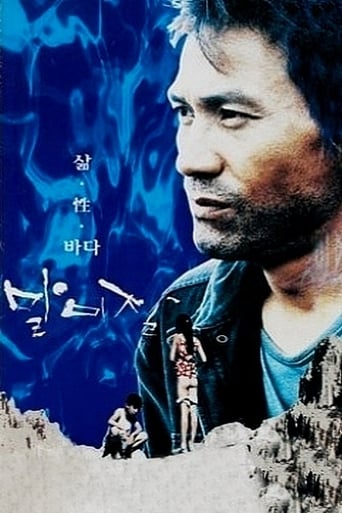 9.0
9.0No synopsis available yet.
Mom, the Star, and the Sea Anemone
1995
 7.0
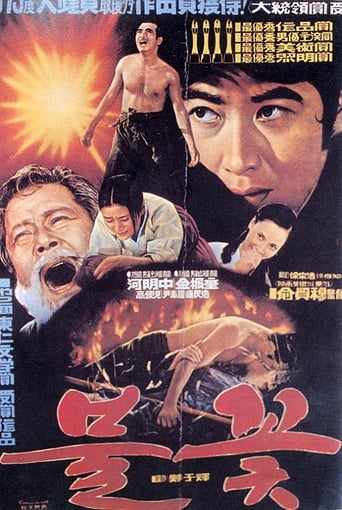
7.0A man wanders around the mountains with a bleeding leg, holding a rifle in his hand. Seemingly a fugitive, he runs from as-yet unknown pursuers, but he also seems to be following somebody who has already walked the same path. As he hides in a secluded cave, past memories sweep through his exhausted mind, memories of lifelong cowardice and evasion. And this recollection leads to a reconstruction of early 20th century Korean history. Winner of Best Picture (Nam-a Pictures Co., Ltd.), Best Actor (Ha Myung-joong), Best Art Direction (Kim Yoo-joon), Best Lighting (Son Young-cheol) at the 14th Grand Bell Awards. (source: Jiro Hong, koreanfilm.org)
Flame
1975
 7.5
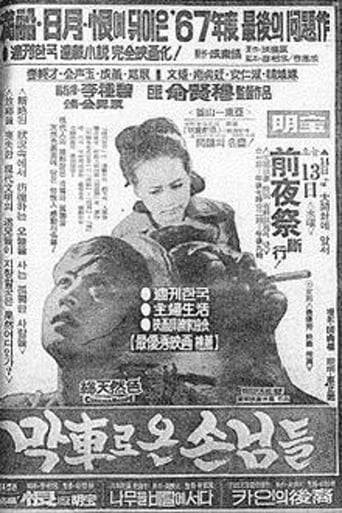
7.5This film concentrates on a group of people who have trouble adjusting to mainstream society. From a woman running away from her previous life, to a man with a terminal disease, to a pop artist misunderstood by his contemporaries, the film looks on with sympathy and compassionate humor on a set of people who, for whatever reason, just don’t fit in.
Guests Who Arrived by the Last Train
1967
 6.0
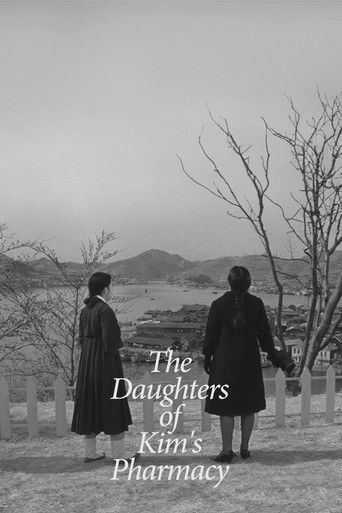
6.0After an aggressive man lets his anger get the better of him, his wife takes her own life and he is forced to go on the run. The son he leaves behind grows up to have 4 daughters, but there is rumored to be a curse on his family. As the daughters find their way into relationships the curse seems to be true. Allegations of child murder, infidelity, forced into marriages with raging psychopaths.
The Daughters of Kim's Pharmacy
1963
 6.3
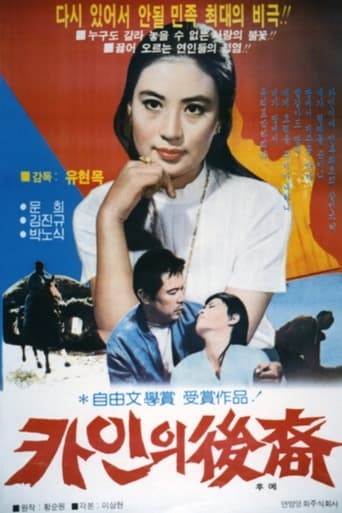
6.3Shortly after Korea gained independence from Japan (1945), North Koreans decide to extort civilians' property in the name of revolutionalizing its land and settle class struggles for proletariats. The film depicts an anti North-Korean concept, detailing the country's situation after the independence. South Korea's submission for the Academy Award for Best Foreign Language Film in 1968.
Descendants of Cain
1968
 10.0
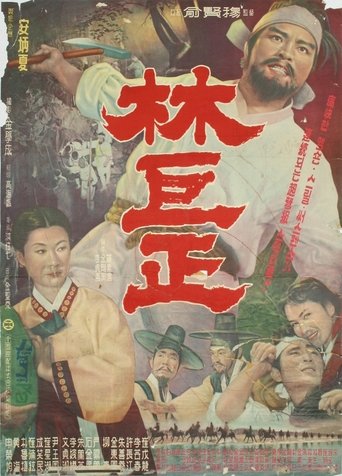
10.0During the later years of Joseon Dynasty (1392-1910), Lim Kkeok-jeong, a butcher's son, stands up against the aristocrats' tyranny and helps displaced people live in peace at a village he has established. He also forms a chivalrous robbers' band to get rid of corrupt officials. He dedicates himself to saving people from misery and teaching a lesson to the aristocrats and corrupted officials.
Lim Kkeok-jeong
1961
 NR
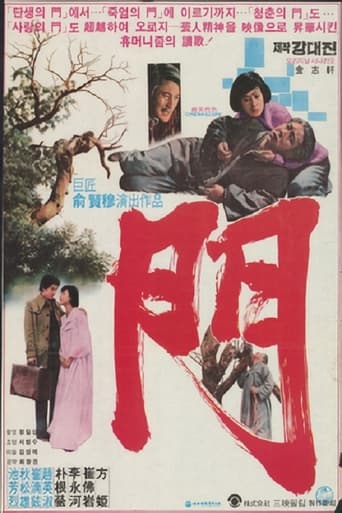
NRZung comes to Korea to investigate the mysterious death of her father, Seijung, a renowned performer and composer in the Japanese music scene. While Zung pursued a different path in life by studying engineering, she is drawn back to her father's legacy. In her search, she reaches the summit of Hallasan, where her father's body was found, and meets Master Woo, a master of the gayageum, and his daughter, Gasil. Listening to Master Woo's performance, characterized by the phrase "music that is joyful yet not exuberant, sorrowful yet not mournful," she learns that her father had been deeply affected by the music, leading to his tragic passing.
The Door
1978
 9.0
9.0A school teacher on a remote island has to convince skeptical parents to allow him to take his class of young children to Seoul to experience modern, urban civilization for the first time.
School Excursion
1969
 6.5
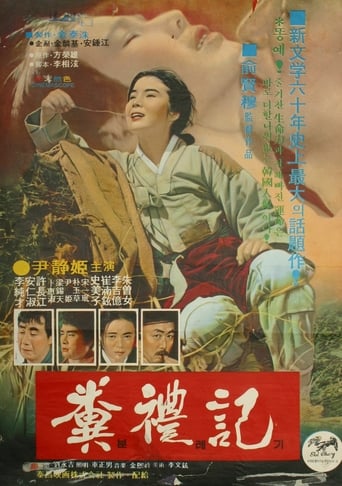
6.5Bun-rye, the eldest daughter in a poor family, is violated by Yong-pal, who is a married man, and out of desperation she becomes a concubine of Young-cheol, a gambler who is impotent. Kong Jo-shi is in love with Bun-rye, though she still has feelings for Yong-pal. After losing his money, Young-cheol takes out his anger on Bun-rye and throws her out of his house. In retaliation, Jo-shi kills Young-cheol, and Bun-rye is driven to madness.
Bun-rye's Story
1971
 10.0
10.0In a hospital waiting room, a group of men arrive and meet one another. Choe, is the upbeat fellow who always thinks of the nation and its people. Cheon was wounded in the war and has fallen into despair. Then there's the dentist, run ragged by his hectic life. They commiserate over each man's lot in life and exchange stories about their love affairs.
The Extra Mortals
1964
 10.0
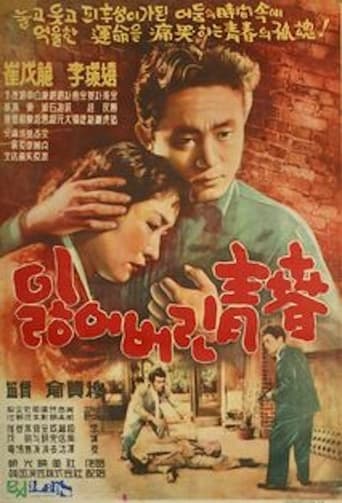
10.0A man named Jin-gu, fleeing Seoul after accidentally committing murder while defending himself, is torn between escaping with his lover, Jeong-ae, and his growing entanglement in a criminal conspiracy. After a series of dangerous encounters and close calls with the police, Jin-gu desperately seeks Jeong-ae, only to find her being tailed by detectives. As their attempts to reunite are continuously thwarted, Jin-gu's journey reflects not only his personal guilt but also the tragic fate of those, like Jeong-ae, caught in circumstances beyond their control. In the end, Jin-gu faces the consequences of his actions, while Jeong-ae silently endures the weight of their doomed love.
The Lost Youth
1957
 NR
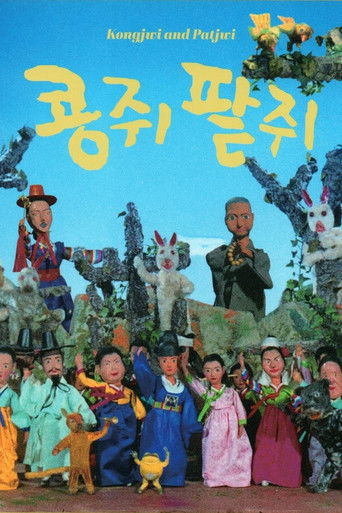
NRKongjui, who had been living alone with her father, welcomes a stepmother and a stepsister called Patchui into her life. When her father is out, the stepmother and Patchui make her do all the housework and the stepmother believes all of Patchui's lies and beats Kongjui mercilessly. When talks of marriage between Kongjui and the son of a respectable family come out one day, the stepmother does everything in her power to get Patchui married to the young man. Unaware of her stepmother's plans, Kongjui runs into the young man in the woods and the two fall in love.
Kongjwi and Patjwi
1978
 7.0
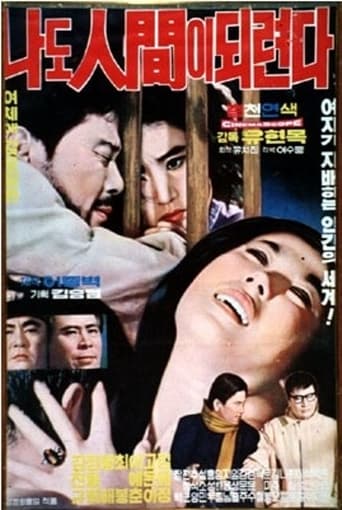
7.0Natasha, an officer at the Soviet Embassy in North Korea, is in love with Seok-bong. But Seok-bong has already planned his wedding with Bok-hui. Natasha grows jealous and threatens Bok-hui to leave somewhere else. Meanwhile Bok-hui's brother, Tae-yeong, is executed after participating in an anti-communist march. Seok-bong is accused of taking a part in the march. Seok-bong starts to feel pessimistic about his communist belief. He tries an escape to the South, but he is captured by the authority and executed.
I Want to Be Human
1969
 NR
NRNo synopsis available yet.
I'll Give You Everything
1968
 10.0
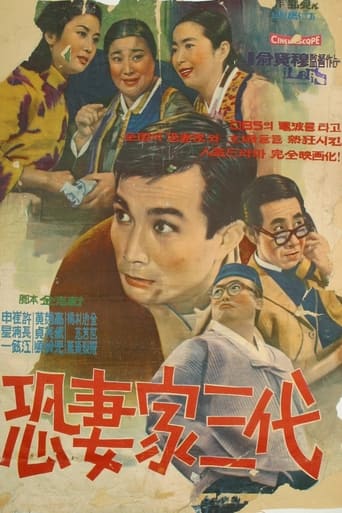
10.0A grandfather, his son, and grandson are all henpecked husbands. A comedy picturing these three henpecked men's lives at one family.
The Three Hen-pecked Generations
1967
 NR
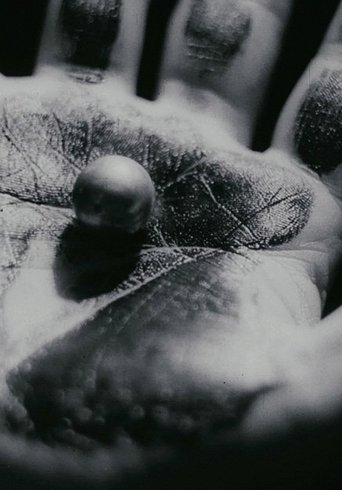
NRHand is the second and last film produced by Cinepoem in 1966. Cinepoem is a film group founded by Yu Hyun-mok with the aim of producing avant-garde short films. Hand was directed by Yu, written by Choi Il-soo, shot by Kim Gi-Guk, and recorded by Park Ik-sun. It’s format is 35mm and B&W with a length of 50 seconds. The exceptionally short length of the film was set for submitting to the International and Universal Exposition in Montreal under the theme “Man and His World (Concours terre de hommes).” It organized a competition program for 50 seconds long films and called for works from all over the world. Winning works were supposed to screen in theaters as well on television. In the competition, 870 works from 37 countries were presented and 94 films were selected including Hand for screening at the opening of the Montreal International Film Festival.
Hand
1966
 8.0
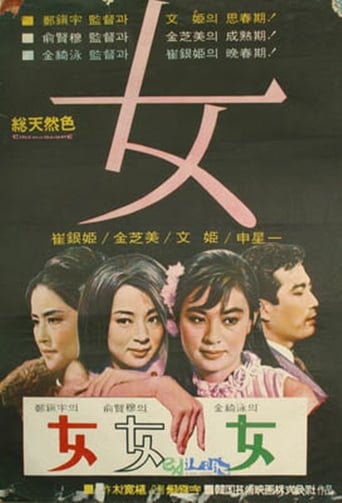
8.0A man meets a woman on his hiking trip to Mountain Seorak, but she suffers from incurable diseases. He becomes infatuated with her hair. When he tells her about his feeling she promises him that she would leave her hair after she dies as part his heritage for the man. But when he looks for her later she is already dead, and her hair was already sold to another person. He meets another woman he becomes intimate with, but finds that she is his biological mother.
Woman
1968
 6.8
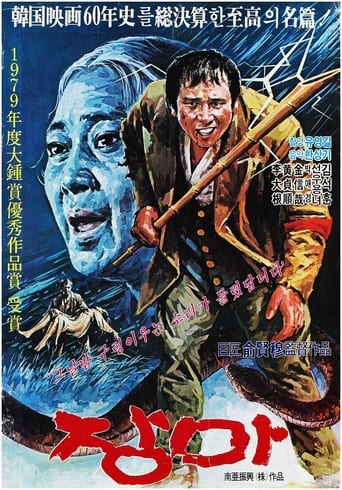
6.8During the Korean War in early 1950s, mother’s family comes and stays at Dong-man’s house. His uncle on father’s side is a North Korean partisan and the uncle on mother’s side dies while fighting as South Korean soldier. For this reason, his grandmothers don’t get alone. Dong-man tells a stranger that his partisan uncle is home and his father gets arrested.
Rainy Days
1979
 7.0
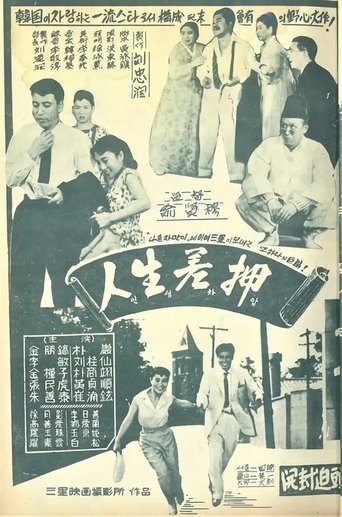
7.0I Joong-saeng (Kim Seung-ho), a sign company president who believes power and money can solve anything, stages a fake suicide to escape legal troubles from fraud, embezzlement, and tax evasion, but ultimately fails and faces a tragic downfall.
The Seizure of Life
1958