

Acting
Gegam Grigorian
Born — Died
1951-01-29 — 2016-03-23
Place of birth
Yerevan, Armenian SSR, USSR [now Armenia]
Known for
Acting
Credits
5 titles
Gegham Grigorian (also written Grigoryan, Armenian: Գեղամ Գրիգորյան; Russian: Гегам Григорян; 29 January 1951 – 23 March 2016) was an Armenian operatic tenor. Gegham Grigorian was born in Yerevan and graduated from Yerevan Komitas State Conservatory. He was a student of Professor Sergei Danielyan. Grigorian made his first appearance on the big stage in 1971 at age 20. In 1972 he went to West Berlin to perform in solo concerts. In 1975 he made his debut at the National Theater of Opera and Ballet of Armenia in the role of Edgardo in Lucia di Lammermoor by Donizetti. After this, he played Saro in Armen Tigranian's Anoush, Tirit in Tigran Chukhajian's Arshak II, Sayat Nova in Alexander Arutiu…
Known for
 NR
No synopsis available yet.
Le monde est à vous
1987
 7.0
Taped live at the Mariinsky Theater in St. Petersburg, Valery Gergiev conducts this landmark production of Giuseppe Verdi's operatic masterpiece. This opera premiered at the Mariinsky Theatre in 1862, and is performed here in its original St. Petersburg version using reconstructions of the magnificent painted scenery.
Verdi: La Forza del Destino
1997
 NR
The Queen of Spades, Op. 68 (Russian: Пиковая дама, Pikovaya dama, French: Pique Dame) is an opera in 3 acts (7 scenes) by Pyotr Ilyich Tchaikovsky to a Russian libretto by the composer's brother Modest Tchaikovsky, based on a short story of the same name by Alexander Pushkin, but the plot was very changed. The premiere took place in 1890 in St. Petersburg (at the Mariinsky Theatre), Russia.
Tchaikovsky: The Queen of Spades
2002
 10.0
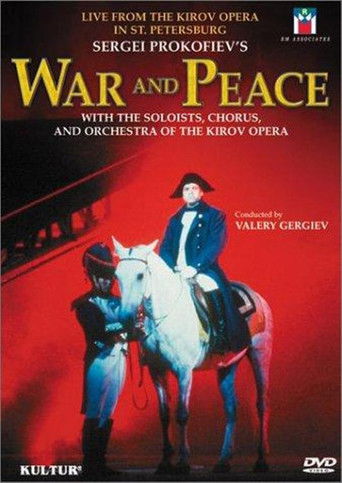
The love story of young Countess Natasha Rostova and Count Pierre Bezukhov is interwoven with the Great Patriotic War of 1812 against Napoleon's invading army.
War and Peace
1991
 10.0
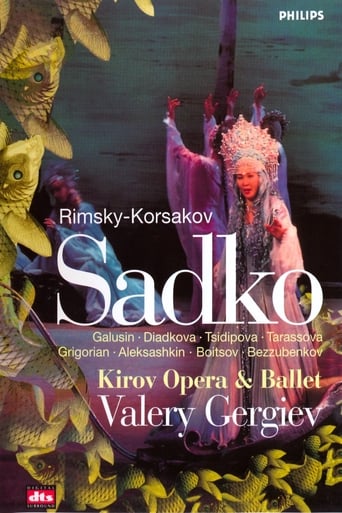
Nikolai Rimsky-Korsakov's dazzling opera by-line in seven tableaux. The epic journey of Sadko a sea-faring minstrel from Novgorod, his wife Libava and their encounters with Volkhova, a sea Princess and the court of her parents the Tsar and Tsarina of the Sea. Sadko traveling on his ship "Falcon" also meets visiting foreign merchants from India (a Hindu), Scandinavia (a Varangian) and Italy (a Venetian) singing of the magic of their own lands to try and lure him. In the seventh tableaux Sadko is reunited with his wife, thinking his journey a dream, until he sees his fleet of ships coming up the newly created river Volkhova and realizes his sea Princess has transformed herself into the river in order to create the gateway to the ocean for Novgorod. In conclusion Sadko leads the hymn of praise and everyone rejoices their good fortune.
Sadko
1994
Film credits
1990s · 3 titles
7.0Taped live at the Mariinsky Theater in St. Petersburg, Valery Gergiev conducts this landmark production of Giuseppe Verdi's operatic masterpiece. This opera premiered at the Mariinsky Theatre in 1862, and is performed here in its original St. Petersburg version using reconstructions of the magnificent painted scenery.
Verdi: La Forza del Destino
1997
10.0The love story of young Countess Natasha Rostova and Count Pierre Bezukhov is interwoven with the Great Patriotic War of 1812 against Napoleon's invading army.
War and Peace
1991
10.0Nikolai Rimsky-Korsakov's dazzling opera by-line in seven tableaux. The epic journey of Sadko a sea-faring minstrel from Novgorod, his wife Libava and their encounters with Volkhova, a sea Princess and the court of her parents the Tsar and Tsarina of the Sea. Sadko traveling on his ship "Falcon" also meets visiting foreign merchants from India (a Hindu), Scandinavia (a Varangian) and Italy (a Venetian) singing of the magic of their own lands to try and lure him. In the seventh tableaux Sadko is reunited with his wife, thinking his journey a dream, until he sees his fleet of ships coming up the newly created river Volkhova and realizes his sea Princess has transformed herself into the river in order to create the gateway to the ocean for Novgorod. In conclusion Sadko leads the hymn of praise and everyone rejoices their good fortune.
Sadko
1994