
Directing
Brian L. Frye
Known for
Directing
Credits
32 titles
Brian L. Frye is a filmmaker and professor of law. His films are in the permanent collection at The Whitney Museum. In 2012, he joins the permanent faculty at the University of Kentucky Law School.
Known for
 6.4
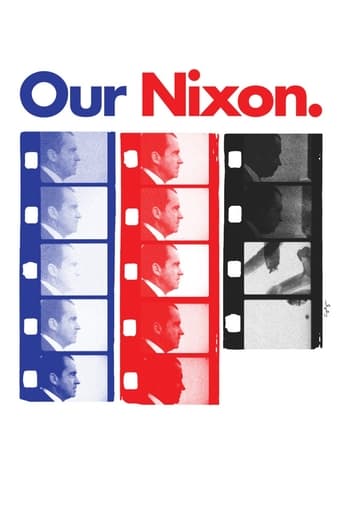
6.4Never before seen Super 8 home movies filmed by Richard Nixon's closest aides - and convicted Watergate conspirators - offer a surprising and intimate new look into his Presidency.
Our Nixon
2013
 8.0
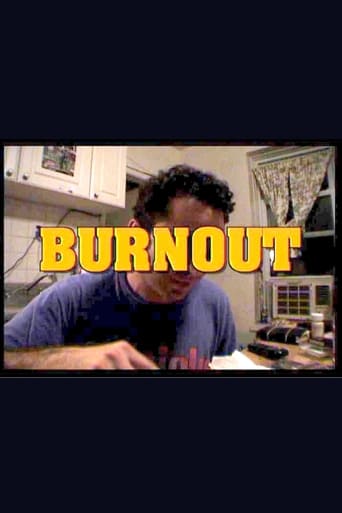
8.0A metropolis awash in electrical overdrive crashes in the heat of summer and sends a Bronxite into the clutches of a waterworld further north. It is there that we witness the cooling fogs and diving mammals of maritime yore and sail free in winds of a nautical nature. A nature that fills the summer sky with twinkling tidbits and the tummy with protein rich denizens of Neptune’s soup. A tour of the towering turrets of tomorrow land and the spatial splendor of yesterday’s yearnings captured on both chemical and electrical media.
Burnout
2003
 NR
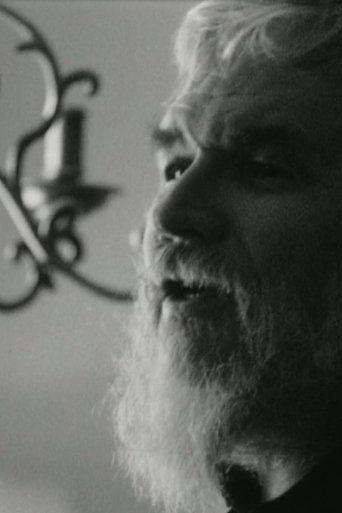
NRI shot this roll of film at a party Bard College threw when it awarded Stan Brakhage an honorary degree. A few days after he died, I dug it out and watched it again. I had meant to make Brakhage a gift of the roll, but instead it became a farewell.
Encomium
2003
Alchemical transformation of the remains of a mysterious low-budget film from 1969.
Apocryphal Movie
2001
A 16 mm. film by Brian L. Frye.
Ladies Day
1997
 NR
NRA fragment of tinted nitrate. An acetate recording of a wedding ceremony. Echoes of the bitter sweetness of the Spirit on the tongue of Man. As Frampton tipped his hat to Gloria, so might I.
Kaddish
2002
Film credits
Behind the camera
6.4Never before seen Super 8 home movies filmed by Richard Nixon's closest aides - and convicted Watergate conspirators - offer a surprising and intimate new look into his Presidency.
Our Nixon
2013
NRI shot this roll of film at a party Bard College threw when it awarded Stan Brakhage an honorary degree. A few days after he died, I dug it out and watched it again. I had meant to make Brakhage a gift of the roll, but instead it became a farewell.
Encomium
2003
Alchemical transformation of the remains of a mysterious low-budget film from 1969.
Apocryphal Movie
2001
A 16 mm. film by Brian L. Frye.
Ladies Day
1997
NRA fragment of tinted nitrate. An acetate recording of a wedding ceremony. Echoes of the bitter sweetness of the Spirit on the tongue of Man. As Frampton tipped his hat to Gloria, so might I.
Kaddish
2002
 NR
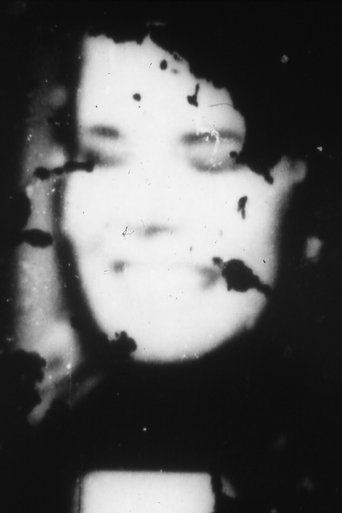
NRA home-processed, handmade work, revises Charlie Chaplin’s screen test of his adolescent soon-to-be spouse (Oona O’Neill, the daughter of playwright Eugene O’Neill), broken up by irregular interruptions of black emulsion. Frye creates a continuously shifting exchange of glances between her image and the audience: «A surpassingly intense meditation on viewing and being viewed».
Oona's Veil
2000
A short work by Brian Frye
Sunday Morning
2001
Short work by Brian Frye
Untitled 1997
1997
 NR
NRBrakhage has called her the muse, perhaps because she appears only to those who hold a strip of film in their own hands. But here she appears – if only for a moment – to all those who care to look for her. "Let us speak plainly: The marvelous is always beautiful, anything marvelous is beautiful; indeed, nothing but the marvelous is beautiful." – Andre Breton
Nadja
2000
Greg Pierce of Orgone Cinema invited me and Bradley Eros to present a Robert Beck Memorial Cinema program at the Warhol Museum in Pittsburgh, Pennsylvania. I stayed at Greg and Alisa's house, and one the morning after the program, I shot this film of their daughters Merce and Orla in the backyard. -Brian L. Frye
Sunday Morning
—
TV Assassin was filmed in 2000. The images are Adolf Eichmann, at his trial in Jerusalem in 1961. I used a Cine-Kodak Eight Model 60 with the shutter and claw removed, placed on a Cine-Kodak Titler, to rephotograph the images from a cheap, miniature television, creating a vertically smeared, pulsating image. Then I projected the regular 8mm film at 5 fps on a Bolex Paillard 18-5 and rephotographed it on Super-8. The process was intended to evoke the blurred quality of Gerhard Richter’s “October 18, 1977,” a cycle of photopaintings of the Red Army Faction, or Baader-Meinhof Gang.
TV Assassin
—
In 1997, while attending the San Francisco Art Institute, I made a 1 hour video of myself reading from John-Paul Sartre's book Nausea while drinking an entire fifth of Jack Daniels. My prediction came true, in spades. -Brian L. Frye
Nausea
1997
A film by Brian L. Frye
In Love With Love
2000
 NR
NRA short sound work by Brian Frye
Francois Boue Services the Fragrance Machine at Bloomingdale's
1998
A film by Brian L. Frye
Mirror Manhattan
2001
A short work by Brian Frye
An American Boy Grows Up
2002
An essay toward documenting the ineffable...One might consider it a dialogue between a man of Faith and one who has merely tasted of the absurd, yet struggles to ingest it.
The Letter
2001
Robert Beck was an American soldier from Chicago, who served in the First World War. Struck deaf and dumb by shellshock, Beck was sent to an English sanitarium to convalesce. At some point, the patients attended a movie. Beck began to laugh, and was suddenly cured of his affliction. He became the patron saint of New York's Robert Beck Memorial Cinema, dedicated to films which touch the marvelous. On September 26, 2000, Stuart Sherman, the great performance artist and filmmaker, presented several of his films, interspersed with "perfilmances," in which he re-enacted the passion of Robert Beck. This film is a record of that "spectacle," shot by Lee Ellickson. Stuart Sherman died on September 14, 2001 in San Francisco. This may have been his last New York performance.
Robert Beck is Alive and Well and Living in NYC
2002
 NR
NR"Frye's Meeting With Khrushchev is not an easy film to like, but repeated viewings reveal a work of immense weight, a moving combination of intense nostalgia and thoughtful meditation on the impossibility of ever completely understanding history [...] The longest 25 minutes of my life." -Edward Smith
Meeting with Khrushchev
1997
 NR
NRThe film consists of two rolls of film I shot in 1998 or 1999 while living in a Bushwick loft. I was interested in the perfect simplicity of a movie camera and what happens when a single part is disabled. So I found simple old cameras and deliberately broke one part, to see what happened. In the first reel, I removed the claw. In the second, I removed the shutter. As I recall, I also have a scheme of swinging the camera back and forth and up and down and various f-stop settings. Very Ernie Gehr. Playing, drinking beer & shooting film. No editing to speak of.
Broken Camera Reels 1 & 2
2000
6.95: Striptease might have been titled "Brian Frye Fails to Strip." We see Frye disrobe, but when he gets to his white undershorts, the roll ends in white flare-outs. There's ... something strange about his movements, especially when he drops his shirt — because in fact he ran the camera in reverse while putting his clothes on. As a result, the work is much more than a joke about not doing what so many other student performers are quite happy to do. - Fred Camper
6.95: Striptease
1995
Wormwood’s Dog and Monkey Show was obviously compiled from a lot more material, which I found over at least a year and a half of hunting about. I spend a good deal of my free time hunting out films. It’s not just any sort of material. I wanted to find films that weren’t totally naïve. None of this stuff is home movies, though some of it almost is. And it’s not professional either. Nor is it newsreel quality. It’s a sort of studied, non-professional filmmaking. It’s by different people, obviously, but they all have a similar position in relation to the camera. To me there’s a sort of beautiful openness to that kind of filmmaking.
Wormwood's Dog and Monkey Show
2001
 NR
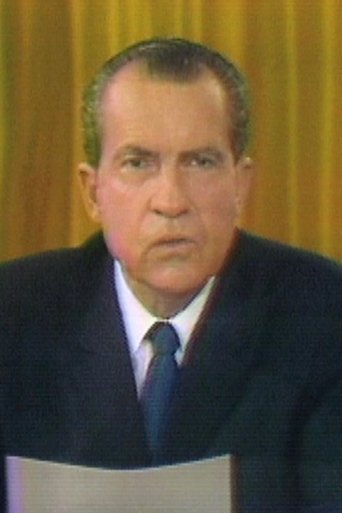
NRThis short documentary suggests a direct connection between two of Nixon’s greatest triumphs as president: his landmark 1969 "Silent Majority" speech (in which he argued that street protesters did not represent the views of most Americans, despite their increasing visibility) and his historic landslide re-election in 1972 (in which George S. McGovern won only one state and the District of Columbia, losing even his home state of South Dakota).
The Silent Majority
2011
 NR
NR".. and yet of that living breathing throng, not one will be encased in a material frame. A company of ghosts, playing to spectral music. So may the luminous larvae of the Elysian fields have rehearsed ...
Lachrymae
2000
I made this film at the San Francisco Art Institute. I shot the entire film by myself in one day on an Arriflex. It was filmed on Kodak RAR gun camera film, which I hand-processed as a negative and sent out for a workprint. I edited the workprint, which became the final version of the film. -Brian L. Frye
World's Fair and Exhibition
1997
 NR
NRThis documentary consists of the victim impact video introduced in the penalty phase of the trial of Douglas Oliver Kelly, accompanied by an audio recording of the California Supreme Court hearing oral argument as to the admissibility of the video.
Sara Nokomis Weir
2014
In honor of St. Patrick's Day, Moira Tierney asked for films about snakes. This is as close as I came. -Brian L. Frye
The Eels of Chicago
2000
In 2007, the United States Supreme Court decided Scott v. Harris, which held that where “the record blatantly contradicts the plaintiff’s version of events so that no reasonable jury could believe it, a court should not adopt that version of the facts for purposes of ruling on a summary judgment motion.” (BF)
A Reasonable Man
2011
 NR
NRMan is full of sin and nature, and all he does don't bear looking at, and a heap of what he says is a shame and a mawkery. But cant no witness hurt him. Some day something might beat him, but it wont be Satan." – William Faulkner in "A Fable". The annual Civil War re-enactment at Gettysburg is one of the largest and best attended in the country. Why Gettysburg? Partly because – rightly or not – we take it as the moment at which the outcome of the struggle for America was most in doubt. But truly because the words Lincoln spoke there made of it that moment, framing the struggle in its starkest terms. And so these people who believe in America come to perform its redemption. It is a passion-play, really, a dramatic evocation of the cataclysm in which a young nation expiated its sins in blood, and was reborn. (Silent, accompanied by Civil War songs.)
Observations at Gettysburg
2002
 NR
NROn December 12, 1863, General Ambrose Burnside's Army of the Potomac engaged General Robert E. Lee's Army of Northern Virginia in the town of Fredericksburg, Virginia... Close combat through the streets of Fredericksburg and multiple assaults on the Confederate army entrenched in the heights behind the town resulted in heavy Federal casualties, which forced an eventual withdrawal. In November, 2001, I attended a small and relatively informal reenactment of the battle of Fredericksburg. About a hundred men and women did their best to illustrate the actions of the thousands of young men who offered their lives a century earlier. An air of absurd theater suffused the entire event, which provided the ground for its peculiar truth. Everyone played their part exceedingly honestly and well, and left something on the film I was myself surprised to find there.
Across the Rappahannock
2002
 NR
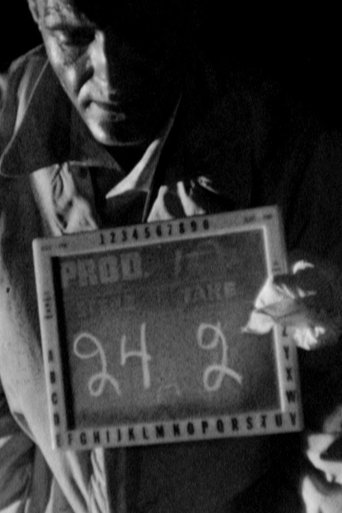
NRSometime in the 1960s, a chiropractor from Kansas City made a short film called "A Portrait of Fear." The film consisted of several tableau shots of amateur actors standing in a field at night reciting painfully overwrought dialogue, apparently lit by the headlights of a car. I assume the cinematographer used an Auricon, as the sound was recorded directly on the B&W reversal original. In 1998, he sold me the outtakes, strung together just like you see them.
The Anatomy of Melancholy
1999