

Writing
Toshio Yasumi
Born — Died
1903-04-06 — 1991-05-22
Place of birth
Osaka, Japan
Known for
Writing
Credits
40 titles
Known for
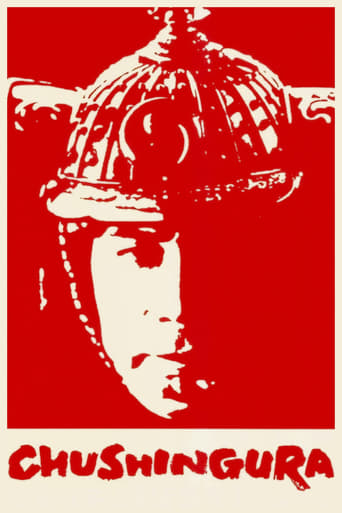 7.1
After their lord is tricked into committing ritual suicide, forty-seven samurai warriors await the chance to avenge their master and reclaim their honor.
Chûshingura
1962
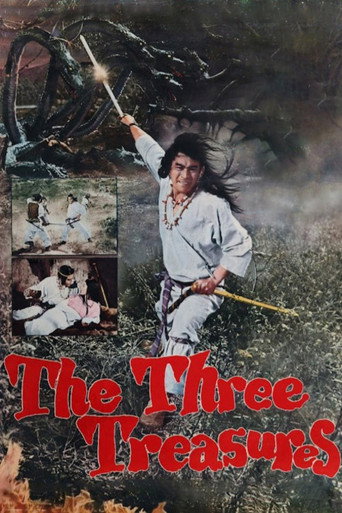 5.5
The legend of the birth of Shintoism. In Fourth Century Japan, the Emperor's son Ouso expects to succeed his father on the throne, but Otomo, the Emperor's vassal, prefers Ouso's stepbrother, and conspires to have Ouso die on a dangerous mission he has contrived. But Ouso prevails in the mission and returns to his father's castle under a new name, Prince Yamato Takeru. Otomo plots to have the Prince sent into even greater danger, but Otomo is unaware that the gods have favored the Prince and the outcome is far from what any of them expected.
The Three Treasures
1959
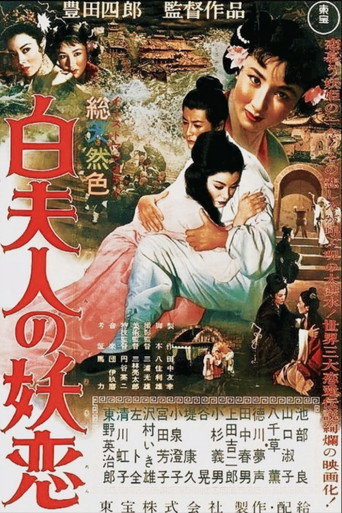 6.1
Lavish Japanese-Chinese coproduction based on an ancient Chinese legend about a man who falls in love with a snake goddess in human form.
The Legend of the White Serpent
1956
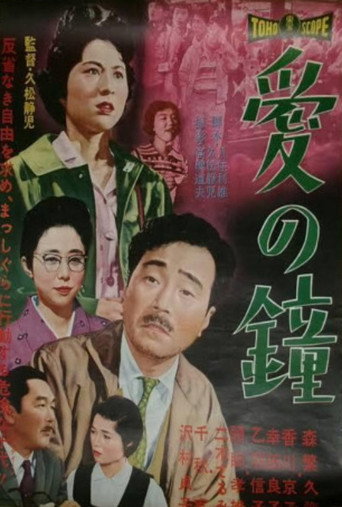 NR
No synopsis available yet.
The Bell of Love
1959
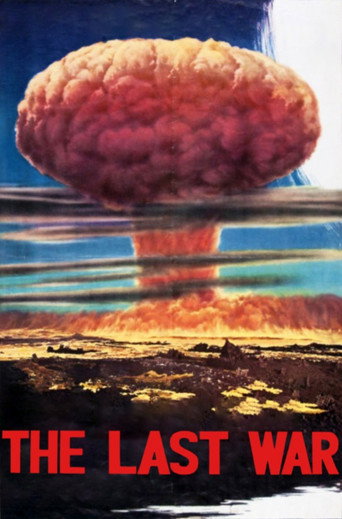 6.8
A Japanese family is torn apart by the tensions of an avoidable nuclear world war between the superpowers.
The Last War
1961
 NR
1957 Japanese movie.
Forgotten Flower Petal: Conclusion
1957
Behind the camera
7.1After their lord is tricked into committing ritual suicide, forty-seven samurai warriors await the chance to avenge their master and reclaim their honor.
Chûshingura
1962
5.5The legend of the birth of Shintoism. In Fourth Century Japan, the Emperor's son Ouso expects to succeed his father on the throne, but Otomo, the Emperor's vassal, prefers Ouso's stepbrother, and conspires to have Ouso die on a dangerous mission he has contrived. But Ouso prevails in the mission and returns to his father's castle under a new name, Prince Yamato Takeru. Otomo plots to have the Prince sent into even greater danger, but Otomo is unaware that the gods have favored the Prince and the outcome is far from what any of them expected.
The Three Treasures
1959
6.1Lavish Japanese-Chinese coproduction based on an ancient Chinese legend about a man who falls in love with a snake goddess in human form.
The Legend of the White Serpent
1956
NRNo synopsis available yet.
The Bell of Love
1959
6.8A Japanese family is torn apart by the tensions of an avoidable nuclear world war between the superpowers.
The Last War
1961
NR1957 Japanese movie.
Forgotten Flower Petal: Conclusion
1957
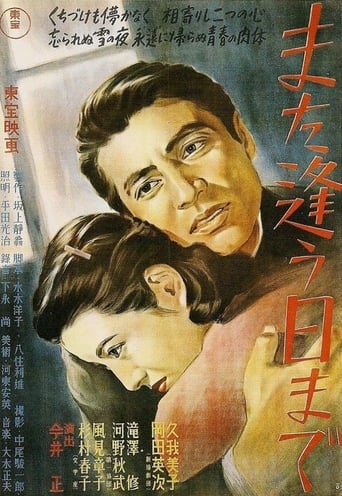 6.7
Saburo and Keiko fall in love with each other but the tide of war separates them.
Till We Meet Again
1950
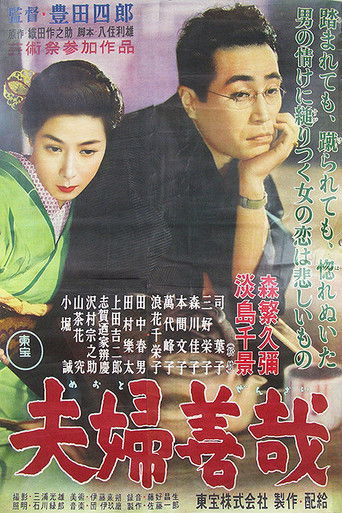 5.6
Ryukichi, the pampered heir to a cosmetics wholesaler, abandons his wife and child to pursue a scandalous affair with a famous geisha named Choko. This betrayal leads his father to disown him, leaving the unskilled Ryukichi with no way to earn a living. To keep them afloat, Choko is forced to continue working as a geisha while secretly scraping together a nest egg to start their own business. However, Ryukichi remains trapped in his hedonistic lifestyle, eventually squandering Choko’s hard-earned savings on his own self-indulgence.
Marital Relations
1955
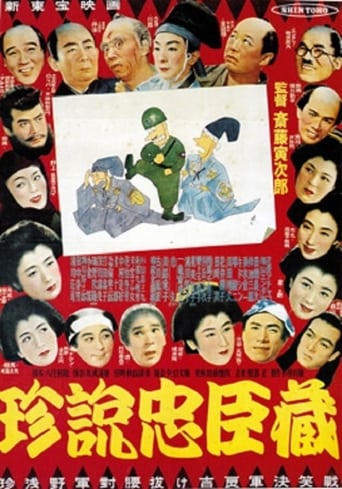 NR
A comedic retelling of the legend of the loyal 47 ronin.
珍説忠臣蔵
1953
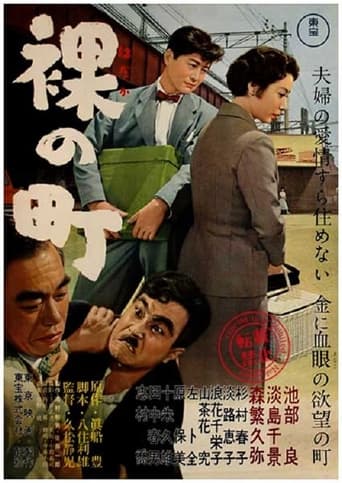 NR
No synopsis available yet.
Hadaka no Machi
1957
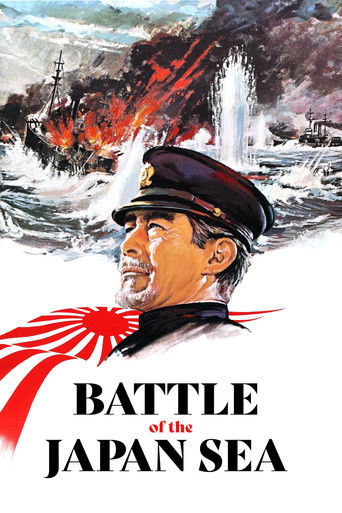 6.4
Japan and Russia clash in what comes to be known as the Russo-Japanese War. An attempt by the Japanese fleet and army to take Port Arthur fails, and a Russian fleet bears down on the Sea of Japan. Admiral Heihachiro Togo sends his fleet to confront the Russians, with results which stun both nations. Meanwhile, Major Genjiro Akashi makes secret negotiations with the Bolshevik revolutionaries in Russia, negotiations that have repercussions far beyond the conflict at hand.
Battle of the Japan Sea
1969
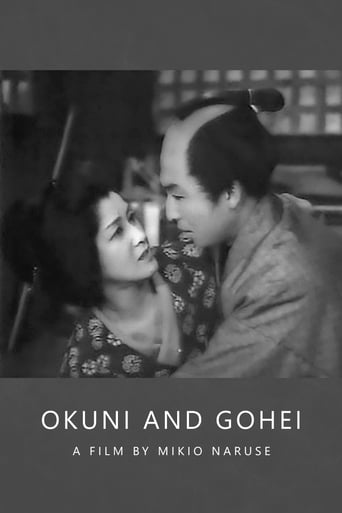 6.3
A high-born woman named Okuni travels around the country with Gohei, a samurai retainer who is in service to her. They are in search of Tomonojo, who has killed the man who was Okuni’s husband and Gohei’s master, and they cannot return to their lord’s home until they have fulfilled their duty of hunting down and killing Tomonojo.
Okuni and Gohei
1952
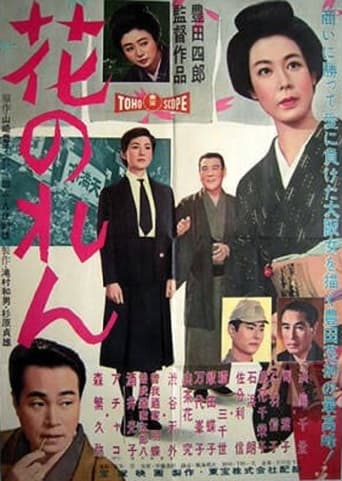 10.0
The movie depicts the strength and resilience of a woman who spent her entire life as a merchant in Semba, Osaka.
Flower Shop Curtain
1959
Shuzenji Monogatari (The Mask and Destiny) is based on a 12th-century Japanese legend. An abortive royal romance leads to an escalating series of tragedies. The central character is a Japanese monarch who would prefer to live a humble existence as a maskmaker. Unfortunately, events -- and destiny -- are against him. When first released, Shuzenji Monogatari was held in far lower esteem than such recent Japanese films as Gate of Hell and Samurai. Nevertheless, the film was selected as an entry at the Venice Film Festival, possibly on the strength of its excellent production values.
The Mask and Destiny
1955
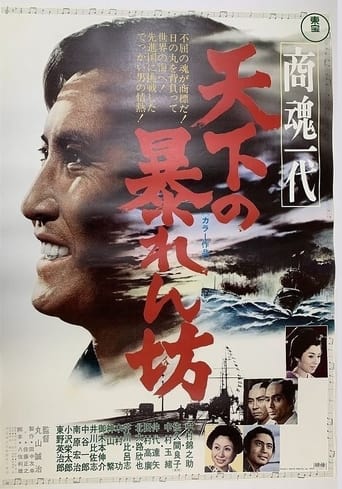 NR
The struggles of a low-ranking samurai (Nakamura) coming to terms with the end of the Tokugawa shogunate and the end of Japan's feudal age with the 1868 Restoration.
Will to Conquer
1970
 8.0
Ayako Wakao won the Blue Ribbon and the Kinema Jumpo for this film.
Nami kage
1965
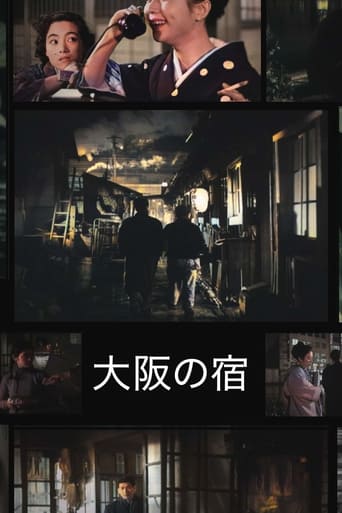 7.5
Follows the story of an insurance company executive from Tokyo, Mr. Mito, who is demoted to the Osaka office. He takes a room at a small inn and tries to rebuild his life.
An Inn at Osaka
1954
 6.4
The ghost of a samurai's wife takes revenge on her husband.
Illusion of Blood
1965
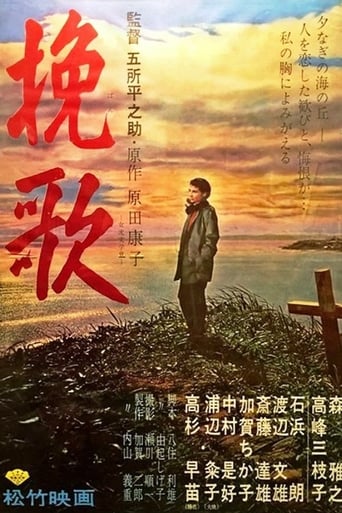 6.1
Reiko, a young woman with a physical disability, begins a clandestine affair with the married architect Katsuragi, but also becomes dangerously obsessed with his unfaithful wife, Akiko.
Elegy of the North
1957
 6.7
It's a man's world. Shimamura, an artist, comes to this snowbound town to rejuvenate himself. He connects with Komako, a geisha he met on a previous trip, and it seems like love. She's the foster daughter of a local family, almost engaged to the family's son Yukio, now dying of consumption. He's tended by his sister Yuko who's angry at Komako for abandoning her brother. Shimamura returns to Tokyo but promises he will be back soon. In anticipation of his return, Komako breaks with her patron and her family loses their home. Complications arise when Shimamura doesn't come back as promised. Then Komako discovers that he and Yuko knew each other in Tokyo. Can Komako escape destiny?
Snow Country
1957
 6.7
Shozo is plagued by the needs of his ex-wife and his current one, but prefers the company of his cat.
Shozo, a Cat and Two Women
1956
 7.0
Depicts various relationships between four beautiful sisters, their husbands, and their second daughter's husband's mistress.
Between Women and Wives
1976
 NR
No synopsis available yet.
Rōkyoku tengu dōjō
1955
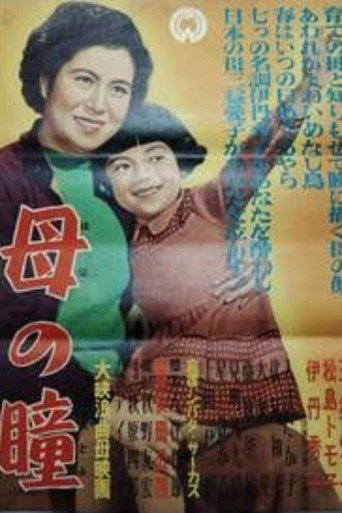 NR
A blind little girl searches for her mother.
Haha no hitomi
1953
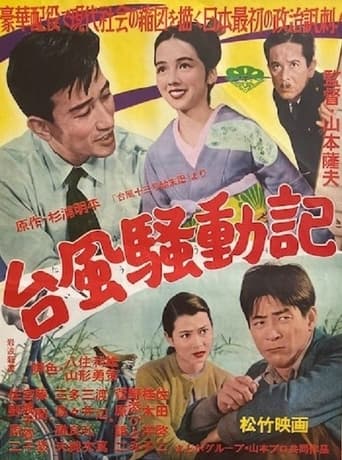 10.0
A group of shady politicians want to make money after a typhoon by claiming the schoolhouse has been destroyed and then cashing in on building a new one.
Typhoon Furor
1956
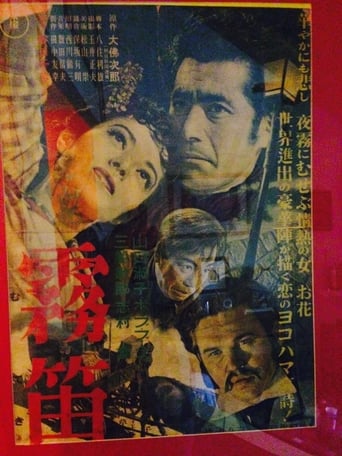 10.0
A Japanese woman, the mistress of an American, falls in love with her servant.
Foghorn
1952
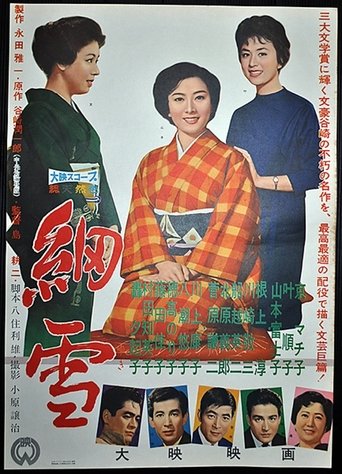 8.5
Based on the famous novel by Junichiro Tanizaki, this is a story of the four sisters of the ancient and reputable Makioka family of Osaka.
The Makioka Sisters
1959
 4.5
Nakadai is an English teacher at a local school. He’s put-upon like the patron figure of dozens of films and televisions shows. Viewers who are especially fans of Nakadai will appreciate how the actor comically rants about here. His home life is almost disastrous, with a ditzy (but attractive) wife, three young children, a loud school nearby that’s controlled by a corrupt businessman he loathes, and frequent visits from layabout friends. And the grey-furred, green-eyed cat!
I Am a Cat
1975
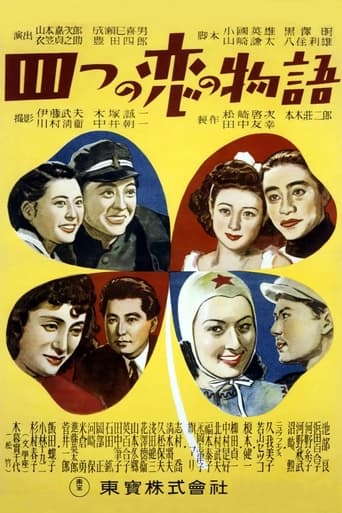 6.2
Omnibus of love stories from 1947 directed by famous directors, featuring big stars.
Four Love Stories
1947
 NR
No synopsis available yet.
Boshisen
1951
 7.5
Based on Kaoru Morimoto oft performed 1945 play, a starring vehicle for famed actress Machiko Kyo as Kei an abused orphaned girl that eventually finds sanctuary with a wealthy family that trades goods with China and becomes a successful businesswoman. Masumura dilutes the originally intended pro-Japan propaganda elements for a more anti-war approach.
A Woman's Life
1962
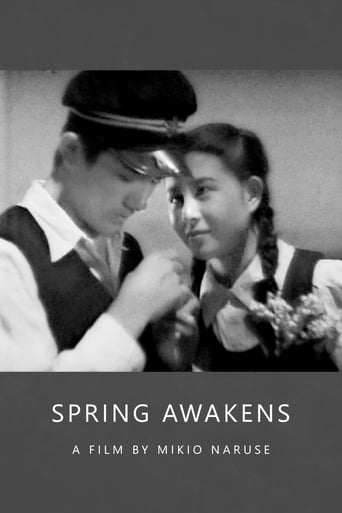 6.8
Slice of life film centered on a couple of years in the life of a rural high school girl.
Spring Awakens
1947
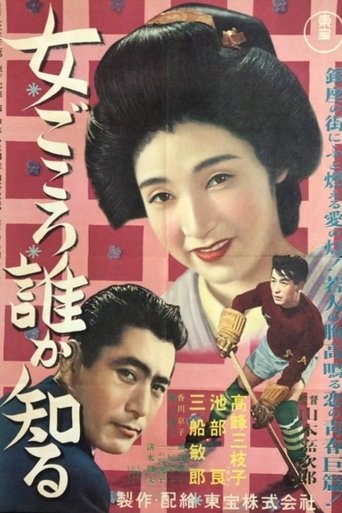 10.0
Ikeuchi was captain of the K - University ice hockey team. The daughter Shikotsuko of Ginza 's western restaurant "Piccolo" was also a female student at K University and was a figure player. They had a dream of being dispatched to Oslo in the Olympic Games and were struggling in each way. Mizuno who runs a sports equipment store in Ginza, showed the geisha by guiding the junior's Ikeuchi and others to the shop of Shimbashi one day.
Who Knows a Woman's Heart
1951
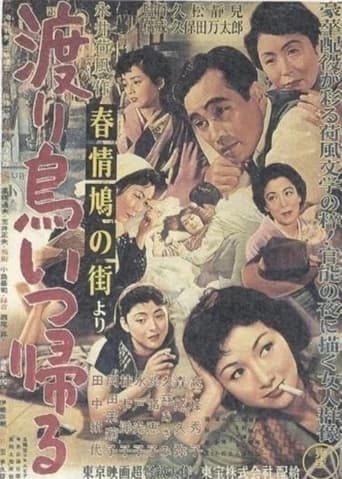 9.0
Yoshida Denkichi does loses sight of his wife Chiyoko and daughter Toyoko during the war, and is taken in by a familiar woman, Oshige, and becomes the owner of "Fujimura" in the town of Hato. Eiko is a timid woman who hates Terada, a watchmaker who is obsessed with her; Tamie is a hard worker who asks for money from customers to support her mother and daughter Teruko; Tane, who dreams of the day they can be together, gives money to her lover Takeda; Machiko, an apres girl, is selective about her customers in the name of romance. They are women working in the red light district at "Fujimura."
House of Many Pleasures
1955
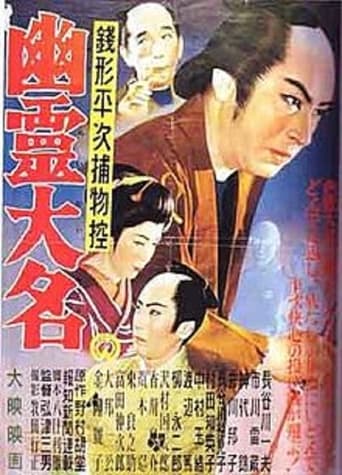 NR
No synopsis available yet.
Case Files of Zenigata Heiji: Ghost Lord
1954
 8.0
Apparently a baseball drama starring real-life stars Nagashima (The Babe Ruth of Japanese Baseball) and teammate Oh-known collectively as ON-from the Yomiuri Giants. Nagashima nickname was 'Mr. Giants.
Mr. Giant's Victory Flag
1964
 NR
No synopsis available yet.
Nodojiman-kyō jidai
1949
 8.0
A 1954 film.
Road to Hawaii
1954
 NR
No synopsis available yet.
Student Double Suicide
1954
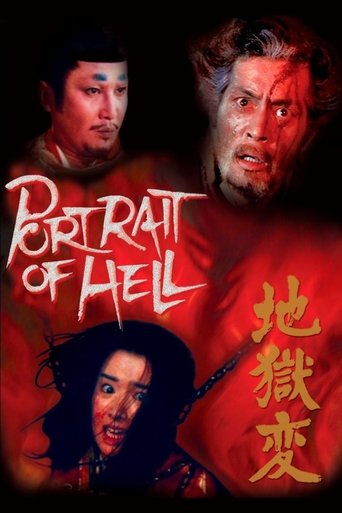 7.9
The story, set in the Heian era, depicts the conflict between Korean painter Yoshihide (Nakadai) and his Japanese patron, the cruel and egotistical daimyo Horikawa (Nakamura). It is based on the 1918 short story Hell Screen by Ryūnosuke Akutagawa.
Portrait of Hell
1969