

Directing
Sammy Lee
Born — Died
1890-05-26 — 1968-03-30
Place of birth
New York, USA
Known for
Directing
Credits
22 titles
Sammy Lee will best be remembered for his great contributions as Dance Director of many important musicals during Hollywood's golden age. He first achieved fame in New York as dance director of the highly successful Ziegfeld Follies of 1927. After contributing dance routines for Ziegfeld's famous productions "Showboat", "Rio Rita", and the last of the "Midnight Frolics", he signed with MGM studios early in 1929. His imaginative dance routines included overhead shots a year before Buzby Berkeley's work in "Whoopee". He brought the prestige of the Ziegfeld image to MGM's early musical talkies. Sammy Lee was nominated twice for an academy award for best dance direction, in 1935 for "King Of Bur…
Known for
 5.0
This short showcases composers and lyricists of songs that are now considered standards of American popular music. For several of these song writers, this is their only known appearance in a theatrically released film.
The Song Writers' Revue
1929
 5.7
A love affair blossoms between two pairs of shoes after a couple purchases the shoes.
New Shoes
1936
 7.5
In this John Nesbitt's Passing Parade short, a look is taken at the problems of film preservation efforts in the 1930s and early 1940s.
The Film That Was Lost
1942
 6.5
This short looks at the illness anthropophobia, the fear of people. In 1901, young Catherine Starr, who lives in a small English coastal town, has an argument with her fiancé. He leaves her house, goes off to serve in the Boer War, and dies of malaria. Catherine blames herself for his death and fears others will also blame her. She does not leave her house for forty years. Groceries are delivered to the house, but no one sees who retrieves them. When the Nazis bomb her house in September 1941, she is forced to cope with the outside world.
The Woman in the House
1942
Leonardo Da Vinci was seen as a great artist during his lifetime. The same cannot be said for his life as an inventor. His genius as an inventor was only truly known through reading his secret manuscripts after his death. His want to invent was because of his curiosity and insatiable quest for knowledge. He was able to invent the earliest prototypes of such things as the steam cannon, the machine gun, the submarine, the depth charge, and the tank, all which were welcome inventions of the day for monarchs who saw their usefulness in warfare.
Portrait of a Genius
1943
 6.4
Part of MGM's "Crime Does Not Pay" series, this short film focuses on crimes revolving around pension scams.
Soak the Old
1940
Behind the camera
5.0This short showcases composers and lyricists of songs that are now considered standards of American popular music. For several of these song writers, this is their only known appearance in a theatrically released film.
The Song Writers' Revue
1929
5.7A love affair blossoms between two pairs of shoes after a couple purchases the shoes.
New Shoes
1936
7.5In this John Nesbitt's Passing Parade short, a look is taken at the problems of film preservation efforts in the 1930s and early 1940s.
The Film That Was Lost
1942
6.5This short looks at the illness anthropophobia, the fear of people. In 1901, young Catherine Starr, who lives in a small English coastal town, has an argument with her fiancé. He leaves her house, goes off to serve in the Boer War, and dies of malaria. Catherine blames herself for his death and fears others will also blame her. She does not leave her house for forty years. Groceries are delivered to the house, but no one sees who retrieves them. When the Nazis bomb her house in September 1941, she is forced to cope with the outside world.
The Woman in the House
1942
Leonardo Da Vinci was seen as a great artist during his lifetime. The same cannot be said for his life as an inventor. His genius as an inventor was only truly known through reading his secret manuscripts after his death. His want to invent was because of his curiosity and insatiable quest for knowledge. He was able to invent the earliest prototypes of such things as the steam cannon, the machine gun, the submarine, the depth charge, and the tank, all which were welcome inventions of the day for monarchs who saw their usefulness in warfare.
Portrait of a Genius
1943
6.4Part of MGM's "Crime Does Not Pay" series, this short film focuses on crimes revolving around pension scams.
Soak the Old
1940
 7.5
This MGM Passing Parade series short tells the story of Julian Poydras, whose encounter with a girl at Mardi Gras had a profound effect on his later life.
Strange Testament
1941
Employees of The Homey Foamy Washing Machine Company decide to put on a musical show. The Board of Directors attempt to get the employees to get back to work
Men of Steel
1938
8.0Shows how important luck can be in a person's life.
The Hidden Master
1940
 6.4
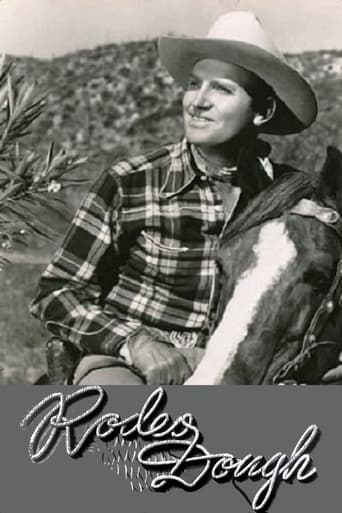
After a trip to Hollywood, two young ladies attempt to hitchhike home but end up at a star-filled rodeo.
Rodeo Dough
1940
 7.0
This John Nesbitt's Passing Parade short tells of the Nazis' efforts to shut down an underground resistance newspaper in occupied Belgium.
Out of Darkness
1941
 7.3
This John Nesbitt's Passing Parade series short highlights the film preservation efforts of the Museum of Modern Art in New York. Several scenes from early newsreels are shown.
Forgotten Treasure
1943
 8.0
This Passing Parade short tells the true story of Vermont blacksmith and inventor Tom Davenport, who lived the first half of the 19th century.
The Immortal Blacksmith
1944
6.7This short film examines the origins of several superstitions including crossing your fingers, knocking on wood, rabbit's feet, and breaking champagne bottles to christen ships, plus the role of superstitions in the Flying Dutchman tale.
Who's Superstitious?
1943
 7.1
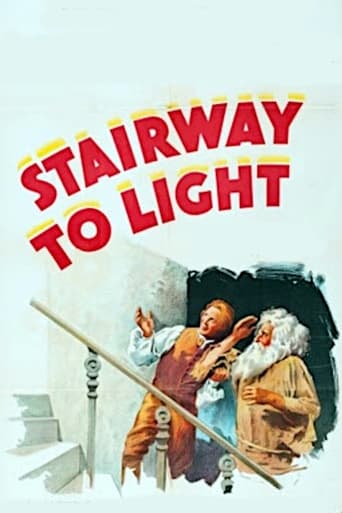
This John Nesbitt's Passing Parade short tells the story of 18th Century French physician Dr. Philippe Pinel, who initiated enlightened, humane treatment of the mentally ill.
Stairway to Light
1945
 9.0
This latter-day parable focuses on two brothers. Peter Rogers is an ambitious, hard-driving attorney. Bob Rogers is a thoughtful, contemplative doctor who decides to forsake his practice to do missionary work in war-torn China. When Peter's young son is tragically killed in an accident, he visits his brother and learns first-hand the importance of compassion and charity. In a world rocked by strife and pain, love can overcome and triumph.
Beyond Our Own
1947
 4.0
Two starstruck visitors to Hollywood sneak into the famous nightclub and end up in a Conga contest and get more than they expected.
Rhumba Rhythm at the Hollywood La Conga
1939
At the Dimsdale Hall Finishing School, Assistant Dean Emily Godsall declares that any student who associates herself with swing music will be severely punished. Complications develop when she finds out that her boyfriend, a chemistry professor at the school, is also a well-known swing bandleader.
Somewhat Secret
1939
An homage to NYC in the form of a short travelogue.
Manhattan Serenade
1929
 8.0
Early Vitaphone short.
The Doll Shop
1929
 6.3
An MGM Miniature about an incurable optimist who is always giving up on his job or project to try something new, while his wife and kids humor him, thinking that some day he may make that million he always talks about. He takes over a peanut farm, but immediately starts off on a bee-hive project, leaving his wife and kids to run the peanut farm.
The Greener Hills
1939
In this "Miniature Musical Comedy," a factory worker keeps pining away for her Prince Charming to rescue her, unaware that her co-worker is a nobleman in disguise. M-G-M seems to have set up Jean Chatburn and Gregory Gaye in this as an alternate Jeanette MacDonald and Nelson Eddy.
Some Time Soon
—