

Acting
Manuel F. Araujo
Place of birth
Rio de Janeiro, Rio de Janeiro, Brazil
Known for
Acting
Credits
16 titles
Manuel F. Araujo (Rio de Janeiro, February 8, 1879–1940) was an early Brazilian film actor. He was prominent in Brazilian film in the 1920s and 1930s and in 1920 directed the film Convém Martelar in which he worked with the touring famous Portuguese actor António Silva. Wikipedia
Known for
 8.0
8.0The story evolves around four women. The two lead characters, Vera and Gilda, middle-class women, are poor but ambitious. They face the bourgeois characters, Helena and Diva.
Human Clay
1929
 NR
NRMaria Bonita is a girl who, because of her beauty, draws the attention of many suitors. Although João Canoeiro likes Maria Bonita, the girl falls in love with Luiz.
Maria Bonita
1937
 9.0
9.0A 1923 Brazilian silent comedy film directed by Luiz de Barros, now considered a Lost Film. Augusto Aníbal Quer Casar is recognized as the first portrayal of an LGBT character in Brazilian cinema history.
Augusto Aníbal Quer Casar
1923
 9.0
9.0Carmen, a poor and beautiful woman, lives in a shantytown in Rio de Janeiro. All men desire her, including her stepfather, but she only has eyes for her boyfriend, Milton. After being expelled from home, she finds out her lover is married. Unhappy with her life, she finds a place in a boarding house and tries to find a job, with no success. Tired and starving, she ends up passing out in the street, being helped by a passer-by, who leaves her at writer Flávio Martins's house, a man torn between the proposal of an arranged marriage, an old flame, and the new guest.
Woman
1931
 NR
NRReconstruction of the lost film "Augusto Aníbal Quer Casar," which turned 100 years old in 2023.
A Reconstituição de "Augusto Aníbal Quer Casar"
2023
 9.0
9.0No synopsis available yet.
Alma Sertaneja
1919
Film credits
1930s · 6 titles
NRMaria Bonita is a girl who, because of her beauty, draws the attention of many suitors. Although João Canoeiro likes Maria Bonita, the girl falls in love with Luiz.
Maria Bonita
1937
9.0Carmen, a poor and beautiful woman, lives in a shantytown in Rio de Janeiro. All men desire her, including her stepfather, but she only has eyes for her boyfriend, Milton. After being expelled from home, she finds out her lover is married. Unhappy with her life, she finds a place in a boarding house and tries to find a job, with no success. Tired and starving, she ends up passing out in the street, being helped by a passer-by, who leaves her at writer Flávio Martins's house, a man torn between the proposal of an arranged marriage, an old flame, and the new guest.
Woman
1931
 9.0
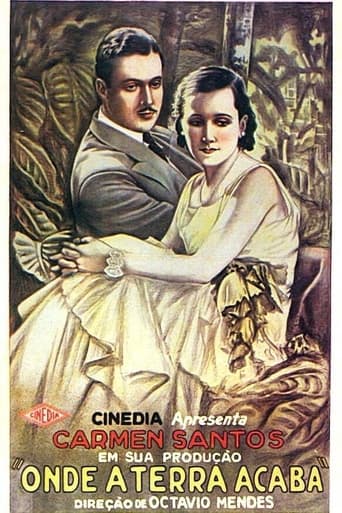
9.0A woman flees to an isolated island, expecting peace and inspiration to write a novel. Her arrival, however, threats the stability of the islanders' lives as it stirs conflict between two men.
Onde a Terra Acaba
1933
 7.0
7.0A poor woman passes herself as singer that just arrives from Frances and becames a sensation on Rio de Janeiro's high society.
Bonequinha de Seda
1936
 8.0
8.0In a séance, Menezes' great-great-grandfather is brought back to life in present day (1936), over a century after his death at age 26. A free-spirited womanizer, he starts causing all sorts of trouble for the wealthy, respectable family of his descendants.
The Young Great-Great-Grandfather
1936
 7.5
7.5An orphan is sent to a reformatory where the inmates receive an extremely repressive education. While visiting the place, a teacher hears the orphan's indignant complaints about the mistreatment. Impressed, he adopts this 16-year-old girl, who at 24 graduated in Social Sciences. Now she has a name: Vitória dos Santos, and her concern is to help the girls who, like her, suffer in the city's asylums.
Birds without a Nest
1939
1920s · 7 titles
8.0The story evolves around four women. The two lead characters, Vera and Gilda, middle-class women, are poor but ambitious. They face the bourgeois characters, Helena and Diva.
Human Clay
1929
9.0A 1923 Brazilian silent comedy film directed by Luiz de Barros, now considered a Lost Film. Augusto Aníbal Quer Casar is recognized as the first portrayal of an LGBT character in Brazilian cinema history.
Augusto Aníbal Quer Casar
1923
 10.0
10.0Lost film. Mack Sennet-style comedy, with bathing girls.
Aventuras de Gregório
1920
 8.0
8.0Night guard Alberto, whose greatest ambition was to be a reporter, tries to clear a friend accused of a crime. With the help of his friend Ernesto, he investigates the events linked to the crime and is pursued by the real criminal. Jaime, the bandit, before dying confesses to the crime, after a plane chase in which he fell to the ground, with Ernesto in pursuit. Ernesto had moved from one plane to another, using a rope ladder and managed to stay attached to the plane's wings, saving himself.
Hei de Vencer
1924
 7.0
7.0A farmer from the countryside goes to Rio de Janeiro with his family in search of his daughter's fiancé, who was in the Federal Capital gambling, going to cabarets and dating a ballerina. The farmer also gets involved in many adventures. In the end, he and Gouveia, the fiancé, regret their decision and return to their family.
A Capital Federal
1923
 10.0
10.0Seeing a black knight, the young man Álvaro runs after him. During the race, the knight falls and he discovers that it is a girl. The two end up falling in love.
O Cavaleiro Negro
1923
 8.0
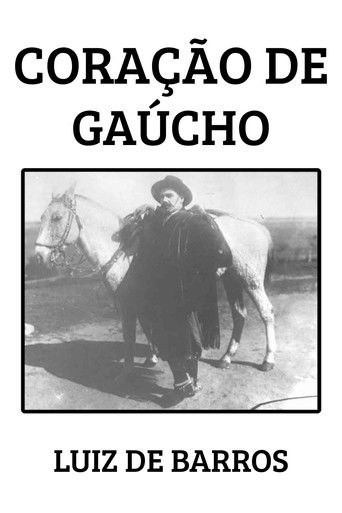
8.0Film based on the book "O Gaúcho" by the writer José de Alencar.
Coração de Gaúcho
1920
1910s · 2 titles
9.0No synopsis available yet.
Alma Sertaneja
1919
 NR
NRUbirajara, chief of the Araguaias, is engaged to Jandyra. One day, however, he falls in love with Aracy, daughter of Itaquê, chief of the Tocantins and sister of Pojucã, his prisoner. He frees Pojucã so he can declare war on Itaquê and retrieve his daughter. Itaquê is wounded by other enemies and goes blind. The two tribes unite and elect Ubirajara as chief.
Ubirajara
1919