
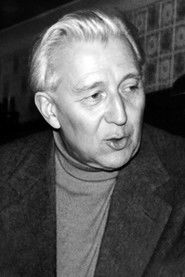
Directing
Georges Régnier
Born — Died
1913-04-17 — 1992-01-17
Place of birth
Paris, Ile-de-France, France
Known for
Directing
Credits
13 titles
Georges Régnier, born April 17, 1913, in the 14th arrondissement of Paris, where he died on January 17, 1992, was a French film director, screenwriter, and cinematographer. A discreet yet committed figure, he belonged to that generation of post-war filmmakers for whom cinema was both an art form and a tool for social intervention. Originally from the Paris region, Georges Régnier trained in the visual arts before specializing in directing and screenwriting. This dual expertise as a screenwriter and cinematographer profoundly influenced his style, characterized by meticulous attention to framing and lighting, often serving subjects rooted in the social realities of his time. His career trul…
Known for
 10.0
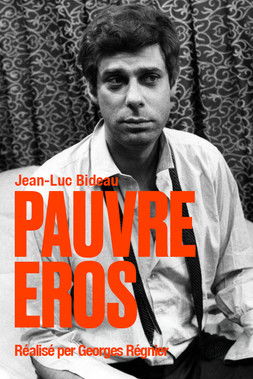
10.0A man decides to use the classifieds to replace his mistress who left him.
Pauvre Eros
1983
 10.0
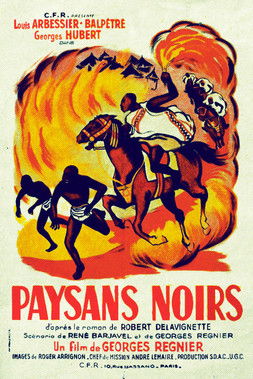
10.0In Ivory Coast, an administrator is appointed to replace a colleague who has just been assassinated. The newly appointed administrator, Guillon, clashes with a powerful elite that extorts money from farmers who refuse to cultivate the land. A peanut processing plant, nearing completion, unfolds against a backdrop of ethnic rivalries and resistance from the rural population to the changes imposed by the colonial regime, which is striving to modernize traditional agriculture to demand increased production. Aided by a doctor and an engineer, Guillon succeeds in restoring the confidence of the Black farmers after thwarting the schemes of those who dared to stand in his way.
Paysans Noirs
1949
 7.2
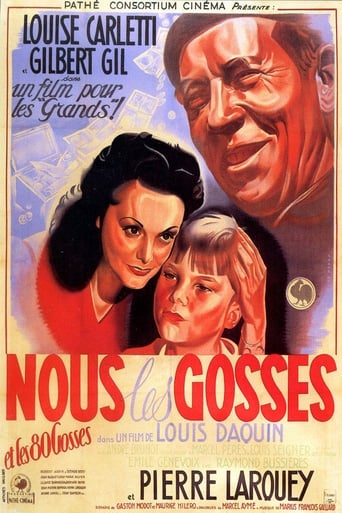
7.2A student from an elementary school accidentally breaks the glass roof of his school. His comrades decide to support it by working during the summer holidays in order to pay for reconstruction.
Portrait of Innocence
1941
 10.0
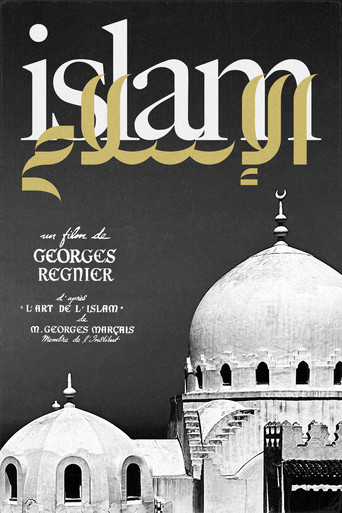
10.0"Islam" by Georges Régnier (1949) is a documentary about Islamic art in Algeria, Tunisia, Morocco, and Spain. The documentary received a special mention at the Venice Film Festival in 1949. Georges Régnier, a French documentary filmmaker active in the post-war period, was interested in North African cultures and colonial issues. In this film, he traces the history of Islam and its architectural art across these regions, and describes the expansion of Islam from Arabia to the Maghreb and Andalusia, highlighting mosques, minarets, and palaces such as those in Kairouan, Algiers, and Marrakech, all accompanied by the sounds of the Arabic call to prayer.
Islam
1949
 10.0
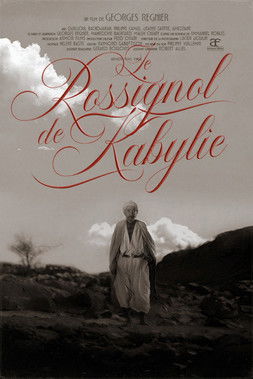
10.0This story, set against the backdrop of the Algerian War, could be an oriental tale. The "Nightingale of Kabylia" is the nickname given to old Ahieddine, a poet who lives in a mountain village. Ahieddine receives a visit from a young French officer. What does the officer want? Information, no doubt. The lieutenant, who once studied the Kabyle language, simply wants to visit a renowned poet, speak with him, and hear him recite a poem. Such a visit will be difficult to justify to the men of the maquis. That very evening, Ahieddine is summoned to appear before a tribunal of maquisards. He is condemned to death for treason. Does he have a wish before he dies? Yes, to compose one last poem, the poem of his death. He improvises a poem; the men listen, moved by the words of their own language, which express the poetry of their people. They pardon old Ahieddine and grant him his freedom. Destiny, however, awaited at the bend of a mountain path, the "Nightingale of Kabylia".
The Nightingale of Kabylia
1962
 9.5
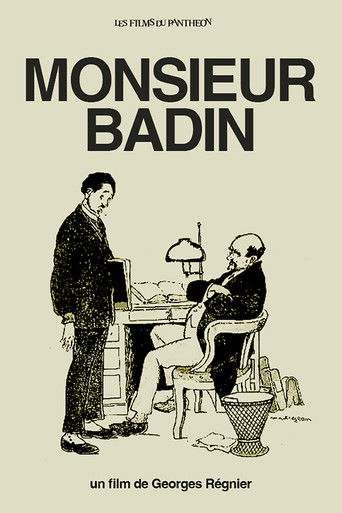
9.5Based on the short story by Georges Courteline. The story of Monsieur Badin, a model employee who can't bring himself to go to the office and suffers as a result. He can no longer live under these conditions, and to better endure this tedious chore, he needs a raise.
Monsieur Badin
1947
Film credits
Behind the camera
10.0A man decides to use the classifieds to replace his mistress who left him.
Pauvre Eros
1983
10.0In Ivory Coast, an administrator is appointed to replace a colleague who has just been assassinated. The newly appointed administrator, Guillon, clashes with a powerful elite that extorts money from farmers who refuse to cultivate the land. A peanut processing plant, nearing completion, unfolds against a backdrop of ethnic rivalries and resistance from the rural population to the changes imposed by the colonial regime, which is striving to modernize traditional agriculture to demand increased production. Aided by a doctor and an engineer, Guillon succeeds in restoring the confidence of the Black farmers after thwarting the schemes of those who dared to stand in his way.
Paysans Noirs
1949
10.0In Ivory Coast, an administrator is appointed to replace a colleague who has just been assassinated. The newly appointed administrator, Guillon, clashes with a powerful elite that extorts money from farmers who refuse to cultivate the land. A peanut processing plant, nearing completion, unfolds against a backdrop of ethnic rivalries and resistance from the rural population to the changes imposed by the colonial regime, which is striving to modernize traditional agriculture to demand increased production. Aided by a doctor and an engineer, Guillon succeeds in restoring the confidence of the Black farmers after thwarting the schemes of those who dared to stand in his way.
Paysans Noirs
1949
10.0"Islam" by Georges Régnier (1949) is a documentary about Islamic art in Algeria, Tunisia, Morocco, and Spain. The documentary received a special mention at the Venice Film Festival in 1949. Georges Régnier, a French documentary filmmaker active in the post-war period, was interested in North African cultures and colonial issues. In this film, he traces the history of Islam and its architectural art across these regions, and describes the expansion of Islam from Arabia to the Maghreb and Andalusia, highlighting mosques, minarets, and palaces such as those in Kairouan, Algiers, and Marrakech, all accompanied by the sounds of the Arabic call to prayer.
Islam
1949
10.0"Islam" by Georges Régnier (1949) is a documentary about Islamic art in Algeria, Tunisia, Morocco, and Spain. The documentary received a special mention at the Venice Film Festival in 1949. Georges Régnier, a French documentary filmmaker active in the post-war period, was interested in North African cultures and colonial issues. In this film, he traces the history of Islam and its architectural art across these regions, and describes the expansion of Islam from Arabia to the Maghreb and Andalusia, highlighting mosques, minarets, and palaces such as those in Kairouan, Algiers, and Marrakech, all accompanied by the sounds of the Arabic call to prayer.
Islam
1949
10.0This story, set against the backdrop of the Algerian War, could be an oriental tale. The "Nightingale of Kabylia" is the nickname given to old Ahieddine, a poet who lives in a mountain village. Ahieddine receives a visit from a young French officer. What does the officer want? Information, no doubt. The lieutenant, who once studied the Kabyle language, simply wants to visit a renowned poet, speak with him, and hear him recite a poem. Such a visit will be difficult to justify to the men of the maquis. That very evening, Ahieddine is summoned to appear before a tribunal of maquisards. He is condemned to death for treason. Does he have a wish before he dies? Yes, to compose one last poem, the poem of his death. He improvises a poem; the men listen, moved by the words of their own language, which express the poetry of their people. They pardon old Ahieddine and grant him his freedom. Destiny, however, awaited at the bend of a mountain path, the "Nightingale of Kabylia".
The Nightingale of Kabylia
1962
9.5Based on the short story by Georges Courteline. The story of Monsieur Badin, a model employee who can't bring himself to go to the office and suffers as a result. He can no longer live under these conditions, and to better endure this tedious chore, he needs a raise.
Monsieur Badin
1947
9.5Based on the short story by Georges Courteline. The story of Monsieur Badin, a model employee who can't bring himself to go to the office and suffers as a result. He can no longer live under these conditions, and to better endure this tedious chore, he needs a raise.
Monsieur Badin
1947
 NR
NRNo synopsis available yet.
Le Voyage d'Abdallah
1953
NRNo synopsis available yet.
Le Voyage d'Abdallah
1953
 NR
NRMen of the Oasis is a short film by Georges Régnier, shot in Morocco and presented in competition at the Cannes Film Festival in 1951. From birth to death, the life of the oasis dweller is linked to that of the date palm, which he must plant, care for, and ensure is pollinated. Filmed in the Goulmina oasis, on the edge of the Tafillet region, this film tells the simple story of the life of Saïd, son of Ahmed.
Hommes Des Oasis
1951
NRMen of the Oasis is a short film by Georges Régnier, shot in Morocco and presented in competition at the Cannes Film Festival in 1951. From birth to death, the life of the oasis dweller is linked to that of the date palm, which he must plant, care for, and ensure is pollinated. Filmed in the Goulmina oasis, on the edge of the Tafillet region, this film tells the simple story of the life of Saïd, son of Ahmed.
Hommes Des Oasis
1951