
Directing
Peter Gidal
Born
1946-12-21 (79)
Known for
Directing
Credits
35 titles
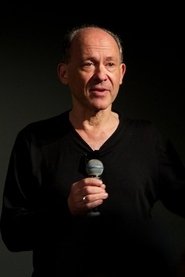
Born in 1946. Gidal studied theatre, psychology and literature at Brandeis University, Massachussets, 1964-68, and the University of Munich from 1966-7. He studied at the Royal College of Art from 1968-71 where he went on to teach Advanced Film Studies until 1984. He was an active member of the London Film-makers' Co-operative since 1969, and Cinema Programmer there from 1971-4. Co-founder of the Independent Film-makers' Association, 1975, he served as a member of the British Film Institute Production Board, 1978-81. His films have been screened nationally and internationally, including the Tate Gallery, the Hayward Gallery, and yearly since 1969 at the Edinburgh Film Festival and the Natio…
Known for
Includes 'portraits' of Marianne Faithfull, Thelonious Monk and 28 others, some known, some less so.
Heads
1969
 NR
Gidal describes the film’s ‘so-called imagery’ as ‘a complex of barely visible cuts in space and time, the opposite of erasure, but nothing so much as visible’
Coda II
2013
 7.0
Jonas Mekas assembles 160 portraits, appearances, and fleeting sketches of underground and independent filmmakers captured between 1955 and 1996. Fast-paced and archival in spirit, the film celebrates the avant-garde as its own “nation of cinema,” a vital community existing outside the dominance of commercial film.
Birth of a Nation
1997
 NR
Peter Gidal’s starting point for his 16mm film was a soundtrack that consists of three lines from a 1,000 word story written by Gidal in 1971, read by William Burroughs.
Coda I
2013
 NR
Volcano, half hour, silent, shot on 16mm on a volcano in Hawaii, the film attempts to deal with those questions of representation that persist as problematic, for me, for the basic questions of aesthetics, what it is to view, how to view the unknown as to view the known is not possibly a viewing. The question of recognition, the impossibility of recognition or, better said, the impossibility o f a viewer viewing at all if it is predicated up on recognition... at that moment, you the viewer I the viewer am no longer part of a process, a material however metaphysical or not process of making meaning through the conflicts of perception of something...
Volcano
2002
The film attempts to construct a space (as all films do), to construct a time (as all films do), to construct a process (as all films do) of and for viewing, of and for the viewer to constantly re-process, re-memorate, re-produce it (him/her) self in attempted (but impossible) arrestation. Thus the impossibility, through such a practice as this film, 4th Wall, of a seamlessness, a linear narrative flow, a pleasure of the sort so sought for as in its delirium it reestablishes in all its power the ideology of meaning making. The secure place for the finding of meaning in representation is that secure place: of sexist power, of the ideology of transparency, meaning/consumption in the guise of 'meaning making', the catatonic hysterical statis of/for the viewer, given more and more as the 'position of the subject', etc, a new ideology of freedom, which must be countered (again, a defence) with another ideology; this.
Fourth Wall
1978
Film credits
Behind the camera
Includes 'portraits' of Marianne Faithfull, Thelonious Monk and 28 others, some known, some less so.
Heads
1969
NRGidal describes the film’s ‘so-called imagery’ as ‘a complex of barely visible cuts in space and time, the opposite of erasure, but nothing so much as visible’
Coda II
2013
NRPeter Gidal’s starting point for his 16mm film was a soundtrack that consists of three lines from a 1,000 word story written by Gidal in 1971, read by William Burroughs.
Coda I
2013
NRVolcano, half hour, silent, shot on 16mm on a volcano in Hawaii, the film attempts to deal with those questions of representation that persist as problematic, for me, for the basic questions of aesthetics, what it is to view, how to view the unknown as to view the known is not possibly a viewing. The question of recognition, the impossibility of recognition or, better said, the impossibility o f a viewer viewing at all if it is predicated up on recognition... at that moment, you the viewer I the viewer am no longer part of a process, a material however metaphysical or not process of making meaning through the conflicts of perception of something...
Volcano
2002
The film attempts to construct a space (as all films do), to construct a time (as all films do), to construct a process (as all films do) of and for viewing, of and for the viewer to constantly re-process, re-memorate, re-produce it (him/her) self in attempted (but impossible) arrestation. Thus the impossibility, through such a practice as this film, 4th Wall, of a seamlessness, a linear narrative flow, a pleasure of the sort so sought for as in its delirium it reestablishes in all its power the ideology of meaning making. The secure place for the finding of meaning in representation is that secure place: of sexist power, of the ideology of transparency, meaning/consumption in the guise of 'meaning making', the catatonic hysterical statis of/for the viewer, given more and more as the 'position of the subject', etc, a new ideology of freedom, which must be countered (again, a defence) with another ideology; this.
Fourth Wall
1978
 NR
Early short by Peter Gidal.
Focus
1971
Kopenhagen/1930 presents a different attitude to the seductions of content, to the signifying processes that are repressed in the rigorous procedures of the structural/materialist film. Its material is "images by George Gidal, Copenhagen 1930": photographs, their grounding and their signification.
Kopenhagen/1930
1977
 5.5
A slow zoom out and defocus of 'An enclosed and progressive disembowelment of durational progression.'
Key
1968
 NR
The film deals with levels of reproduction. The repetitious camera movements over successive photographs are intended to function as distancing devices relatable to mechanical repetitions such as film loops. The 'subject' of the film is the material operation or, rather, it is a film in its own right and an explication of the mechanisms and technique inherent in its making. It is not a documentary of those mechanisms and techniques. Film as anonymous production, wherein (exhaustively) certain techniques are utilized, does combat with film that represents the (absent) subject, the filmmaker (forever repressed ever-present, ever-represented). Film as presentation, not re-presentation.
Film Print
1974
Assumption is a virtuosic personal tribute, a glimpse at history and a celebration of independent film culture. Gidal's short film was assembled round a recording of the voice of Mary Pat Leece, who worked at the London Filmmakers' Co-op in the mid-1970s, and later became a much loved lecturer at St Martins School of Art. She died suddenly in 1997. The film's rapid-fire montage of images and sounds encapsulates her politics, her Catholicism and her intellectual passion.
Assumption
1997
A film by Peter Gidal
Epilogue
1978
 NR
Hopefully learning the lessons of Close Up, the attempt was to construct the discrete form the (seemingly) continuous... so that, mainly retrospectively (yet during viewing) sequences present themselves as fragment-conglomorates. Therefrom might come questions of 'natural representations'... Filmic assumptions of evidence lacking, desired voyeurist pleasures could be turned into thought. Realism of another kind.
Denials
1985
The most inclusive so far of my film preoccupations; zooming panning focussing to constantly redefine reality and the process of seeing/filming...also; demystification of the subject/object relationship and an attempt to create awareness of manipulation, rather than deny its filmic existence. A structured film in pre and post filming conceptualisation. The situation within the film is the process of making the film as such; the technical events of the filmmaking process are the film experience.
Bedroom
1971
Loop ended up being a film that also 'ended' Upside Down Feature (1967-72) and was a negative upside down portrait as well....in negative, the person moving, or blinking, or smiling, or not smiling, become gestures distanced whilst simultaneously apprehendable perceptually...a kind of conscious objectification of the subject and subjectification of the object, the abstract as the real, and at the same time a dissolution through repetition, no more an identifyable 'it' after all due to both the reification and no less dissolution through repetition...
Loop
1968
 1.0
Objects in the world given luminousness, light, are here less apprehensible to knowledge than that which has less light.
Guilt
1988
 NR
Sound: unrecognition unidentified, in time, you hear? Image: recognition identified, out of time in time; not not knowing the unknown but not knowing the known, no trace of 'no trace of any thing'. E.g. grain: is grain silver, black & white, or colour? Is silver black & white or colour? You see? - P.G. Feb 1992.
Flare Out
1992
Peter Gidal’s starting point for his 16mm film was a soundtrack that consists of three lines from a 1,000 word story written by Gidal in 1971, read by William Burroughs. Gidal describes the film’s ‘so-called imagery’ as ‘a complex of barely visible cuts in space and time, the opposite of erasure, but nothing so much as visible’.
Coda I + Coda II
2013
 1.0
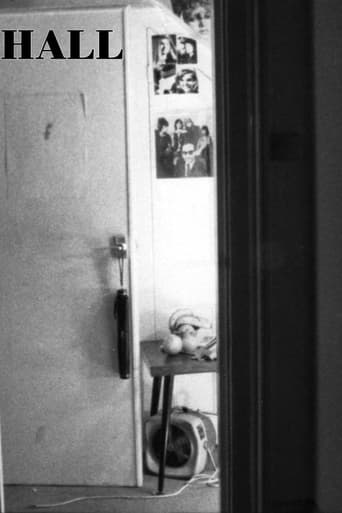
Demystified reaction by the viewer to a demystified situation; a cut in space and an interruption of duration, through (obvious) jumpcut editing within a strictly defined space. Manipulation of response and awareness thereof: through repetition and duration of image. Film situation as structured, as recorrective mechanism.
Hall
1968
 1.0
In effect, it turns the spectator loose in a problematic textual system which includes both narrative and non-narrative clues; the puzzle cannot be resolved because its terms are systematically ambiguous. The actual filmic material related closely to that used by Gidal in previous films: hand-held shooting in domestic interiors, with tight framing, frequent zooms and re-focusing, aspires to a kind of 'pre-predicative' flux, in which full representation is held in abeyance. However, this material is now fragmented by the regular interruption of black leader, so that it appears as a series of discrete segments which are not, in any syntactic sense, shots - single takes clearly extend across more than one segment.
Silent Partner
1977
Clouds 1969 by the British filmmaker Peter Gidal is a film comprised of ten minutes of looped footage of the sky, shot with a handheld camera using a zoom to achieve close-up images. Aside from the amorphous shapes of the clouds, the only forms to appear in the film are an aeroplane flying overhead and the side of a building, and these only as fleeting glimpses. The formless image of the sky and the repetition of the footage on a loop prevent any clear narrative development within the film. The minimal soundtrack consists of a sustained oscillating sine wave, consistently audible throughout the film without progression or climax. The work is shown as a projection and was not produced in an edition. The subject of the film can be said to be the material qualities of film itself: the grain, the light, the shadow and inconsistencies in the print.
Clouds
1969
 NR
Made from the same footage as Epilogue but in a different order: 1. pan, 2. dissolve-crossfade, 3.freeze.... as opposed topan, freeze, crossfade-dissolve......very different in terms of filmic expectation, recognition, assumptions of anti-narrativity, all whilst watching these small fragments (each film only a few minutes long, each made from the (repeated) opticals of the same very short fragments of several seconds each....)....P.G.
Untitled
1978
 1.0
Close Up is a provocative and potentially dangerous pulling together of two opposing aspects of film form - namely, a 'documentartist' soundtrack comprising interview material with Nicaraguan revolutionaries on the subject of art, propaganda and imperialism, and an image track of much beauty, veering toward the abstract as the camera moves ceaselessly over the objects in the a room, or those represented in the 17 blown up photographs. - Michael O'Pray
Close Up
1983
The glass window being installed - labour - being the subject ostensibly of the film...glaziers and glass having a history within representation from the german novella through Beckett's molloy through Duchamp though at the time none of that was conscious, it was for me about the endless superimpositions of a transparent signifier...five layers of optical superimposition (and as each in the lab darkens the scene, it necessitated lightening....each time one step more for each of five 'same' temporalities....) that alone for a viewer/viewing enough to unsettle any seeing through glass, any transparencies....shown at Knokke EXPRMNTL in 1974 to general incomprehension my own included.
C/O/N/S/T/R/U/C/T
1974
 NR
What darkness the film will have in No Night No Daywill not be connected to nature's night, equally light will be unconnected to 'day' as a lived concept and reality. A distension from any nature, including the nature of film, or the viewer's natural 'seeing', is probably closest to what my concerns with this film are. Attempting to grasp, attempting to know, the usual problems. - P.G. 1998.
No Night No Day
1997
 NR
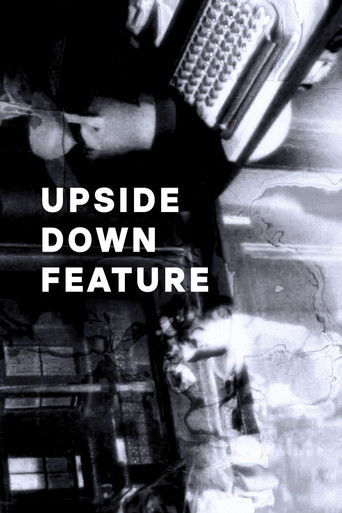
Peter Gidal's 'Upside Down Feature' is one of the most important films to have been made in this country. It makes a complex and original foray into the nature of film, and, by extension, confronts its audience with a thorough reappraisal of its ways of dealing with film. I found the film exhilarating, but it's unfortunately necessary to add a rider that if you're unused to this type of film, expecting anything remotely similar to what the Big Boys from Wardour St dish you up. then you're in for a major piece of culture-shock which could mean anger, frustration and resentment.
Upside Down Feature
1972
 1.0
Structuralist film collage consisting of 8mm film "notes" printed directly on 16mm stock. The images include people and landscapes and the technical difference between the two film formats are emphasised by the presence of perforations, Kodak company marking, spacing, and leader.
8mm Film Notes on 16mm
1971
 NR
Directed by Peter Gidal (1967)
Portrait Subject Object
1967
 4.3
"This film is a consequent continuation and contraction of my film work, research which began with Room (1967). The film is not a translation of anything, it is not a representation of anything, not even of consciousness."
Room Film 1973
1973
"first film in 5 years, tempted to say different yet the same, but not." peter gidal/london/2014
Not Far At All
2013
“Theatre theory for film, or not: Brecht (an interrogation/performance: a ghost trio for two).” (Gidal). Taking the form of a multi-part dialogue in which Gidal’s translations of Brecht are spoken, Gidal stages an interrogation of his own practice as an experimental filmmaker and theorist via Brecht’s theatre theory. Without rehearsal (but with practice), Gidal “replied” and counter-interrogated on the night. Performance of Sorts with Brecht, Peter Gidal with Karen Mirza was presented by no.w.here as part of the series Reverberations in collaboration with Chisenhale Gallery on 8th June 2009.
Performance of Sorts with Brecht
2009
In Gidal's films, the first level of resistance, that of the filmmaker to the lure of the object, is chiefly inscribed through the action of the camera in it's 'looking at' the space - variously through; motion, distance, focal length's effect on perspective, zoom or focus. The second level, the attempt to distanciate the spectator from the identification with the enunciator, is chiefly inscribed through devices like; repetition, graining out or darkening out of the image in printing, or disruptions in the flow of images and motion. It is particularly in the devices of the second level of distanciation - the effects on the screen of 'material flatness, grain, light movement' where Gidal, in an attempt to produce a condition for the spectator of response to the film, rather than identification with the filmmaker, that he has recourse to those features 'intrinsic' to film.
Action at a Distance
1980
 5.0
The practice of Structural/Materialist Film is defined in...process, construction, displaced reflexively...not displaced uniformly into the pattern of a narrative bound up for the stable subject-centred image. Structural/Materialist film has no place for the look, ceaselessly displaced, outphased, a problem of seeing, it is anti-voyeuristic.
Condition of Illusion
1975
 NR
A hand-held camera zooms in and out as it films the objects in a room. The same sequence is presented twice. "In Room, [Gidal] makes deliberate use of the complete repetition of a whole film [...]. The camera's movement is slow and in close up on the objects it passes, causing the viewer to mentally search ahead of its motion, particulary in the repeat". Malcolm Le Grice, Abstract Film and Beyond, 1977
Room (Double Take)
1967