
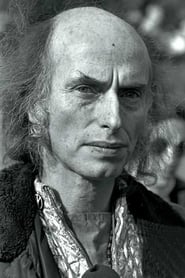
Acting
Julian Beck
Born — Died
1925-05-31 — 1985-09-14
Place of birth
New York City, New York, USA
Known for
Acting
Credits
27 titles
Julian Beck (May 31, 1925 – September 14, 1985) was an American actor, stage director, poet, and painter. He is best known for co-founding and directing the Living Theatre, as well as his role as Reverend Henry Kane, the malevolent preacher in the supernatural horror film Poltergeist II: The Other Side (1986)
Known for
 7.4
7.4The story of the Miami Police Department's vice squad and its efforts to end drug trafficking and prostitution, centered on the unlikely partnership of Sonny Crockett and Ricardo Tubbs - who first meet when Tubbs is undercover in a drug cartel.
Miami Vice
1984
 6.1
6.1An erotic story about a woman, the assistant of an art gallery, who gets involved in an impersonal affair with a man. She barely knows about his life, only about the sex games they play, so the relationship begins to get complicated.
Nine 1/2 Weeks
1986
 6.5
6.5Harlem's legendary Cotton Club becomes a hotbed of passion and violence as the lives and loves of entertainers and gangsters collide.
The Cotton Club
1984
 5.1
5.1A high school girl encounters a variety of kookie characters and humorous sexual situations while searching for the meaning of life.
Candy
1968
 6.0
6.0The Freeling family move in with Diane's mother in an effort to escape the trauma and aftermath of Carol Anne's abduction by the Beast. But the Beast is not to be put off so easily and appears in a ghostly apparition as the Reverend Kane, a religious zealot responsible for the deaths of his many followers. His goal is simple - he wants the angelic Carol Anne.
Poltergeist II: The Other Side
1986
 6.8
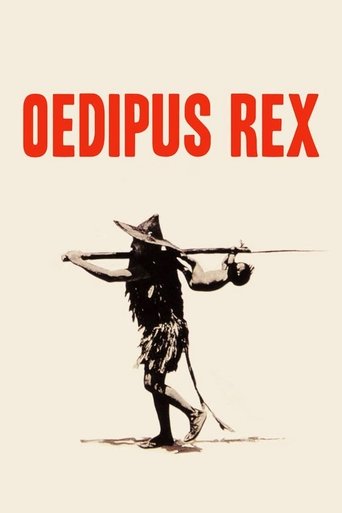
6.8In pre-war Italy, a young couple have a baby boy. The father, however, is jealous of his son - and the scene moves to antiquity, where the baby is taken into the desert to be killed. He is rescued, given the name Oedipus, and brought up by the King and Queen of Corinth as their son. One day an oracle informs Oedipus that he is destined to kill his father and marry his mother. Horrified, he flees Corinth and his supposed parents - only to get into a fight and kill an older man on the road…
Oedipus Rex
1967
Film credits
1980s · 7 titles
6.1An erotic story about a woman, the assistant of an art gallery, who gets involved in an impersonal affair with a man. She barely knows about his life, only about the sex games they play, so the relationship begins to get complicated.
Nine 1/2 Weeks
1986
6.5Harlem's legendary Cotton Club becomes a hotbed of passion and violence as the lives and loves of entertainers and gangsters collide.
The Cotton Club
1984
6.0The Freeling family move in with Diane's mother in an effort to escape the trauma and aftermath of Carol Anne's abduction by the Beast. But the Beast is not to be put off so easily and appears in a ghostly apparition as the Reverend Kane, a religious zealot responsible for the deaths of his many followers. His goal is simple - he wants the angelic Carol Anne.
Poltergeist II: The Other Side
1986
"STREET SONGS is a 1966 performance, in France, of a section of the Living Theater's 'Mysteries and Smaller Pieces.' Based on a chance-determined scenario written by Jackson Maclow in 1961, STREET SONGS weaves militant political chants into a mandala of mantras. Julian Becvk sits cross legged on an empty stage; the slogan he repeats - 'Free All Men! Ban the Bomb! Stop the War! Free the Blacks! Change the World!' - are both meditation and calls to action, as a crowd of voices answers each slogan and actors join him on stage to pace in a circle, clasp one another's shoulders and collectively breath 'Ohmm...' ..." -- Sally Banes, Village Voice, October 18, 1983
Street Songs
1983
 6.3
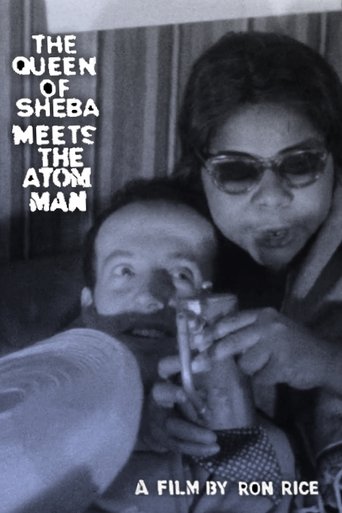
6.3“New York plays itself, as Taylor Mead and Winifred Bryan regale in pas de deux among the trashcans and the towers. The Studiedly Goofy and the Monumentally Grand are joined in masterly pas de don’t [...] The awed couple do battle with the status quo and teach the world to dance on the head of a bin. Rice detects real dignity in Bryan and amazing grace in Mead as they essay solitary promenades through the parks, subways and streets of a wintery New York landscape. Photographed and directed by Ron Rice, edited and scored by Taylor Mead.” –Edward Leffingwell
The Queen of Sheba Meets the Atom Man
1981
 6.5
6.5A compilation of avant-garde artwork and talent of the mid to late 20th century hosted by Ryuichi Sakamoto.
All Star Video
1985
 9.0
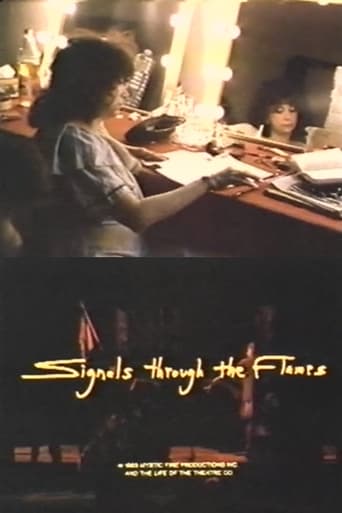
9.0Signals Through the Flames is at once a history and a celebration of the Living Theatre. Founded in the late 1940s by husband-and-wife performers Julian Beck and Judith Malina, the Living Theatre was for many years the predominent American outlet for the avant-garde movement. There were occasional self-imposed exiles to Europe in the 1950s and 1960s, but the group returned full-force during the Aquarius Age to entertain a new generation of theatregoers.
Signals Through the Flames
1983
1970s · 3 titles
 6.6
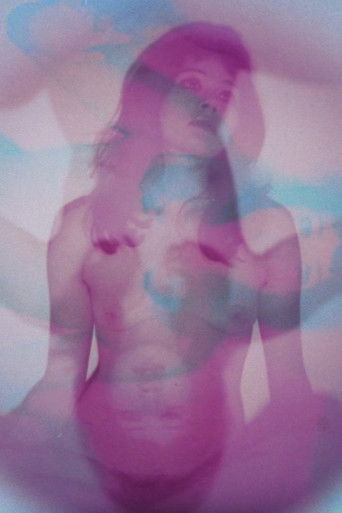
6.6Best known for his roles in Belle de jour, Sweet Movie, and many more, Pierre Clementi was also the architect behind a transgressive, high-minded, and disorienting cinema. Like an acid-soaked freefall, Visa de censure n° X is a rush of nudity and color from one of France’s most seductively watchable actors, set to an album's worth of psychedelic prog rock (performed by the Delired Cameleon Family, a group featuring members of French band Clearlight).
Visa de censure n° X
1976
 7.0
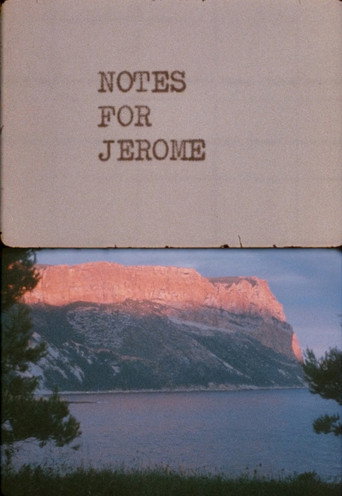
7.0A tribute to Jonas Mekas' late friend and patron, Jerome Hill. Filmed on 16mm across three visits to Hill’s estate in Cassis, France, the film plays out as a tender visual diary of memory, passing time, and artistic exile. While the film focuses on daily life rather than explicit sexuality, it breathes with queer history. Hill was a closeted gay philanthropist who used his immense wealth to shelter and fund underground, heavily queer creatives. Mekas captures the warm, intimate atmosphere of this sanctuary, featuring legendary gay avant-garde icons like Warhol superstar Taylor Mead and actor Charles Rydell. Dedicated "to the wind of Lithuania" and featured in the 1979 Whitney Biennial, the film ultimately stands as a beautifully soft, authentic time capsule of a safe haven built by and for mid-century queer radicals.
Notes for Jerome
1978
 5.0
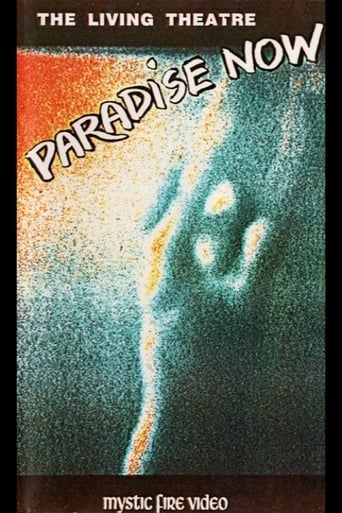
5.0At least forty films have been made about the Living Theatre; it remained to the American underground filmmaker Sheldon Rochlin (previously responsible for the marvellous Vali) to make the 'definitive' film about one of the most famous of their works, Paradise Now, shot in Brussels and at the Berlin Sportpalast. Made on videotape, with expressionist colouring 'injected' by electronic means, this emerges as a hypnotic transmutation of a theatrical event into poetic cinema, capturing the ambiance and frenzy of the original. No documentary record could have done it justice.
Paradise Now
1970
1960s · 13 titles
5.1A high school girl encounters a variety of kookie characters and humorous sexual situations while searching for the meaning of life.
Candy
1968
6.8In pre-war Italy, a young couple have a baby boy. The father, however, is jealous of his son - and the scene moves to antiquity, where the baby is taken into the desert to be killed. He is rescued, given the name Oedipus, and brought up by the King and Queen of Corinth as their son. One day an oracle informs Oedipus that he is destined to kill his father and marry his mother. Horrified, he flees Corinth and his supposed parents - only to get into a fight and kill an older man on the road…
Oedipus Rex
1967
 NR
NRSeries of three short 'Pop Films' directed between 1966 - 67 for French television by Philippe Garrel. Includes footage of The Living Theater in rehearsal, interviews with Julian Beck and Judith Malina, Donovan in concert and The Who in the studio recording 'Pictures of Lily'. Re-broadcast on INA in 1984.
The Lost Paths
1967
 NR
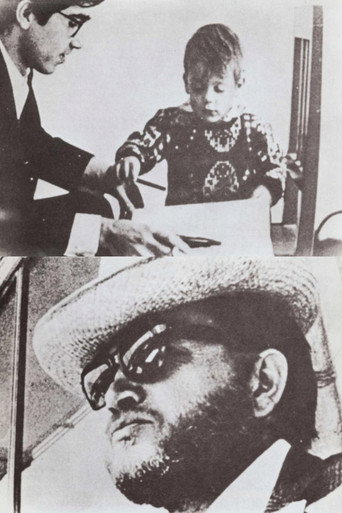
NRThe title Amore amore (Love, Love) defines the primary emotive motor of the film and constitutes the filter through which are selected the materials used - people, things, signs - and determines a good portion of the associations though which the sequences unwind.
Amore, amore
1966
 5.2
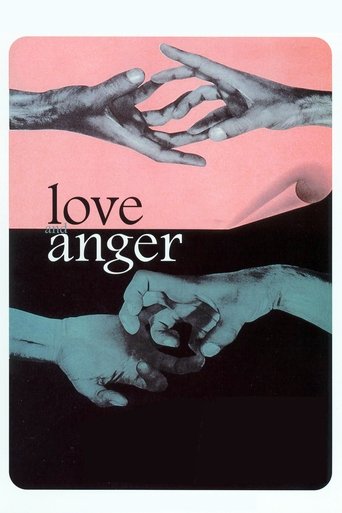
5.2Five short stories with contemporary settings. In New York, people are indifferent to derelicts sleeping on sidewalks, to a woman's assault in front of an apartment building, and to a couple injured in a car crash. A man, stripped of his identity, dies in bed with actors expressing his agony. A cheerful, innocent young man walking a city street in a time of war pays a price for this innocence. A couple talks about cinema while it watches another couple talk of love and truth on the eve of one character's return to Cuba. Striking students take over a university classroom; an argument follows about revolution or incremental change.
Love and Anger
1969
No synopsis available yet.
Être libre
1968
 NR
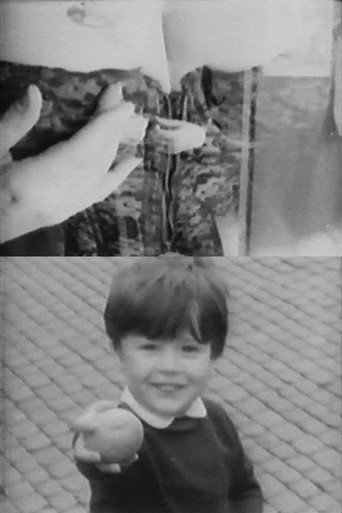
NRIn this film, as in all my previous ones, there is a direct connection between inner urges and cinematic rendering. I tried to visualize my present aspiration to recover, through the various ways taught by one’s experience, the easiness, directness and ripeness proper to children’s relationships and affective life. This film is maybe a track of this path backwards. – A. L.
If the Unconscious Revolts
1967
No synopsis available yet.
Après la Passion selon Sade
1968
 NR
NRa 32-minute color film by Gwen Brown, featuring precious footage of Living Theatre productions “Mysteries” and smaller pieces, “Paradise Now” and “Frankenstein.” “The fusion of Brown’s freewheeling direct cinema and the Living Theatre’s performance for revolutionary change (amidst the heydays of both) unite as a dynamic concoction of the era, yielding for the viewer a shifting terrain of both critical insight and ecstatic zeal, not as a vacant nostalgia for a pre-commodified radicality, but as tactical inspiration for future days.” – Andrew Wilson (Artist’s Access Television)
Emergency: The Living Theatre
1968
 9.0
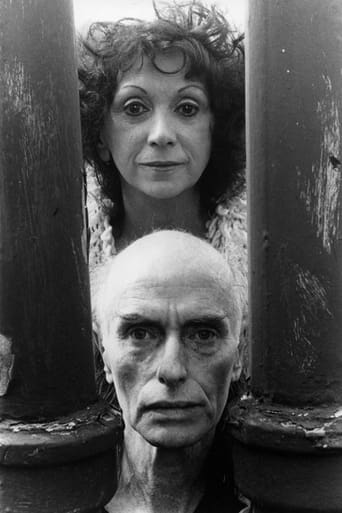
9.0Commissioned work by Julian Beck and members of The Living Theatre (featuring Beck and Judith Malina, co-founders of The Living Theatre, in performance) for broadcast on KQED-TV, San Francisco. The Dilexi Series represents a pioneering effort to present works created by artists specifically for broadcast.
Rite of Guerrilla Theater
1969
 6.0
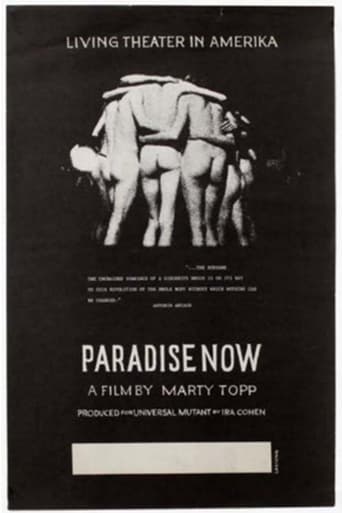
6.0A harrowing, gorgeous, in-your-face-and-mind 45-minute black-and-white film by Marty Topp, produced by Ira Cohen for Universal Mutant. “Marty Topp’s beautiful film of ‘Paradise Now’ reveals how the theories of revolutionary change and the experience of sexual liberation are not separate paths to the beautiful nonviolent anarchist revolution. Practiced together they are a single thrust, encompassing both political action and sensual joy, leading to the dreamed-of terrestrial paradise.
Paradise Now: The Living Theater in Amerika
1969
 NR
NRLeonardi's film about the Living Theatre is less concerned with a straight documentary presentation of the exile theatre group from New York, but rather is concerned with the specific atmospheric factor which is indicated by their name, and which constitutes the highly suggestive effect of their playing. Cutting, for Leonardi, is the most decisive aesthetic device. The result is a wonderfully composed furioso of pictures. The hand-held camera catches rehearsals, conversations without sound, bits of theatre and daily life actions (which, for Living Theatre people, is very often intermixed).
Living & Glorious
1965
Images of the life of the Living, the material that composes it was originally shot for the film: "The Unconscious Rebels". The shots were re-edited following the rehearsals of Mysteries and Antigone.
J. & J. & Co.
1967
Series credits
7.4The story of the Miami Police Department's vice squad and its efforts to end drug trafficking and prostitution, centered on the unlikely partnership of Sonny Crockett and Ricardo Tubbs - who first meet when Tubbs is undercover in a drug cartel.
Miami Vice
1984
 9.0
9.0"The Century of the Theater" - From the "birth of the director" to the "heroes of modernity" - an overview of the world of theater - illuminates the interaction with the history of the past hundred years is also shown.
Das Jahrhundert des Theaters
2002