
Acting
Joseph Beuys
Born — Died
1921-05-12 — 1986-01-23
Place of birth
Krefeld, Germany
Known for
Acting
Credits
30 titles
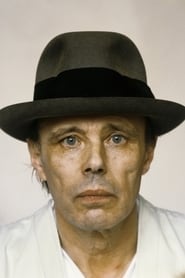
Joseph Beuys was a German artist, theorist and teacher who was highly influential in international contemporary art in the latter half of the 20th century. He is a founder of the art movement known as Fluxus, and a practitioner and exemplar of happenings, and performance art.
Known for
No synopsis available yet.
Club 2
1976
 4.0
4.0No synopsis available yet.
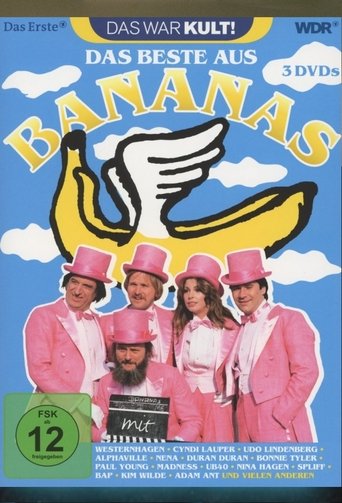
Bananas
1981
 NR
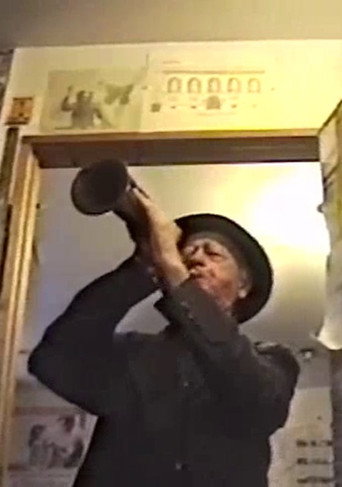
NRScenes from the life and work at Anthology Film Archives. Much of the footage in this video was shot by Auguste Varkalis.
Laboratorium Anthology
1999
 6.6
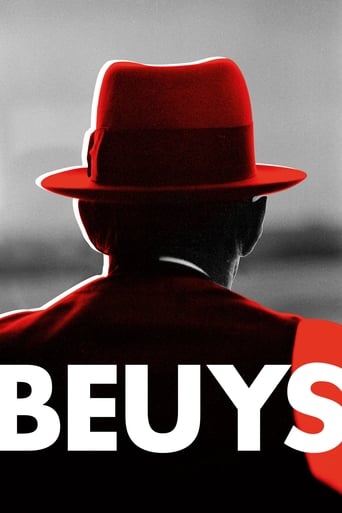
6.6A documentary about the 20th century German sculptor and performance artist Joseph Beuys.
Beuys
2017
 6.8
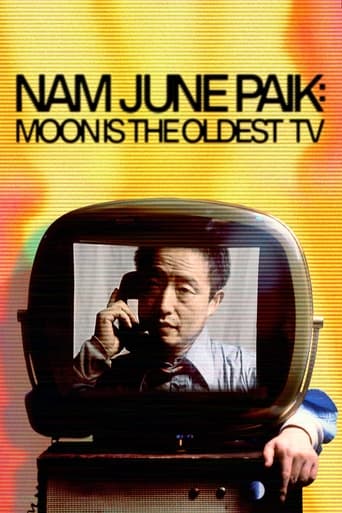
6.8The quixotic journey of Nam June Paik, one of the most famous Asian artists of the 20th century, who revolutionized the use of technology as an artistic canvas and prophesied both the fascist tendencies and intercultural understanding that would arise from the interconnected metaverse of today's world.
Nam June Paik: Moon Is the Oldest TV
2023
 NR
NRHow do we relate to and make use of our physical senses? This film examines the mechanics of perception and the still mysterious way in which the brain makes meaning of it all. Includes comments by artists on how they use their senses in creative work.
How Does It Feel?
—
Film credits
2020s · 2 titles
6.8The quixotic journey of Nam June Paik, one of the most famous Asian artists of the 20th century, who revolutionized the use of technology as an artistic canvas and prophesied both the fascist tendencies and intercultural understanding that would arise from the interconnected metaverse of today's world.
Nam June Paik: Moon Is the Oldest TV
2023
 7.0
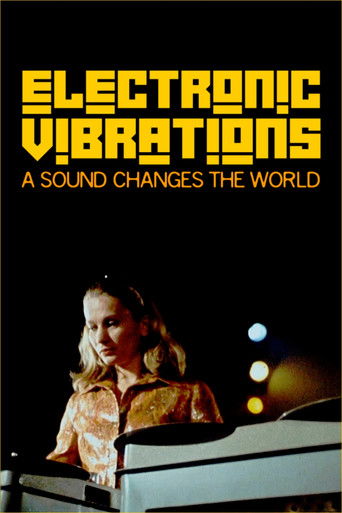
7.0The amazing story of electronic music: its epic journey from its origins in Europe, at the hands of the great artists of the post-war classical avant-garde, to the great post-industrial cities of the USA, where this genre of genres took over music stores, shady clubs and, eventually, the big stages.
Electronic Vibrations: A Sound Changes the World
2022
2010s · 2 titles
6.6A documentary about the 20th century German sculptor and performance artist Joseph Beuys.
Beuys
2017
 NR
NR“Drawing on his personal archives, Mekas has assembled a Fluxus vaudeville starring Yoko Ono, Joseph Beuys, and the late Nam June Paik. Most of the material is relatively recent although Ben Vautieur shows some early 1960s work to hilarious effect and Mekas channels Fluxus founder George Maciunas throughout.” – J. Hoberman, VILLAGE VOICE
Re: Maciunas and Fluxus
2011
2000s · 2 titles
An experimental journey to trace the lost ‘Arrows of Time’. Diary footage from the Director’s own observations at The Stanford Linear Accelerator Center are interwoven with poetry and commentary from cultural visionaries of the past such as Joseph Beuys and Jacques Derrida.
Arrows of Time
2007
 NR
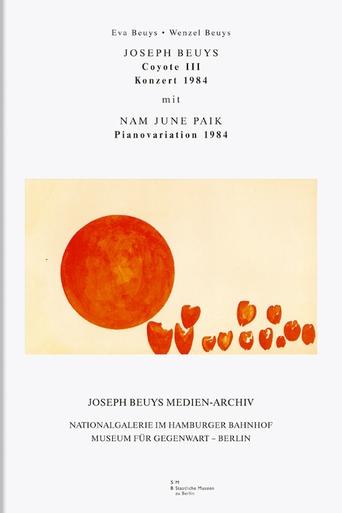
NRDVD accompanying the book "Coyote III", documenting Joseph Beuys and Nam June Paik performing at the Sôgetsu Hall in Tokyo on the 2nd of June 1984. Nam June Paik sits on one side of the stage playing European classical music, improvisations and Japanese folk music. On the other side, Joseph Beuys acts out experiences from living in an enclosed space with a coyote - a free man who turns back into an animal, into a form of life that he understands as a prerequisite for this freedom
Joseph Beuys - Coyote III
2008
1990s · 3 titles
NRScenes from the life and work at Anthology Film Archives. Much of the footage in this video was shot by Auguste Varkalis.
Laboratorium Anthology
1999
 NR
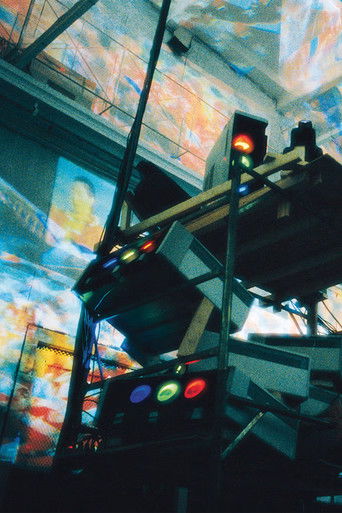
NRSistine Chapel is an audio-visual collage of new footage and samples from Paik’s past videos, which featured many of his friends, collaborators, and public figures. It was Paik’s own way of summarizing his artistic career with video. The film installation consists of fast-paced and overlapping images that completely cover the gallery walls and ceiling—one of the most under-appreciated parts of architecture, according to Paik. With its electronic visuals and booming audio, interspersed with periods of silence, the immersive installation stands in stark contrast to the experience of its namesake.
Sistine Chapel
1993
 NR
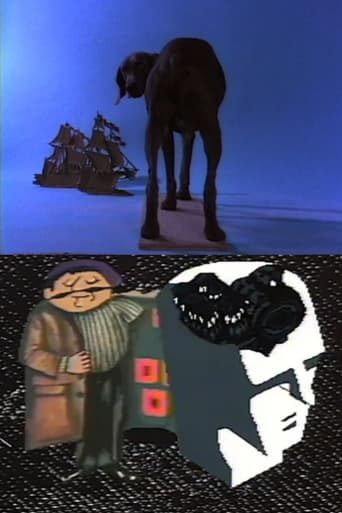
NRVideo art show presented at the 1991 Broadcast Designers Association convention. Includes work from: Robert Ashley, Robert Breer, Peter Callas, Christen Clark, Sumit Das, Ed Emshwiller, John Hart, Jon Klein, Lyonel Kouro, Maureen Nappi, Paul Garin, Amy Greenfield, Nam June Paik, Mark Pellington, M. Rawlings, John Sanborn, Dan Sandin, William Wegman, Dean Winkler. Major contributions include "MAJORCA-fantasia", "Sunstone", "Welcome to My Living Room" and "Neo-Geo: An American Purchase", as well as excerpts from "Perfect Lives".
Frames for Seconds
1991
1980s · 5 titles
 6.0
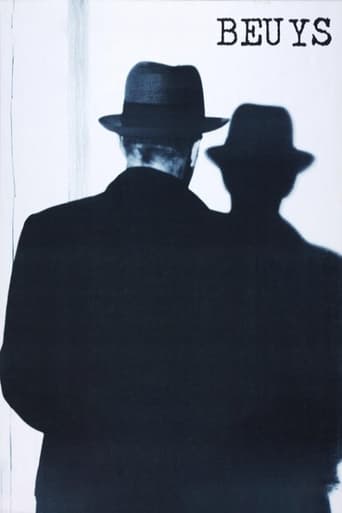
6.0The German artist Joseph Beuys is reflecting on his theory of art, being filmed as a kinetic sculpture. In 1981, the film has won the German film critic's award for “Best short film in Germany”.
Beuys
1981
 8.1
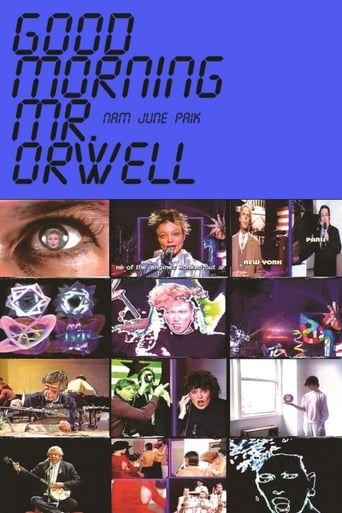
8.1In his book "1984", George Orwell saw the television of the future as a control instrument in the hands of Big Brother. Right at the start of the much-anticipated Orwellian year, Paik and Co. were keen to demonstrate satellite TV's ability to serve positive ends-- Namely, the intercontinental exchange of culture, combining both highbrow and entertainment elements. A live broadcast shared between WNET TV in New York and the Centre Pompidou in Paris, linked up with broadcasters in Germany and South Korea, reached a worldwide audience of over 10 or even 25 million (including the later repeat transmissions).
Good Morning, Mr. Orwell
1984
 NR
NRAn essayistic documentary about the action art movement that emerged in the 1960s: In interviews with various action artists, including Wolf Vostell, Joseph Beuys and Allan Kaprow, director Helmut Herbst illuminates the performative and participatory tendencies in art that began in the 1960s and outlines the diversity of motives and strategies.
Happening, Kunst, Protest 1968
1981
 6.5
6.5A compilation of avant-garde artwork and talent of the mid to late 20th century hosted by Ryuichi Sakamoto.
All Star Video
1985
A film about German artist Joseph Beuys's art where the artist speaks about his work and explains it to an American audience.
Joseph Beuys: Transformer
1988
1970s · 5 titles
 5.7
5.7An odyssey through Beethoven’s lasting presence and influence in our modern world – viewed through the eyes of the composer himself.
Ludwig van
1970
 NR
NRNo synopsis available yet.
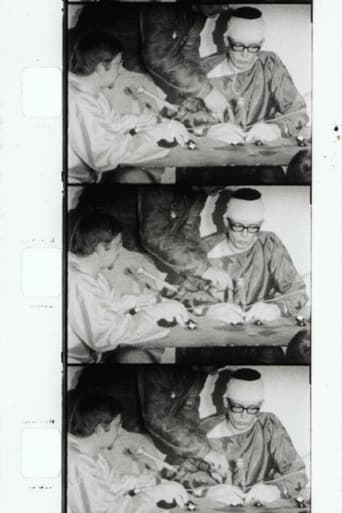
The Table
1971
 1.0
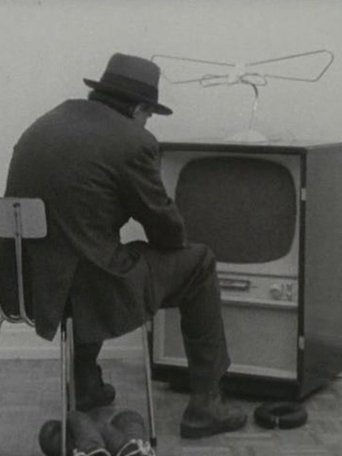
1.0"As a contribution to Gerry Schum's 'Identifications', Beuys adapted for television the 'Felt TV' action previously staged for a live audience at a Happening festival in Copenhagen in 1966. It was the only Beuys action executed specifically for the camera. It opens with Beuys seated in front of a TV set showing a programme which is invisible because the screen is covered by felt. The boxing-gloves used later in the action lie at the ready beneath his chair."
Felt TV
1970
 NR
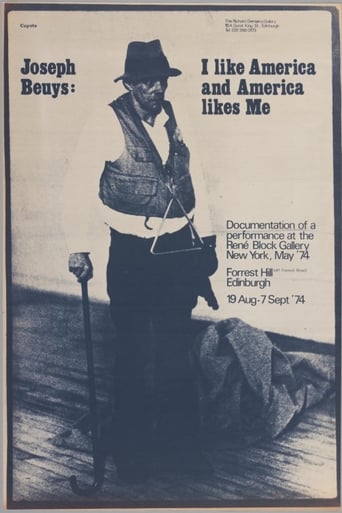
NRIn May 1974 Joseph Beuys flew to New York and was taken by ambulance to the site of the performance, a room in the René Block Gallery at 409 West Broadway. Beuys lay on the ambulance stretcher swathed in felt. He shared this room with a coyote, for eight hours over three days.
I like America and America likes Me
1974
 NR
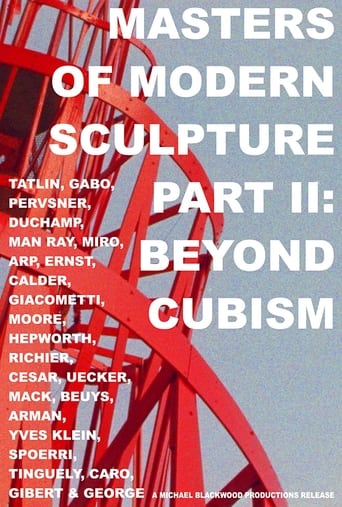
NRCentered around the emergence of Constructivism, Futurism, Surrealism and Dada, Beyond Cubism takes a closer look at the artists who ignited the new movements and the alterations of artistic culture brought forth by World War II. Creating out of their philosophy and ideology, artists such as Vladimir Tatlin, Barbara Hepworth and Henry Moore pushed sculpture to new limits of abstraction and possibility, feverently building on their predecessors.
Masters of Modern Sculpture Part II: Beyond Cubism
1978
1960s · 3 titles
 7.0
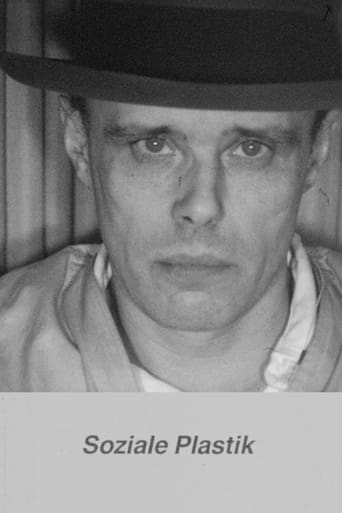
7.0"Social Sculpture" was filmed in 1969 subsequently after the filming of "400 m IFF". IFF is the name of the available film material, that was already expired, from which approximately 400 m were used for "400 m IFF" and the rest for "Social Sculpture". In "400 m IFF" three men appear in front of the filming camera in the apartment of the author. With Joseph Beuys this situation had been appointed, the other two visitors came by chance before him and played instinctively. "They all noticed the exceptional situation, but could not count on the sovereignty to carry out their point. And even during the operations on the screen, the viewer becomes a participant who cannot avoid the question of how he would have behaved in the same situation."
Social Sculpture
1969
Otto Kellner, Norbert Stratmann and Joseph Beuys step inside the already filming camera of Lutz Mommartz inside his apartment. Lutz Mommartz without a word exposures the visitors to the audience.
400 m IFF
1969
Early documentary about the pop art scene and happenings in Germany.
Kunst und Ketchup
1966
Undated · 2 titles
NRHow do we relate to and make use of our physical senses? This film examines the mechanics of perception and the still mysterious way in which the brain makes meaning of it all. Includes comments by artists on how they use their senses in creative work.
How Does It Feel?
—
No synopsis available yet.
Lucrezia e Joseph Beuys
—
Series credits
Behind the camera
NRNo synopsis available yet.
The Table
1971
1.0"As a contribution to Gerry Schum's 'Identifications', Beuys adapted for television the 'Felt TV' action previously staged for a live audience at a Happening festival in Copenhagen in 1966. It was the only Beuys action executed specifically for the camera. It opens with Beuys seated in front of a TV set showing a programme which is invisible because the screen is covered by felt. The boxing-gloves used later in the action lie at the ready beneath his chair."
Felt TV
1970
 2.0
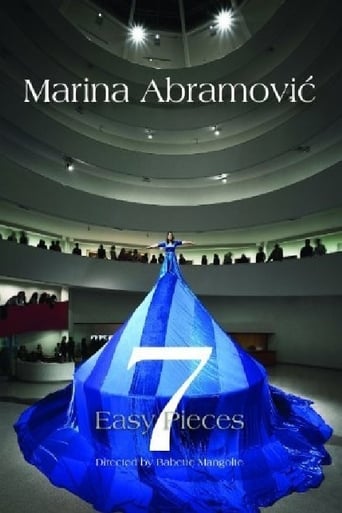
2.0For Seven Easy Pieces Marina Abramovic reenacted five seminal performance works by her peers, dating from the 1960's and 70's, and two of her own, interpreting them as one would a musical score. The project confronted the fact that little documentation exists from this critical early period and one often has to rely upon testimony from witnesses or photographs that show only portions of any given performance. The seven works were performed for seven hours each, over the course of seven consecutive days, November 9 –15, 2005 at the Guggenheim Museum, in New York City. Seven Easy Pieces examines the possibilities of representing and preserving an art form that is, by nature, ephemeral.
Seven Easy Pieces
2007