
Directing
Nobuhiro Kawanaka
Known for
Directing
Credits
33 titles
Born in Tokyo in 1941. Began making 8mm films in the early 1960s, and in 1968 took part in the formation of Japan’s first filmmaking association based on individuals. Oversaw the foundation of the organization that would later become Image Forum in 1970. Began to hold regular screenings of experimental films. Has produced a total of 100 short and feature-length works to date, throughout which he has consistently investigated the meaning of making films as an individual.
Known for
 NR
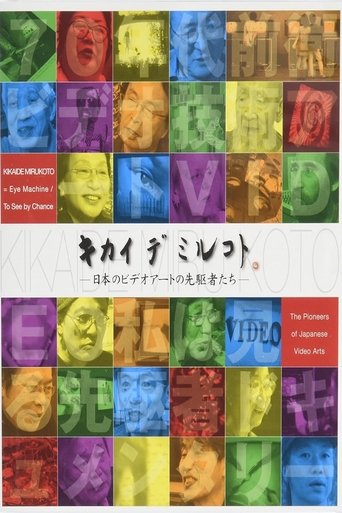
NRVideo began as a medium that inspired discovery. This art documentary traces the expressive roots of “media art” in Japan — works of video, performances, and installations created using video technology that allowed for free and creative visual expression.
KIKAIDE MIRUKOTO = Eye Machine / To See by Chance –The Pioneers of Japanese Video Arts–
2013
 NR
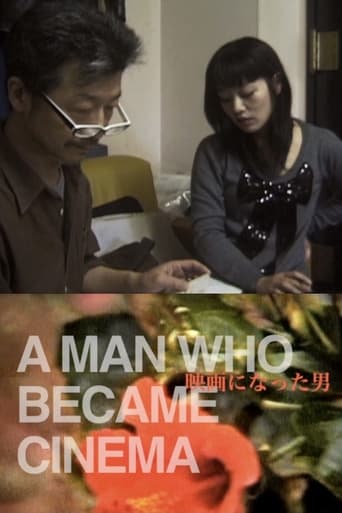
NRMasato Hara made his directorial debut in high school in 1968 and achieved a reputation as a young prodigy. Many years later, he continues to make films and show his old experimental 'live-screening' films, but is saddled with massive debts. This film follows eight years in his life.
A Man Who Became Cinema
2018
The work by Nobuhiro Kawanaka, who consistently produces film works from a personal aspect, focuses on Naito Chin (comedian, book reviewer), who had passed away in 2011. With the enormous footage Kawanaka has taken, the time he and Naito had spent together will be revived on screen.
Imprint
2014
 NR
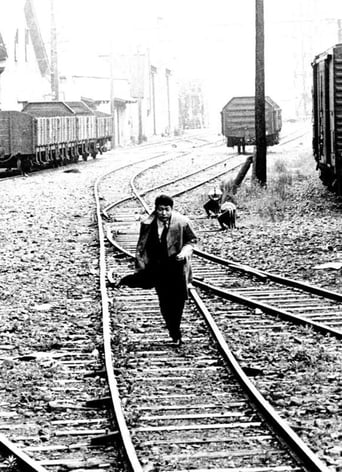
NRThe documentary to find the "true Shuji Terayama".
Where is Tomorrow, Shuji Terayama
2017
Experimental film by Nobuhiro Kawanaka.
TSUKURARETSUTSUARU EIGA
2006
 NR
NRA five-part documentary chronicling Toshio Matsumoto, the legendary filmmaker known as a pioneer of experimental cinema in Japan and also active as a film theorist, who exerted a profound influence on innovative film expression from the 1950s onward. Directed by filmmaker and critic Takefumi Tsutsui—himself both a filmmaker and critic like Matsumoto—the project was filmed over the course of ten years. Interweaving excerpts from Matsumoto’s works with an extensive series of interviews with collaborators and critics, the documentary retraces, through the figure of Matsumoto, the tumultuous decades from the 1950s to the 2000s across five parts, totaling 700 minutes.
Discovery of Image – The Era of Toshio Matsumoto
2017
Film credits
2010s · 4 titles
NRVideo began as a medium that inspired discovery. This art documentary traces the expressive roots of “media art” in Japan — works of video, performances, and installations created using video technology that allowed for free and creative visual expression.
KIKAIDE MIRUKOTO = Eye Machine / To See by Chance –The Pioneers of Japanese Video Arts–
2013
NRMasato Hara made his directorial debut in high school in 1968 and achieved a reputation as a young prodigy. Many years later, he continues to make films and show his old experimental 'live-screening' films, but is saddled with massive debts. This film follows eight years in his life.
A Man Who Became Cinema
2018
NRThe documentary to find the "true Shuji Terayama".
Where is Tomorrow, Shuji Terayama
2017
NRA five-part documentary chronicling Toshio Matsumoto, the legendary filmmaker known as a pioneer of experimental cinema in Japan and also active as a film theorist, who exerted a profound influence on innovative film expression from the 1950s onward. Directed by filmmaker and critic Takefumi Tsutsui—himself both a filmmaker and critic like Matsumoto—the project was filmed over the course of ten years. Interweaving excerpts from Matsumoto’s works with an extensive series of interviews with collaborators and critics, the documentary retraces, through the figure of Matsumoto, the tumultuous decades from the 1950s to the 2000s across five parts, totaling 700 minutes.
Discovery of Image – The Era of Toshio Matsumoto
2017
Behind the camera
The work by Nobuhiro Kawanaka, who consistently produces film works from a personal aspect, focuses on Naito Chin (comedian, book reviewer), who had passed away in 2011. With the enormous footage Kawanaka has taken, the time he and Naito had spent together will be revived on screen.
Imprint
2014
Experimental film by Nobuhiro Kawanaka.
TSUKURARETSUTSUARU EIGA
2006
 NR
NRSince she was a little girl, Nagisa Yoko had two dreams: one was to have a song written for her by Aku Yu; the other was to sing at the Shinjuku Koma Theater. Aku Yu had already had written an original song for her. When Nagisa heard that the Shinjuku Koma Theater was to close down, she decided that she would have to rent the hall herself, in order to realize her dream. The concert was a great success, aided by many of her friends, including Wakamatsu Koji, Yamaya Hatsuo, Naito Chin, and Mikami Kan, who grew up in Shinjuku. Director Kawanaka Nobuhiro has fond memories from decades ago, when he was delivering milk and had a chance to talk with the Shinkokugeki actor Ogata Ken in the Shinjuku Koma Theater dressing room. He returns to that room in this film.
Shinjuku Legend: Nagisa Yoko Shinjuku Koma Gewa-gewa Recital
2009
Digital film by Japanese director Nobuhiro Kawanaka presented at the Image Forum Festival.
So Far
2018
No synopsis available yet.
タウンスケープ・10「ROOM」
1977
This formal study is based on a series of postcards of pre-war Tokyo. The artist fuses these images of the past with the same scenes that appear today in an evocative and lyrical way.
Spinning Time
1983
 NR
NRA nostalgic work, which attempts to reconstruct the materials of postwar 35 mm newsreel footage given by the filmmakers’ friend and old tinted picture postcards. He frankly describes in his own coherent style of filmmaking how he was moved when he saw these films and photographs for the first time. An attempt to rediscover fresh and new images in the past products.
Switch Back
1976
“I am deeply involved in human memory and the feeling of nostalgia brought about by time. For this piece, my challenge was to observe time within the frame.” (Nobuhiro Kawanaka)
“B” Continued
1984
 NR
NRPhotographs of a nude, arranged into stop-motion sequences on the left half of the screen, are juxtaposed with a close-up of the film itself passing in front of a viewer, gradually revealed on the right half of the screen.
Feedback
1973
Film shot on 16mm by Japanese filmmaker Nobuhiro Kawanaka in the late 1990s.
Time
1998
Short film that is part of a series of 6 films that Nobuhiro Kawanaka made between 1987 and 1992.
Shishōsetsu 3
1989
 NR
NRA compilation of Kawanaka's representative "Shishōsetsu" series. "The title of my film series, 'I-novel,' is easily misunderstood. The 'I-novel' is a traditional Japanese literary form in which the filmmaker depicts his or her life as if poking around in a box. That's why I didn't shoot it like a regular documentary film. I'm filming everyday life, but it's fictionalized into a scene I've never seen before." -Nobuhiro Kawanaka
Shishōsetsu
1996
 NR
NRThe first installment in the "Video Letters" series, in which two artists exchange images. The story unfolds as each artist incorporates the other's images into their own, like nesting layers.
Eizō Shokan 1
1979
 NR
NRVideo short by Japanese filmmaker Nobuhiro Kawanaka, premiered at the Image Forum Festival in 2012.
Crossroads Crisis
2012
 NR
NRIn recent years, my older colleagues and friends have begun to pass away one after another. I wonder if I'm reaching that age myself, and I feel like time is chasing me. I had a brush with death when I was diagnosed with stomach cancer in 2005, and I was able to enjoy that situation with more objectivity and acceptance than I thought. In 2011, I had major surgery and lost my vocal cords. Since then, I've had surgery almost every year, and this life on the edge is my "landscape." (Nobuhiro Kawanaka)
Route
2015
 NR
NRNo synopsis available yet.
Eizō Shokan 5
1994
 NR
NRShort film about the personal life of Nobuhiro Kawanaka.
Upcoming Road
2001
 NR
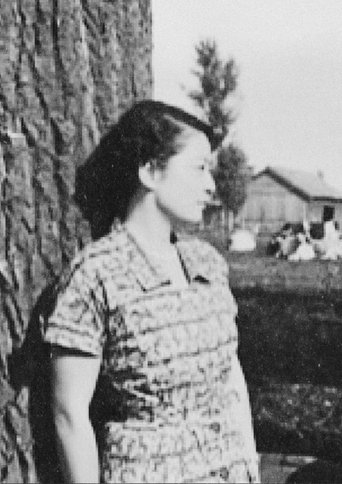
NRLately, I cannot help thinking; “What if the gods created life and death by mistake?” I find it odd that as I age, my body withers. If, as I slip into old age, my heart becomes young, then it would be appropriate if my body could follow suit. Wouldn’t it be nice if humans were born elderly, and in reverse, died of old age in an infant’s body?. (Hagiwara Sakumi)
Eizō Shokan 10
2005
The newest work in a series of works employing 16mm film to exchange correspondence between the two filmmakers Nobuhiro Kawanaka and Sakumi Hagiwara. The principal theme of the series, begun in 1979, was "the landscape of memory", and the theme of this film is "travel". The thoughts of the two filmmakers intersect as Nobuhiro Kawanaka presents a return to the past through "time travel" and Sakumi Hagiwara uses a narrative method to portray "the destination of travel". (Kurzfilmtage - International Short Film Festival Oberhausen)
Eizō Shokan 7
1997
 6.0
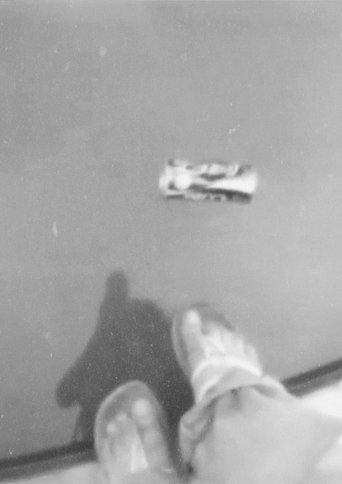
6.0Writes Kawanaka, "Video is a medium of image as well as sound. Walking on a gravel road with a camera, the crunch sound is captured in real time. Such [an] observation seems obvious, but as a filmmaker, the ability to record sound in real time was very new to me. Referencing a can-kicking game I played as a child, I followed the rolling can and recorded the resonant sounds of the can hitting the ground."
Kick the World
1974
Short film that is part of a series of 6 films that Nobuhiro Kawanaka made between 1987 and 1992.
Shishōsetsu 2
1988
 NR
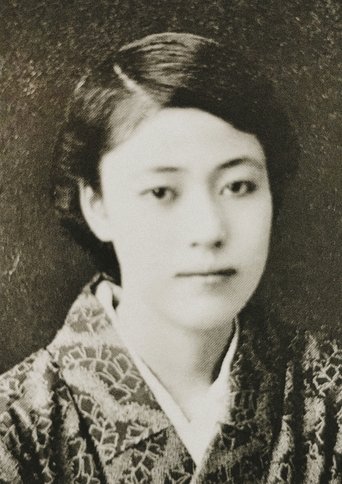
NRAs demonstrated by the film's title, Kawanaka has been exploring the theme of “Shishōsetsu” (“realized” fiction) for some time. For the author, there is a personal tension which develops between the self which experiences life, and the self which attempts to record images filtered through time and imagination. (Karen Keane)
Shishōsetsu 5
1991
Short film that is part of a series of 6 films that Nobuhiro Kawanaka made between 1987 and 1992.
Shishōsetsu 6
1992
Short film that is part of a series of 6 films that Nobuhiro Kawanaka made between 1987 and 1992.
Shishōsetsu 4
1990
 NR
NRShort film that is part of a series of 6 films that Nobuhiro Kawanaka made between 1987 and 1992.
Shishōsetsu 1
1987
The seminal image of the continuous motion of a woman skipping. While Edward Muybridge worked to accurately record human movements, this film, shot in 16mm and made 100 years later, sparks interest in how it disrupts the order of continuous movement.
Transparent Process
1975
Digital film by Japanese director Nobuhiro Kawanaka presented at the Image Forum Festival.
5 Years Since
2018
A pictorial diary featuring images taken at the Old Blue Hotel in Berkeley.
Painting Sky
1985
 NR
NRNo synopsis available yet.
Playback
1973