

Directing
Mako Idemitsu
Born 1940-01-01 · Tōkyō, Japan
Experimental video artist Mako Idemitsu creates domestic narratives, that examine female identity within the context of the contemporary Japanese family. Echoing and subverting the popular melodramas of Japanese television, she applies a women's liberationist critique to her fictions of the psychological "family romance." Dramatising the strict gender roles that shape mother-child and husband-wife relationships, she explores the role of women in a patriarchal, mediated culture.
Acting credits

Behind the camera
 NR
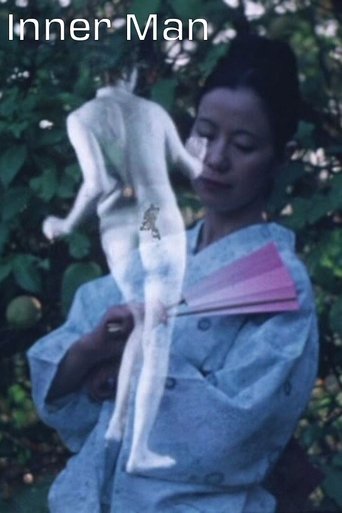
NRThis film shows the images of a dancing woman who is wearing Kimono overlapping another image which a naked man is dancing. This is one of the original psychological concepts of C.G. Jung. For women, Animus is an image of a man by projection of her mental energy.
Inner Man
1972
Idemitsu's camera follows a gay man, Eckard.
Hi! Eckard
1970
 NR
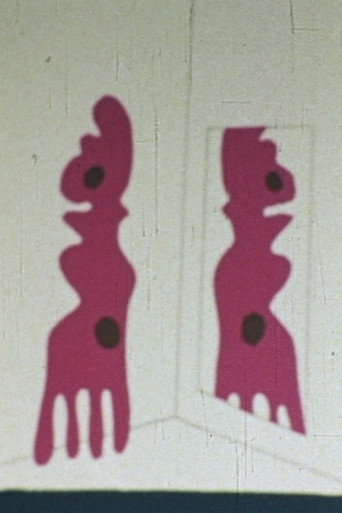
NRA film made using a work of Cindy Sherman, expresses Idemitsu's free and easy sense of humor.
Next
1973
 NR
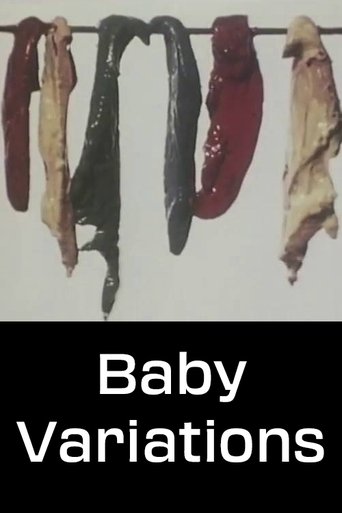
NRThe film shows vivid close-ups of a liver with the background music of “My Baby” by Janice Joplin.
Baby Variations
1974
 NR
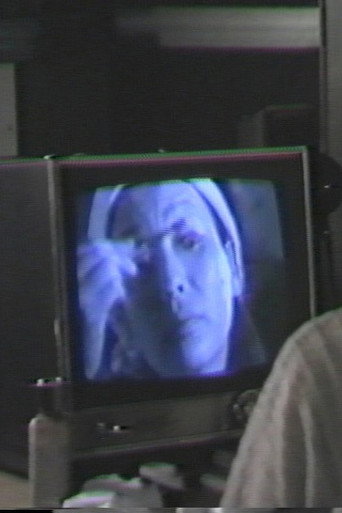
NRIn Idemitsu's experiment using a video camera and monitor, the reflexive exercise looking into a mirror is swapped with the monitor, suggesting a reflection on the history of women's relationship with makeup.
Make Up
1978
 NR
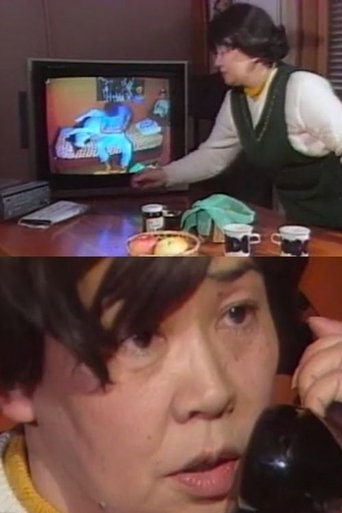
NRHideo, a young man living away from his parents, is kept under constant surveillance by his doting mother via an omnipresent television monitor. Mama can only communicate with her beloved, absent son through the video screen.
Hideo, It's Me, Mama
1986
 NR
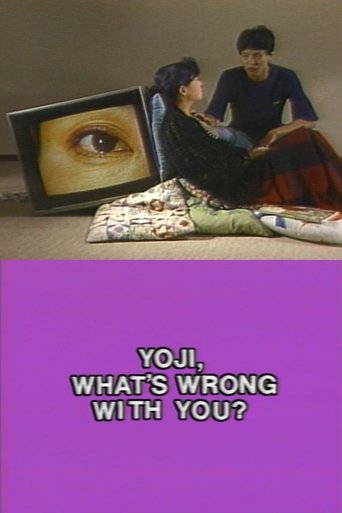
NRWhen Yoji announces to his mother that he wants her to meet a new girlfriend, the mother's jealousy destroys the relationship. Yoji's mother fastens onto her son, unable to leave his mother or experience love for any other woman.
Yoji, What's Wrong With You?
1987
Idemitsu handed four women who frequented the feminist gathering space Hōkiboshi a video camera to record whatever they wished as Idemitsu also recorded their actions. The whole group then watched all five videos on five monitors, which Idemitsu then also recorded.
Women
1977
 NR
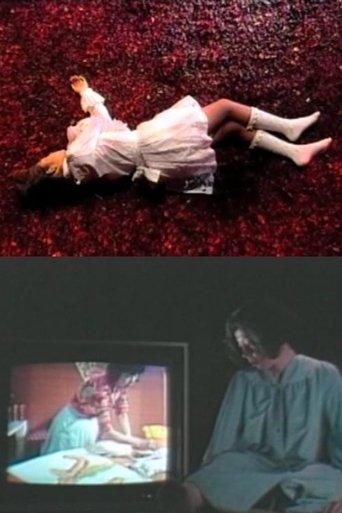
NRKiyoko's Situation articulates the deeply embedded cultural roles of Japanese women through the parallel stories of two female artists, Kiyoko and Tani. In Idemitsu's narrative-within-a-narrative, "Kiyoko's situation" is played out on a television monitor within Tani's drama. Tani is paralyzed in her attempts to paint by her feeling that, as a single woman, she has failed in society's eyes. Kiyoko, a young mother viciously criticized by her husband and family for her fierce determination to paint, eventually compromises her art for "maternal duty." As Kiyoko complies with the family, Tani, isolated and despairing, is driven to suicide. Idemitsu's chillingly omniscient television monitor, which acts as the psychological "other," metaphorically and literally condemns Tani to death. In the final cruel irony, she hangs herself, using the television monitor as a jumping-off point.
Kiyoko's Situation
1989
 NR
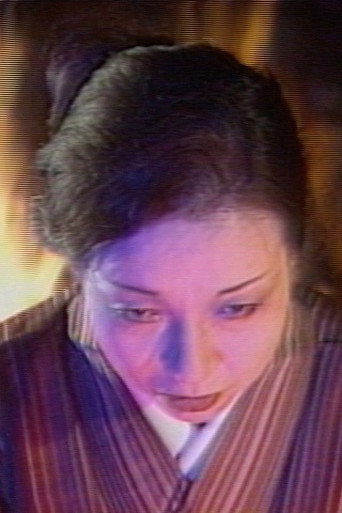
NRThe relationship between the mother and daughter is psychologically very tight. The isolated husband is irritated and becomes violent whenever he drinks but the two women cannot understand the reason of his violence. The mother lets the daughter marry for appearance's sake although in reality she hangs onto the daughter forever.
Great Mother (Sachiko)
1986
 NR
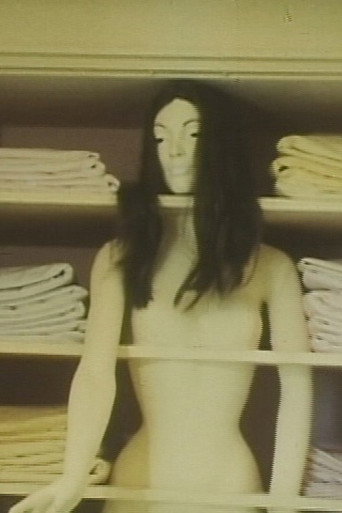
NRTaking place during the women’s liberation movement, Idemitsu filmed the Womanhouse which became her first 16mm film work. Judy Chicago and Miriam Schapiro jointly organized the Feminist Art Program at the California Institute of the Arts (Cal Arts) in 1971. The Cal Arts Feminist Art Program group performed for the audience at Womanhouse in 1972. They transformed an old run-down mansion in Los Angeles into Womanhouse. In the kitchen a progression of sculptured breasts gradually turned into fried eggs; one bathroom contained a mass of Tampax, and if you opened the linen closet you found a trapped mannequin.
Woman's House
1972
In this work, the subconscious problems of a daughter who rejects going school is illustrated based on the concept of the Great Mother, a psychological concept by C.G. Jung. The subconscious of the daughter is shown on the screen of the monitor in the scenes. When the daughter becomes violent, how does a personified great mother function?
Great Mother (Harumi)
1983
In Idemitsu's seminal women's liberationist video, the image of a tampon swirling in a toilet bowl slowly appears, as the artist speaks about the troubling roles, responsibilities and expectations of women in a clinical tone. Minimal in composition, What a Woman Made is a candid critique of the treatment of women in Japanese society.
What a Woman Made
1973
 NR
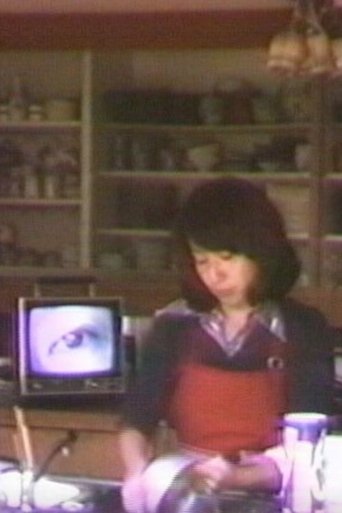
NRA woman performs domestic chores, watched by a television displaying the image of her own eye. The home is recast as a space of surveillance, control and repetitive labor.
Another Day of a Housewife
1977
 5.0
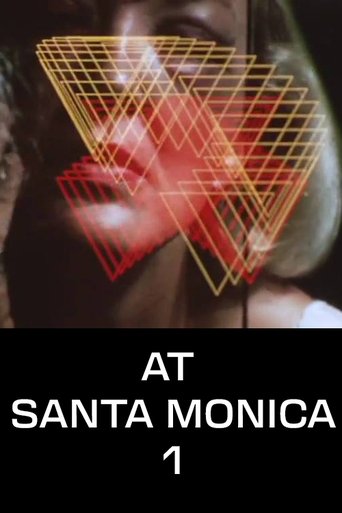
5.0A woman’s image as a mind-scape, after she had plastic surgery.
At Santa Monica 1
1973
 NR
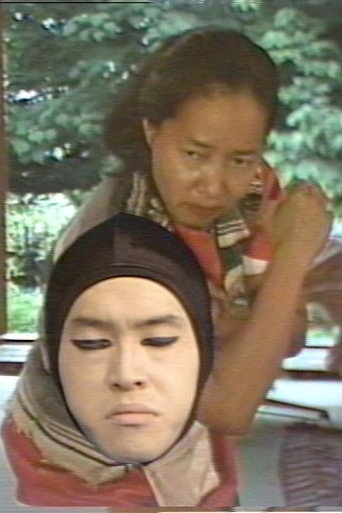
NRThis work portrays 'Animus,' a Jungian concept representing the masculine side of the female psyche. It embodies the 'Animus image' felt upon viewing 'Messenger from Hell,' a performance by the late Sayako Kishimoto.
Animus Part 2
1982
 NR
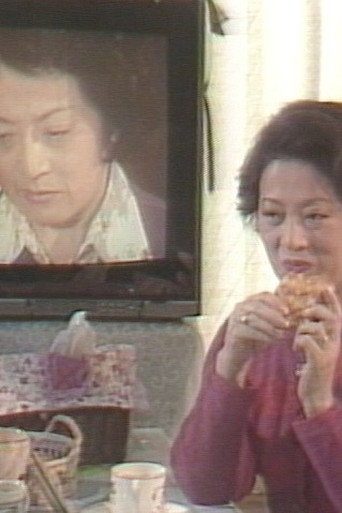
NRToday, Japan is envied by the world for her economic prosperity, which however, has resulted in producing this sort of average family. Its contains a wife who has to serve her husband, a preoccupied businessman, and who showers all her attention on her child who is also left behind at home with the mother. The child, especially a son, becomes a replacement for her husband. Mother and son share an intimate life like lovers at home without the husband. It seems that this is such a common occurrence that Japanese society ignores this video work. Those that are envious of the Japanese economic success will become less so if they see this work and realize what this real phenomena in Japanese society is like.
The Marriage of Yasushi
1986
Idemitsu reflects on her family and the war waged by Japan at the beginning of last century in Asia
The Past Ahead
2000
 NR
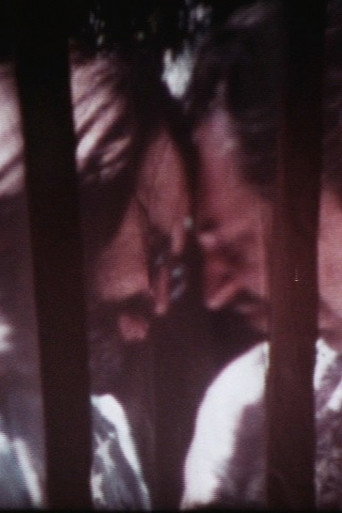
NRDepicts one weekend of a gay couple. The title "Touryanse" refers to a Japanese nursery rhyme.
Toryanse
1982
 NR
NRA mindscape in Santa Monica, where Idemitsu lived for 8 years.
At Santa Monica 3
1975
 NR
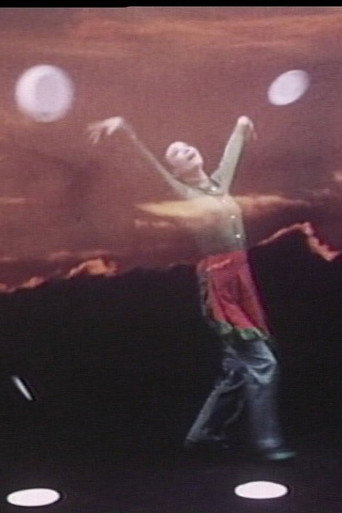
NROne of a series of Idemitsu’s works which deal with housewives buried in everyday life. Idemitsu overlapped a 16 mm work that had Yoneyama Mamako pantomiming in her “Tango of a Hosewife” for the Commemoration of the International Women’s year, 1975. Behind Mamako pantomiming as a housewife, there are clouds, sunsets and bonfires.
At Any Place 4: From the Tango of a Housewife by Yoneyama Mamako
1978
 NR
NROne man's life is expressed in a form of a mime with a factories' chimneys are placed as its backdrop.
At Any Place 5
1978
 NR
NRCommissioned by the American Center Japan, Idemitsu made a video introducing her husband Sam Francis. She interviewed 5 people about their views of Sam Francis. Those who interviewed were Taeko Tomioka, Toru Takemitsu, Shuzo Takiguchi, Jiro Takamatsu, and Sazo Idemitsu.
Sam Are You Listening?
1974
 NR
NRAs a shadow appears when a human body is lit up, there is a certain dark part like a shadow in the mind of a man. This is an aspect of a man’s personality which he usually is hesitant to admit. C.G.Jung, Swiss psychologist, called this dark aspect a shadow because it appears in personified forms when one dreams. In my work Shadows, there is another monitor in the images of the main monitor. The inside monitor shows the mind of the outside characters, that is, the inside monitor’s characters are shadows, psychological projections of the outside characters. Since the issue of shadows is so complicated and hard to understand, I selected examples that are specific and understandable, as well as familiar to women in their daily life. These are also the feeling I have toward my routine life.
Shadow Part 1
1980