
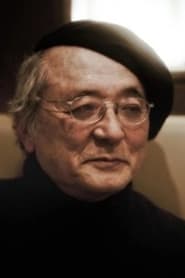
Directing
Takahiko Iimura
Born
1937-02-20 (89)
Place of birth
Tokyo, Japan
Known for
Directing
Credits
49 titles
Takahiko Iimura has been a pioneer artist of Japanese experimental film and video, working with film since l960 and with video since 1970 while residing in New York and Tokyo. He is a widely established international artist, having numerous solo exhibitions in major museums such as the Museum of Modern Art, New York, the Whitney Museum, New York, Anthology Film Archives, New York, Centre George Pompidou, Paris, the National Gallery Jeu de Paume, Paris, Palais des Beaux-Arts, Brussels, Reina Sofia National Museum, Madrid, and the Tokyo Metropolitan Museum of Photography, Tokyo in addition to an artist residency at the German Academy of Arts, Berlin, and Bellagio Rockefeller Foundation Study C…
Known for
 7.0
7.0Jonas Mekas assembles 160 portraits, appearances, and fleeting sketches of underground and independent filmmakers captured between 1955 and 1996. Fast-paced and archival in spirit, the film celebrates the avant-garde as its own “nation of cinema,” a vital community existing outside the dominance of commercial film.
Birth of a Nation
1997
 NR
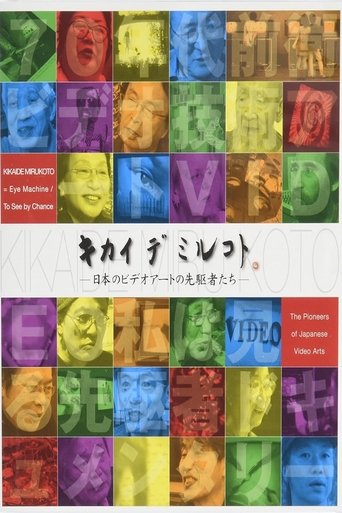
NRVideo began as a medium that inspired discovery. This art documentary traces the expressive roots of “media art” in Japan — works of video, performances, and installations created using video technology that allowed for free and creative visual expression.
KIKAIDE MIRUKOTO = Eye Machine / To See by Chance –The Pioneers of Japanese Video Arts–
2013
 NR
NRHome movies shot on Super 8mm by W+B Hein over 10 years.
Home Movies 1971-81
1985
 6.0
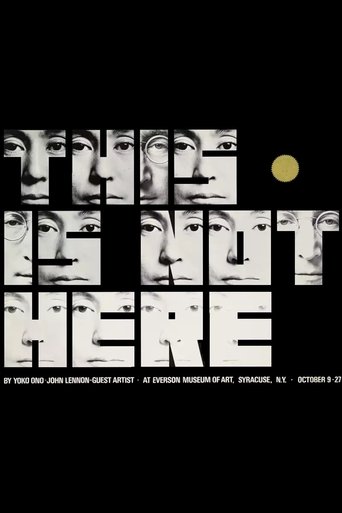
6.0On John's 31st birthday, Yoko held an art exhibit, "This Is Not Here", at the Everson Museum of Art in Syracuse, N.Y.. The show was taped and aired on U.S. TV on May 11, 1972 as "John and Yoko in Syracuse, New York.
Yoko Ono: This Is Not Here
1972
 NR
NRFrom the collector of Marquis de Sade in the early 1960s, still a 'dark age ' of erotic picture, even his novels were forbidden to publish in Tokyo, I burrowed the copies of the engraving taken from the 18th century edition of "The story of Juliette" and of "The story of Justine." and rearranged along a story made from of the pictures not from the novels. An exercise out of the curiosity. It was the same year I made Ai (Love) in 1962 which consists of mostly extreme close-ups of love making. I have kept DeSade for many years in my closet without looking at it myself and have forgotten about it. By a chance I re-found the film 50 years later that there is something worth to see. (T.I, 2012)
Desade
1963
UKIYO UKARE present details from the shunga, pornographic wood-block prints of Harunobu, Utamaro, and others
Ukiyo Ukare
—
Film credits
2010s · 3 titles
NRVideo began as a medium that inspired discovery. This art documentary traces the expressive roots of “media art” in Japan — works of video, performances, and installations created using video technology that allowed for free and creative visual expression.
KIKAIDE MIRUKOTO = Eye Machine / To See by Chance –The Pioneers of Japanese Video Arts–
2013
 NR
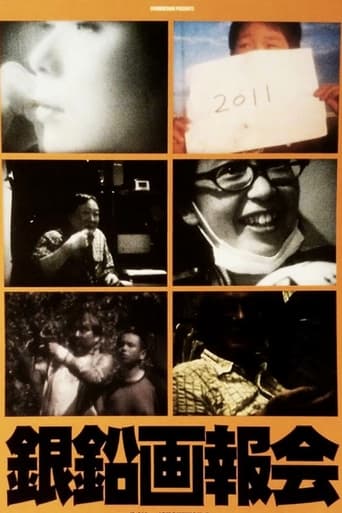
NRThis is a film about a medium approaching extinction, an 8mm documentary film about a vanishing 8mm cinema. Blending two genres, the science film and the personal film, and benefiting from the participation of multiple generations of cineastes, it is a reflection upon the original cinematic experience.
Associations of Silverpencils
2011
 NR
NR8mm short by Kenji Onishi and Tohru Mabuchi.
Film Workshop In SANGENJAYA - Summer
2012
2000s · 1 titles
1990s · 2 titles
7.0Jonas Mekas assembles 160 portraits, appearances, and fleeting sketches of underground and independent filmmakers captured between 1955 and 1996. Fast-paced and archival in spirit, the film celebrates the avant-garde as its own “nation of cinema,” a vital community existing outside the dominance of commercial film.
Birth of a Nation
1997
 NR
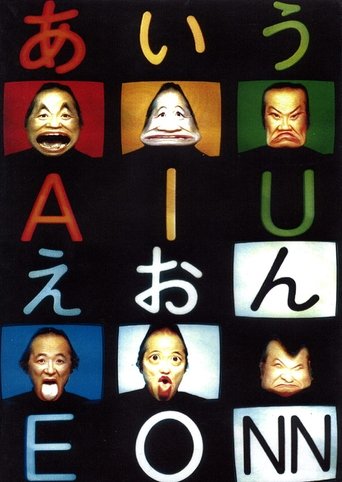
NRExperimental film involving letters.
A I U E O NN Six Features
1993
Behind the camera
6.0On John's 31st birthday, Yoko held an art exhibit, "This Is Not Here", at the Everson Museum of Art in Syracuse, N.Y.. The show was taped and aired on U.S. TV on May 11, 1972 as "John and Yoko in Syracuse, New York.
Yoko Ono: This Is Not Here
1972
6.0On John's 31st birthday, Yoko held an art exhibit, "This Is Not Here", at the Everson Museum of Art in Syracuse, N.Y.. The show was taped and aired on U.S. TV on May 11, 1972 as "John and Yoko in Syracuse, New York.
Yoko Ono: This Is Not Here
1972
NRFrom the collector of Marquis de Sade in the early 1960s, still a 'dark age ' of erotic picture, even his novels were forbidden to publish in Tokyo, I burrowed the copies of the engraving taken from the 18th century edition of "The story of Juliette" and of "The story of Justine." and rearranged along a story made from of the pictures not from the novels. An exercise out of the curiosity. It was the same year I made Ai (Love) in 1962 which consists of mostly extreme close-ups of love making. I have kept DeSade for many years in my closet without looking at it myself and have forgotten about it. By a chance I re-found the film 50 years later that there is something worth to see. (T.I, 2012)
Desade
1963
UKIYO UKARE present details from the shunga, pornographic wood-block prints of Harunobu, Utamaro, and others
Ukiyo Ukare
—
In the context of the Cold War, use of the word “shelter” was common. However, it surprised Iimura when he started to live in New York in the 1960s. His work Shelter 9999 embodied the idea of a shelter of the future. Iimura captured scratched letters and abstract lines on black film. Letters were not legible at the speed 24 letters per second that corresponded to the sequence of 24 frames per second. Experimental musician and music professor Alvin Lucier was in charge of sound. Together they performed the collaborative work at a disco club in East Village.
Shelter 9999
1967
 8.0
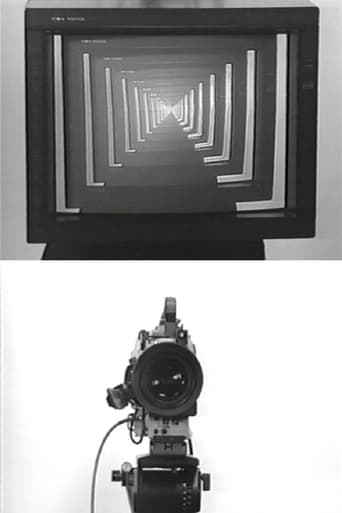
8.0Cameras observing each other.
Observer / Observed
1975
8.0Cameras observing each other.
Observer / Observed
1975
White Calligraphy is an abstract short made by scratching characters from 'Kojiki', an early Japanese text, into the frames of 16mm black leader.
White Calligraphy
1967
Using the system of academy leader: 10 to 1, the film replaces the number to white space with bip sound (clear leader) gradually until it reaches to complete white.
Sync Sound
1978
 NR
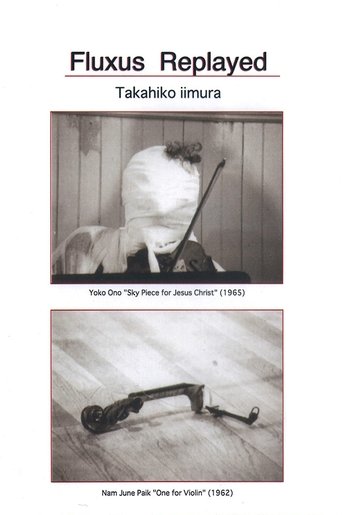
NRThe film reproduces the historic performances by some of the iconic artists of Fluxus from the 60s: Nam June Paik, Yoko Ono, Dick Higgins, George Brecht, Alison Knowles, Ben Patterson, Jackson Mac Low etc.
Fluxus Replayed
1991
 NR
NRA touching portrait of his partner Akiko and the days following their wedding, Iimura's conceptual rigour loosens in favour of intimacy in Honey Moon. (Julian Ross)
Honey Moon
1966
 NR
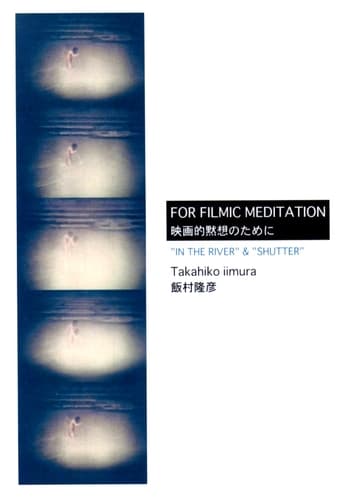
NR'What I am concerned with in this film is not only the flicker effect, but also the coming and going of an eye-like shape on screen which was created by a fade-in-out device while shooting the light/the bulb of the projector. The viewer literally looks into the light which acts like an eye.'(T.I.)
Shutter
1971
 NR
NRIimura creates a short self-portrait as well as brief portraits of five of his peers: Brakhage, Vanderbeek, Smith, Mekas and Warhol. In each portrait, Iimura attempts to copy the styles and traits of each artist (Vanderbeek's constantly moving camera; Mekas' experiments with film speed; Warhol's use of flashes of white against a black background), while briefly commenting on the images being shown. The film serves effectively as an introduction to the film styles of these artists.
Filmmakers
1969
 NR
NRWhile I was staying in New York in the 1960s during the rise of the hippie movement, I filmed performances of body painting by the artist, Kusama Yayoi, together with the performers. As I wasn't satisfied with merely documenting her performance, made super-impositions of flowers over the performance, more as a film poem than a documentary, since flowers was the symbol of the hippie movement as given the name "flower children."
Flowers
1969
 NR
NRThe 1981 performance Circle & Square by Takahiko Iimura, New York-based Japanese film and video pioneer, evolved from the artist's interest in exposing the apparatus of projection and the materiality of image and light, which began in the mid-60s. The work commences with the projection of a long loop of black 16mm film leader suspended from the ceiling. The artist punches a hole on the film's surface and as it loops through the projector's gate, a single white circle of light pierces the darkness. With each subsequent punch the film builds before the viewer’s eyes into a cascade of white circles before reaching its abrupt and revelatory conclusion.
Circle & Square
1981
 NR
NR"It's a mixture of [dead] animals, pieces of [broken] furniture, industrial waste, kids playing. I didn't have in mind any of the kind of historical perspective, nor was I trying to make an ecological statement. I was showing the new landscape of our civilization. My point of view was animistic. I tried to revive those dead animals metaphorically and to give the junk new life."
Junk
1962
 NR
NRIn the general classification, this was a complete abstract film and a kind of experimental movie as well, only black film, which blocks light, and clear film, which is totally transparent, were used as the basic materials.
MA (Intervals)
1977
 NR
NROriginally filmed in 8mm a little stone-made Buddha in a temple of Katmandu, the film strip in ten seconds was projected as a loop, and then the screen w as refilmed many times in 16mm at different speeds (frames per second). The original 8mm footage has been greatly expanded through refilming in 16mm. The rhythmic manipulation of "flying Buddha" in the air is realized.
Buddha Again
1970
 NR
NRAnma (The Masseurs) is a representative and historical work by the creator of Butoh dance, Tatsumi Hijikata in his early period in the 1960s. The film is realized not only as a dance document but also as a Cine-Dance, a term made by Iimura, that is meant to be a choreography of film. The filmmaker "performed" with a camera on the stage in front of the audience. With the main performers: Tatsumi Hijikata and Kazuo Ohno, the film has the highlights such as Butohs of a soldier by Hijikata & a mad woman by Ohno. There is a story of the mad woman, first outcast and ignored, at the end joins to the community through her dance. Inserted descriptions of Anma (The Masseurs) are made for the film by the filmmaker, but were not in the original Butoh. The film, the only document taken of the performance, must be seen for the understanding of Hijikata Butoh and the foundation of Butoh.
The Masseurs
1963
NRAnma (The Masseurs) is a representative and historical work by the creator of Butoh dance, Tatsumi Hijikata in his early period in the 1960s. The film is realized not only as a dance document but also as a Cine-Dance, a term made by Iimura, that is meant to be a choreography of film. The filmmaker "performed" with a camera on the stage in front of the audience. With the main performers: Tatsumi Hijikata and Kazuo Ohno, the film has the highlights such as Butohs of a soldier by Hijikata & a mad woman by Ohno. There is a story of the mad woman, first outcast and ignored, at the end joins to the community through her dance. Inserted descriptions of Anma (The Masseurs) are made for the film by the filmmaker, but were not in the original Butoh. The film, the only document taken of the performance, must be seen for the understanding of Hijikata Butoh and the foundation of Butoh.
The Masseurs
1963
 8.0
8.0"10 minutes of the act of creation itself run through close up and magnifying lenses. " -T.I.
Love
1962
 1.0
1.0Film installation by Japanese experimental filmmaker Takahiko Iimura.
Dead Movie
1964
 NR
NR"Double Portrait" and "I Love You" are a paired piece with Akiko Iimura. Both Iimuras play individually as well as a unit. In "Double Portrait" they are never together, but one by one in three points of view, front, side, and back, assigned to the words "I", "You" and "He/She" respectively. The pronouns rotate with every repetition, for instance, in front view with "You", then "He/She" and back to "I". Often the words are destroyed acoustically making them unintelligible. "I Love You" is not a style of confession, but the words, and a linguistic practice using a sentence and shifting the pronouns.
Double Portrait
1987
 NR
NRFirst projected onto Jiro Takamatsu's naked back at the legendary Sogetsu Art Center for the performance Screen Play, Colors is an experiment in concoction. Iimura drops paint into oil and water and melts wax as he films the colors take shape whilst simultaneously dissolving into one another. An eerie soundtrack by Yasunao Tone of Group Ongaku and Fluxus creates an impression of music being the witch behind the craft. (Julian Ross)
Iro (Colors)
1966
 NR
NRAn attempt at time travel in a very conceptual sense.
Time Tunnel
1971
 9.0
9.0The early sixteenth-century Japanese garden in the Zen temple of Ryoan-ji, in Kyoto, is considered a masterpiece of the karesansui or "dry landscape" style... In this film, the viewer is invited to experience the garden as an embodiment of ma, a Japanese concept that conveys both time and space... The aesthetic of the film is the message, it has the quality of an experimental film, a conceptual film-an artwork in itself. Good balance of music/visuals/titles. If not as compelling for some viewers as for others, still rated as very effective. Makes one want to visit the actual garden and experience its spiritual energy. – Art on Screen
MA: Space/Time in the Garden of Ryoan-ji
1989
9.0The early sixteenth-century Japanese garden in the Zen temple of Ryoan-ji, in Kyoto, is considered a masterpiece of the karesansui or "dry landscape" style... In this film, the viewer is invited to experience the garden as an embodiment of ma, a Japanese concept that conveys both time and space... The aesthetic of the film is the message, it has the quality of an experimental film, a conceptual film-an artwork in itself. Good balance of music/visuals/titles. If not as compelling for some viewers as for others, still rated as very effective. Makes one want to visit the actual garden and experience its spiritual energy. – Art on Screen
MA: Space/Time in the Garden of Ryoan-ji
1989
 NR
NRShort film for the "A Commercial for Myself" programme.
My Documentary
1964
A program of five films on love and sex from the Japanese underground of the experimental cinema, assembled by avant-garde cineaste Takahiko Iimura, and shown at the American Cinematheque from January 19 to 25, 1967.
Japanese Erotica: Five Films on Love and Sex from the Japanese Underground of the Experimental Cinema
1967
Filmed turning the camera upside down, and without looking through the viewfinder, this experimental short features fragmented scenes of people, a girl, an amusement park, the beach, etc.
Sakasama (Upside Down)
1963
 NR
NROne of the earliest minimalist video with flicker effects was produced in Tokyo in early 1970s. A flickering video with eyes, which super-impose the positive over the negative, open and close rapidly. At the same time the "blind" effects of video fast-forwarding accelerates/decelerates the picture synchronized with the sound.
Blinking
1970
NRExperimental film involving letters.
A I U E O NN Six Features
1993
NRExperimental film involving letters.
A I U E O NN Six Features
1993
 9.0
9.0“ONAN is a work about desire (masturbation) which has no object but itself. The appearance of the large egg objectifies the man's desires. After colliding with the other (a girl), the hero falls down while still holding the egg, thus caricaturing the desire of the hero.” —Takahiko Iimura (takaiimura.com)
Onan
1963
9.0“ONAN is a work about desire (masturbation) which has no object but itself. The appearance of the large egg objectifies the man's desires. After colliding with the other (a girl), the hero falls down while still holding the egg, thus caricaturing the desire of the hero.” —Takahiko Iimura (takaiimura.com)
Onan
1963
 NR
NROne of Takahiko Iimura's (and modern art's) earliest works in conceptual video, A Chair entirely consists of a steady (and usually ghosted) image of a chair to the accompaniment of the firecracker pops of television static. While formally minimal, A Chair is conceptually challenging in its simplicity and its demand that the audience zero in on, of all things, a simple chair. - Tom Fritsche
A Chair
1970
NRThis is a film about a medium approaching extinction, an 8mm documentary film about a vanishing 8mm cinema. Blending two genres, the science film and the personal film, and benefiting from the participation of multiple generations of cineastes, it is a reflection upon the original cinematic experience.
Associations of Silverpencils
2011
 NR
NRYomiuri Independent was an annual show between 1949-1963 that exhibited all art that was submitted. Artists in the early 60s began to take advantage of the challenge by provoking the organisers with their submissions that cast a question on the framework of art within the gallery space. The objet d'art and performances we see in Dada 62 are fragments of what was shown in its 1962 version with pieces by Genpei Akasegawa, Jiro Takamatsu and Shinmei Kojima making an appearance. (Julian Ross)
Dada 62
1962
 NR
NR"This Is A Camera Which Shoots This" and "As I See You You See Me" are both set up facing two cameras and monitors and the performer walks between them while voicing the sentence of the title. Here the words "This" and "You" have the same form in the nominative and the objective cases, switching the roles of not only the signifier (word) but also the signified (object).
As I See You You See Me
1995
Short work.
Models: B-4: Seeing, Not Seeing
1972